
Switched On – Craven Faults: Sidings (The Leaf Label)

Reviewed by Ben Hogwood

What’s the story?

Craven Faults is proving to be a particularly fertile source of long-form instrumental music. Created by a single, anonymous hand, its pictorial approach leans on industry for inspiration but looks beyond that, creating an intriguing form of descriptive ambience. This has already been shown in double-length albums Erratics & Unconformities and Standers, and a number of EPs.

“The journey on Sidings isn’t made with people in mind. It begins in an isolated community which has built up around one of the great engineering projects of its age. The work is slow and perilous – thousands of men at the mercy of the elements. The ground is frozen or flooded for months on end, while red kites circle overhead. 14 tunnels and 22 viaducts to open up the north. The on-beat and the off-beat interchange. Recorded in 1969, Olympic Studios – a precursor to the ships we built.

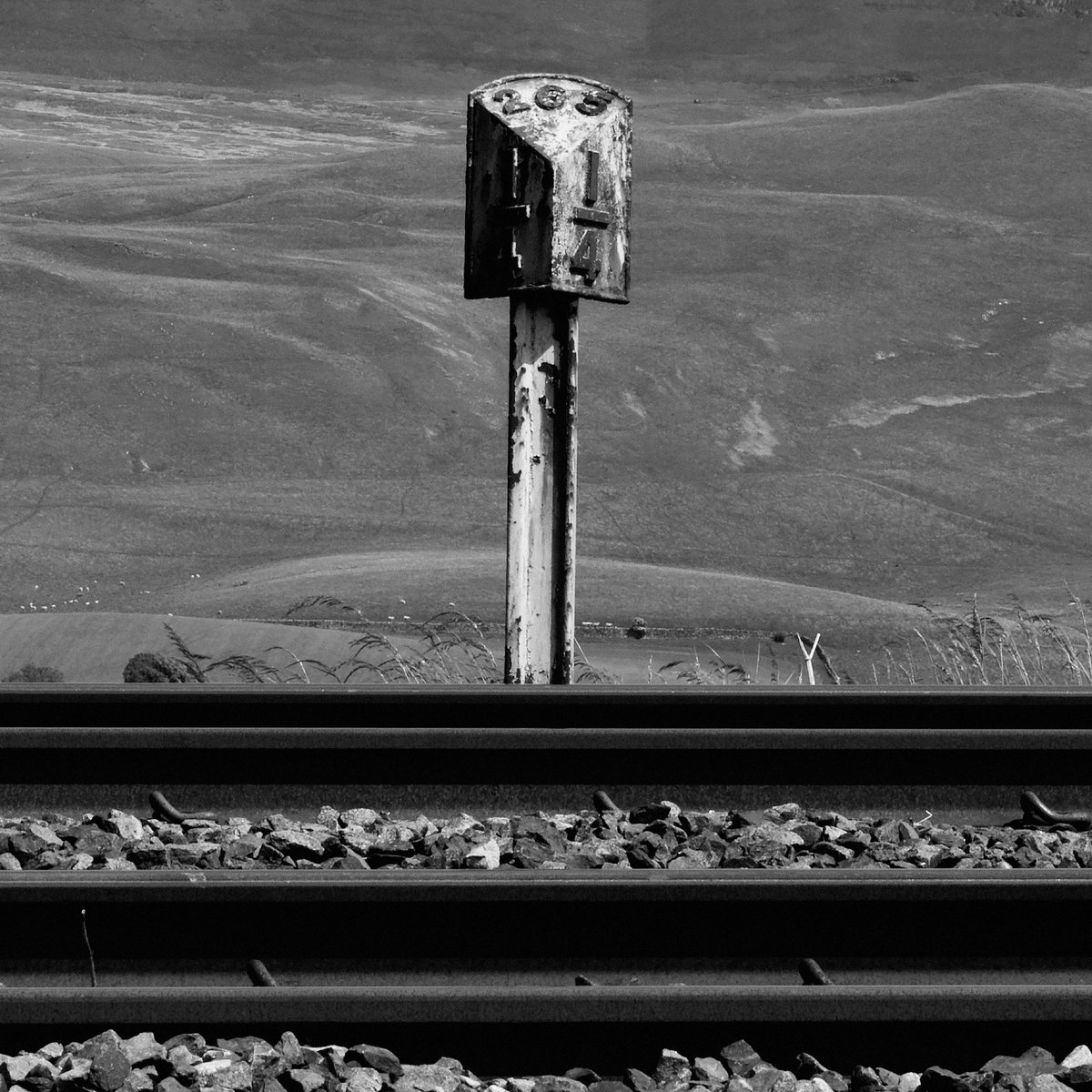
We walk northeast in search of a distance marker. When it first comes into view, it looks similar to where we commenced our journey on ‘Bounds.’ The open moorland gives it away. This particular trip will take considerably longer, by foot and packhorse, before the land and power is redistributed by order of parliament. Just shy of fifteen minutes between 1952 and 1964 – from J&M Studio, New Orleans to the San Francisco Tape Music Centre. Rapid progress and consistently fertile ground.

As the sun rises, we make our way by road to a junction. There is a livestock market and an inn for travellers. It’s important to make the journey before the seasons change and this area becomes inaccessible. An idea almost lost in the mists of time – a West German prototype unearthed twelve years later. A little way due south, we arrive at another crossroads. We find a maestro labouring over his masterwork – Gold Star Studios, United Western Recorders, Columbia Studios and Capitol Studios. October 3rd, 1966 to November 20th, 1968. Inspired by the story of another community building the railways. The circle is complete and encompasses continents.

We continue south, hitching a ride on a finely turned-out cart. We help to unload the churns onto the platform and wait for the train to arrive. Our cargo will head east before switching tracks to be delivered into urban areas. Hundreds of thousands of gallons per year. The Black Ark, 1977.

From there we head north and west a little way and find ourselves near to where we began. Another temporary settlement built up along the line, where each chord occupies its own space. Wally Heider in 1967 and finished off at home a year later. Spikes driven into the frozen ground and the Kirkstall Forge hammer in the dead of night. Finding order in the chaos.

We strike a deal with the local farm and walk a thousand heads of cattle to market. The ground is heavy and it’s slow going – it will take the best part of a week. We stop to graze at Suma Recording Studio, 1978 and then Sunwest, 1969. We reach the end of our journey via a final rest stop – an enclosed field on the moor we hovered over on ‘Standers.’ 1858. An outgrown coda and proof that two chords will suffice. Three is a luxury. A radio enthusiast intercepts government secrets – Cargo Studios, 1980.

What’s the music like?

Once again, the music matches the story – and Sidings unfolds in subtle yet compelling form, finding a meditative sweet spot on Ganger that never lets up, with shimmering figures in the half-light above a supportive, broadly phrased drone.

The start of Stoneyman is initially like the summons of a bell, above a drum with an ominous tread, while Three Loaning End slows the tempo, with an oddly persuasive lilt. Incline is scattered with melodic fragments that have the quality of settling snow, again over the reassurance of a supportive bass drone. Far Closes, meanwhile, operates with a steadying kick drum pulse beneath subtly shifting figures.

Does it all work?

It does. This is an album to get thoroughly engrossed in, rewarding its listeners with vivid and captivating imagery.

Is it recommended?

Very much so. Craven Faults’ music is distinctive and forward looking, yet extremely conscious of its recent past. The blend is both fascinating and rewarding, becoming a form of 21st century English electronica with an uncanny awareness of its surroundings.

Listen / Buy

Published post no.2,776 – Friday 23 January 2026

Switched On – Craven Faults: Yard Loup (The Leaf Label)

by Ben Hogwood

What’s the story?

As the new Craven Faults album Sidings nears release, The Leaf Label have teased another of its eight tracks. Yard Loup is much shorter than the previous single Far Closes, but gives an indication of the sonic world in which the producer is operating.

What’s the music like?

Picturesque – in that it paints many images in the mind’s eye. Craven Faults has a way of working that combines long drone phrases and quicker, less defined movements, in this case a gently shimmering treble. In this case the image conjured up is a wintry, watery scene.

Does it all work…and is it recommended?

It does, though I suspect it will work a lot better in the context of the album. It certainly whets the appetite.

Listen & Buy

You can listen to the two tracks from Sidings below:

Published post no.2,760 – Wednesday 7 January 2026

Switched On – Craven Faults: Bounds (The Leaf Label)

by Ben Hogwood

What’s the story?

The mysterious Craven Faults knows exactly how to tell a story. The accompanying text for the four track album Bounds does just that, describing the third album as “another 37-minute journey through Northern England via a lifetime obsessing at the fringes of popular culture. New details and perspectives. Dusk gathering.

There’s some discussion over where this journey begins. Certainly, less than twenty miles north-west of the city, but possibly much closer. Ironic given we’re searching for a distance marker. A gritstone pillar is the prime candidate – destroyed by lightning almost 200 years ago, and then rebuilt a quarter of a mile away. A curiosity. Many a journey starts here these days, as we take flight and head further north and west. The tarn was drained in 1940 to protect critical infrastructure. We leave the sounds of heavy industry behind us to float weightlessly over the moors.

We pick up pace and hit those levels of repetition engineered to the highest standards in Düsseldorf and Köln, 1971. A gift to the world. At this point the altitude is no longer clear; there’s no sense of scale. We could be a matter of inches from the ground, but the patterns are the same. Eventually we arrive at a hillside with no defined boundaries. The limestone pavement is visible in parts, and snaps us into focus once again.

It’s a little way east for our next stop, very close to where the journey began on Standers. Documents from 1651 suggest an arbitrary drawing of boundaries, the distribution of power and wealth set down in pen and ink and then passed down through generations. We beat a path around the perimeter. The divides still exist although the crab apple tree is long gone. Melodies give way to bent notes and dissonance.

We take a circuitous trip to Hamburg and Rome for filming between February 11 and April 23, 1972. A slower pace. Less structure, but emotive, evolving. The master touch, indeed. One final job before retiring and living off the land for the next 373 years.”

What’s the music like?

Reading the text as an accompaniment to the music is very helpful, for it puts this slow-moving discourse in perspective. Yet in spite of its quite restrained nature, and its restricted tempo, Craven Faults secures music of stature, laden with atmospheric touches.

The four tracks unfold effortlessly, but not without tension, with each prompted by a sonorous, slow-moving bass. Groups Hollows moves at two speeds simultaneously, with the slow tread of the bass against a quicker rhythmic profile, and a twinkling loop adding colour up top.

Meanwhile the crossrhythms of Lampes Mosse create an intriguing picture before the epic, sprawling Waste & Demesne which casts a spell – again slow movement against quicker, before the elegant line at the top is left in isolation.

Does it all work?

It does. Craven Faults’ music has a timeless quality to it, and provided you experience the album with all frequencies available – especially bass! – you’ll get the most immersive experience from Bounds.

Is it recommended?

Yes, enthusiastically. Craven Faults are one of those outfits who have mastered the art of ‘less is more’, and this quartet of captivating tableaus tells as vivid a story as the text accompanying it. Essential listening for those who have already latched on to their talents.

For fans of… Luke Abbott, Boards Of Canada, Mogwai, Aphex Twin

Listen & Buy

Published post no.2,356 – Friday 8 November 2024

Switched On – Craven Faults: Standers (The Leaf Label)

by Ben Hogwood

What’s the story?

This is a big year for the elusive minds behind Craven Faults. On the horizon is a debut live show in September, where their modular synthesisers, cables and organs will be extracted from the old textile mill where they work, and presented to the public.

Part of that presentation will surely include Standers, the outfit’s second album. A large scale piece, it moves towards a large scale approach that sees four of the six tracks clocking in at more than ten minutes each. Their approach is self-described as ‘a self-contained analogue electronic journey across northern Britain, viewed through the lens of a century in popular music.’ This time around the perspective around the landscapes they create in music is shifting, looking at how their outlines have been shaped by the elements and by human settlers. The interaction between the two provides plenty of raw material for composition.

What’s the music like?

Rather like the artwork. Craven Faults make music of the exquisitely shaded black and white variety, with a combination of panoramic drones and detailed foreground work that makes a lasting impression and keeps the listener coming back for more.

The longer form of composition definitely suits Craven Faults’ music, as it allows each scene to be set, subtly shaded and crafted.

First track Hurrocstanes – which appears to be a historical name for Haddock Stones, in North Yorkshire – makes a striking start. Over the course of a quarter of an hour it emits a regular, tolling chime that is equal parts foreboding and comforting, as the musical landscape beneath pulses with activity, subtly shifting from the root note and back again.

Even more impressive is Sun Vein Strings, a blast of light from its massed banks of keyboards but also with plenty going on elsewhere. The 18-minute epic becomes a series of twisted electronic moves, the lines expanding and contracting with hypnotic regularity, and with the syncopation throwing the listener off the beat.

The shorter tracks are equally concentrated. Severals rises impressively from the depths, its synthesizer lines gaining in stature, while Odda Delf gains a probing piano line.

Descriptive writing is at the heart of Craven Faults work, and the outdoors certainly beckons on a track like Meers & Hushes, describing nature’s efforts to cover the trails of human industry. Its regular pulse suggests past activity, while the drones are highly descriptive. The music rises to a higher pitch, slow riffs playing off each other.

Does it all work?

Yes. Craven Faults have the ability to make music indoors that very clearly portrays the landscapes around them, and the blend of natural and mechanical elements feels just right.

Is it recommended?

Yes. On this evidence the live material will be fascinating to chart – but taken as a standalone work, Standers represents a very fine achievement and a cornerstone of this year’s British electronica.

Listen

Buy

On record – Craven Faults: Erratics & Unconformities (The Leaf Label)

Written by Ben Hogwood

What’s the story?

How refreshing to find an artist that keeps their self-promotion to a minimum. That said, it would be good to know more about Craven Faults at some point! The elusive biography on his record label site describes his moniker as ‘half-remembered journeys across post-industrial Yorkshire’.

In fact Craven Faults has been a thing for a while, with his well-received Lowfold Works EPs containing electronic music that shows off an ambitious grasp of musical structure. He is capable of stretching out his approach to minimal music into tracks of 20 minutes or more, using the barest of elements like Philip Glass does but building them up with oscillating synthesizers and drones.

Erratics & Unconformities is his first LP.

What’s the music like?

The Yorkshire reference is helpful, for as first track Vacca Wall establishes its shimmering content it feels like a look across the brooding landscape of the North Yorkshire Moors – but gradually opens out like the wings of a darkly shaded butterfly. This is music supported by a constant bass line, which tolls out like a deep bell, and a percussion track that never extends beyond a single kick drum, if at all.

The instruction from The Leaf Label to ‘put a 17-minute window in your diary and watch the video for Vacca Wall is worth following. In their words, ‘the rest of your inbox can wait, you need slowly unravelling analogue synthesizer arpeggios right now’:

With the mood set for the album, the next five tracks spread across nearly an hour, revealing different but often darker shades. The shorter Deipkier has a kick drum too, while Cupola Smelt Mill has sharper definition to the synthesizers and a bassline off the beat. Picking up the more industrial theme, Slack Sley & Temple is even darker, its brooding outlines giving the impression of a machine. This is the biggest track on the album, an expansive number of austere beauty.

Hangingstones regains some of the mood of the opening, while Signal Post has a more soothing drone at its base.

Does it all work?

Yes. Craven Faults has a distinctive style, and repeated listening brings out the rhythmic invention in his music, which is greater than you might at first think. It explains why he doesn’t need anything more than a kick drum.

Ultimately this album works best as a single unit in which to immerse yourself, drawing the listener in with its textures and spatial effects.

Is it recommended?

Yes, because there is some very fine music here – though it does come with the health warning that its dark nature is not necessarily ideal for the oppressively cloudy January days where it barely gets light!

Stream

Buy