In concert – ESO Digital Black History Concert – The Art of the Rag

english-symphony-orchestra-rag

English Symphony Orchestra / Kenneth Woods

Joplin (arr. Schuller) Maple Leaf Rag (1899)
Europe
(arr. Schuller) Castle House Rag (1914)
Blake
(arr. Schuller) Charleston Rag (1917)
Morton
 Black Bottom Stomp (1925)
Joplin
(arr. Schuller) The Entertainer (1902)

Recorded at Wyastone Concert Hall, Monmouth on November 10th, 2020
First broadcast on October 28th, 2021

Written by Richard Whitehouse

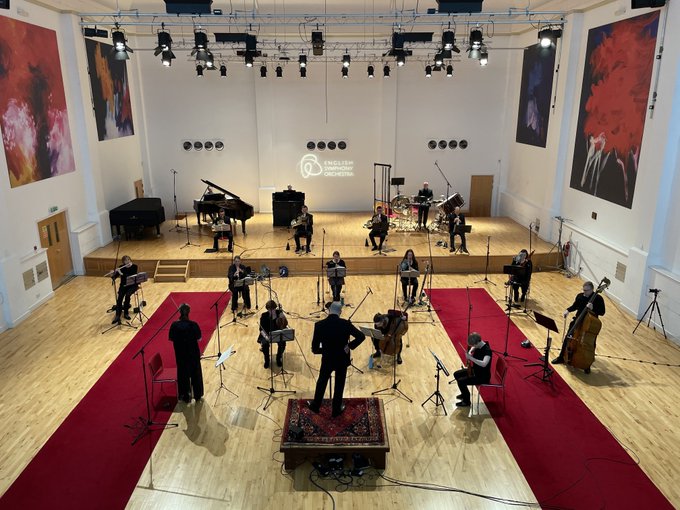
Although recorded just over a year ago, the English Symphony Orchestra’s Art of the Rag made an ideal contribution to the most recent Black History Month – focussing on music by four of the most influential practitioners of the dance-form that became known as Ragtime.

He might not actually have attained his 100th birthday, but Eubie Blake remains among the most versatile of those composers who straddled the (apparent) divide between ragtime and jazz – Charleston Rag typical in its harmonic sideslips and rhythmic syncopation confidently rendered here. His contribution to the promoting of Black musicians, furthering the American war-effort, and creating specifically African-American music has overshadowed James Reese Europe’s compositions – Castle House Rag conveying an ambivalent jollity which was surely intended. Because he lived long enough to perform and record extensively, Jelly Roll Morton has no equals in evolving a jazz idiom – Black Bottom Stomp effectively codifying what was merely a dance craze into a musical template which was to have far-reaching consequences.

Framing these items were the two most popular rags by Scott Joplin. Among his earliest such pieces, Maple Leaf Rag was a success immediately on publication, while The Entertainer had chalked up a plethora of arrangements even before the ragtime revival of the early 1970s, but neither secured financial success for their hapless composer. They certainly responded well to dextrous and attentive playing from the ESO, ably directed by Kenneth Woods and given the benefit – as were most of these pieces – of stylish arrangements by the late Gunther Schuller.

An enterprising selection such as more than fulfilled its purpose in promoting music whose familiarity need not detract from its innovative qualities. Perhaps the ESO could yet mount    a concert or even a staged presentation of Joplin’s magnum opus – the opera Treemonisha?

Further information on the ESO’s current season can be found at their website
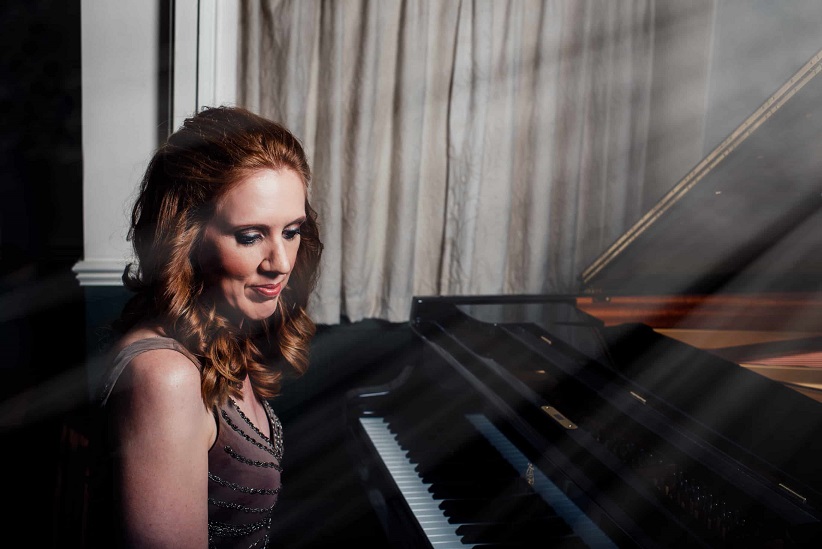
In concert – Sarah Beth Briggs, English Symphony Orchestra / Kenneth Woods: Mozart in Cheltenham

sarah-beth-briggs

Sarah Beth Briggs (piano, above), English Symphony Orchestra / Kenneth Woods

Sawyers The Valley of Vision (2017)
Mozart
Piano Concerto no.22 in E flat major K482 (1785)
Beethoven
Symphony no.6 in F major Op.68 ‘Pastoral’ (1808)

Town Hall, Cheltenham
Monday 25 October 2021

Written by Richard Whitehouse; picture of Sarah Beth Briggs by Carolyn Mendelsohn

Tonight’s concert found the English Symphony Orchestra at the Town Hall in Cheltenham, a building of Victorian opulence with an expansive while (surprisingly?) immediate acoustic to match, in a programme featuring classics of their respective media by Mozart and Beethoven.

First, though, a welcome revival for The Valley of Vision – the tone poem by Philip Sawyers that surveys the environs around Shoreham, Kent as were immortalized in the visionary early landscapes of Samuel Palmer. Although the composer had identified five continuous sections, the probing intensity of this music makes for a seamless unfolding which was to the fore in a superbly focussed account as directed by Kenneth Woods (who recently premiered Sawyers’ Fifth Symphony at the Colorado Mahler Festival). No less tangible was the control over this music’s momentum, extending through to a climactic faster section before soon regaining its initial pensiveness. In its subtly evocative aura and persuasive handling of tonality, moreover, this piece can rank with the most significant British orchestral works of the past two decades.

From the six piano concertos that Mozart wrote for his subscription concerts during the mid-1780s, the Twenty-Second is likely the least often heard. A pity, when its relatively expansive form and unpredictability of content are striking even in the context of this most exploratory phase from the composer’s output. Certainly, it is a piece of which Sarah Beth Briggs had the measure – whether in the forceful impetus of its opening Allegro, winsome interplay between soloist and woodwind in the central Andante (arguably the most eloquent among Mozart’s sets of variations) or blithe unfolding of a final Rondo afforded greater pathos by the ‘harmonien’ episode whose interposing was an inspired departure. Nor were Dennis Matthews’s succinct and artfully integrated cadenzas other than an enhancement of what was a fine performance.

Not that there was there anything routine about Beethoven’s Pastoral following the interval, a worthy successor to those performances of the Fifth and Seventh Symphonies that Woods and the ESO have given in recent concerts. Thus, a purposeful though never inflexible take on the opening movement left sufficient room to characterize its reflective asides, with the ‘Scene by the brook’ even more engrossing through its homogeneity of texture and seamless continuity; the closing bird-calls elegantly phrased and enticingly integrated into the whole.

Too rapid a tempo for the scherzo left Woods with insufficient room to point up contrasts in motion with its trio sections, but the Thunderstorm was finely rendered as an extended introduction into the finale – this Shepherd’s Song emerging as the formal and emotional culmination in all respects. Not the least of these strengths was an inevitability of progress – here maintained right through to a coda of serene poise and, in the process, underlining the degree to which any vestige of self has been sublimated into the enveloping cosmic dance.

An absorbing performance as made one look forward to further Beethoven symphonies from this source. Woods and ESO are in Worcester at the weekend with two concerts as part of the Autumn Elgar Festival, the first featuring the masterly Elegy for Strings by Harold Truscott.

Further information on the ESO’s current season can be found at their website. For more on composer Philip Sawyers, visit his website here, while more on pianist Sarah Beth Briggs can be found at her website

In concert – Alexander Sitkovetsky, English Symphony Orchestra / Kenneth Woods: Beethoven in Hereford

alexander-sitkovetsky

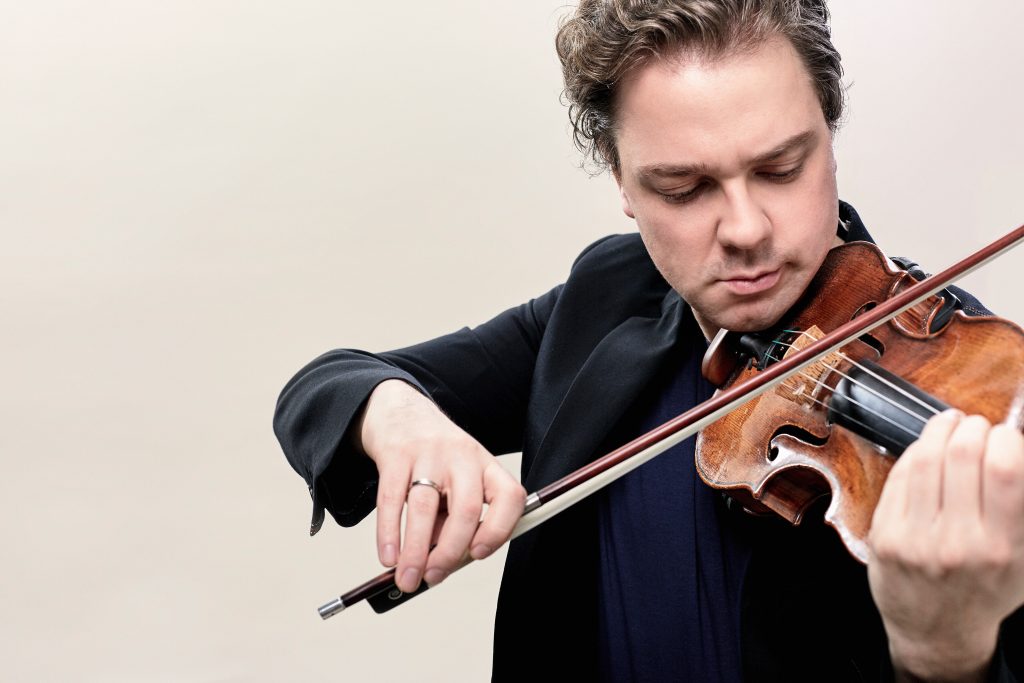
Alexander Sitkovetsky (violin, above), English Symphony Orchestra / Kenneth Woods

Mendelssohn Symphony no.4 in A major Op.90 ‘Italian’ (1833 rev.1834)
Carwithen arr. Woods
: Lento for Strings (1945 arr. 2020)
Beethoven
Violin Concerto in D major Op.61 (1806)

St. Peter’s Church, Hereford
Sunday 26 July 2021 (3.30pm) (Concert reviewed online via ESO Digital)

Written by Richard Whitehouse

For this first concert in its 2021/22 season, the English Symphony Orchestra was heard at St. Peter’s Church, Hereford in a concert combining familiar classics with an arrangement of the kind that has been a hallmark of its programming under principal conductor Kenneth Woods.

The piece in question was a Lento for Strings that began as the slow movement of the First Quartet by Doreen Carwithen. Although she left a notable output of concert and film music, Carwithen (1922-2003) is remembered mainly through her association with William Alwyn – being his amanuensis from 1961 and second wife from 1975 for the final decade of his life. At the time of this quartet, she was a promising composer in her own right, as confirmed by Woods’s adaptation of the slow movement so that its prevailing intimacy and introspection lose none of their acuity. The ESO played it with requisite poise and finesse, not least those plangent solos for viola and violin that were eloquently rendered here by Matt Maguire and Kate Suthers, thereby resulting in an atmospheric miniature which warrants frequent revival.

Mendelssohn was just a year older when he completed his Italian symphony, long among his most popular works even if heard a mere handful of times then withheld from publication in his lifetime. Maybe the touristic nature of its conception or its unlikely tonal trajectory (A to A minor) created issues he was unable to resolve, but in creating this symphonic suite he had unconsciously set a precedent. Woods undoubtedly had its measure – whether in an Allegro (exposition repeat included) whose joyousness did not exclude more combative energy from its development and coda, an Andante whose journeying pilgrims were evoked with no little pathos, an intermezzo deftly revisiting the wide-eyed enchantment of the composer’s youth, or a finale whose interplay of saltarello and tarantella rhythms surged on to a decisive close.

Beethoven’s Violin Concerto is one of a select few in its genre whose weight and substance justifies its occupying the whole second half. Alexander Sitkovetsky responded accordingly – the opening movement long-breathed but sustaining itself at least until the latter stages of the development, when a sense of expectancy rather failed to materialize. Momentum picked up thereafter, not least during a finely projected account of the (Kreisler) cadenza whose tensile rhetoric subsequently made the orchestra’s heartfelt re-entry in the coda seem more telling.

The highlight of this performance came with the Larghetto, slower than is often now the case but its sequence of variations melding into each other with seamless elegance, with a rapport between soloist and conductor at its most tangible in the theme’s hushed reiteration prior to a spirited transition into the Rondo. This did not lack for impetus, and if Sitkovetsky was most perceptive in the intervening episodes, the anticipation generated as the main theme steals in on the approach to the final tutti carried through to the nonchalant pay-off of the closing bars. An appealing and enjoyable concert in which, moreover, the ESO sounded not at all fazed by the vagaries of the acoustic. It continues its current schedule on October 10th with music by Mendelssohn, Mozart and Schubert – plus a mystery piece ‘‘to be announced on the night’’!

Further information on the ESO’s next concert can be found at their website. For more on Doreen Carwithen, visit the MusicWeb International page here

Live review – April Fredrick, David Stout, English Symphony Orchestra / Kenneth Woods: Bartók – Bluebeard’s Castle

mahler-9-woods

April Fredrick (soprano, Judith), David Stout [baritone (Bluebeard) / speaker (Prologue)], English Symphony Orchestra / Kenneth Woods

Bartók arr. van Tuinen / Karcher-Young Bluebeard’s Castle (1911/12)

Wyastone Concert Hall, Monmouth
Recorded June 16-17 2021 for online broadcast, premieres 13 August 2021

Written by Richard Whitehouse

The English Symphony Orchestra’s season of online concerts drew to its close tonight with a performance of Duke Bluebeard’s Castle, the only opera by Bartók and seminal work on the cusp between the late-Romanticism and nascent Modernism from the early twentieth century.

While its libretto by Béla Balázs is susceptible to interpretation, that concerning the ultimate impossibility of meaningful human communication is surely the decisive factor for Bartók’s setting of what became his longest work and his most explicitly personal statement. Yet this emotional scope never results in a lack of formal cohesion or expressive focus, ensuring that the duo-drama unfolds both inevitably and inexorably towards a fateful denouement that – by no means coincidentally – brings the piece full circle in terms of its underlying introspection.

A piece, then, of epic sweep but whose climactic moments only rarely dominate music that is (surprisingly?) well suited to reduction of a kind undertaken here by Christopher van Tuinen and revised by Michael Karcher-Young. The 25-strong ESO copes ably with those undulating contrasts in mood and texture that underpin the traversal of the protagonists through the castle and its environs, through to a culmination whose outcome feels no less tragic for having been ordained almost from the outset – a fable of disillusion whose impact comes across unscathed.

Of course, such considerations are relative to the success of the two singers in conveying the range of their respective roles. Whether or not she had previously sung that of Judith, April Fredrick has its full measure as she moves from confidence, via wariness and imploration, to reluctant acceptance of the part she must play in the completion of a journey that other wives have undergone before her. Rendered with vibrancy but no lack of finesse, this is a perceptive assumption, and one which Fredrick will hopefully be able to repeat on stage before too long.

Not that David Stout is necessarily upstaged in his portrayal of Bluebeard – emerging here as no misogynist, still less a murderer, than a conflicted figure whose avowals of love can never outweigh those inherent failings of self that have led to his repeating the same pattern of loss as before. Having previously taken on the spoken Prologue with thoughtful anticipation, Stout projects the role with no mean impetus as well as a keen eloquence that comes to the fore in those fateful later episodes when the sixth and seventh doors have almost to be prized open.

Otherwise, the ESO plays to its customary high standards throughout a score which, if never as radical as works of this period by Schoenberg or Stravinsky, remains a testing assignment with the integration of overtly expressionist tendencies into music of a Straussian opulence. This reduction loses little in either respect, due notably to a piano part as achieves more than textural filling-in then a harmonium part adding substance and atmosphere in equal measure. Kenneth Woods paces these 65 minutes with an acute sense of where the drama is headed.

Indeed, the only real proviso is the end-credits being accompanying by music from earlier in the opera. Surely it would be possible to have silence for the one minute it takes for these to ‘roll’? Otherwise, this is an excellent conclusion to a worthwhile season of online concerts.

You can watch the concert on the English Symphony Orchestra website here

For further information on future English Symphony Orchestra concerts, click here. ‘Fiddles, Forests and Fowl Fables’ is now available from the English Symphony Orchestra Website.

In concert – English Symphony Orchestra / Kenneth Woods: New Notes

3choirs festival

English Symphony Orchestra / Kenneth Woods

Doolittle Woodwings (2018, arr. 2020) [Version premiere]
Elcock
Symphony no.8 Op.37 (2019-20) [World premiere]
Beethoven
Symphony no.7 in A major Op.92 (1811-12)

Town Hall, Kidderminster
Wednesday 28 July 2021 (2pm)

Written by Richard Whitehouse

It may have taken over 15 months, but the English Symphony Orchestra this afternoon gave its first concert with audience, as part of the Three Choirs Festival, in what was essentially an event rescheduled from last year that continued its estimable 21st Century Symphony Project.

The premiere was that of the Eighth Symphony by Steve Elcock (above), born in Chesterfield in 1957 and resident in central France, whose music has only recently come to prominence via releases on the Toccata Classics label fronted by the redoubtable Martin Anderson. Symphonic writing has dominated Elcock’s output this past quarter-century, and if his latest piece has antecedents in a string quartet composed back in the early 1980s, there can be no doubt it continues those processes of organic evolution and integration central to the seven works that came before it.

The present piece reflects the impact of having heard the Sixth Symphony of Allan Pettersson (awaiting its UK premiere after 55 years), but whereas that hour-long epic centres on fateful arrival, Elcock’s 20-minute entity is more about striving towards a destination which remains tantalizingly beyond reach. Various pithy motifs are sounded in the opening pages, the earlier stages pursuing a productive interplay between relative stasis and dynamism as is thrown into relief by the emergence (10 minutes in) of a trumpet melody which crystallizes the course of this piece as it builds inexorably to a powerful climax then subsides into a searching postlude that recedes beyond earshot. Overt resolution may be avoided, yet the sense of cohesion and inevitability audible throughout its course makes for an engrossing and rewarding experience.

That was certainly the impression left by this well prepared and finely realized performance, notable for the way in which Elcock’s idiomatic while demanding string writing was realized with manifest conviction. A 10-strong wind ensemble (along with cello and double-bass) had opened the concert with Emily Doolittle’s Woodwings, the songs and calls of nine Canadian birds rendered over five characterful movements somewhere between Poulenc and Messiaen, with a finale whose relatively freeform structure made for an intriguing and enticing payoff.

After the interval, Beethoven‘s Seventh Symphony received a performance as uninhibited and exhilarating as the piece itself. That all repeats in the first, third and fourth movements is no longer the surprise it might once have been: more startling was Kenneth Woods’s decision – entirely justified – to proceed without a pause into the second movement, so underlining the A-A minor pivot which uncannily anticipates that of Mahler’s Sixth almost a century later. Other highlights were the bracing cross-rhythms of the transition into the first movement’s reprise, the flexible pacing of the scherzo’s trio melody– poised ideally between hymn and dance, then a finale whose coda threatened to breach the confines of Kidderminster’s Town Hall but whose ultimate elation clearly left its mark on the audience’s enthusiastic response.

An impressive return to live performance from the ESO (above) and a harbinger of just what can be expected in its 2021/22 season. Before that comes another in this orchestra’s series of online concerts with a fascinating chamber realization of Bartók’s opera Duke Bluebeard’s Castle.

You can find information on the ESO’s next concert at their website, and more on their latest recording, ‘Fables’, here. For more on the composer Steve Elcock, head to his website – and for the recordings on Toccata Classics, click here