
In concert – Raphael Wallfisch, BBC Concert Orchestra / Martin Yates: English Music Festival opening concert

Raphael Wallfisch (cello, below), BBC Concert Orchestra / Martin Yates

Lewis A Celebratory Overture (2023) [EMF commission: World premiere]
Lloyd Webber (orch. Yates) Scenes from Childhood (c1950) [World premiere]
Moeran Cello Concerto in B minor (1945)
Alwyn Serenade for Orchestra (1932) [World premiere]
Delius Two Pieces for Small Orchestra (1911-12)
Vaughan Williams (arr. Adrian Williams) A Road All Paved with Stars (1929/2016) [Public premiere]

Dorchester Abbey, Dorchester-on-Thames
Friday 26 May 2023

Reviewed by Richard Whitehouse

The breezy ebullience of Paul Lewis’s A Celebratory Overture (redolent of Malcolm Arnold without any risk of expressive ambiguity) launched this latest English Music Festival in fine style, with its crisp and precise playing from the BBC Concert Orchestra under Martin Yates.

As so often in these concerts, world premieres were not lacking and the first brought hitherto unknown partsongs by William Lloyd Webber arranged into suite-form then orchestrated by the conductor. If the resultant Scenes from Childhood adds but little to the reputation of this not inconsiderable figure, the Prelude yields appealing poise while Serenade is a waltz of no mean suavity, then the Finale nimbly combines elements of fugue and waltz on its way to a rousing close. Worth hearing, and not least when rendered with such obvious enjoyment.
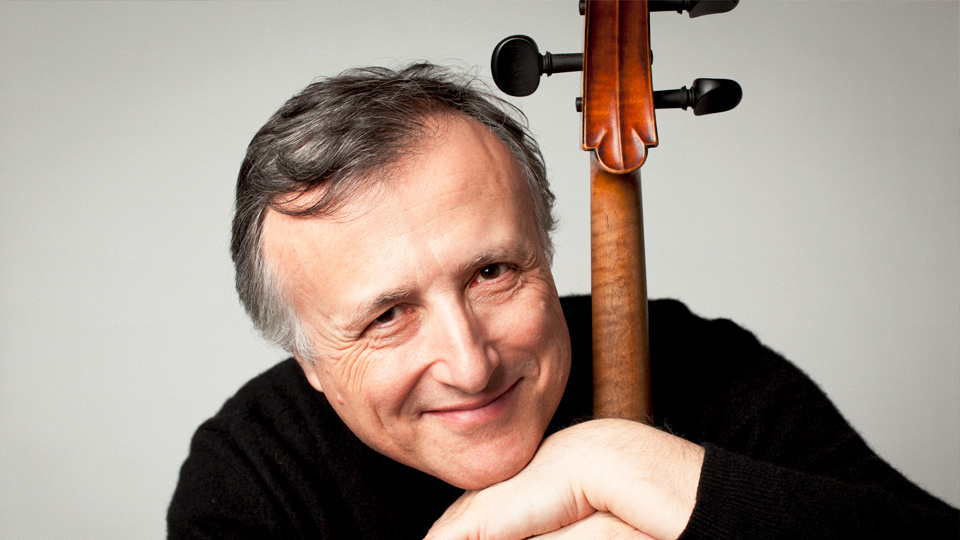
The emotional weight of this first half inevitably fell upon the Cello Concerto by E.J. Moeran. Completed in the aftermath of the Second World War, it was the composer’s first large-scale piece for his wife Peers Coetmore; her belated and often approximate recording likely having deterred others from taking it up. Not so Raphael Wallfisch (above), his belief evident from the outset of a Moderato whose confiding eloquence is not without undercurrents of unease. These latter are made explicit at the start of the Adagio, otherwise centred on one of the composer’s most affecting melodies and building with due inevitability to a cadenza whose growing animation carries over to the final Allegretto. Here a jig-like main theme denotes an Irish influence that offsets any tendency to introspection as it guides this engaging movement to a decisive close.

Quite a performance, then, which was complemented after the interval by a first hearing for the early(ish) Serenade by William Alwyn. Written while on examination duties in Australia, this undemanding piece moves from a (mostly!) tranquil Prelude, through a stealthy and by no means uninhibited Bacchanale then a serene Air which could yet find favour as a radio staple, to a Finale that, as Andrew Knowles rightly indicated in his programme note, betrays more than a hint of Czech folk-music across its insouciant and ultimately boisterous course.
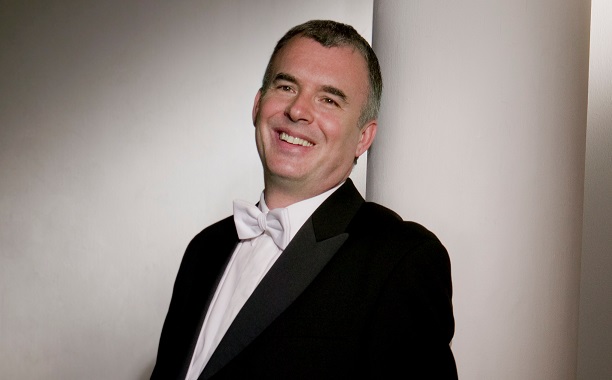
Hardly an interlude, the brace of pieces by Delius fairly encapsulate the inward rapture of his maturity. Yates (above) brought just the right lilt to the dancing gait of On Hearing the First Cuckoo in Spring, while the subtle eddying of Summer Night on the River was effortlessly conveyed.

The final premiere tonight came in the guise of A Road All Paved with Stars – the ‘symphonic fantasy’ as arranged by Adrian Williams (a notable composer in his own right) from Vaughan Williams’ comic opera The Poisoned Kiss. Occasionally revived, its dramatic prolixity rather obscures its musical highpoints – emphasized here in what is both a chronological overview and cumulative paraphrase that also adds a non-symphonic orchestral work to its composer’s output. The surging emotion of those final stages could hardly leave an audience unmoved. This vivid reading concluded a memorable concert in which the Moeran was dedicated to the memory of Michal Kaznowski – who, as cellist of the Maggini Quartet and formerly section-leader at the City of Birmingham Symphony Orchestra, has left a legacy worth remembering.

To read more about the festival, visit the English Music Festival website. For information on the performers, click on the links to read more about cellist Raphael Wallfisch, conductor Martin Yates and the BBC Concert Orchestra, and for more information on composer and arranger Adrian Williams and composer Paul Lewis

On Record – David Quigley – The Fair Hills of Éire: Irish Airs and Dances (Heritage Records)

david-quigley

David Quigley (piano)

Beach The Fair Hills of Éire Op.91 (1922)
Esposito Two Irish Melodies Op.39 (1883)
Field Go to the Devil and Shake Yourself (1798)
Hammond Miniatures and Modulations (2011) – No. 5, Old Truagh; No. 21, The Beardless Boy
Hennessy Variations sur un air Irlandais ancien Op.28 (1908)
Hough Londonderry Air (2014)
Martin Sionna – Spirit of the Shannon (2018)
Moeran Irish Love Song (1926); The White Mountain (1929)
Smith Paraphrase on ‘The Last Rose of Summer’ Op.173 (1883)
Stanford arr. Grainger Four Irish Dances Op.89 (1916) – no.1: Maguire’s Kick; no.4: A Reel

Heritage Records HTGCD152 [62’39”]
Producer / Engineer David Marshalsea

Recorded 9 & 11 April 2022 at Elgar Concert Hall, The Bramall, University of Birmingham

Reviewed by Richard Whitehouse

What’s the story?

The enterprising Heritage label continues its association with David Quigley in this recital   of Irish piano works as cover over two centuries, reminding listeners of the wealth of folk or traditional music from that island and its influence on successive generations of composers.

What’s the music like?

Published as Favorite (sic) Irish Dance Arranged as a Rondo for the Piano Forte, the first item is not unreasonably attributed to the teenage John Field and make for a breezy recital-opener – following which, pianist Stephen Hough demonstrated his prowess as an arranger with what is surely the most famous of all Irish melodies. Two pieces by the Italian émigré Michele Esposito – the trenchant Avenging and Bright, followed by the pensive Though the Last Glimpse of Erin – complement each other ideally, whereas the first from a set of dances by Charles Villers Stanford exudes bracing humour most likely accentuated in this idiomatic arrangement by no less than Percy Grainger. By some distance the longest piece here is from Swan Hennessy, an Irish/American later resident in France – his 12 variations on an (unidentified) theme in the lineage of various such works from the 19th century but diverting in its ingenuity. Best known as an inquiring pianist, Philip Martin the composer is represented by this evocative set of ‘rhapsodic variations’ written for the present artist.

Sidney Smith’s Paraphrase de concert on another Irish staple is the most virtuosic music and would make a dashing encore even today. Philip Hammond is the other contemporary composer featured – the present brace, part of a sequence of 21 drawn from the Edward Bunting collection and likewise written for Quigley, respectively searching and animated     in their emotional profile. From among her many mood-pieces, that by Amy Beach yields       a limpid poetry that more than deserves to provide the title for this collection overall. An English composer with direct Irish ancestry, Ernest Moeran’s predilection for all-things Celtic is made plain by the two pieces heard here, their recourse to traditional melodies enhanced by an idiomatic pianism which adds greatly to the winsomeness of their appeal. Back, finally, to those Stanford/Grainger dances with the fourth from this set a reminder that the former, whatever his formidable reputation as a pedagogue, was never averse to indulging his Irish roots in the writing of music as scintillating as it remains appealing.

Does it all work?

Admirably. Quigley is as committed to the music of his homeland as have been numerous of his predecessors, not only with performing these pieces in recital but also by finding ways of integrating them into a cohesive overall programme. Only one achieves (just) the 10-minute mark and another is almost eight minutes, making them ideal for combining into a judicious sequence – one which, at little more than an hour’s length, can be enjoyed at a single hearing. Quigley will hopefully have the chance to mine the ‘Irish piano-book’ further in due course.

Is it recommended?

Indeed. Quigley is a perceptive exponent of this repertoire, his Kawai Shigeru SK-EX heard to advantage in the spacious yet detailed acoustic of the Elgar Concert Hall. With succinctly informative notes from Andrew H. King, this recital warrants the warmest recommendation.

For further information on this release, and to purchase, visit the Heritage Records website, and for more on David Quigley click here