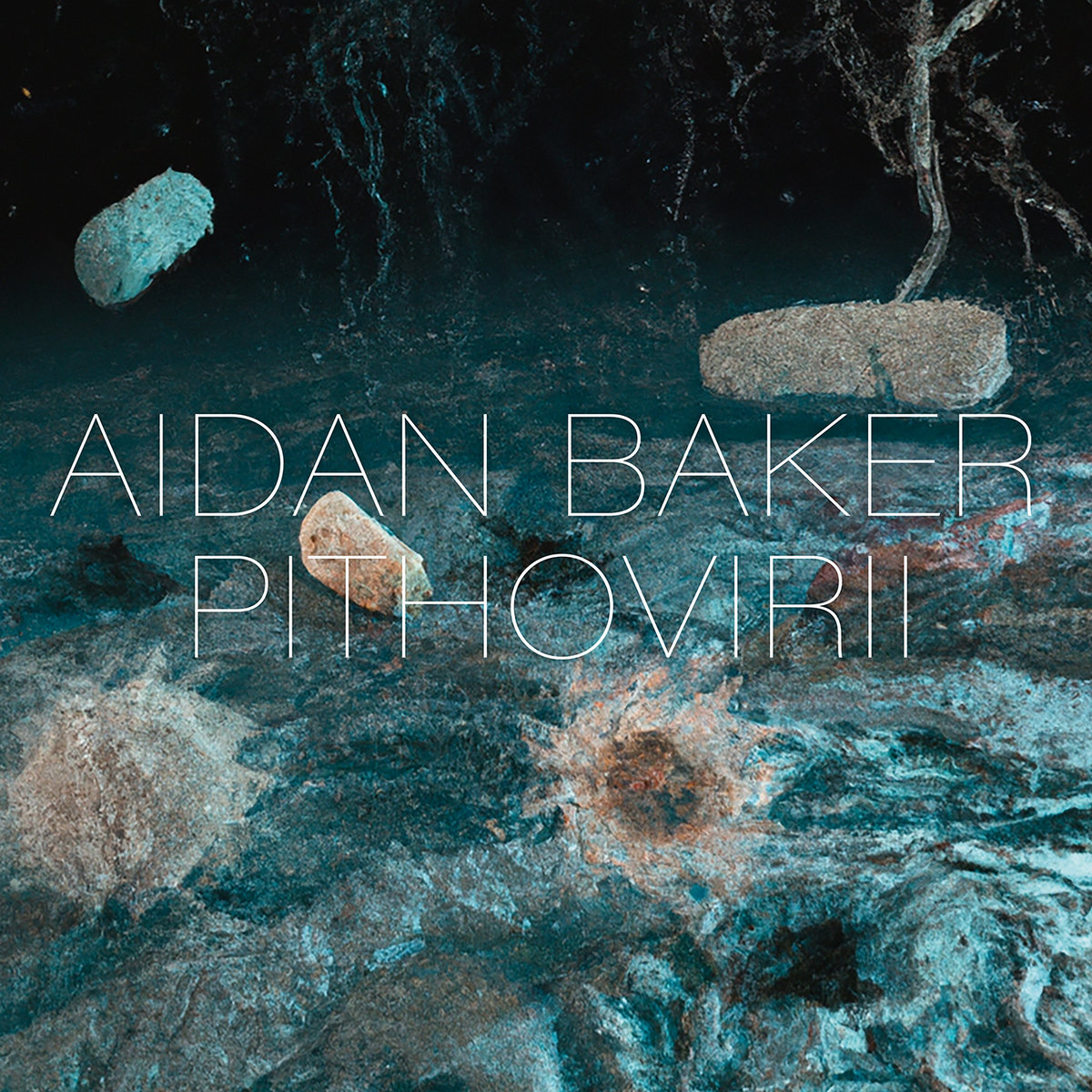
Switched On – Aidan Baker: Pithovirii (Glacial Movements)

by Ben Hogwood

What’s the story?

Aidan Baker’s principal currency in music is the electric guitar, but in reality he is a multi-instrumentalist, able to use the guitar along with electronic manipulation, and in a way that moves easily between musical forms.

Pithovirii, the Canadian composer’s first release on the Glacial Movements label, takes its inspiration from Vladimir Sorokin’s novel Ice Trilogy. This led Baker down a rabbit hole, reading about the destructive Tunguska meteor that fell on Siberia in 1908, flattening an estimated 80 million trees, and then more reading about truly ancient viruses found in glacier ice – known as ‘pithovirii’.

Using his electric guitar with effects pedals, Baker has attempted a musical depiction to convey the idea of glacial density, and “stasis within which lurk potentially malevolent microbiome”.

What’s the music like?

Baker certainly catches the almost complete stasis of a glacier in the two long-form tracks that make up Pithovirii. There is an ominous feel to Sibericum, a kind of omnipresent threat that hovers over the music. As it slowly evolves the dark colours of Baker’s vision come in to view, dense clouds of sound working in slow-moving waves that wash over the listener. This is certainly musical ambience, and is meditative to a degree, but it is also quite oppressive in the way it takes over the sonic spectrum, working as a very gradual crescendo.

Massiliensis is named after a mysterious form of bacteria that appears to still be under exploration. The light ‘hiss’ that Baker has around the edge of the sound is both ambient and disarming, as a long unison note makes itself known, slightly metallic in texture – and the hiss becomes a thick, woolly drone of sound. As the track unfolds the sonics combine to make the audio equivalent of hearing a massive church organ from the far end of the building, sustaining a long note whose overtones work in and out of consciousness – and gradually change and even modulate over time, taking over most of the aural spectrum. The thick outer coating to the music remains, fed through Baker’s electronic prism.

Does it all work?

It does, with a couple of caveats. The obvious criticism to level at Baker’s work would be that there is not a lot going on – but that is the whole point. To fully experience and appreciate these big blocks of sound the listener needs to be somewhere quiet, with all frequencies available.

Is it recommended?

Yes. Baker is a natural fit for Glacial Movements (in title alone!) but he has written two extremely evocative pieces here. Together they make a whole that somehow captures the state of the remote ice regions of our planet in this day and age.

Listen & Buy

Pithovirii is released tomorrow, Friday 8 March – at which point you will be able to hear it in full here:

Published post no.2,110 – Thursday 7 March 2024
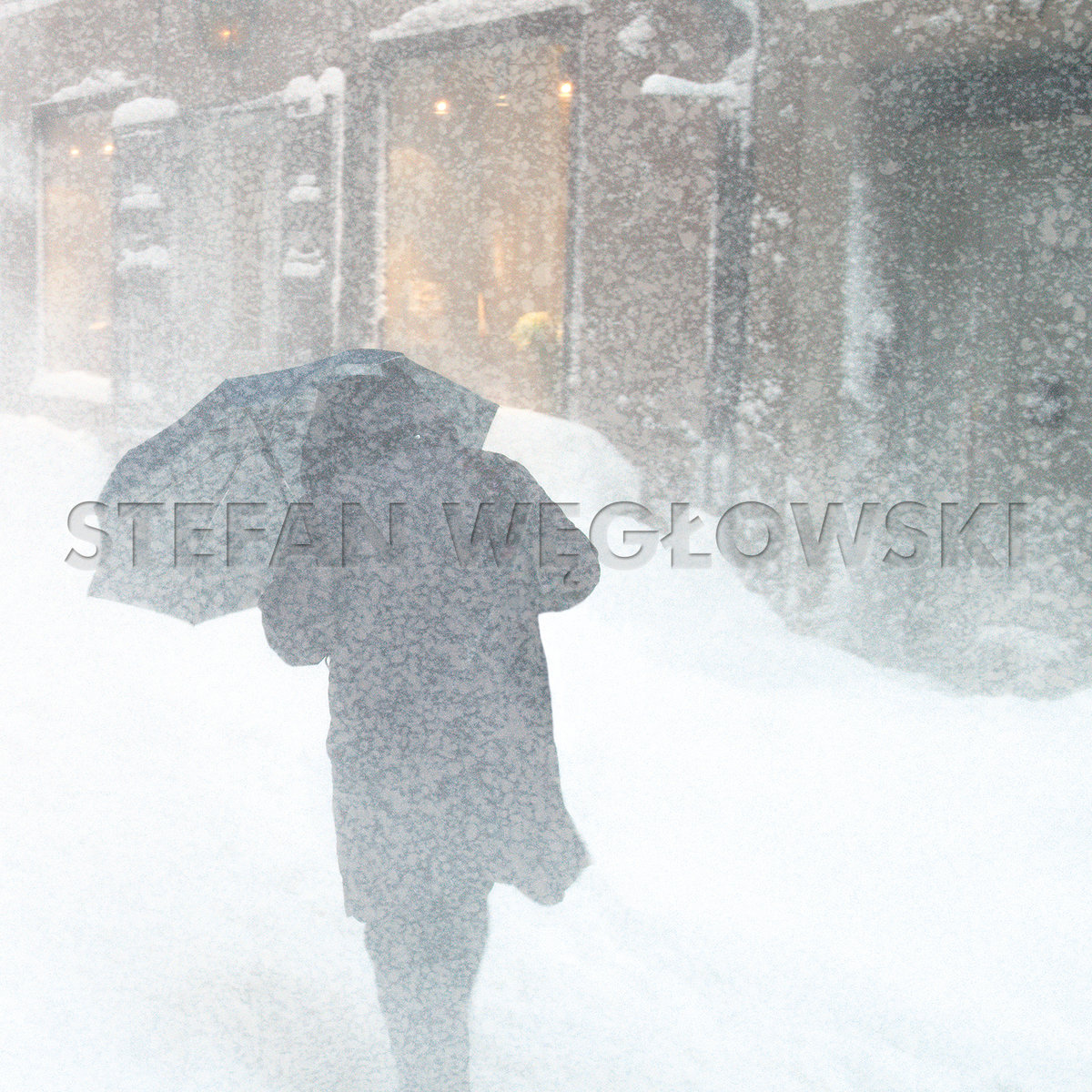
Switched On – Stefan Węgłowski: Smooth Inertia (Glacial Movements)

by Ben Hogwood

What’s the story?

With this new album from Polish composer Stefan Węgłowski, the Italian label Glacial Movements reach a half century of releases, in which time they have cemented a status as one of the go-to labels for deep musical ambience.

In Stefan’s own words, “Smooth inertia is an album that was created in solitude, after the end of a certain period in which I stagnated. I could call it a blank sheet that I had to fill in. For years I had been trying to create an ambient album that I would be happy with, which would transcend me somehow beyond my full understanding.”

To do this, he uses field recordings, manipulated spoken word (Anna Figurska) and an out of tune piano (Adam Kośmieja). Węgłowski also plays the guitar on two tracks, a return to the instrument after a nine-year break.

What’s the music like?

Haunting. Deep Light sets a dark, mysterious tone, effectively a scene setter before Ray Of Night stretches out before the listener. Here the out of tune piano provides an effective counter to the thick sonic clouds behind, while the field recordings – birdsong high in the mix – bring a softer, lighter complexion to the music.

Time Brings Relief is as long as these two pieces combined, with Figurska’s voice set against another musical cloud, this one with consonant harmony that gives it a bright edge. Yet it is Frozen Edge that leaves a lasting impression, its initial ambience compromised by the glint of metallic tones that come to the sonic foreground. These cast a powerful spell, the harmony alternating slowly between two roots in the background. Towards the end a piano chord tolls meaningfully.

As a bonus, Frozen Edge appears in a remix from Michał Wolski, who delves into its mystery and adds a chilling sonic wind blowing across the picture.

Does it all work?

Yes – and though the durations of the tracks suggest the album might be lopsided, it proves to be well structured.

Is it recommended?

It is. There are dark moments here for sure, suggesting strife and loss, but the deeper impression is that of an overriding calm.

Listen

Buy

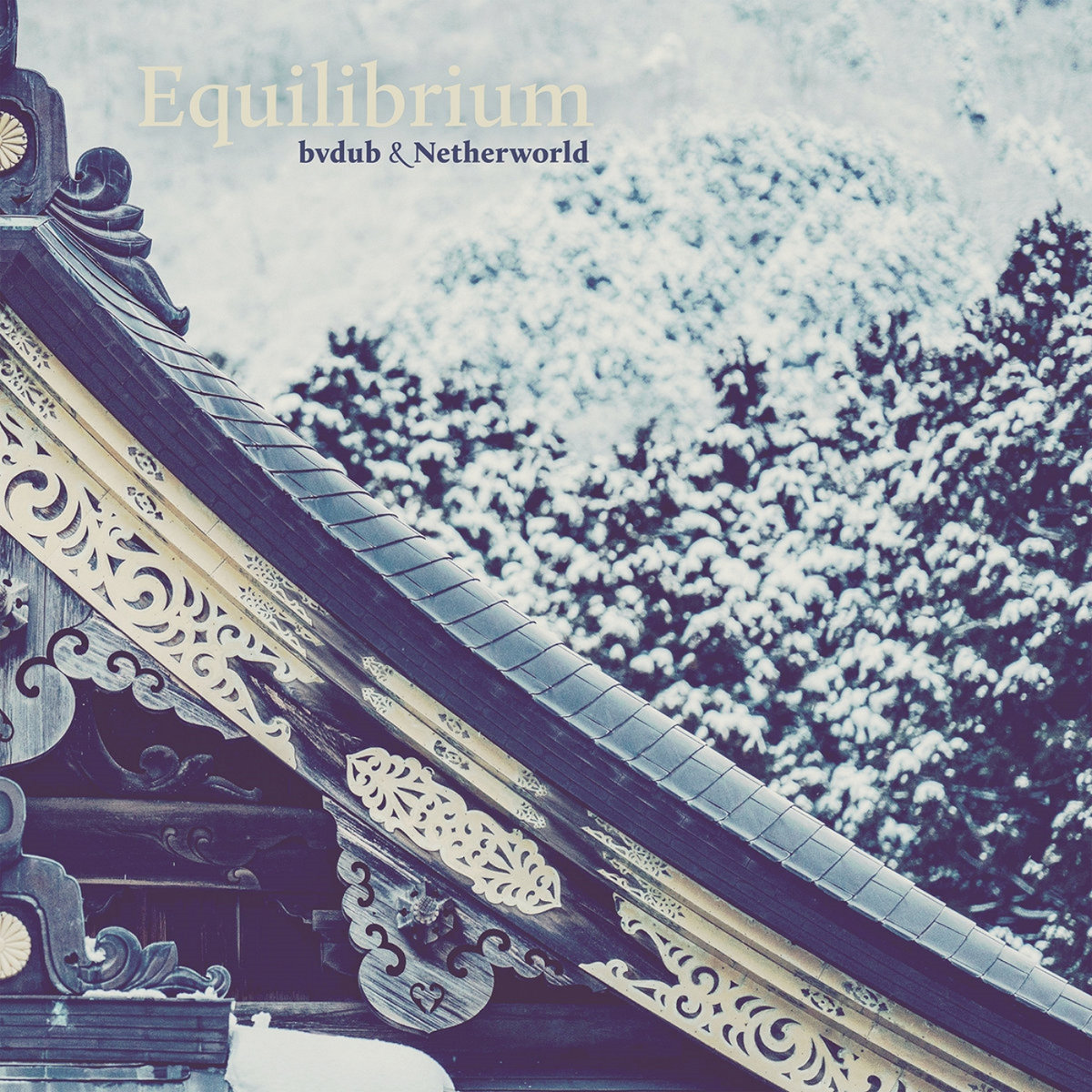
Switched On – bvdub & Netherworld: Equilibrium (Glacial Movements)

by Ben Hogwood

What’s the story?

This is the first official collaboration between bvdub (Brock Van Wey) and Netherworld, otherwise known as Glacial Movements founder Alessandro Tedeschi. It is described as ‘a testament to a friendship that has endured and grown for well over a decade’.

The ‘equilibrium’ of the title is used in the context of a glacier, describing the point at which it achieves a perfect balance between the mass of snow and ice that comprises its mass. This means it is never advancing nor retreating, with the gritty warmth (bvdub) above, and the glacial cold (Netherworld) below.

What’s the music like?

It is to be assumed that bvdub and Netherworld stuck to the description above, and that the former took on the more variable elements of the music while the latter stretched out the harmonic outlines beneath. However they did it, Equilibrium works beautifully as a quartet of intense yet deeply ambient compositions.

Each piece is of equivalent length, weighing in around the 20 minute mark, and the music within casts a lasting spell.

The evocatively titled No Trees For Miles establishes the cold climate through its icy textures, and secures a strong home melodic pitch to contain the broad canvas above. The melodic lines, such as they are, move very slowly, like birds circling on the wing, though when the wordless vocals appear there is greater activity, as though zooming in closer to the mass.

Darkness From The Sun works as a gradual crescendo, like a huge keyboard getting itself into gear, before long pauses enable the listener to take in the scene around, with a massive echo giving us an idea of the sheer scale of the glacier, working up to slab of white noise at the end. Seas of Stones and Sand adds an air of mystery, its wordless voices forming weird and ethereal mini-melodies. The slowly evolving scenery takes on a vast scope with a blast of treble from an organ-like instrument, which proves overwhelming for a while before dropping back to distant, calming echoes.

Finally Ice on Fire creates the most movement, underpinned by long notes as the treble arpeggios dance like flames. Again it paints an uncannily vivid picture, one that proves extremely striking on headphones or with surround sound. As with the other pieces, it gradually subsides to silence.

This combination of rapt stillness and subtle movement is ideal for mindful meditation, but along with that the two artists paint a very vivid sound picture of the environment. The scratchy, grainy exterior maps to the hard edges of the glacier, while the stretched-out harmonies places it in stasis rather than outright movement.

Does it all work?

It does. Equilibrium is a highly descriptive quartet of works, intense yet deeply restful at the same time.

Is it recommended?

It is. Both artists have clearly spent a lot of time in getting Equilibrium just right – which in itself makes sense. What they have made is an exquisite, lasting musical stillness to ease the mind.

Listen

Buy

Switched On: NETHERWORLD – Vanishing Lands (Glacial Movements)

by Ben Hogwood

What’s the story?

There is a powerful message behind Vanishing Lands. The most recent album from Glacial Movements‘ head Alessandro Tedeschi under the guise of NETHERWORLD, it is – in his words – ‘a cry of desperation…the realization that we are one step away from the abyss’.

Whereas many Glacial Movements albums celebrate the vast spaces of our environment, particularly the cold ones, this one does so in a troubling context. During lockdown, Tedeschi committed his thoughts to record on the gradual disappearance of the vast white expanses over which you can see the Northern Lights – ‘ice-covered volcanoes and silent expanses of snow and ice stretching as far as the eye can see;.

What’s the music like?

What’s the music like?

Rather appropriately, Vanishing Lands starts out with what sounds like the tolling of a very distant bell. There is the strong implication of a soft breeze, with shrill treble sounds blowing across the stereo picture of Last Sunset, the album’s first track. Towards the end, pure treble voices calmly coo across the picture, a snapshot taken in the middle of a much longer phrase. This first track runs for a quarter of an hour, serene but darkly coloured and ominous, too.

Thwaites is deeply mysterious, presenting a very intriguing perspective on headphones. The movement is in the middle foreground, like flecks of cloud or interference, while a sonorous mid-range hum at the very back throws the perspective wide open. Then Slow Moving Streams is an intriguing call and answer, whereby a slightly guttural, low synthesizer tone is responded to by a higher, vibrato-rich vocal.

The album’s progression is compelling. The Beauty Of Places Where There Is Nothing To See has an appealing remoteness but there is also a note of sorrow in the far-off cries of electronic birds and mammals. Comet has piercing timbres that streak across the cold surface beneath, before Vanishing Lands enhances the anguish. Initially cool and ambient, it has elements of protest in the voices that rise up, as well as primal pain.

Does it all work?

Yes. Be warned though, as while this is still essentially an ambient album it is a painful one too, an acknowledgement that those big spaces so often celebrated by Glacial Movements are under serious threat. As NETHERWORLD shows us the plight of those spaces, it operates under a very wide dynamic range, with some moments where the music is so quiet that you will have to lean into it.

Is it recommended?

Yes. Vanishing Lands is a brave set of searing observations packed into an album. One of Alessandro Tedeschi’s most intense pieces of work, it is a powerful and wholly meaningful addition to his canon. Make sure you hear it.

Listen & Buy

In Gratitude – David Fraser, Stewart Brown & John Bourke

by Ben Hogwood

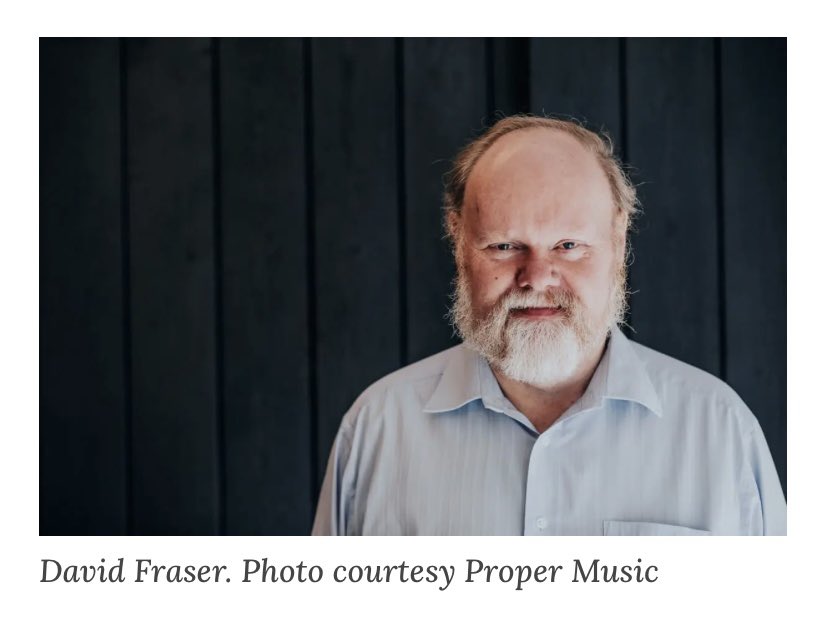
I wanted to place on record my appreciation for three very different but fiercely passionate musical contacts we have very sadly lost in recent weeks.

My heartfelt condolences go to the family and friends of David Fraser, who until recently worked for the excellent distributor Proper Music. David headed the press and marketing facility in the UK for the prestigious ECM label, a position from which he was able to make many enlightening musical recommendations. I remember him as a generous, kind-hearted contact who was always pleased to talk and continually modest about his vast musical knowledge. Thank you, David – I shall miss our chats, and include one of our mutual loves, the music of György Kurtág – one of his Bach arrangements – below:

The world of classical music has also been paying tribute to Stewart Brown, who died earlier this month at the age of 69. Stewart founded and ran the Testament label from 1990 onwards, creating an important resource of historical recordings that were largely remastered on his watch. Many an EMI recording was enhanced at Stewart’s hand, and we will greatly miss the excellence of the projects he oversaw.

I only know a fringe of the Testament catalogue well, but the recordings I have reviewed and enjoyed include Erich Leinsdorf conducting Prokofiev, Carlo Maria Giulini’s Bruckner, Sir John Barbirolli’s Mahler, a chamber recital from David Oistrakh, Mstislav Rostropovich and Benjamin Britten in recital at the Aldeburgh Festival, one of the label’s most recent releases, and a wonderful series of Clemens Krauss conducting Richard Strauss. All those recordings are testament (pun intended) to Stewart’s eye for a valuable recording, and us record collectors owe him heartfelt thanks for his achievements. Most importantly – as his close friends have confirmed – he was a lovely man.

The third of my musical musketeers is John Bourke. I never met John, but while he was running his own music PR enterprise we built up that most modern of musical friendships, a regular e-mail and social media correspondence. Whenever he had something he genuinely thought I would enjoy, John would be on the virtual blower.

That is the key element – John was never too pushy with the music he was promoting, unless he felt the listener / reviewer would appreciate it, and our friendship grew on that assumption. Several of Arcana’s interviews and playlist features are the result of John’s thoughtful prompting, while a great many more of my musical discoveries, especially the Glacial Movements label – were made possible through John’s correspondence. Thank you John – and I hope that wherever you are resting now that you have the most ambient of electronic music to keep you company.