Switched On – James Holden: Imagine This Is A High Dimensional Space Of All Possibilities (Border Community)

by Ben Hogwood

What’s the story?

Four albums down, James Holden is showing another side to his artistry. Holden has always been closely associated with electronic music, but this instalment finds him looking to recreate what rave music was about in the early 1990s.

To do that he has in tandem a fleet of classic analogue synthesizers, and has personalized his approach with recordings of the young Holden on violin and piano.

What’s the music like?

The wordy title is a homage both to rave classics of the time but also brings to mind early Pink Floyd or 1970s Krautrock excursions. All are present in Holden’s music, though he keeps well away from derivative writing, instead bringing through riffs that are fresh, vital and energetic.

It is a big but wholly enjoyable album, one that goes back to first principles in making music for enjoyment, pure and simple. You Are In A Clearing is evidence of that, referring to some of the work Steve Hillage has done with System 7. Like Hillage, Holden gets his synths to talk, sometimes with dolphin-like keening noises, other times with soaring arpeggios.

The young Holden gets his look-in on Contains Multitudes, a longer expression of musical warmth where the violin and piano recordings complement the synths. Worlds Collide Mountains Form also uses the violin, though here it acts of a drone with a dubby bass for company. Common Land occupies similar ground, returning to the early Ibiza triumphs of 808 State for inspiration.

Does it all work?

It does. It may be a long album, but the high dimensional space does indeed realise all possibilities.

Is it recommended?

Enthusiastically. This is a joyous homage not just to early 1990s rave but also the more fantastical end of 1970s Krautrock – and yet James Holden makes the album even more than a sum of those parts. A wonderful and essential album that somehow works.

Listen

Buy

Switched On – Szun Waves: Earth Patterns (The Leaf Label)

Reviewed by Ben Hogwood

What’s the story?

Earth Patterns is the third album from the creative spirits of Szun Waves – saxophonist Jack Wyllie, keyboard maestro Luke Abbott and percussionist Laurence Pike.

The sessions took place in late 2019, where a succession of ideas germinated through improvisation – and after honing the tracks with James Holden and producer David Pye they have emerged with what is described as ‘the most fully-formed Szun Waves record to date’.

New Hymn To Freedom, their second album, looked up towards the stars – but Earth Patterns is very much of this planet, an organic affair where the music grows from small cells.

What’s the music like?

There is undoubtedly a special chemistry at work in Szun Waves. Each of the protagonists has their own special contribution to make, and there are so many notes produced in Earth Patterns, but somehow the trio and their studio team make room for all of them, crafting an album where each track goes on its own meaningful journey.

The album gets off to quite a chaotic but thrilling start, Exploding Upwards establishing the myriad of colours on offer from the trio, with surges of analogue synthesizers and saxophone alike. New Universe evolves at a gradual pace but ends up in an even more exalted and euphoric state, the saxophone flying high.

As the album progresses so the range of colours broadens, and In The Moon House features shimmering metallic instruments above a drone, with deeply soulful thoughts from the saxophone. Be A Pattern For The World builds its intensity through long notes, the saxophone starting to strain in its upper register.

Final track Atomkerne is poised, the saxophone like a massive, overarching presence, as figures flit back and forwards in the middle ground with a low drone buzzing away underneath. What unites all of these ideas is the sheer strength of feeling behind them. Jack Wyllie plays his saxophone like his life depends on it, with a dizzying range of pitches from soft, low thoughts to soaring high phrases. Luke Abbott marshals the electronics beautifully, ensuring we hear the colours of the analogue synths but that they bubble respectfully when other instruments play, surging to the front when their moment is called. Laurence Pike gives us the icing on the cake with intricate, detailed percussion that can focus on metallic treble-based material one minute, then fulsome lower range instruments the next.

Does it all work?

It does – and hangs together emotionally too, for Earth Patterns is certainly Szun Waves’ most deeply felt album to date.

Is it recommended?

Yes, without hesitation. Anyone following the musical progression of any of these three artists will want to snap this one up without delay – and anyone enjoying the intersection of jazz and electronica should also do the same. A Mercury nomination would not seem to be out of the question for next year, even at this stage!.

Listen

Buy

Switched On – Luke Abbott: Translate (Border Community)

reviewed by Ben Hogwood

What’s the story?

This may be Luke Abbott’s first album in six years, but as regular followers of the Norfolk-based musician will know, he has been extremely busy in that time, forming the widely acclaimed Szun Waves with Jack Wyllie and Laurence Pike.

For this album Abbott changed his recording habits, decamping to friend and Border Community head James Holden’s London studio for the sessions. He sat in the centre of the studio with eight speakers around, but had an additional receiver in the corridor to catch passing sounds on the industrial estate where the studio is located.

What’s the music like?

Richly rewarding. As listeners to previous long players Holkham Drones and Wysing Forest will know, Abbott has a deep knowledge of synthesizers and orchestrating their sounds, and that skill runs throughout Translate to extremely good effect. Kagen Sound – a track celebrating the puzzle box – is a really strong start, a majestic track with some wonderful analogue tones.

Earthship feels like the workings of a great big machine lumbering into action, while the way the melodic lines intertwine on Our Scene is really clever. The mellow Roses may be brief but it shows how Abbott can harness the different tones of his instruments, coming as it does after the ripple effects of Ames Window, a really substantial piece of work.

To his immense credit Abbott puts a great deal into his rhythm section, very rarely using a basic four to the floor pattern and often using, in tracks like Living Dust, intriguing syncopations that lean the main beats anywhere he chooses. Finally Luna and August Prism close out the album in kaleidoscopic colour.

Does it all work?

Yes. Abbott is meticulous with his planning and quality control, and the production with James Holden has led to a nice air of spontaneity in his work. The sounds are to die for as well.

Is it recommended?

Yes. A study in instrumental colour and rhythmic intrigue, Translate is an album that handsomely repays repeated listening.

Stream

Buy

What’s coming up on Arcana in 2016?

satie

Caricature du Maître d’Arcueil, Erik Satie

A question. What do Janet Jackson, Steve Hackett, Gary Numan and Cesar dog food have in common?

I’ll let you ponder the answer while setting out what Arcana has planned for some of 2016! We’ve already wished you a happy new year but having survived the first week back this is a great chance to let you know what we have planned for the year ahead.

We plan to make much more of the links between classical and pop music this year – so you can expect further episodes of The Borrowers (which already includes Manfred Mann, Plan B, Village People and Greg Lake), interviews with artists who like to work in both areas of music, and reviews of albums that appeal to both sides.

These will include the forthcoming James Holden and Luke Abbott album, a homage to Terry Riley – and we might even delve into the daunting prospect of Rick Wakeman and Alice Cooper celebrating the 40th anniversary of Pink Floyd’s Wish You Were Here, with large orchestra in tow! There is so much variety and depth in this area to explore. We also hope to hear from the artists themselves, whether electronic, prog, jazz or ‘other’.

shining

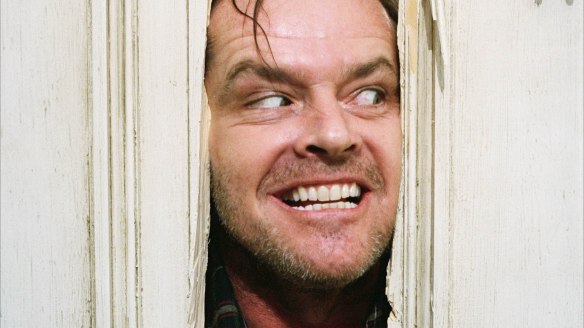
Arcana will also be training the spotlight on two composers who have been a big influence on pop music, albeit in very different ways. 2016 is the 150th anniversary of the birth of Erik Satie, and we will explore his influence on pop music from several directions. A good contrast to Satie’s music can be found in the work of Hungarian composer Béla Bartók – famously used by Stanley Kubrick in part of The Shining (above). Arcana aims to show the breadth of his writing, as well as illustrating how rock music can be said to trace back through his work. Kicking off, Richard Whitehouse will be covering James Ehnes and Andrew Armstrong playing Bartók in a concert from the Wigmore Hall tonight.

All that and the usual concert and new recording reviews…showing there is an awful lot to enjoy musically this year. Please do stick around for the ride! And the answer to the question? They’ve all used the music of Erik Satie! We’ll tell you how in due course…but for now we will leave you with his most popular piece: