
Listening to Beethoven #10 – Piano Concerto in E flat major


Beethoven, aged 13. This portrait in oils is said to be the earliest authenticated likeness of Beethoven – but Beethoven-Haus Bonn disputes this description, claiming it to be an unknown youth painted in the early 19th century.

Piano Concerto in E flat major WoO 4(1783-4, Beethoven aged 13)

Dedication not known
Duration 24′

Listen

Background and Critical Reception

Daniel Heartz tells the story of Beethoven’s first foray into the world of the concerto. Barely a teenager, ‘it was appropriate to the young composer’s status as a virtuoso of the keyboard that he should try his hand at writing a piano concerto.’

The work was incomplete however, with the orchestral part left unfinished beyond its two-piano reduction. The trip to Holland mentioned in the previous article on the Rondo in C major looks to have been the driving force behind this composition, for Heartz says that ‘Beethoven may have performed it in a concert at The Hague for which he was paid a large sum as a pianist, and at which Carl Stamitz also appeared as a viola soloist.’

As Jan Swafford notes, the work begins with a ‘flavour of hunting call-cum-march’, an ‘abiding topic in his future concerto first movements’. He calls it a ‘lively and eclectic piece that showed off his virtuosity’, while in his booklet notes to the DG complete Beethoven edition Barry Cooper notes its proximity in style to J.C. Bach rather than Mozart.

Thoughts

In Ronald Brautigam’s recording – where he made the orchestral arrangement – the horns are prominent in the opening salvo, which is reasonable to expect given the key of E flat major which will suit them. Then the piano takes over with an upbeat theme and some florid passagework. The music is fluently written, and follows the rules relatively closely in moving to the keys expected in the course of its development – B flat major, G minor, closely ‘related’ to the home key. The music is both charming and virtuosic.

For the slow movement Beethoven revisits a Larghetto direction (slow but not as slow as the ‘adagio’ tempo marking’) and writes music of an appealing delicacy and charm – undemanding but giving the soloist room to spread their wings a little.

For the finale Beethoven uses a Rondo form (presenting three themes in the sequence A – B – A – C – A – B – A) – a form he used for the last movement of each of his five published piano concertos. Despite the rigorous structure it again sounds very natural and the ‘A’ theme – which you hear from the start – is lightly playful, suggesting a less formal dance. The grace and charm of the third movement has a nice complement in the shape of a rustic ‘C’ theme where we briefly flirt with the minor key and the melody becomes more decorative. Only the ending is a bit strange, with a sudden cut-off point.

Recordings used

Ronald Brautigam (piano), Norrköpping Symphony Orchestra / Andrew Parrott (BIS)
Orchestra of Opera North / Howard Shelley (piano) (Chandos)

Ronald Brautigam gives a fine performance of the concerto, with attentive accompaniment from Andrew Parrott and the Norrköpping Symphony Orchestra. Howard Shelley’s version has a softer orchestration for the first theme of the piece which works really nicely. His playing follows suit, proving particularly effective in the second movement where his affection for Beethoven’s early work is clear.

Spotify links

Ronald Brautigam, Norrköping Symphony Orchestra / Andrew Parrott (tracks 1-3 of the link below)

Orchestra of Opera North / Howard Shelley (piano) (the fourth disc of an album containing all the Beethoven works for piano and orchestra)

You can chart the Arcana Beethoven playlist as it grows, with one recommended version of each piece we listen to. Catch up here!

Also written in 1783 Abel 6 Symphonies Op.17

Next up Piano Concerto in E flat major WoO 4
Listening to Beethoven #7 – Piano Sonata in D major (‘Electoral’ no.3)


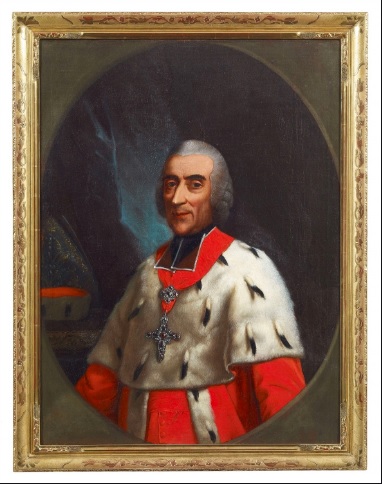
Portrait of Maximilian Friedrich von Königsegg-Rothenfels, Archbishop-Elector of Cologne. Portrait by Georg Oswald May

Piano Sonata in D major WoO 47/3 ‘Electoral’ for piano (1783, Beethoven aged 12)

Dedication Maximilian Friedrich, Elector of Cologne
Duration 14’00

Listen

Background and Critical Reception

The third of the Electoral sonatas is, for Jan Swafford, the strongest of the set. For him, it ‘suggests Haydn at his most vivacious. Its jolly outer movements frame the most striking formal idea of the sonatas, a minuet followed by six variations…’ and it finds Beethoven in D major, ‘bright and ebullient’.

Pondering the forms further, he says, ‘It is hard to tell whether his departures from standard forms are imaginative or naive. Only in the D major does he begin to grapple with the sophisticated discipline of sustaining an idea’.

At this point it is worth restating that this is music written by a 12-year old, one of his first public statements – and certainly one of the first opportunities for teacher Christian Kneefe to show off the work of his pupil.

Thoughts

As Swafford says, the brightness of this music is striking, right from the airy, genial first theme. This is music you would listen to in order to feel right with the world, to take the weight off a difficult day. With rippling textures in the left hand, Beethoven writes a fluid first movement.

The Menuett and variations is the star though, an attractive triple-time dance supported by the left hand which is clearly the ‘feet’ of the operation. The variations include a glittering right hand (4) then some gentle syncopation (5) before an attractive couplet in thirds (6).

The third movement is similarly bright, more closely related to the fourth variation of the Menuett in its rapid movement for the right hand – which helps keep the music on its natural high level. Beethoven will give us more of these natural highs in D major – this is simply the first!

Recordings used

Jörg Demus, as used on the DG complete edition, is given a very roomy backdrop in Vienna to work with. As a result his recording, made in 1969, does show its age in spite of some lovely playing. In part because of that the preference is for Jenő Jandó on Naxos, who also gives the music a nice amount of room. Beethoven’s work is closely aligned to Haydn in his hands. Ronald Brautigam, meanwhile, adds all repeats in an account that lasts 17 minutes, bringing forward Beethoven’s potential for the longer form. His virtuosity and musicality really bring these pieces to life.

Spotify links

The playlist below is for all three Electoral Sonatas, and includes the recordings discussed above:

You can chart the Arcana Beethoven playlist as it grows, with one recommended version of each piece we listen to. Catch up here!

Also written in 1783 Michael Haydn Symphony in E-flat major .

Next up An einen Säugling

Listening to Beethoven #5 – Piano Sonata in E flat major (‘Electoral’ no.1)


Portrait of Maximilian Friedrich von Königsegg-Rothenfels, Archbishop-Elector of Cologne, by Johann Heinrich Fischer

Piano Sonata in E flat major WoO 47/1 ‘Electoral’ for piano (1783, Beethoven aged 12)

Dedication Maximilian Friedrich, Elector of Cologne
Duration 11’10

Background and Critical Reception

With the world of keyboard composition starting to turn to the piano from the harpsichord, the 12-year-old Beethoven was already plotting his own innovations. Christian Kneefe, his teacher, was encouraging him to compose and was conceding the piano was the best method of his expression. So it was that on 14 October 1783 a set of three piano sonatas were published, dedicated to Maximilian Friedrich, Elector of Cologne – whose residence was in Bonn.

Each of the sonatas is in three movements, and unlike the previous year’s Dressler variations there are plenty of markings to indicate how they should be performed. Jan Swafford notes how the young composer went a little too far in this regard, over-directing his performer in some instances – but that his treatment of the rules of sonata form, used for the vast majority of these multi-movement works, was impeccable.

Thus the melodic themes and their development unfolded as they ‘should’ – but that didn’t stop Beethoven from experimenting a little. Pianist Cyprien Katsaris asserted in an interview with Arcana that ‘there are not 32 sonatas but 35 as you have to include the first three ones that Beethoven wrote’. That gives an indication of how he views the quality of the three pieces.

For musicologist Charles Rosen ‘the sonatas…start clearly from Haydn’s work of the late 1760: we tend to forget that Beethoven’s early musical education antedated any knowledge (in Bonn at least) of the works of Haydn and Mozart in the fully developed classical style – the works by which they are best known. Bonn was less advanced than Vienna.

The first of the three sonatas is in E flat major, a key Beethoven used a great deal – and a key Haydn used in a number of his piano sonatas. Swafford describes the opening movement as ‘stately, aristocratic, fashionably gallant and a little pompous: its tone may have been a tribute to the Elector.’

Thoughts

As Swafford says, this is quite a step forward for Beethoven. A bright, march-like theme brings in the sonata’s first movement. It is quite polite but there is the airy quality of an earlier Haydn sonata. Exchanges between the parts are lively, though there is a feeling that Beethoven is doing things by the book, trying his hand at an existing form. A brief excursion to C minor brings grittier music around the three-minute mark, before the first theme returns in regular fashion.

The second movement is marked Andante (at a walking pace) – and the left hand really is out for a stroll. This movement in B flat major has simple but effective outlines. As it moves on the music becomes more expressive, the right hand rising much further up the register, before the initial music returns.

Similarly the third movement, a Rondo, has very simple outlines – Beethoven was 12 after all! – but the surety of direction is there again. Once again he develops his ideas with an animated section into C minor, but this comes to quite an abrupt halt so that the main theme can return

Recordings used

Recordings of the Electoral Sonatas are few and far between. Emil Gilels is the starriest name at this stage, and he plays the first sonata thoughtfully – though may be a touch slow for some tastes in his choice of tempi. Jenő Jandó is articulate, with nicely shaped melodies and clarity. Cyprien Katsaris’ recording is the most recent, and is quite roomy. He lends a certain grandeur to the piece which it benefits from.

Spotify links

The playlist below includes the recordings discussed above – Emil Gilels, Jenő Jandó and Cyprien Katsaris:

You can chart the Arcana Beethoven playlist as it grows, with one recommended version of each piece we listen to. Catch up here!

Also written in 1783 Mozart Symphony no.36 in C major K425 ‘Linz’ .

Next up Piano Sonata in F minor, ‘Electoral’

Listening to Beethoven #1 – 9 Variations on a March by Dressler


Ernst Dressler (left) and the young Ludwig van Beethoven

9 Variations on a March by Dressler WoO 63 for piano (1782, Beethoven aged 12)

Dedication not known
Duration 7′ (13’30 with repeats included)

Listen

What’s the theme like?

Dressler’s theme is serious in tone, and foursquare. The march is a slow one but it gives plenty of room for the young composer to work with his source material.

Background and Critical Reception

Beethoven’s first published work was released into the public domain when the composer was barely 12 years old. Its release was accompanied with a glowing reference from his teacher at the time, Christian Neefe. Jan Swafford takes up the story in his recent Beethoven biographer. ‘He plays the clavier very skillfully and with power, reads at sight very well, and…plays chiefly The Well Tempered Clavier of Sebastian Bach…He (Beethoven) has had nine variations for the pianoforte engraved in Mannheim. This youthful genius…would surely become a second Wolfgang Amadeus Mozart were he to continue as he has begun.’

The variation form was a good way of exercising students; seeing how inventive they could be when given a theme as a starting point. Talking with Arcana about the Dressler variations, pianist Cyprien Katsaris notes how “this piece is variations by a kid, and it could be considered in the beginning a little bit boring. His teacher probably told him to keep the same tempo, but I think there is a probability that if Beethoven played that piece as an adult he would play it in a different way to when he was under the guidance of that teacher. What a pity we didn’t have recordings earlier!”

Barry Cooper‘s booklet note for DG’s New Complete Edition of Beethoven notes how variations of the time were usually in a major key, and the adoption of C minor ‘feels like something of a statement’. It is a key we will traverse many more times as Beethoven’s portfolio unfolds. Swafford interprets the choice of C minor and its serious material ‘might form a memorial for the boy’s recently passed, still-lamented teacher and friend Franz Georg Rovantini‘, and that the final variation is a ‘triumph over sorrow’.

Thoughts

The young Beethoven takes the relatively basic Dressler theme and works nine variations from it, beginning in serious mood but gradually loosening his approach to explore different techniques.

For eight of the nine variations we keep the darker colour of the minor key, staying true to the mood of the theme but gradually adding more to it, with a few grace notes (variation 1), relatively polite sequential figures (2), then extra arpeggios in the middle parts (3), and chromatic inflections in the right hand (4). The fifth variation is more playful.

The sense of a composer running with greater freedom is clear, as the fifth variation is really let off the leash, the right hand roaming as it wishes. Variation six exchanges trills and more playful melodies between the two hands, while the seventh is in lilting triple time. The eighth feels like music we have heard already, with flowing arpeggios. Until now all variations have remained in the minor key, but this heightens the moment Beethoven switches to the major for the last variation, a terrific flurry of notes for the right hand which show off his technical prowess. Not many 12-year-olds could play music like this!

Recordings used

Cécile Ousset (Eloquence), Mikhail Pletnev (DG); Cyprien Katsaris (Piano 21)

Cécile Ousset includes all of Beethoven’s repeat markings, so each half of each variation is repeated, the piece extended to 13 minutes. Hers is a gracious account, brilliantly executed at the end.
Pletnev is very straight-faced initially, and plays around with the tempo a good deal, but goes for broke at the end to make the final variation sound like a piece of C.P.E. Bach.
Katsaris, including revised material by Beethoven, is in a room with a good deal of reverberation, heightening the serious theme and quite deliberate initially – but with terrific excitement generated in the fifth and final variations.

Spotify links

Mikhail Pletnev

Cécile Ousset

Cyprien Katsaris


Also written in 1782 Haydn Symphony no.73 in D major ‘La Chasse’

Next up Schilderung eines Mädchens

You can read Cyprien Katsaris’ full interview about Beethoven with Arcana soon.

Routes to Beethoven – Clementi

by Ben Hogwood

“Clementi plays well, with regard to right-hand technique. His speciality is passages in thirds. Otherwise he hasn’t a trace of feeling, or taste, in a word, he is a mere mechanic.”

This withering assessment of the virtuoso 18th century pianist Muzio Clementi came from none other than Mozart, who had engaged in a keyboard competition with the Roman composer at the request of Haydn on Christmas Eve in 1781. Mozart was writing to his father Leopold, as Daniel Heartz reports the duo in his superb book Mozart, Haydn and early Beethoven. Perhaps not surprisingly Haydn, who organised the duel, was more independent in his views, describing a set of Clementi’s Piano Sonatas as ‘very beautiful’ a year or so later.

Clementi was a nimble-fingered virtuoso. Born in Italy but settling in London, he is not mentioned a great deal in books of the time. Heartz reports a number of lukewarm reactions to his symphonies in England, though again this is not surprising given he was being compared with the visiting Haydn.

It was then in the field of piano music where Clementi really made his mark, and not just as a musician but as a publisher too. Beethoven recognised his influence in both disciplines, recommending his music for the use of piano students. Jan Swafford writes of how Beethoven and Clementi finally cemented a friendship in 1807. “As a pioneering composer for the piano, he had been a formative influence on the young Beethoven, because Clementi was among the best available models for how to write idiomatically for the instrument. Now retired from performing, Clementi lived in England and prowled the continent looking for music to publish and customers for his pianos.” He made several visits to Vienna. After an initial misunderstanding in Vienna in 1804, the pair struck a publishing deal and a friendship on a subsequent visit three years later.

Charles Rosen, writing in The Classical Style, recognises his influence. “In his (Beethoven’s) youthful works, the imitation of his two great precursors is largely exterior: in technique and even in spirit, he is at the beginning of his career often closer to Hummel, Weber, and to the later works of Clementi than to Haydn and Mozart.”

Harold Truscott, writing in The Beethoven Companion about Beethoven’s piano music, goes further. “I think it is true that Beethoven absorbed so much of this music of Clementi and Dussek that many times themes crop up in his work which go right back to themes in their work and that it seems probable he was unconscious of any origin; they had become part of him. We should be careful to distinguish between such unconscious connections and real influence, although the mere fact that these themes penetrated so deeply into his musical make-up seems to show that they had a great impact upon him.”

He observes many characteristics in the make-up of Beethoven’s themes and their treatment that have their common points with equivalent Clementi works. Looking at the Op.2 sonatas in particular, Truscott says, “Throughout his career the essentials of Beethoven’s piano writing changed little from what is displayed in these three sonatas. It was the writing of a virtuoso, using the basic techniques of Clementi and Dussek, but gradually developing their potential in his own way to meet new expressive demands as they arose.”

We will encounter the Op.2 sonatas early on in the Beethoven listening project…but for now we can enjoy Clementi’s own writing, when at its best is full of dramatic contrast, taking minimal melodic material and growing it substantially. The Sonata in G minor is perhaps the best example of his craft, and showing these qualities with the reminder that its date of composition, 1795, is before all of Beethoven’s early published work. It is included in the Spotify playlist below.

About the F minor work, also included in the playlist, Anselm Gerhard writes in his booklet notes how “the whirl of the final movement proclaims the definitive end of music’s historical dependence on traditional dance forms: here purely instrumental music reveals its determination to stand on its own two feet. It was not long before this idea was put into practice by Beethoven”, he continues, “albeit using completely different, characteristically revolutionary means: by consistently dramatising his music, he set out to transfer the prestige of the age’s most celebrated literary genre to instrumental music, and in the highly charged atmosphere of works like the Op.26 and Tempest sonatas, the medium’s new artistic ambitions were plain for all to hear.”

There is humour in Clementi’s thought process too, nowhere more so than in the brilliant pastiche of the Preludes in the style of Haydn and Mozart. Beginning the playlist is the Piano Concerto in C major, and there are two symphonies that illustrate how the composer’s prowess was not as stilted as some might have claimed. They may of course have seen him as a rival.

Clementi’s standing proves him to be more than that – and his influence on Beethoven will become clear in due course.