In concert – Paul Lewis, CBSO / Tabita Berglund: Sibelius, Grieg & Tchaikovsky

Paul Lewis (piano), City of Birmingham Symphony Orchestra / Tabita Berglund

Sibelius Pohjola’s Daughter Op.49 (1906)
Grieg Piano Concerto in A minor Op.16 (1868)
Tchaikovsky Symphony no.5 in E minor Op.64 (1888)

Symphony Hall, Birmingham
Thursday 11th January 2024 [2.15pm]

Reviewed by Richard Whitehouse

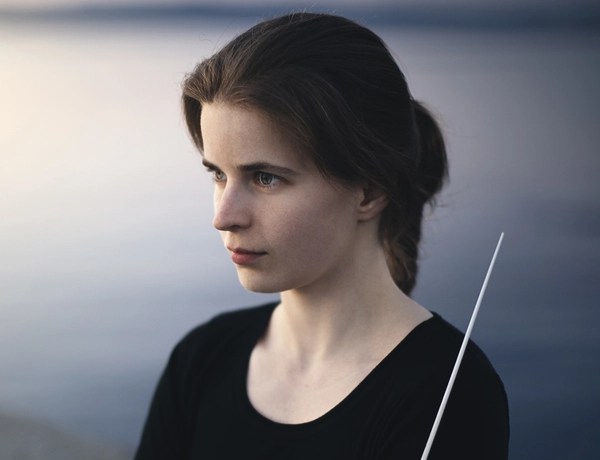
Entering 2024 with this attractive programme, the City of Birmingham Symphony Orchestra was conducted by Tabita Berglund – the Norwegian who, though unrelated to the late, great Paavo, seems certain to become one of the most significant conductors from her generation.

It was with Sibelius that the programme commenced, Pohjola’s Daughter lying on the cusp between its composer’s nationalistically inclined Romanticism and the relative Classicism that ensued. Pointedly so given the composer derived his inspiration from the Kalevala, in which its totemic figure Väinämöinen is outwitted by the ‘daughter of the North’, as the basis for a symphonic fantasia which critiques as surely as it remodels its underlying sonata design. Other interpreters have ensured a more seamless cohesion, but the acute characterization that Berglund brought to each episode, then the emotional frisson when those main motifs come together for a powerful apotheosis, compelled admiration – as did the closing pages in which Sibelius cannily fragments form and texture so all that remains is an all-enveloping silence.

Its ubiquity across 150 years should not distract attention from the innovative qualities found in Grieg’s Piano Concerto, and if his was not a consciously recreative approach, Paul Lewis gave a performance as appealing as it was insightful. Not least in an opening Allegro whose melodic directness was always balanced by a tangible sense of where this music was headed, and culminating in a take on the lengthy cadenza that infused its rhetoric with an inevitability worthy of Beethoven. There was expressive light and shade aplenty in the central Adagio, as too an unforced progress to the heartfelt restatement of its main theme. The outer sections of the final Allegro had no lack of impetus, as if to emphasize contrast with its rapt flute melody that closes the work in a thrilling peroration where soloist and conductor were rightly as one.

After the interval, Tchaikovsky’s Fifth Symphony emerged as a forceful and combative piece with its occasional longueurs convincingly held in check. Not least in an opening movement, the simmering expectancy of whose introduction intensified throughout what followed. Any short-windedness of phrasing was absent in the Andante cantabile, its indelible horn melody serenely intoned by Elspeth Dutch then its interplay between slow-burning eloquence and violent interjections of the ‘fate’ theme astutely judged on route to a warmly resigned coda.

Ostensibly an interlude, the Valse has a charm and, in its central trio, insouciance as belies its formal ingenuity that Berglund conveyed in full measure. Nor was there any sense of overkill as the Finale pursued a purposeful but never headlong course – its initial restatement of the main theme exuding an expressive focus matched by that of its climactic reappearance, here without risk of bathos in what brought the performance to a decisive and affirmative close. Certainly, the composer’s doubts as to any ‘insincerity’ proved unfounded on this occasion. It also confirmed a rapport between Berglund and the CBSO which will hopefully continue. Next week, however, brings the return of Kazuki Yamada for a wide-ranging programme of Berlioz, Walton and the world premiere of a newly commissioned work from Dai Fujikura.

Click on the link to read more on the current CBSO concert season, and on the artist names for more on Tabita Berglund and Paul Lewis

Published post no.2,054 – Friday 12 January 2024

BBC Proms 2023 – we’re underway…

Yesterday saw the start of the biggest festival in British classical music, the BBC Proms – broadcast live from the Royal Albert Hall.

Dalia Stasevska, guest conductor of the BBC Symphony Orchestra, led passionate Nordic music from Sibelius (the choral version of Finlandia with the BBC Singers and BBC Symphony Chorus, and a new arrangement of Snöfrid, narrated by actress Lesley Manville) and Grieg, whose evergreen Piano Concerto was given a new lick of paint by a wonderful interpretation from Paul Lewis.

Also featured was a Sibelian new work, Let There Be Light, from Ukrainian composer Bohdana Frolyak – a composer definitely worth seeking out in this evidence – and the concert closed with Britten‘s Young Person’s Guide To The Orchestra, with its triumphant fugal finale.

You can watch the Prom here on the BBC iPlayer:

https://www.bbc.co.uk/iplayer/episode/m001nr5b/bbc-proms-2023-first-night-of-the-proms

Arcana will be covering a good number of concerts as the season progresses, so check back through July and August to read more!

In concert – Noriko Ogawa, English Symphony Orchestra / Kenneth Woods – Brahms, Grieg & Sibelius

Noriko Ogawa (piano), English String Orchestra / Kenneth Woods

Brahms Tragic Overture, Op. 81 (1880)
Grieg Piano Concerto in A minor, Op. 16 (1868)
Sibelius Symphony No. 5 in E flat, Op. 82 (1915-19)

Town Hall, Cheltenham
Sunday 16 April 2023

Reviewed by Richard Whitehouse

The English Symphony Orchestra’s latest concert had no English (or British) connection and no premieres or unfamiliar music. In short, a mainstream sequence of overture, concerto and symphony which worked as a programme simply because these pieces went so well together.

Although it has never lacked for performances, Brahms’s Tragic Overture remains among his more unusual conceptions: a concert overture whose deftly modified sonata design admits an element of evocation as if some intangible drama were being played out. It was to the credit of this performance when such subjection offset an otherwise unwavering formal trajectory, Kenneth Woods integrating the speculative central episode with a conviction that made the heightened reprise of the main theme the more telling for its implacably wrought fatalism.

Brahms’s writing of an overture with components as if ‘in the wrong order’ made an unlikely link to the Piano Concerto by Grieg, which still offers a wealth of surprises in a sympathetic reading. This it received from Noriko Ogawa – bringing out the unforced eloquence of what, the opening Allegro in particular, is much more than a loose sequence of enticing melodies in search of coherence. As her imaginative take on its cadenza underlined, Grieg left nothing to chance as the movement turns decisively full circle. With its easeful horn melody (courtesy of James Topp) and alluring solo response, the Adagio exuded an understated allure, and if the finale lacked for any rhythmic verve, the central section with its rapt flute melody (courtesy of Laura Jellicoe) sounded as affecting as its heightened peroration at the close was majestic.

The ESO and Woods are currently working towards a Sibelius cycle and their account of the Fifth Symphony had all the hallmarks of complete identity with, here again, a determination not to take to take anything in so familiar a work for granted. This was especially notable in the opening movement – its segueing between what began as two separate entities rendered with due seamlessness. Not least that central climax, out of which the scherzo emerged then proceeded to accrue motion imperceptibly through to a coda whose velocity was irresistibly evident. Much more than a whimsical interlude, the Andante had keen appreciation of those ambiguous shadows which inform its progress at crucial junctures, yet without undermining that guileless essence to the fore in the closing pages with their felicitous woodwind playing.

Making an attacca (and rightly so) directly into the finale, Woods brought out the productive contrast between its ideas – thus, the initial theme with its onrushing strings, then the ‘swan melody’ with its harmonic allure and intricate textural layering abetted here by the up-front acoustic of Cheltenham Town Hall. Just how so tensile and compact a movement generates an apotheosis of such grandeur cannot easily be explained, yet such an outcome was tangible as those concluding chords emerged with an inevitability as undeniable as it was heartening.

They certainly set the seal on an impressive performance which was warmly received by the sizable house. The ESO can be heard in Worcester early next month with assistant conductor Michael Karcher-Young, then with Woods in June for the latest edition of The Elgar Festival.

For more information on the artists in this concert, click on the links to read about Noriko Ogawa Kenneth Woods and the English Symphony Orchestra.

In concert – Isata Kanneh-Mason, CBSO / Ilan Volkov: Sibelius, Prokofiev & Freya Waley-Cohen

Isata Kanneh-Mason (piano), City of Birmingham Symphony Orchestra / Ilan Volkov

Sibelius The Oceanides, Op. 73 (1914)
Prokofiev Piano Concerto No. 3 in C, Op. 26 (1921)
Waley-Cohen Demon (2022) [CBSO Centenary Commission: World Premiere]
Sibelius Symphony No. 5 in E flat, Op. 82 (1915-19)

Symphony Hall, Birmingham
Wednesday 22 February 2023

Reviewed by Richard Whitehouse

A frequent visitor during the past quarter-century, Ilan Volkov’s concerts with the City of Birmingham Symphony Orchestra are always to be anticipated, and so it proved with this evening’s programme which brought together the familiar and the new to engaging effect.

Sibelius provided a potent framework, The Oceanides (of which the CBSO made a fine recording with Simon Rattle now almost four decades ago) heard in a reading of unusual breadth and deliberation. Not that this ever impeded the progress of music whose almost impressionistic eddying goes hand in hand with inexorability of motion; the outcome a double climax whose spiralling intensity – visceral even in the context of Sibelius’s later music – makes way for a coda whose understated fatalism was affectingly conveyed here.

Along with her brother Sheku, Isata Kanneh-Mason has had a major impact on the UK music scene – her skill and insight evident throughout this performance of Prokofiev’s Third Piano Concerto. There was no lack of élan in passagework where the composer sought to confirm his own pianistic credentials as he built a career in the West, but also a tendency to brittleness as arguably sold the music short. It was in more reflective sections that Kanneh-Mason came fully into her own – the limpid musing on its main theme at the centre of the first movement, the spectral half-lights of its successor’s third variation, or the warmly expressive melody at the heart of the finale in which her rapport with Volkov was tangible. If the electrifying close brought less than the ultimate frisson, it still set the seal on a reading of impressive potential.

After the interval, another in the CBSO’s Centenary Commissions – the well-regarded Freya Waley-Cohen (above) duly responding with Demon. Its scenario evoking the more ominous of folk stories, this piece packed a considerable amount of incident into its 11 minutes – a Ligetian playfulness offsetting its frequently intricate polyphony to diverting and, throughout the final stages, impulsive effect. Drawing an incisive and precise response, Volkov seemed intent on presenting this colourful curtain-raiser as well worthy of further and repeated performance.

Volkov’s accounts of Sibelius’s Third and Fourth Symphonies were highlights of a complete cycle at the 2015 Proms, and this account of the Fifth found his advocacy undimmed. Others have found greater atmosphere in the first movement’s earlier stages, but the purposefulness with which he built to its defining climax was undoubted; as too a corresponding build-up of momentum in its ‘scherzo’ – Matthew Hardy’s volleys of timpani spearheading the propulsive coda. More intermezzo than slow movement, the Andante had an appealingly winsome aura for all its darker undertones (with some delectable woodwind playing), while the finale made the most of its contrasts in motion – the ‘swan melody’ eloquently rendered – on the way to an apotheosis whose surging affirmation was driven home by those indelible closing chords.

An impressive performance, then, such as brought this concert to a suitably inspiring close. Volkov is on the podium again this Sunday – directing the CBSO Youth Orchestra in a new piece by Bergrun Snaebjörnsdottir, heard alongside music by Grażyna Bacewicz and Berlioz.

You can read all about the 2022/23 season and book tickets at the CBSO website. Click on the artist and composer names for more on Ilan Volkov, Isata Kanneh-Mason and Freya Waley-Cohen

Online concert – English Symphony Orchestra / Kenneth Woods: Music from Wyastone – Sibelius: Symphony no.6 & Tapiola

Sibelius Symphony no.6 in D minor Op.104 (1923); Tapiola Op.112 (1926)

English Symphony Orchestra / Kenneth Woods

Recorded at Wyastone Concert Hall, Monmouth, 1-2 March 2022

by Richard Whitehouse

A cycle of Sibelius symphonies by the English Symphony Orchestra got underway last year with an impressive account of the Seventh, making this second instalment the more pertinent for showing just how the composer had arrived at that work and where he went from there.

Only if the Sixth Symphony is viewed as neo-classical does it feel elusive, rather than a deft reformulation of Classical precepts as here. The first movement duly unfolded as a seamless evolution whose emotional contrasts are incidental – Kenneth Woods ensuring its purposeful course complemented the circling repetition of the following intermezzo, with its speculative variations upon that almost casual opening gesture. Ideally paced, the scherzo yielded a more incisive tone which the finale then pursued in a refracted sonata design as gained intensity up to its climactic mid-point. Tension dropped momentarily here, quickly restored in a disarming reprise of its opening and a coda whose evanescence was well conveyed; a reminder Sibelius Six is as much about eschewal of beginnings and endings in its seeking after a new cohesion.

A suitably expanded ESO then tackled Tapiola – Sibelius’s last completed major work, whose prefatory quatrain implies an elemental aspect duly rendered through the near/total absence of transition in music of incessant evolution. A quality to the fore in this perceptive reading with Woods finding the right balance between formal unity and expressive diversity throughout its underlying course. Just occasionally there was a lack of that ‘otherness’ as endows this music with its uniquely disquieting aura, yet a steadily accumulating momentum was rarely in doubt towards the seething climax, then a string threnody whose anguish can bestow only the most tenuous of benedictions. A reminder, too, that not the least reason Sibelius might have failed to complete his Eighth Symphony was because he had already realized it in the present work.

The ESO being heard to advantage in the spacious clarity of Wyastone Hall, these accounts will be worth getting to know on commercial release (with the Seventh Symphony) early next year, when this cycle will itself continue with recordings of the Fourth and Fifth Symphonies

These works are available for viewing on the English Symphony Orchestra website from 29 July – 1 August, then through ESO Digital by way of a subscription. Meanwhile click on the names for more on the English Symphony Orchestra and Kenneth Woods