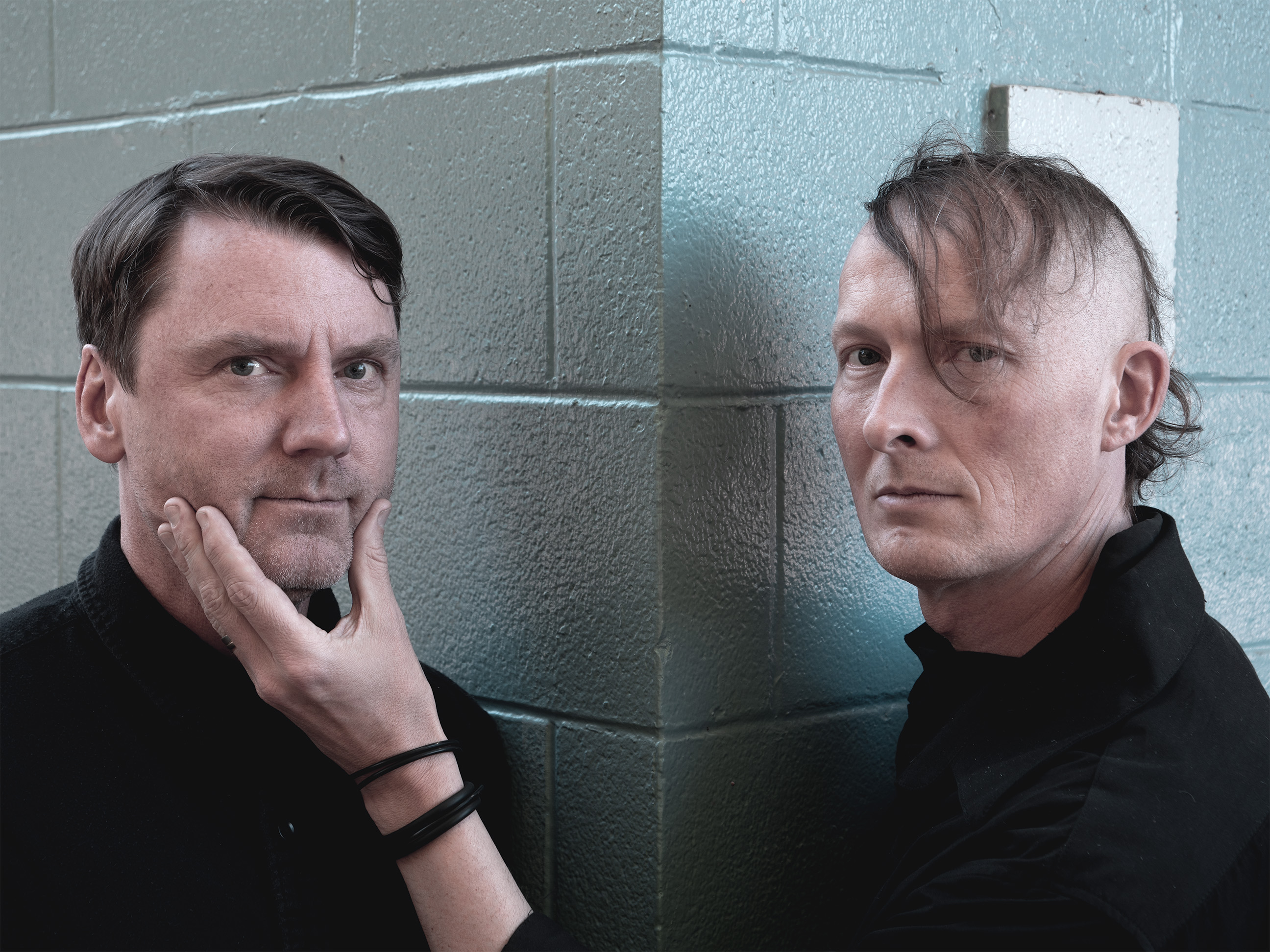
Switched On: Saloli – Canyon (Kranky)

by Ben Hogwood

What’s the story?

It is relatively rare for electronic albums to be performed ‘as live’ – but that is what Saloli achieves with Canyon. Saloli – the Cherokee word for ‘squirrel’ – is the alias under which Portland pianist and instrumentalist Mary Sutton operates,

The whole album is performed on a Sequential Circuits MultiTrak synthesizer, routed through a delay pedal to add the spatial quality of ‘echoing off canyon walls’.

There is a concept powering Canyon, too, the album evoking ‘a day in the life of a bear in a canyon in the Smoky Mountains’. As the press release explains, ‘in Cherokee teachings, humans and animals are considered to have no essential difference – originally, all the creatures of the earth lived together in harmony.’ The album’s cover art is by Sutton’s father Jerry, its yellow lettering using Cherokee Syllabary and spelling ‘Yona’, which means ‘bear’.

What’s the music like?

Strong in character. Saloli’s writing is very ‘in the moment’, creating portraits full of colour and musical content.

Waterfall shimmers and glistens in the light, the melodic patterns of the synthesizer sustained as they bounce around the sonic picture. At this point Saloli’s music resembles earlier Philip Glass, both in its melodic language and its pleasingly rough timbre. This is clearly music evoking the outside, and is all the better for its untampered state.

Lily Pad is much more fragile, the live setting capturing the surface tension of the water on which it sits, while Snake is more obviously right and left hand, as arpeggios in the left complement higher melodies in the right.

The sonic picture changes strikingly for Yona, the playful bear portrait, whose lack of reverberation makes this feel a close-up, indoor encounter. Panning out again we hear the softer Silhouette, whose vibrato casts a spell and draws parallels with Wendy Carlos.

Full Moon brings a pipe-organ sonority to Saloli’s music, wide-eyed and brightly lit, the echoes used again to playful effect. The slightly jaunty mood continues to the elusive Nighthawk, the left hand on the keyboard establishing a Habañera-type rhythm while trying to pin down an elusive right hand melody.

Saloli ends with the exhilarating Sunrise, its rippling arpeggios telling of the light forcing its way upwards out of the darkness and into the day. Its evocative growth from subtle flickers to stabs of daylight shows Sutton’s skill at painting pictures in sound.

Does it all work?

It does. The intimate portrait of the bear is slightly curious, given the animal’s size, but it is typical of the personality running through Sutton’s music. This is electronic music with a beating heart, for sure.

Is it recommended?

It is. Saloli has made an album of instrumental tone pictures with lasting character and quality.

Listen

Buy

Switched On – Tim Hecker: No Highs (Kranky)

by Ben Hogwood

What’s the story?

There is a note of defiance with this new album from Tim Hecker, the Canadian’s eleventh studio long player. It is in effect an anti-record, positioned against what is described as ‘false positive corporate ambient’.

It is meant to be unsettling, a reaction against comfort and calm, and, as the press release calls it, a ‘jagged anti-relaxant for our medicated age, rough-hewn and undefined.’

The No Highs title is borne out by the artwork, and its unremitting shades of grey.

What’s the music like?

Oddly, and perhaps inevitably, there is deep ambience in the musical content of Tim Hecker’s work, but it is pitched in a way that means it is never too comfortable or settled.

As No Highs proceeds, it is a compelling listen, as Hecker has carefully shaded his work in response to the subject matter. There is certainly an unnerving tone to the long-breathed electronic sighs of Monotony, though an ideal contrast to this can be found on tracks like Winter Cop, which adds warmer tones, and even Monotony II, where the saxophone of Colin Stetson comes into its own. He plays a beautiful soliloquy that builds rather like a murmuration, turning this way and that against the spacious backdrop.

Sometimes Hecker’s approach is contrary, the result being that a track like Anxiety is actually quite calming in its own drawn-out way. Meanwhile the extended Lotus Light, which flickers intermittently at the start, pulses with activity once it gets going.

Does it all work?

It does. Although darkly shaded, Hecker’s music has an authority that is rare to music of this tempo and instrumentation.

Is it recommended?

It is. This is indeed a sound musical riposte to the ambient ‘muzak’ that can be found in a lot of areas currently

Listen

Buy

Switched On – Loscil // Lawrence English: Colours Of Air (Kranky)

by Ben Hogwood

What’s the story?

This collaboration between Canada and Australia, between composers Loscil and Lawrence English, was born from a long-running conversation on electronic music. It gives both musical minds a chance to explore together the sounds of a pipe organ from the Old Museum in Brisbane. While Lawrence English’s work of the past decade has centred on the sounds of instruments such as this, Loscil’s has tended towards less analogue keyboard instruments.

Here the two combine their unique and deeply personal approach to music, taking the source recordings and manipulating the organ sounds into personal and uniquely colourful responses – hence a different shade for each of the eight tracks.

What’s the music like?

Perhaps inevitably, colourful. However there is something about the way Loscil and English bring colour into their music that sets it well above the ambient ‘standard’. These tracks really do live up to their names, and with eight different hues throughout the album it is certainly one for the mind’s eye.

The Brisbane instrument makes a major contribution, but not just through its resultant music. The mechanical actions are part of the recording process too, so on occasion the very instrument is inhaling and exhaling, providing a white-noise percussion along with the pitches.

Without ado, Cyan allows us to dive straight into these wonderful textures, a glittering array of musical shades that soon become punctuated with soft chimes. The music shimmers in a way that the organ music of Philip Glass does, but the motifs are blanketed, the shape shifting chords taking place like billowing clouds.

As the eight-part suite progresses, so we get to hear more of the nuances of the Brisbane instrument, with varying levels of attack and depth. The pitches stay relatively static, often in a drone-like stasis, but some allow for greater, mysterious movement – such as Aqua, with its ethereal sighing motif. Sharper tones are used for the brightness of Pink, a vivid contrast to the relatively withdrawn colours of Grey and Black that went before.

Black, the longest track of the eight, is a majestic piece of work, dark as space itself but panning out to the edge of perspective. Of a similar dimension is Magenta, whose slight pitch bends create a drawn out and very intense sonic drama.

Yellow is another standout moment, and it just so happened that I experienced this piece of music during a sunrise, which it most certainly evokes – one of those wonderful moments where sound and nature are as one.

Does it all work?

Yes. There are some fascinating processes at work here, and the feeling persists that the outcome is an equal musical agreement between the two parties. The listener still gets Loscil’s uniquely wide, weather-beaten panorama, but the pipe organ adds something special, Lawrence English securing his timeless response in a different and slightly more mechanical way.

Is it recommended?

Without hesitation. A mandatory purchase for fans of either – and for those in need of some musical balm to mark the end of January.

Listen

Buy

Switched On – Loscil: Clara (Kranky)

loscil

reviewed by Ben Hogwood

What’s the story?

‘Clara’ is the Latin word for ‘bright’. It is employed by Vancouver’s Scott Morgan to describe his latest album under the Loscil moniker. Morgan is a highly productive musician known for making minimal material stretch a long way, but with Clara he has outdone himself.

Taking a three-minute piece for a 22-piece string orchestra, Morgan recorded the output but then subjected the recording to heavy treatment. The master was purposefully damaged, introducing surface noise to give the impression of recordings made outside in the field, with gravelly scratches and frissons of white noise.

To match this, Morgan took snapshots of the score, stretching them into almost unrecognisable, broad canvases – rather like the detail you would find on a set of micro-models. The effect, as he says, is that “shadows are amplified and bright spots dimmed.”

What’s the music like?

Too often music is described as immersive, but the music of Loscil cannot be seen as anything else. As it unfolds, Clara has the reassuring regularity of a tidal system, its rich colours mixed together in a slowly moving but utterly compelling cycle. The tracks work on their own terms but are best experienced as part of the whole, as material from the original three-minute track stretches out to 70 minutes.

Although this is the first time Loscil has explicitly taken the orchestra for his inspiration, his music has always had suitable dimensions for these large-scale arrangements, and so Clara represents more of a shift in colour than a change in textural depth. With this in mind, Lucida paints pastel shades while a single chime tolls, but while that track has a metronomic regularity, Stella reaches a beautiful stillness, the ebb and flow of just two repeated chords providing the ultimate ambience over a ten-minute structure. From here Loscil naturally segues into Vespera, where a regularly turning mechanism sounds like the onward motion of a boat. Aura exhibits a more remote beauty, looking farther afield after the slowly bubbling Sol. Darker tones are used for the title track, in spite of its Latin meaning, a rich chord building with purpose from the bass strings before we glimpse the light in the violins. Eventually it fades over the horizon like the setting sun.

Does it all work?

Emphatically. Morgan makes ever-more meaningful and powerful music, which remains by turns simple and incredibly pictorial. His music gives the listener a wider perspective, a grasp of the earth’s vast spaces from their own little corner of the world. It reminds us how, in an age of technology that moves faster than ever before, nature has not quickened its pace to follow suit, proceeding where possible with its same sure-footed and inevitable progress.

As Loscil, Morgan gives us the reassurance that despite those supposed human advances, the progress of geology and nature is unlikely to ever be fully checked.

Is it recommended?

Yes. Clara is another very strong addition to the remarkably consistent Loscil canon, which continues to evolve and develop without repeating itself. It provides another reminder of just how far Scott Morgan is able to stretch the barest of musical material, resulting in an album of awesome depth and presence.

Stream

Buy


Switched On – Loscil: Equivalents (Kranky)

Loscil Equivalents (Kranky)

reviewed by Ben Hogwood

What’s the story?

Scott Morgan’s twelfth album as Loscil is inspired by Equivalents, a collection of black and white cloud photographs by Alfred Stieglitz from the early 20th century. Given that he lives in Vancouver, with its panoramic sky views towards the eastern Pacific, Morgan had constant reminders while writing his concentrated musical responses to eight of the pictures.

What’s the music like?

The imagery fits Loscil’s music perfectly, Morgan often creating music that works as an audible representation of a weather system.

Once again time and space are suspended in this music, which seems to be incredibly simple when placed in the middle background, but which on closer inspection reveals intricate lines when up close, rather like those cloud systems. The eight equivalents, slightly confusing in their placements out of conventional order on the album, unfold with slow gravity. Like their clouds they are weighed down, almost to floor level, but their layers combine to make constructions of rarefied beauty.

Equivalents 1 & 3 (picture above) make a good pair with which to start, both brooding in minor keys but in the second piece oscillating softly between two pitches above a long, held note. If you close your eyes and concentrate at this point natural phenomena come into view (they did for me at least!) and there is a palpable, windswept energy despite the complete lack of percussion.

The central Equivalent 5 (above) is the most memorable and remarkable, with the closest thing to a melody you will find on this album. A four-note motif, drawn over around 10 seconds, enjoys a stately progression through the clouds, like a plane on an onward journey as the mass of water swells around it.

In response Equivalent 2 (above) has that rare breed of stillness Loscil can conjure up, floating weightlessly above the solid masses. Again though this has a slow moving, four note movement, audible in the bass part.

Finally Equivalent 4 (above) inhabits a similar timeless space to Holst’s final planet Neptune, with a rich added chord bolstered by fuzzy outlines that gradually fade from view.

Does it all work?

Yes, with the greatest intensity. Some of the best ambient music is pleasant and relaxing to listen to but carries with it a concentrated feeling. Loscil achieves that balance once again on Equivalents, placing his listener in the very photograph providing him with inspiration. On headphones that notion becomes a very intense but also private experience.

Is it recommended?

Absolutely. A Loscil album that is ideal for new listeners but which will wholly satisfy his devoted fans. If you haven’t joined them already you are strongly advised to do so!

Stream

Buy