Listening to Beethoven #154 – String Quartet in G major Op.18/2

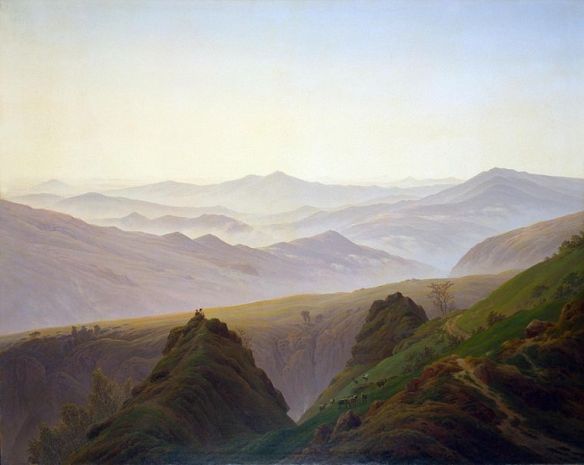
Op182-Friedrich,_Morgen_im_RiesengebirgeMorning on the Riesengebringe, by Caspar David Friedrich (1810)
String Quartet in G major Op.18/2 (1798-1800, Beethoven aged 29)

Dedication Count Johann Georg von Browne
Duration 25′

1. Allegro
2. Adagio cantabile – Allegro – Tempo I
3. Scherzo: Allegro
4. Allegro molto, quasi presto

Listen

written by Ben Hogwood

Background and Critical Reception

‘The jester of the set’, says Daniel Heartz of the second of Beethoven’s first published string quartets. Op.18/2 was actually written third, but is carefully placed by the composer to keep a satisfactory flow between the works. In Germany it acquired the occasional nickname ‘Komplientierquartett’, for what Ludwig Finscher calls the ‘graceful principal theme’. The nickname reflects on the quartet too, ‘not merely to compliment but to greet with formal respect and ceremony’.

Commentators identify more links with the past in this work than the forward looking first – yet the links do not mean the work itself is unadventurous. Finscher writes of how the first movement ‘reaches back beyond Haydn to the preclassical realm, but technically, in its almost parodic succession of two-bar groups and tiny, conventional motives, it is a dazzling tour de force, building on the achievements of the Haydn quartet style and simultaneously providing an ironic comment on them’.

Heartz draws close links with Haydn’s String Quartet Op.33/2, also in G major – and gives several examples on how the first and second movements draw on Haydnesque qualities. Finscher extends his observations, concluding that ‘in artistic skill of that order the work is also a celebration of the level of musical culture in Vienna around 1800’.

Thoughts

It is true that the second of Op.18 is very different from the first – but in a complementary way. The mood is amiable and often comedic, the first violin taking the lead in a cheery second theme, where it ascends to the heights like a bird. Some of the harmonic movements are adventurous in the development, showing that if Beethoven is influenced by Haydn he is channelling the composer’s inventive powers too. The viola and cello take the lead in a striking build to a recap of the main theme.

There are more powers of invention in the slow movement, where tender moments give way to an unexpected, capricious section in the middle. The scherzo third movement is another advance on the traditional minuet, light in mood before cutting to an elusive trio section.

At this point it suddenly feels like the work is finishing, but then Beethoven surges forward with an assertive finale, led off by the cello and featuring busy interactions between the four instruments.

Beethoven has fun with this piece, and given the right performance the listener will do too. The Haydn influences are welcome and well-managed, because the quartet never sounds derivative, and its frequent but subtle inventions keep the listener on their toes. A joy from start to finish.

Recordings used and Spotify links

Quatuor Mosaïques (Andrea Bischof, Erich Höbarth (violins), Anita Mitterer (viola), Christophe Coin (cello)
Melos Quartet (Wilhelm Melcher and Gerhard Voss (violins), Hermann Voss (viola), Peter Buck (cello) (Deutsche Grammophon)
Borodin String Quartet (Ruben Aharonian, Andrei Abramenkov (violins), Igor Naidin (viola), Valentin Berlinsky (cello) (Chandos)
Takács Quartet (Edward Dusinberre, Károly Schranz (violins), Roger Tapping (viola), Andras Fejér (Decca)
Jerusalem Quartet (Alexander Pavlovsky, Sergei Bresler (violins), Ori Kam (viola), Kyril Zlotnikov (cello) (Harmonia Mundi)
Tokyo String Quartet (Peter Oundjian, Kikuei Ikeda (violins), Kazuhide Isomura (viola), Sadao Harada (cello) (BMG)
Végh Quartet (Sándor Végh, Sándor Zöldy (violins), Georges Janzer (viola) & Paul Szabo (cello) (Valois)

The Végh Quartet give a delightful account of this piece, light on their feet and pretty quick, but still with plenty of room for their phrasing. The Tákacs Quartet are often brisk, but similarly enjoyable, while the Quatuor Mosaïques are slower and emphasise the graceful interplay between the quartet. Finally the Tokyo String Quartet are nicely poised and enjoy Beethoven’s flights.

You can chart the Arcana Beethoven playlist as it grows, with one recommended version of each piece we listen to. Catch up here!

Also written in 1800 Krommer String Quartet in A major Op.18/2

Next up String Quartet in D major Op.18/3

Listening to Beethoven #153 – String Quartet in F major Op.18/1

Op181-Morning_in_the_Mountains

Morning in the mountains, by Caspar David Friedrich (1822-23)

String Quartet in F major Op.18/1 (1798-1800, Beethoven aged 29)

Dedication Count Johann Georg von Browne
Duration 24′

1. Allegro con brio
2. Adagio affettuoso ed appassionato
3. Scherzo: Allegro molto
4. Allegro

Listen

written by Ben Hogwood

Background and Critical Reception

Beethoven’s entry into the string quartet arena was carefully calculated – as it was with the symphony and the piano concerto. As Ludwig Finscher writes in an absorbing booklet note for Deutsche Grammophon’s recording from the Melos Quartet, no fewer than 18 young contemporaries published a set of string quartets as their Op.1 in the two decades leading up to 1800.

Beethoven’s set of six was no accident, taking a format used by Haydn (Op.76) and Mozart (the ‘Haydn’ quartets). The order in which the six works were placed was no accident either – with Op.18/3 completed ahead of this piece. Yet Op.18/1 was considered the best with which to start, as ‘the most modern of the six in form and content’, according to Finscher.

He talks about the work achieving ‘an originality of musical language which goes far beyond the personal tone of earlier chamber music’, citing how the piece made unusual demands on its audience – ‘basing an entire movement on the elaboration of a single two-bar motive was something completely new’. The slow movement, too, ‘intensifies the language of the classical quartet to the point where it becomes a medium of immeasurable emotional expression’. Here Beethoven is said to have been thinking about the scene at the tomb in Shakespeare’s Romeo and Juliet.

The third movement is now a fully-fledged scherzo, where once a minuet would have been the norm, Beethoven now taking the opportunity to use this movement as a springboard for radical new ideas rather than conforming to a dance. Only the last movement, says Finscher, is ‘relatively innocuous’.

Thoughts

It is indeed striking how assured Beethoven’s command of the string quartet is from the off in this piece, as though it is a moment he has been waiting on for a long time. His careful preparation by writing extensively from string trio has helped enormously, and the interplay between the instruments is that of an experienced hand rather than a beginner.

Although Haydn and Mozart provide inspiration for certain elements of his quartet writing, and a tradition he can append to, this is a wholly new direction for the string quartet. As Finscher says, the use of small motifs – as well as silence – from the off is striking. The first few bar seem innocuous to begin with but they power the whole piece, and once heard a few times cannot be forgotten. The first movement unfolds in such a fluent fashion that each development of the theme feels inevitable, even when Beethoven is achieving unusual harmonic movements for the day.

Those movements play a big part in the Adagio, set in the darker key of D minor. It is uncommonly expressive from the outset, building on some of Haydn’s late slow movements but setting an emotional bar which looks back to some of the outpourings of a composer such as C.P.E. Bach. The movement is lengthy but as it develops the intensity grows still further. Such is the strength of feeling the listener does not notice that the formal constraints have become secondary to the notes themselves.

The shadowy features of the scherzo are fascinating, certainly not music for the dancefloor of the newly arrived nineteenth-century with their syncopations, still less the dramatic trio section in the middle. The finale may be less radical but we almost need that reassurance from Beethoven, and in any case it has an attractive, florid violin line of Italian flavour to begin with. Audiences of the day would surely have taken reassurance that the form hadn’t lost sight of its roots – but would be under no illusion of Beethoven’s intentions to develop it beyond all recognition.

Recordings used and Spotify links

Quatuor Mosaïques (Andrea Bischof, Erich Höbarth (violins), Anita Mitterer (viola), Christophe Coin (cello)
Melos Quartet (Wilhelm Melcher and Gerhard Voss (violins), Hermann Voss (viola), Peter Buck (cello) (Deutsche Grammophon)
Borodin String Quartet (Ruben Aharonian, Andrei Abramenkov (violins), Igor Naidin (viola), Valentin Berlinsky (cello) (Chandos)
Takács Quartet (Edward Dusinberre, Károly Schranz (violins), Roger Tapping (viola), Andras Fejér (Decca)
Jerusalem Quartet (Alexander Pavlovsky, Sergei Bresler (violins), Ori Kam (viola), Kyril Zlotnikov (cello) (Harmonia Mundi)
Tokyo String Quartet (Peter Oundjian, Kikuei Ikeda (violins), Kazuhide Isomura (viola), Sadao Harada (cello) (BMG)
Belcea Quartet (Corina Belcea, Axel Schacher (violins), Krzysztof Chorzelski (viola), Antoine Lederlin (cello) (Zig Zag)

Edward Dusinberre, violinist in the Takács Quartet, is the author of a fascinating book called Beethoven for a Later Age: The Journey of a String Quartet, where he talks about the particular pleasures and challenges of playing Beethoven. It provides a fascinating guide to the music and to their own version, which captures the forward-looking elements of which Finscher writes.

However the Quatuor Mosaïques, one of the only period-instrument ensembles to tackle Beethoven thus far, give a wonderful account, with searching depth in the slow movement and light-fingered panache in the quick music elsewhere. There are too many other recordings of the quartets to include here, but other very fine readings exist from the Melos, Jerusalem, Belcea and Borodin String Quartets. You can try all these for yourselves below!

You can chart the Arcana Beethoven playlist as it grows, with one recommended version of each piece we listen to. Catch up here!

Also written in 1800 Krommer String Quartet in D major Op.18/1

Next up String Quartet in G major Op.18/2

Listening to Beethoven #152 – Sonata for piano and horn in F major Op.17

giovanni-punto

Giovanni Punto, the dedicatee of Beethoven’s Horn Sonata. Artist unknown

Sonata for piano and horn in F major Op.17 (1799-1800, Beethoven aged 29)

1. Allegro moderato
2. Poco adagio, quasi andante
3. Rondo. Allegro moderato

Dedication Giovanni Punto
Duration 15′

Listen

by Ben Hogwood

Background and Critical Reception

Although Beethoven had written a good deal for wind instruments up until now, this was the first time he had written a solo sonata for one. However as horn player Richard Watkins notes, it is ‘typical of Beethoven’s sonatas in that it could easily be described as a piano sonata with a horn obligato.’

There is a definite date for the first performance of this work, given by Czech horn player Jan Václav Stich (better known in Vienna as Giovanni Punto) and Beethoven on the piano at Vienna’s Burgtheater on 18 April 1800 in Vienna. Punto had also played Mozart’s work, so had an impressive musical pedigree. The story runs, however, that Beethoven arrived in Vienna the day before giving a concert with Punto to find a new horn sonata advertised – which he had not yet written! The next day he had completed a horn part, improvising his own role at the piano. The audience warmed to the new music so much that there was a standing ovation and a repeat performance.

There is a cello arrangement of the work, made by Beethoven himself, which falls easily into the stringed instrument’s range. Steven Isserlis, while noting that it is ‘certainly not a profound work’, enjoys the fun as much as the composer himself. ‘This could not be by anybody else’, he says.

Thoughts

The horn begins with a breezy call, to which the piano responds – and then the two engage in lively dialogue, which the piano begins to dominate. Beethoven’s writing is exuberant, sometimes reckless for the piano – no doubt with his audience in mind. The freshness of his invention is clear, the two players pulling back the volume for a soft-hearted second theme in the first movement. There are some lovely rasps from the horn at the end.

Things take a solemn turn for a very short while, Beethoven slipping into the minor key for a plaintive statement from the horn. Rather than a slow movement proper, however, this acts as a short introduction to a fast third movement. This one is a little more poised than the first but still good fun, with Beethoven asking plenty of the horn player with some wide leaps in the melody.

Overall this is a light-hearted piece, which no doubt made a strong impression at its premiere in spite of the haste with which it was written. It’s good fun and not to be taken too seriously!

Recordings used and Spotify playlist

Dennis Brain (horn), Denis Matthews (fortepiano) (EMI)
Hermann Baumann (horn), Stanley Hoogland (fortepiano) (Teldec)
David Pyatt (horn), Martin Jones (piano) (Erato)
Richard Watkins (horn), Julius Drake (piano) (Signum Classics)
Barry Tuckwell (horn), Vladimir Ashkenazy (piano) (Decca)

There are some very fine versions of this piece, with the Tuckwell – Ashkenazy and Pyatt – Jones partnerships standing out as particularly fine. Yet Dennis Brain is in a league of his own, with a superb account matched by Denis Matthews.

You can chart the Arcana Beethoven playlist as it grows, with one recommended version of each piece we listen to. Catch up here!

Also written in 1800 Gyrowetz – Divertissement for piano, violin or flute and cello Op.50

Next up String Quartet in F major Op.18/1

Listening to Beethoven #151 – Piano Concerto no.1 in C major Op.15

piano-concerto-1
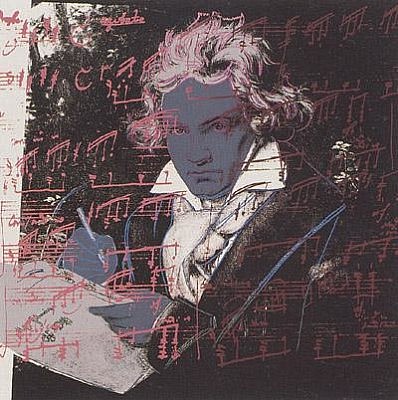
Beethoven (1987) by Andy Warhol – screenprint on Lenox Museum Board

Piano Concerto no.1 in C major Op.15 for piano and orchestra (1795-1800, Beethoven aged 29)

Dedication Princess Babette Odescalchi (a former pupil)
Duration 35′

Listen

Background and Critical Reception

Beethoven tried his hand at a piano concerto back in 1784 at the age of 13, and although it was another 17 years before his next attempt was published, the musical form was never far from his mind. As Barry Cooper reports in his booklet note for Hyperion’s new recordings with soloist Stephen Hough, ‘By 1795, Beethoven felt ready to launch a public career as a pianist-composer. He began composing his Piano Concerto no.1, making numerous sketches and rough drafts’.

A prototype seems to have been performed at the Burgtheater in Vienna on 29 March 1795, with the finale composed in a hurry, but the work was revised in 1800 and written out afresh. This final version was published in March 1801, with the original lost. Cooper writes that ‘around this time, Beethoven began including pedal marks in his own piano works, and this concerto was his first work (along with the Quintet for piano and wind Op.16) to be published with them’.

Daniel Heartz notes that the work ‘calls for the full orchestra of Mozart’s largest piano concertos’ – and goes on to draw parallels with Mozart in Beethoven’s structuring of the first movement and the relationship between the piano and the orchestra. Cooper finds that ‘in all of Beethoven’s piano concertos, the first movement is the most complex, written in a blend of Baroque ritornello form and the more modern sonata form.’ The suggestion is that a great deal of time has been spent on it, as well as the traditional cadenza near the end of the movement. While this section would normally be improvised by the soloist, Beethoven wrote out three possibilities – one in 1808 and two more in 1809.

Heartz describes the theme of the finale as ‘sharply etched in emphatic rhythms, with many repeated tones, lending it a popular or folklike character, like a country dance. For him the third theme has a ‘Slavic twang’.

The reaction to the concerto is not well-documented, but it appeared in an 1801 concert in Vienna which included the first performance of the Septet and the Symphony no.1, also in C major.

Thoughts

Beethoven’s official entry into the concerto arena has a real sense of occasion in its opening minutes. The orchestra play for a good three minutes before we hear the piano, which would surely have heightened the audience expectation back in 1801. It is an elegant theme that gains stature and power, complemented by a flowing second tune.

When the piano has arrived Beethoven enjoys its qualities in dialogue with the orchestra, as well as showing it off. There are some surprisingly quiet, touching moments where the ear is pulled in – just as there are the more obvious opportunities for display.

The first movement is a long one but sustains the drama through to the cadenza, the soloist given plenty of time to display their wares. It may even be too long in comparison to the rest of the work, for it is almost half the duration.

For the slow movement Beethoven chooses A flat major, the same key which held our rapt attention for the second movement of the Pathétique sonata. Here the effect is similar if not quite as concentrated, yet there are tender asides both for the soloist and the orchestra and some lovely prompting from the woodwind, clarinet in particular. The piano tells its story in expressive tones.

The best tune, however, is held over for the finale. It is a catchy number with its roots in the dance, as Daniel Heartz notes, and because of the finale’s ‘Rondo’ structure (A-B-A-C-A-B-A) and its status as the ‘A’ theme, we hear it several times – and it is undoubtedly the tune the audience walk away humming!

Spotify playlist and Recordings used

Wilhelm Kempff, Berliner Philharmoniker / Ferdinand Leitner (Deutsche Grammophon)
Robert Levin, Orchestre Révolutionnaire et Romantique / Sir John Eliot Gardiner (Arkiv)
Mitsuko Uchida, Bavarian Radio Symphony Orchestra / Kurt Sanderling (Philips)
Rudolf Serkin, Bavarian Radio Symphony Orchestra / Rafael Kubelik (Orfeo)
Claudio Arrau, Royal Concertgebouw Orchestra / Bernard Haitink (Philips)
Martha Argerich, Philharmonia Orchestra / Giuseppe Sinopoli (Deutsche Grammophon)
Ronald Brautigam, Die Kölner Akademie / Michael Alexander Willens (BIS)
Stephen Hough, Finnish Radio Symphony Orchestra / Hannu Lintu (Hyperion)

With so many recordings of the concerto it is only possible to offer a few pointers rather than declare a definitive version, but each of the above recordings have helped form an impression of the piece. Wilhelm Kempff and Ferdinand Leitner give a joyful account from 1960 which has held up extremely well, as do Rudolf Serkin and Rafael Kubelik from 1977. Serkin uses the biggest cadenza in the first movement, heightening dramatic impact even if it feels a bit unbalanced. Claudio Arrau’s musicianship is first class, with an especially beautiful delivery of the third movement theme. Robert Levin and John Eliot Gardiner create a special atmosphere in the hushed slow movement. Like Levin, Ronald Brautigam performs on a fortepiano, though his instrument has a coarser sound, lean and to the point. Despite the excitement of his reading the notes are a bit clumped in the finale.

To listen to clips from Stephen Hough’s new recording on Hyperion, head to their website

You can chart the Arcana Beethoven playlist as it grows, with one recommended version of each piece we listen to. Catch up here!

Also written in 1800 Boieldieu Harp Concerto in C major

Next up Horn Sonata in F major Op.17

Listening to Beethoven #150 – 5 Pieces for musical clock, WoO 33

Müller’sches Gebäudehe by F. Sager. This was the art gallery where Joseph Count Deym von Střítež exhibited

5 Pieces for musical clock, WoO 33 (1799, Beethoven aged 28)

Dedication Joseph Count Deym von Střítež

Duration 16′

  1. Adagio. Adagio assai in F major
  2. Scherzo. Allegro in G major
  3. Allegro in G major
  4. Allegro non più molto in C major
  5. Minuet. Allegretto in C major

written by Ben Hogwood

Background and Critical Reception

Keith Anderson, in his extensive booklet notes for a collection of Beethoven chamber rarities on Naxos, writes about the Five Pieces for Musical Clock. The first two date possibly from 1794, but Anderson says the last three ‘were completed by 1800 for the exhibition of waxworks and musical automata displayed by Count Josef Deym, under the name of Müller, having returned to Vienna, after self-imposed exile caused by the death of an opponent in a duel.’

A gruesome state of affairs, but apparently, in a need to resurrect his reputation, the Count ‘had commissioned music from Haydn and Mozart, among others. He died in 1804, leaving his widow Josephine, the apparent object of Beethoven’s amorous inclinations, with four children and social problems to surmount from the fact that her husband had been déclassé, a result of his choice to embark on commercial ventures. The pieces for musical clock are transcribed for organ, an instrument the higher range of which corresponded to the higher register of the clock musical apparatus.’

Thoughts

There is a strange and slightly eerie quality to these five pieces when played on the organ. The first piece is a free spirit and quite ghoulish. Although it is marked Adagio there is a fantasy-like quality and a restless movement throughout its six minutes.

The second piece is a cheery triple-time dance played on a whistle, light as a feather. The third is cut from similar cloth, a twirl in the right hand used as a basis for a short piece that sparkles.

These two shorter pieces are given perspective by the longer fourth, a full blown sonata Allegro of jaunty persuasion. Beethoven enjoys moving between the parts, though the melodies are less obvious. The fifth piece, a Minuet, is a natural companion, and carries the same slight amusement level, the composer with tongue in cheek.

Recordings used and Spotify Links

Simon Preston (Deutsche Grammophon)
Janette Fishell (Naxos)

Simon Preston enjoys the unpredictable movements of these pieces, and chooses the ideal light registration for them. Janette Fishell is perhaps better recorded, and enjoys the humourous opportunities Beethoven offers.

You can chart the Arcana Beethoven playlist as it grows, with one recommended version of each piece we listen to. Catch up here!

Also written in 1799 Haydn String Quartet in F major Op. 77/2

Next up Piano Concerto no.1 in C major Op.15