BBC Proms 2023 – Elena Urioste, BBC NoW / Tadaaki Otaka – Rachmaninoff / Respighi, Coleridge-Taylor & Beethoven

Prom 7 – Elena Urioste (violin), BBC National Orchestra of Wales / Tadaaki Otaka

Rachmaninoff (orch. Respighi) Five Études-tableaux (1911-17, orch 1930) [Proms premiere]
Coleridge-Taylor Violin Concerto in G minor Op.80 (1911-12)
Beethoven Symphony no.5 in C minor Op.67 (1807-08)

Royal Albert Hall, London
Wednesday 19th July 2023 [7pm]

by Richard Whitehouse photos by Andy Paradise / BBC

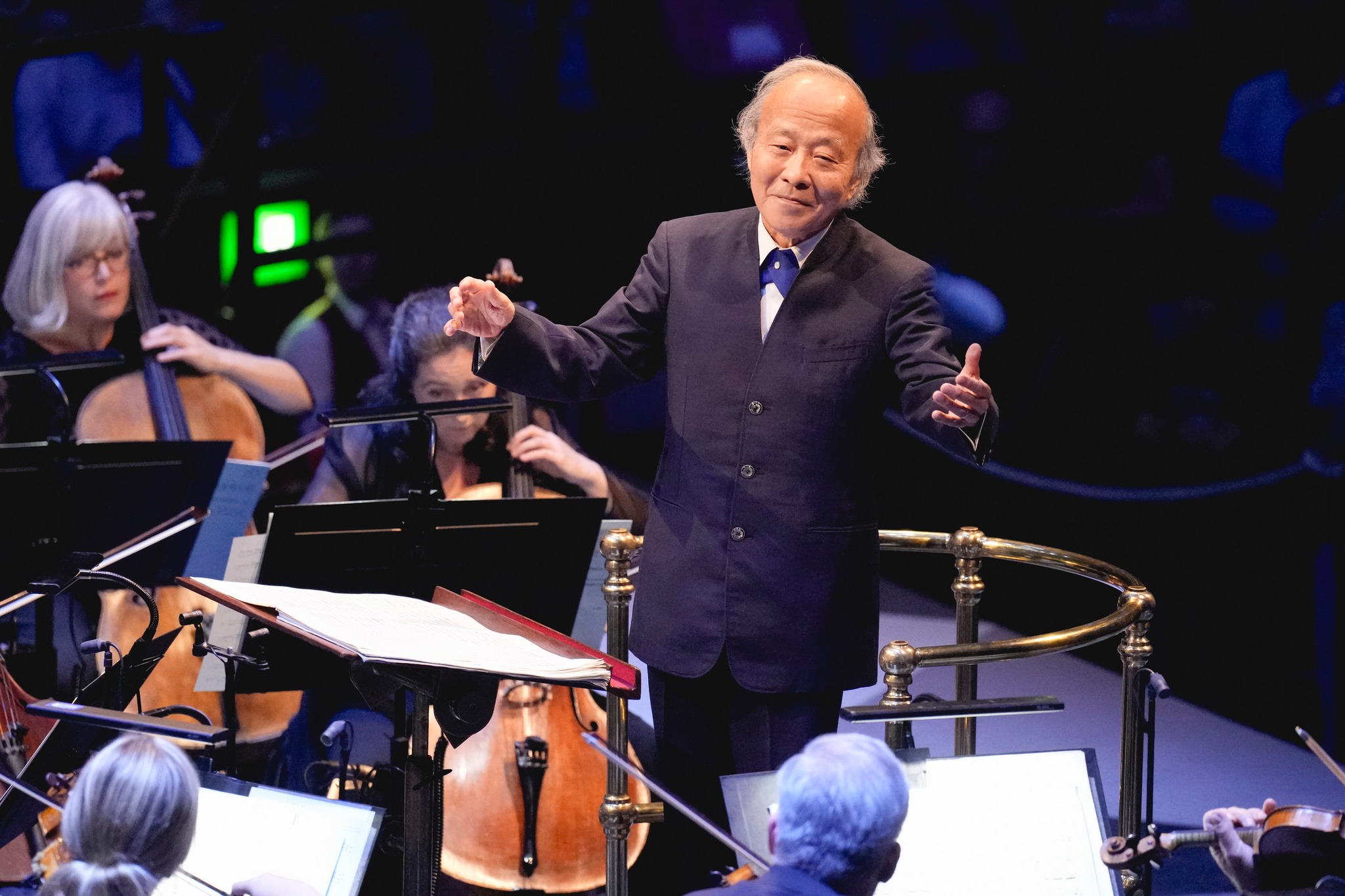
Tadaaki Otaka’s years at the helm of the BBC National Orchestra of Wales (1987-95) were a highpoint of the latter’s history, and it was good to see and hear the rapport between them now that he is Conductor Laureate being maintained throughout this evening’s programme.

Surprising that Respighi’s orchestration of five from Rachmaninoff’s sets of Études-tableaux had not been given at the Proms, but the respective 150th and 80th anniversaries of his birth and death provided an ideal opportunity. Otaka brought out the listless calm of The Sea and the Seagulls with its death-haunted aura, then conveyed the scintillating energy of The Fair. With its evocations of Orthodox chant and heady pealing of bells towards the close, Funeral March is the most imposing and Otaka gave it its due – not least by pointing up the deadpan humour of Little Red Riding Hood and the Wolf which provides greatest possible contrast. The sheer effervescence of March made a fitting conclusion to a sequence that, while other orderings are possible (not least 2-1-4-3-5), is a viable and a cohesive entity in its own right.

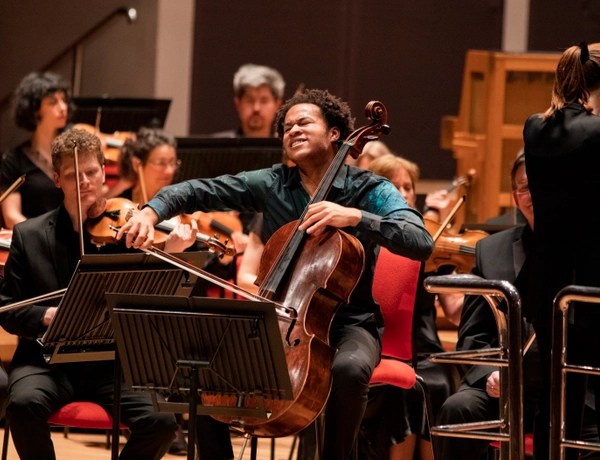
The resurgence of interest in Samuel Coleridge-Taylor continued apace with a revival of his Violin Concerto, 111 years after its UK public premiere at these concerts. Its composer’s last major work, this is a work audibly in the Romantic tradition and while the initial Allegro gets off to a less than promising start with its blousy and over-emphatic first theme, the resource with which the soloist elaborates both this and the insouciant idea that follows is as engaging as the cadenza underpinned by drum-roll is arresting. The central Andante is the undoubted highlight, its warmly confiding main melody capable of unexpected plangency as it unfolds, then the final Allegro draws on the Afro-American inflections of Coleridge-Taylor’s heritage in a spirited discourse whose climax sees an opulent restatement of the work’s opening theme.

A testing assignment such as Elena Urioste (after last year’s Proms debut with Ethel Smyth’s Double Concerto) gave with no little panache, her vivid while modest tone heard to advantage in Tom Poster’s eloquent take on Harold Arlen’s Over the Rainbow that was given as encore.

A staple of the Proms since its very first season 128 years ago, Beethoven’s Fifth Symphony comes so weighted with expectation as to make any performance in itself a provocative act. Eschewing astringency and portentousness, Otaka (rightly) rendered the initial movement as an elemental though unpredictable play on its indelible opening motif; the ensuing Andante pursuing an equally eventful course as its main theme evolves via a process of developing variation, the heroic and inquisitive held in unforced accord through to the decisive ending.

A pity that Otaka opted not to take the repeat in the Scherzo (rather than that of the finale) – its interplay between the ominous and the impetuous abetted by a transition of speculative intent. Here too there was never any risk of pomposity or overkill, Otaka steering this most visceral of symphonic finales through a development of bracing immediacy then on to a coda whose insistent C major reiterations were the outcome – no more and no less – of this movement’s innate potential. The undiminished relevance of this music was never for a moment in doubt.

For more on the 2023 BBC Proms, visit the festival’s website at the BBC. Click on the names for more information on the BBC National Orchestra of Wales, Tadaaki Otaka and Elena Urioste

Beethoven listening will resume shortly!

by Ben Hogwood

If you are a regular visitor to these pages you will (hopefully!) have noticed that Arcana’s traversal of Beethoven‘s complete works has been going at a very slow pace (i.e. it’s stopped!) So far we have listened to everything written up to and including Beethoven’s 34th birthday…which means a lot of the best music is still to come!

I wanted, then, to put this as a placeholder to reassure the throng that the project has not stopped, and that it will resume with Beethoven’s first full opera, Leonore, very shortly. Stay tuned!

Listening to Beethoven #221 – An die Hoffnung Op.32

Peanuts comic strip, drawn by Charles M. Schulz (c)PNTS

An die Hoffnung Op.32 for voice and piano (1805, Beethoven aged 34)

Dedication Countess Josephine von Brunsvik
Text Christoph August Tiedge

Duration 4’00”

Listen

by Ben Hogwood

Background and Critical Reception

Christoph August Tiedge’s lied An die Hoffnung had a profound effect on Beethoven, who set the text on two separate occasions – once published as Op.94 in 1816, but firstly published as Op.32 eleven years prior. Its dedication to Countess Josephine von Brunsvik is significant, for she was an unrequited love interest for the composer early in 1805. In March she wrote to her mother, “The good Beethoven has composed a lovely song for me on a text from Urania ‘An die Hoffnung’ as a gift for me”

By the summer feelings on both sides had cooled somewhat, with Beethoven removing Josephine as its dedicatee. Susan Youens, in booklet notes written for a collection of Beethoven lieder on Signum Classics, describes how the song’s ‘major mode optimism is rendered profound by darker touches of minor. The singer’s eloquent leap upward and the quiet blaze of a new (major) key for the acclamation to Hope – “O Hoffnung” – are unforgettable’.

Thoughts

This does indeed appear to be one of Beethoven’s most heartfelt utterances in the medium of singer and piano. It helps that the range of the song falls neatly within the grasp of either a baritone or tenor range, making it available for almost all male voice types.

Yet it is the elegance of the piano with which Beethoven begins, an unspoken melody spinning out with heartfelt ease. When the singer enters the mood is solemn yet rays of light are frequently shed by the piano harmonies as the music turns back to the major key.

The song makes a profound impact, both singer and pianist under the spell of Tiedge’s poetry, right up to the final line – and a final serene thought from the piano. We are in the calm of E flat major, same key as the Eroica symphony, but what a different mood we have here – vulnerability instead of heroism.

Recordings used

Werner Güra (tenor), Christoph Berner (fortepiano) (Harmonia Mundi)
Matthias Goerne (baritone), Jan Lisiecki (piano) (Deutsche Grammophon)
Ian Partridge (tenor), Richard Burnett (fortepiano) (Amon Ra)
Dietrich Fischer-Dieskau (baritone), Jörg Demus (piano) (Deutsche Grammophon)
John Mark Ainsley (tenor), Iain Burnside (piano) (Signum Classics)
Hermann Prey (baritone), Leonard Hokanson (piano) (Capriccio)

Fischer-Dieskau benefits from a heavenly introduction from pianist Jörg Demus, who sets the tone for an intense and often visionary account. The two recordings with fortepiano are quite different – Werner Güra and Christoph Berner pressing on a quite a rate when compared with Ian Partidge and Richard Burnett.

Also written in 1805 Spohr String Quartet no.2 in G minor Op.4/2

Next up Leonore

Listening to Beethoven #220 – Symphony no.2 in D major Op.36 (arranged for piano trio)


The Longing for Happiness. Left wall, detail from the Beethoven-Frieze (1902) by Gustav Klimt

Symphony no.2 in D major Op.36 for orchestra (1800-1802), arranged for piano trio 1805 (Beethoven aged 34)

Dedication unknown
Duration 30′

1. Adagio molto – Allegro con brio
2. Larghetto
3. Scherzo: Allegro
4. Allegro molto

Listen

Background and Critical Reception

Beethoven’s friend and pupil Ferdinand Ries took charge of this arrangement of the Symphony no.2 for piano trio – but the very limited writings about the arrangement strongly imply that the final decisions on its construction and execution were made by Beethoven himself.

The reason for this arrangement is not abundantly clear, other than it making the symphony available for domestic, small-scale music making. Yet the nature of the scoring would mean only very accomplished players could see it through from one end to the other!

Thoughts

This is a remarkable and surprisingly effective transcription, one that fully retains the vitality of Beethoven’s invention while compressing it for the intimacy of a chamber music environment.

Inevitably the textures are very different, but having less instruments does on occasion give the listener opportunity to appreciate the bare bones of Beethoven’s melodic invention.

Spotify playlist and Recordings used

Robert Levin (piano), Peter Hanson (violin), David Watkin (cello) (Archiv Produktion)

Emanuel Ax (piano), Leonidas Kavakos (violin), Yo-Yo Ma (cello)

This is a very fine performance from pianist Robert Levin and soloists drawn from the Orchestre Révolutionnaire et Romantique. The fast music is punchy and incisive, while the slower music has more intimate moments, beautifully captured.

You can chart the Arcana Beethoven playlist as it grows, with one recommended version of each piece we listen to. Catch up here!

Also written in 1805 Spohr String Quartet no.1 in C major Op.4/1

Next up An die Hoffnung Op.32

In concert – Jörg Widmann, CBSO – Weber, Widmann & Beethoven 7th symphony

City of Birmingham Symphony Orchestra / Jörg Widmann (clarinet)

Weber (arr. Widmann) Clarinet Quintet in E flat major J182 (1815, arr. 2018)
Widmann Con Brio (2008); Drei Schattentänze (2013)
Beethoven Symphony no.7 in A major Op. 92 (1812)

Symphony Hall, Birmingham
Wednesday 10 May 2023

Reviewed by Richard Whitehouse

Jörg Widmann has enjoyed a productive association with the City of Birmingham Symphony Orchestra, having been Artist in Residence during the 2018/19 season, and tonight’s concert was typical with its playing to his strengths as composer, clarinettist and (by no means least) conductor.

Arranger, too, given this programme commenced with his take on Weber’s Clarinet Quintet. Most ambitious of its composer’s works for Heinrich Baermann, it demonstrably gains from receiving a concertante treatment. The interplay between clarinet and strings pointed up the acute contrasts of mood and motion in the initial Allegro, then transformed the Fantasia into an operatic ‘scena’ of sustained plangency. With its ‘capriccio presto’ marking and teasingly playful manner, no movement could be less like a Menuetto than the scherzo which follows; here and in the final Rondo, Widmann summoned a tensile virtuosity paying dividends in the latter’s impetuous course to a thrilling denouement. Having given us Weber’s ‘Third Clarinet Concerto’, maybe Widmann could add a Fourth by transforming the Grand Duo Concertant?

The stage was reset for Con Brio, most often played of Widmann’s orchestral works and (in other contexts) a curtain-raiser bar none. Commissioned to accompany Beethoven’s Seventh and Eighth Symphonies in a cycle by Mariss Jansons with the Bavarian Radio Symphony Orchestra, it alludes to both pieces while casting an ear – sometimes facetious, always provocative – over two centuries of European art-music. Whether Widmann hears this as running on borrowed time, the closing bars do not so much resolve as atrophy via a break-down of graphic intent.

A darkened stage greeted listeners after the interval, across which was placed the music for each of Widmann’s Three Shadow Dances. These combine extended clarinet techniques with engaging, often playful virtuosity – moving (right to left) from the deadpan jazz gestures of ‘Echo-Tanz’, through the submerged remoteness (with no electronic treatment) of ‘(Under) Water Dance’, to the uproarious routines of ‘Danse africaine’ where the instrument becomes its own percussion outfit as it bounds towards the ‘elephant calls’ that signify its conclusion.

It made sense to round off the evening with Beethoven’s Seventh Symphony, having already been anticipated in the first half. In his opening remarks, Widmann spoke of the life-changing effect this work had at first hearing, and he duly threw caution to the wind with a reading that brimmed over with the excitement of new discovery. Surprisingly, he chose not to divide the violins right and left, as this would have emphasized their dizzying antiphonal exchanges in the outer movements. Having set a challengingly fast tempo for the scherzo, which the CBSO met with assurance, he might profitably have held back marginally for the greater part of the finale – enabling the coda to ‘take off’ with a frisson as could only be inferred here. This was otherwise a performance that conveyed the music’s visceral essence with thrilling immediacy.

It set the seal on an impressive showing for Widmann and this orchestra, who will hopefully be working together again in a future season. Next week sees the CBSO reunited with Mirga Gražinytė-Tyla for a performance of Mahler’s decidedly non-valedictory Tenth Symphony.

You can read all about the 2022/23 season and book tickets at the CBSO website – and for specific information on Mirga conducting Mahler, click here. There are several sites to visit for more info on Jörg Widmann – click here for his official site, here for his profile at publisher Schott Music, and here for information from his management at HarrisonParrott