Switched On – bvdub & Netherworld: Equilibrium (Glacial Movements)

by Ben Hogwood

What’s the story?

This is the first official collaboration between bvdub (Brock Van Wey) and Netherworld, otherwise known as Glacial Movements founder Alessandro Tedeschi. It is described as ‘a testament to a friendship that has endured and grown for well over a decade’.

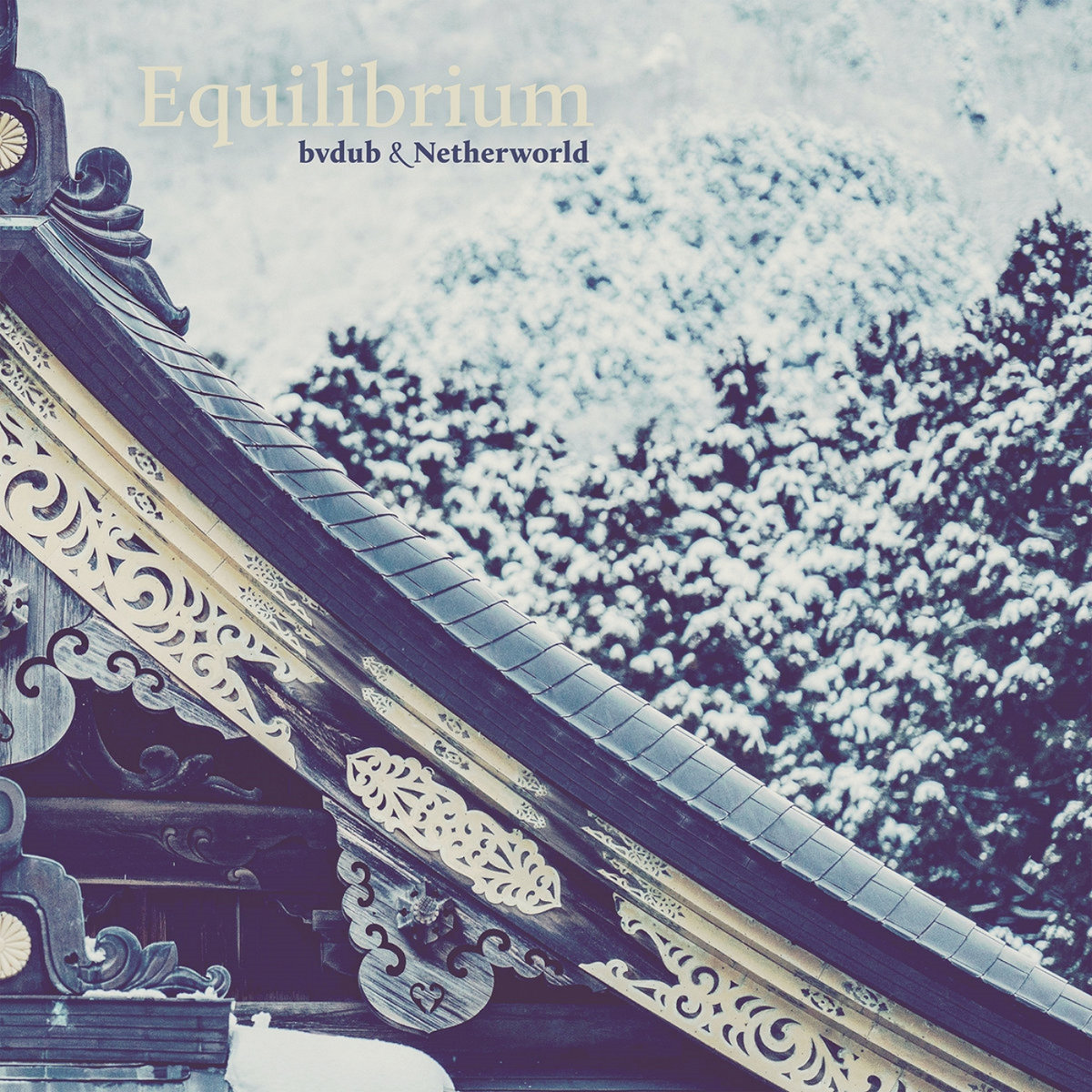
The ‘equilibrium’ of the title is used in the context of a glacier, describing the point at which it achieves a perfect balance between the mass of snow and ice that comprises its mass. This means it is never advancing nor retreating, with the gritty warmth (bvdub) above, and the glacial cold (Netherworld) below.

What’s the music like?

It is to be assumed that bvdub and Netherworld stuck to the description above, and that the former took on the more variable elements of the music while the latter stretched out the harmonic outlines beneath. However they did it, Equilibrium works beautifully as a quartet of intense yet deeply ambient compositions.

Each piece is of equivalent length, weighing in around the 20 minute mark, and the music within casts a lasting spell.

The evocatively titled No Trees For Miles establishes the cold climate through its icy textures, and secures a strong home melodic pitch to contain the broad canvas above. The melodic lines, such as they are, move very slowly, like birds circling on the wing, though when the wordless vocals appear there is greater activity, as though zooming in closer to the mass.

Darkness From The Sun works as a gradual crescendo, like a huge keyboard getting itself into gear, before long pauses enable the listener to take in the scene around, with a massive echo giving us an idea of the sheer scale of the glacier, working up to slab of white noise at the end. Seas of Stones and Sand adds an air of mystery, its wordless voices forming weird and ethereal mini-melodies. The slowly evolving scenery takes on a vast scope with a blast of treble from an organ-like instrument, which proves overwhelming for a while before dropping back to distant, calming echoes.

Finally Ice on Fire creates the most movement, underpinned by long notes as the treble arpeggios dance like flames. Again it paints an uncannily vivid picture, one that proves extremely striking on headphones or with surround sound. As with the other pieces, it gradually subsides to silence.

This combination of rapt stillness and subtle movement is ideal for mindful meditation, but along with that the two artists paint a very vivid sound picture of the environment. The scratchy, grainy exterior maps to the hard edges of the glacier, while the stretched-out harmonies places it in stasis rather than outright movement.

Does it all work?

It does. Equilibrium is a highly descriptive quartet of works, intense yet deeply restful at the same time.

Is it recommended?

It is. Both artists have clearly spent a lot of time in getting Equilibrium just right – which in itself makes sense. What they have made is an exquisite, lasting musical stillness to ease the mind.

Listen

Buy

Switched On: NETHERWORLD – Vanishing Lands (Glacial Movements)

by Ben Hogwood

What’s the story?

There is a powerful message behind Vanishing Lands. The most recent album from Glacial Movements‘ head Alessandro Tedeschi under the guise of NETHERWORLD, it is – in his words – ‘a cry of desperation…the realization that we are one step away from the abyss’.

Whereas many Glacial Movements albums celebrate the vast spaces of our environment, particularly the cold ones, this one does so in a troubling context. During lockdown, Tedeschi committed his thoughts to record on the gradual disappearance of the vast white expanses over which you can see the Northern Lights – ‘ice-covered volcanoes and silent expanses of snow and ice stretching as far as the eye can see;.

What’s the music like?

What’s the music like?

Rather appropriately, Vanishing Lands starts out with what sounds like the tolling of a very distant bell. There is the strong implication of a soft breeze, with shrill treble sounds blowing across the stereo picture of Last Sunset, the album’s first track. Towards the end, pure treble voices calmly coo across the picture, a snapshot taken in the middle of a much longer phrase. This first track runs for a quarter of an hour, serene but darkly coloured and ominous, too.

Thwaites is deeply mysterious, presenting a very intriguing perspective on headphones. The movement is in the middle foreground, like flecks of cloud or interference, while a sonorous mid-range hum at the very back throws the perspective wide open. Then Slow Moving Streams is an intriguing call and answer, whereby a slightly guttural, low synthesizer tone is responded to by a higher, vibrato-rich vocal.

The album’s progression is compelling. The Beauty Of Places Where There Is Nothing To See has an appealing remoteness but there is also a note of sorrow in the far-off cries of electronic birds and mammals. Comet has piercing timbres that streak across the cold surface beneath, before Vanishing Lands enhances the anguish. Initially cool and ambient, it has elements of protest in the voices that rise up, as well as primal pain.

Does it all work?

Yes. Be warned though, as while this is still essentially an ambient album it is a painful one too, an acknowledgement that those big spaces so often celebrated by Glacial Movements are under serious threat. As NETHERWORLD shows us the plight of those spaces, it operates under a very wide dynamic range, with some moments where the music is so quiet that you will have to lean into it.

Is it recommended?

Yes. Vanishing Lands is a brave set of searing observations packed into an album. One of Alessandro Tedeschi’s most intense pieces of work, it is a powerful and wholly meaningful addition to his canon. Make sure you hear it.

Listen & Buy

Switched On – NETHERWORLD: Algida Bellezza (Glacial Movements)

reviewed by Ben Hogwood

What’s the story?

There is a deeply personal story behind the composition of Algida Bellezza. The man behind NETHERWORLD is the founder of Glacial Movements, Alessandro Tedeschi, and he wrote the core music of the album, which loosely translates as ‘frozen beauty’, in 2015. Each of the five ‘movements’ were born – literally – as he cradled his new daughter. In June 2019 the music was mixed and mastered by Tedeschi’s good friend, sound engineer Matteo Spinazzè Savaris – and the completed album ready for release.

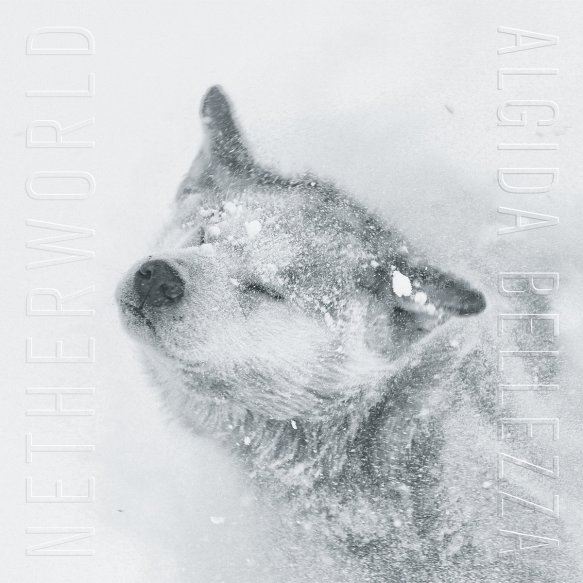
As the cover would suggest it is a great example of Tedeschi’s chilly ambience, which this time takes the all-important Greenland sled dog as its principal focus. The titles of the five tracks all relate to a prominent species of the area – respectively Vulpes lagopus (Arctic Fox), Somniosus microcephalus (Greenland Shark), Orcinus orca (Orca), Monodon monoceros (Narwhal) and Ursus maritimus (Polar Bear).

What’s the music like?

Tedeschi has a way of working that is both ambient but incredibly intense too. The five soundscapes here are characterised by thick textures that resemble weather systems, each putting forward prominent melodic features that work in slowly orbiting loops.

Vulpes lagopus is large in scope, the arctic fox taking very slow, recurring musical breaths, establishing ‘D’ as a tonal base but allowing for other thoughts too. Somniosus microcephalus is almost claustrophobic, its profile like that of a big ocean liner or an incredibly dense cloud with small musical points of reference to hang on to. It effectively wraps the listener in a comforting swathe of cotton wool.

Orcinus orca captures the good and the bad of the killer whale, the passage of a large body expertly portrayed but also its foreboding and potentially inflammatory nature. Monodon monoceros – like the narwhal it portrays – is slower and gentler, the music dominated by soft minor key chords.

Finally Ursus maritimus matches the white of the polar bear, with a lovely sound the listener can really dive into. Tedeschi uses a big bass drum and cymbal effect akin to large waves crashing in the near foreground, before the music settles onto a long sustained note and ultimately settles to rest – even hibernation.

Does it all work?

Yes. Tedeschi brings remarkable depth to his compositions, a blend of easy on the ear ambience and cautionary harmonies that imply everything on the surface is not as comfortable as it seems. This is cold, wintry music that moves slowly, best summarised in visual terms like an icebreaker in the Antarctic – but also managing to portray the five different species in the track titles.

Knowing of Tedeschi’s connection to his little girl only heightens the emotional impact of the music.

Is it recommended?

Yes. Despite its difficult title, Algida Bellezza is typical of Glacial Movements’ output. It works for listeners approaching it from the electronic side but also the classical, where listeners will appreciate the natural, stately development of its ideas. Crucially it is also incredibly ambient and immersive!

Stream

Buy