
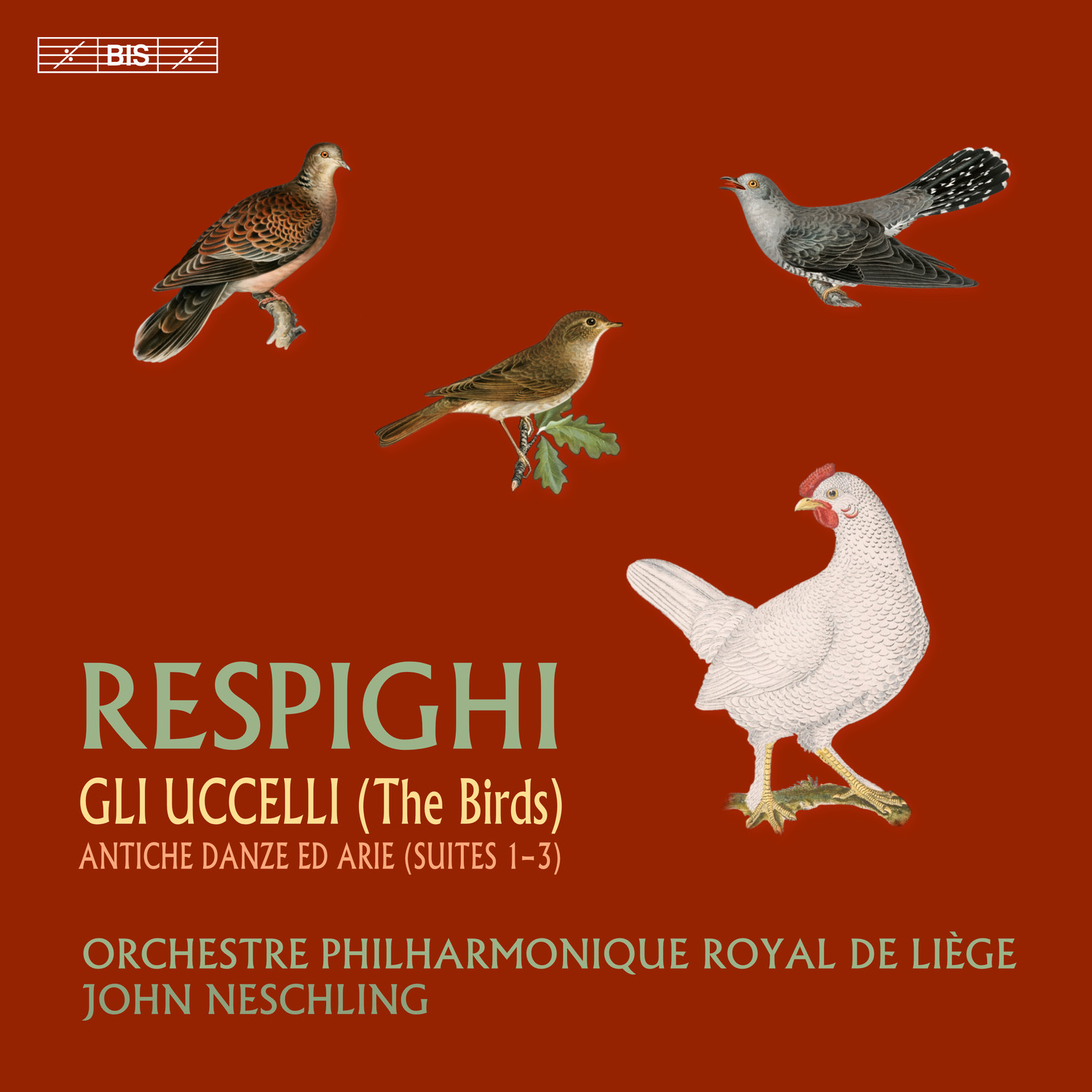
Orchestre Philharmonique Royal de Liège / John Neschling
Respighi
Gli uccelli (The Birds) (1928)
Antiche danze ed arie (Ancient Airs and Dances):
Suite no.1 (1917)
Suite no.2 (1923)
Suite no.3 (1931)
BIS BIS 2540 SACD [75’30”]
Producer Ingo Petry
Engineer Fabian Frank
Recorded 5-9 July 2021 at Salle Philharmonique, Liège, Belgium
Written by Ben Hogwood
What’s the story?
With this release, BIS add a seventh instalment to their richly productive survey of orchestral music by Italian composer Ottorino Respighi. Known primarily for his colourful Roman trilogy, Respighi’s output is often restricted in its exposure, and the BIS series is providing an excellent guide to his craft as a master orchestrator and expansive, often flamboyant melodist.
What’s the music like?
With this collection, John Neschling and the Orchestre Philharmonique Royal de Liège look with Respighi to the past. Gli uccelli (The Birds) is a wonderful work, a suite of five character pieces profiling birds as originally seen through the eyes of 17th and 18th century composers in works for harpsichord or lute. With a little extra musical material and plenty of imagination Respighi brings the various species to life through the colours of a medium-sized symphony orchestra, using contemporary techniques but always letting the winsome melodies shine through.
The three suites of Ancient Airs and Dances show his knowledge and love of music from a more distant past, being orchestrations of works originally written for lute by Italian and French composers in the 16th and 17th centuries. They provide a wide emotional range, too, from the exuberance of the first two suites to the more solemn intonations of the third, which is for string orchestra only. Each suite is a progression of dance movements, meaning the listener’s foot will often be tapping, while by contrast the slower dances have an elegance and solemnity that gives them extra emotional impact.
Does it all work?
It does, especially in these performances, where Neschling leads the Liège orchestra in strongly characterized accounts. The Birds that is notable for its affection and flair, and listeners could easily play ‘guess the bird’ and be right more often than not! A beautiful oboe solo sets La colomba (The dove) aside, while flute, bassoon and horn are affectionate companions as they portray L’usignuolo (The nightingale). These contrast with the perky steps of La gallina (The hen), clucking as it struts around, not to mention a bracing Preludio and the wonderful ‘call and response’ of Il cucù (The cuckoo).
The Ancient Airs and Dances are just as good. Initially the tempo for Suite no.1 Balletto suggests it might be too slow, but the orchestral phrasing ensure this is not a problem and the ensuing Gagliarda has beautifully contrasting sections. The string soloists in the Villanella deserve credit for their obvious affection, while the brightly lit Passo mezzo e Mascherada closes an ideal performance.
The Suite no.2 begins with an alternately tender and exuberant Laura soave, which cuts to a bracing Danza rustica. The extended Campanae parisienses and Aria shows off Respighi’s talents as an orchestral painter, with emotive chorales for wind and strings, before a spirited Bergamasca.
The relatively sombre third suite is elegantly turned, with an attractive Italiana and Sicliana. These bisect the Arie di corte, where elegiac violas take the lead with brighter sections inbetween. The closing Passacaglia is increasingly dramatic, Neschling executing the darkness to light transition with power and panache.
Is it recommended?
Wholeheartedly. Collectors of the series will not hesitate, but this is also an ideal starting point for anyone interested in Respighi’s work. All concerned deserve a vote of thanks for versions of these works that go right to the top of the digital pile.
Stream
Buy
For more information on this release visit the BIS website
 Arcana.fm