The latest addition to the English Symphony Orchestra library of online music is the first performance of Philip Sawyers‘ major choral work, Mayflower on the Sea of Time.
With its ‘luminous and ecstatic choruses’ picked out by Richard Whitehouse in his review of the initial concert, this is an affirmative and major piece by one of the finest contemporary English composers.
Soprano April Fredrick and baritone Thomas Humphreys are joined by the ESOChorus and English Symphony Orchestra in the premiere from Worcester Cathedral, given on 17 June this year.
April Fredrick (soprano), Thomas Humphreys (baritone), ESO Chorus, English Symphony Orchestra / Kenneth Woods
Dvořák Symphony no.9 in E minor Op.95 ‘From the New World’ (1893) Sawyers Mayflower on the Sea of Time (2018) [World Premiere]
Worcester Cathedral Saturday 17 June 2023
Reviewed by Richard Whitehouse
This final concert of the season by the English Symphony Orchestra brought us the premiere of a piece delayed from three years ago. Philip Sawyers’ Mayflower on the Sea of Time was to have been launched at the Three Choirs Festival in April 2020, but the pandemic derailed this as so many other events. Happily, the tenacity of conductor Kenneth Woods has paid off such that the composer’s largest work so far was finally heard, and in the venue originally intended, making for a notable addition to the English choral tradition and one wholly on its own terms.
Commissioned to mark the 400th anniversary of the sailing of the Mayflower from Leiden to Plymouth and thereby founding the United Sates of America, this is an oratorio in concept but equally a choral symphony in its overall design and thematic cohesion. Its libretto, mainly by the artist Philip Groom, features set-pieces for various figures from the Old and New Worlds duly taken by soprano and baritone soloists (those for treble being allotted to sopranos in the chorus), but these along with ones for chorus are drawn into an inherently musical evolution.
Formally, there are four continuous parts. Persecution and Journey, a sonata design such as informs the Pilgrims’ flight from religious persecution and their decision to cross the Atlantic; Arrival in the New World, a slow movement charting their embarkation and tentative initial interaction with native peoples; Survival and Making our Community, a scherzo where the Pilgrims’ industriousness and idealism quickly becomes its own justification; and Our New World, a rondo-finale whose looking to the future is framed by choruses of growing fervour.
As befits such a work, the choral writing is both extensive and resourceful – not least when it elides between depicting Pilgrims or Natives, and that of a more abstract commentary. No less assured, the writing for soprano and baritone allows Sawyers’ lyrical impulse free reign – not least in extended sections toward the end of the second and fourth parts; the latter, especially, rendering comparable passages by Delius or Tippett from a perspective wholly of the present. On either side, luminous and ecstatic choruses accentuate an essentially affirmative message.
The contributions of April Fredrick (no stranger to Sawyers via her long association with the ESO) and Thomas Humphreys could hardly be faulted for commitment or insight, while that of the ESO Chorus exuded a power and immediacy amplified by the resonance of Worcester Cathedral’s acoustic as to belie its relatively modest numbers. The ESO gave its collective all throughout, projecting the textural intricacy and emotional heft of music whose longer-term formal integration was securely conveyed through Woods’s precise yet unobtrusive direction.
Before the interval, Woods gave a notable account of Dvořák’s Ninth Symphony. The poised anticipation of its introduction and visceral drama of its coda were highlights of the opening Allegro, proceeded by a Largo of an eloquence epitomized by rapt cor anglais playing from Louise Braithwaite. Contrast between the incisiveness of the Scherzo’s outer sections and the lilting delicacy of its trio was pointedly underlined, then the final Allegro surged onward to a coda paying tribute to 19th-century symphonism while blazing a trail for what was to come.
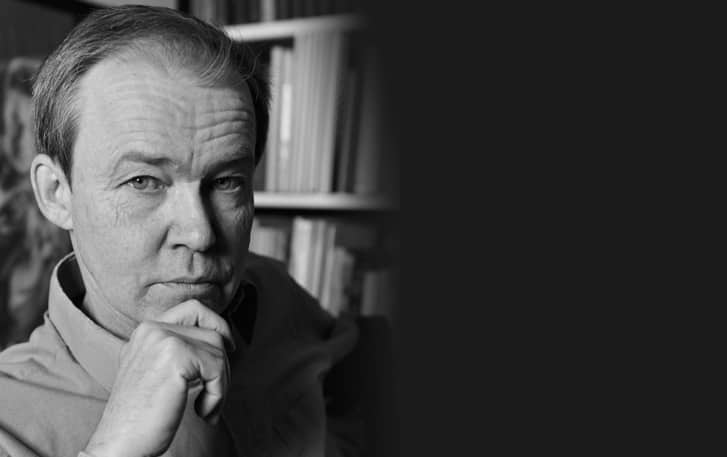
Philip Sawyers (above) Double Concerto for Violin and Cello (2020) Viola Concerto (2020)
Daniel Rowland (violin, viola), Maja Bogdanović (cello), English Symphony Orchestra / Kenneth Woods
Filmed at the Wyastone Concert Hall, Monmouth, Thursday 3 March 2022. Producer Phil Rowlands / Videographer Tim Burton
by Richard Whitehouse. Photo of Daniel Rowland and Maja Bogdanović (c) Stefan Bremer
Since returning to composition with a vengeance almost two decades ago, Philip Sawyers has created a varied output dominated by six symphonies along with five concertos that between them confirm the professionalism of his writing and a sensitivity to the instrument(s) at hand. Two of them were written, one after the other, in 2020 and received their public premieres at Hereford and Great Malvern in March last year.
Daniel Rowland (violin), Maja Bogdanović (cello)
Before that, they were recorded at one of the English Symphony Orchestra’s Wyastone sessions and it is these accounts which feature here. The live performances were covered when part of their respective concerts (see the reviews of the Double Concerto and Viola Concerto respectively), hence it only needs to be added that the studio recordings more than compensate for any lack of spontaneity with what they gain in subtlety of characterization.
The conviction of these readings should only be abetted when they are commercially issued on 6th March, as part of the ESO’s latest Sawyers release which also features his Octet for ensemble and Remembrance for strings (its public premiere to be given by the Leamington Chamber Orchestra at Holy Trinity Church, Leamington Spa on Sunday March 26th). Good news, moreover, that his oratorio Mayflower on the Sea of Time, whose premiere at the 2020 Three Choirs Festival fell victim to the pandemic, is to receive its first hearing later this year.
Recorded Live performances at Macky Auditorium, Boulder, Colorado, 28 August 2021
reviewed by Richard Whitehouse
What’s the story?
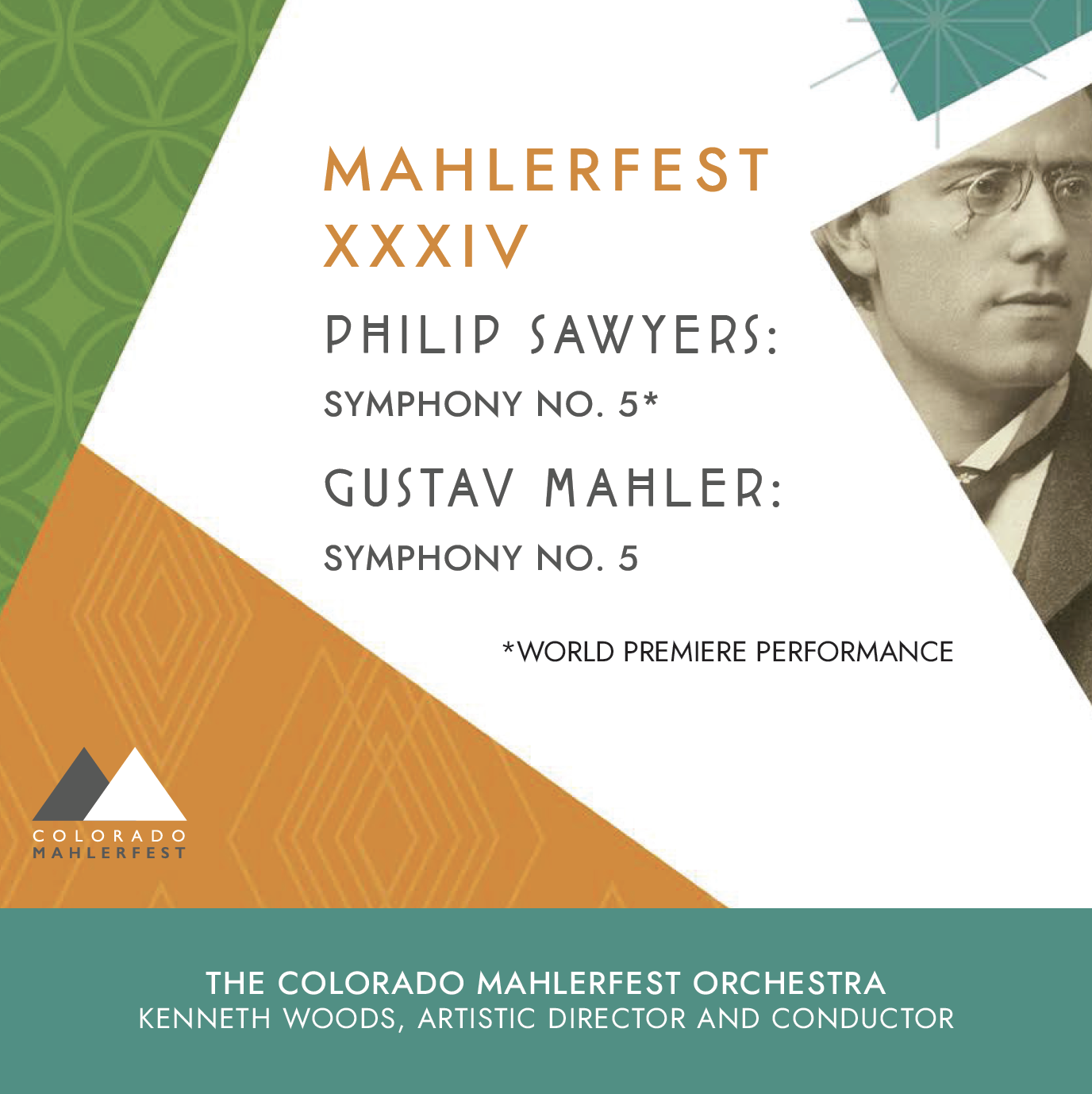
Two five-movement Fifths brought the 34th Colorado MahlerFest to an impressive ending. Mahler’s cycle is often seen as ‘end of the line’ for the symphony, yet its further evolution is not hard to discern, and Kenneth Woods is rightly making this a crucial aspect of his tenure.
What’s the music like?
Philip Sawyers’ Fifth Symphony pursues a stylistic path comparable to those two before it. Its predecessor ended with an expansive Adagio, and this work continues from such inward seriousness in a Moderato that overrides clear-cut sonata procedures for a gradual unfolding whose thoughtful initial theme takes on greater emotional intensity as it builds to an ominous climax, before closing in a mood of no mean ambivalence. The writing, for an orchestra with fifth horn and harp though no percussion other than timpani, is never less than resourceful.
From here an Allegro increases the tempo to capering and, in its middle stages, wistful effect. The central Lento pursues a sustained course over cumulative paragraphs, the latter climaxing with the work’s most anguished music, before an affecting coda. The ensuing Presto affords greater expressive contrast between impulsive outer sections and a chorale-like trio of musing poise. The final Allegro is the most orthodox movement in its energetic and reflective themes, taking in an intensive development and subtly modified reprise prior to a decisive apotheosis.
Pacing is crucial in Mahler’s symphonies, his Fifth being no exception. The opening Funeral March is ideally judged – its development not too histrionic, then a coda whose eruptive force subsides into numbed uncertainty. Proceeding without pause, its successor steers securely to a climactic yet ill-fated chorale, and if the final return of its initial music lacks vehemence, the pulsating expectancy of the closing bars is tangibly rendered. Woods’ handling of the central Scherzo contrasts a rustically evocative trio with the ländler-infused coyness and contrapuntal contrivance either side, the coda wrapping up this overlong movement with real decisiveness.
The remaining two movements are finely realized, the Adagietto taken at a flowing if flexible pace that enables its inherent rapture to emerge without any risk of indulgence. The deftest of transitions duly prepares for a finale whose elaborate interplay of rondo and sonata elements is replete with a cumulative impetus here carried through to a fervent peroration, the chorale blazing forth during a close in which affirmation and nonchalance are irresistibly combined.
Does it all work?
Almost always. Sawyers’ Fifth symphony is a cohesive and absorbing piece – less arresting in overall content than either of its predecessors, though with an unfailing formal logic and expressive eloquence that are not to be gainsaid. Interesting, moreover, that this Fifth marks something of a rapprochement with ‘classical’ tonality, whereas Mahler’s Fifth sets in motion a fractious discourse which informs almost all this composer’s subsequent symphonic works.
Is it recommended?
Certainly. The playing of the Colorado MahlerFest Orchestra is of a high standard, testifying to the excellence of these musicians in their collective responsiveness to Woods’ technical acumen and interpretive insight. To hear this work so authoritatively realized and within the context of a major new symphonic statement says much for the significance of MahlerFest.
Poulenc Sinfonietta FP141 (1947) Sawyers Viola Concerto (2020) [World Premiere] Mozart Symphony No. 40 in G minor K550 (1788)
Daniel Rowland (violin), English Symphony Orchestra / Kenneth Woods
The Priory, Great Malvern Saturday 5 March 2022
Written by Richard Whitehouse
Having relocated from Hereford to Great Malvern, the English Symphony Orchestra’s second concert this weekend followed a broadly similar format with, once again, a first public hearing for a recent concerto by its former Composer-in-Association and now its Composer Laureate.
First, though, a welcome revival for the Sinfonietta that Poulenc wrote for the founding of the BBC’s Third Programme (later Radio Three). The composer wrote little music for orchestra outside a concertante or theatrical context, making this piece from his maturity more valuable. Poulenc’s aesthetic may have been avowedly non-symphonic, but there is no lack of formal focus in an opening Allegro as was suitably impetuous here; nor of capering wit in a scherzo that only marginally outstays its welcome. Not so the Andante, whose fusion of ingratiating charm and restive pathos is almost a character portrait. A showcase, too, for woodwind such as the players seized upon gratefully – the orchestra entering into the spirit of the final Rondo with an abandon neatly offset by the introspective closing pages with their equivocal pay-off.
Not wishing to invoke the joke about buses, but Philip Sawyers had directly followed up the Double Concerto heard yesterday with a Viola Concerto for Daniel Rowland. The outward three-movement trajectory is retained, but the musical content is appreciably different – not least in the moderately paced Allegro whose substantial initial tutti outlines numerous ideas explored extensively if understatedly over what follows. Nor does the absence of a cadenza sell short a viola part whose plangent tones are enhanced with the translucent orchestration.
Almost inevitably less immediate than the corresponding movement of its predecessor, the central Andante is absorbing in its meditative soliloquy for the soloist – often in the company of solo wind and whose haunting demeanour is countered though never quite dispelled by the final Allegro. Here the lively refrain provides an outlet such as Rowlands, clearly as adept a violist as he is a violinist, despatched with no mean virtuosity. Once again, it was a sense of the whole work brought formally and expressively full circle as gave the coda its conviction.
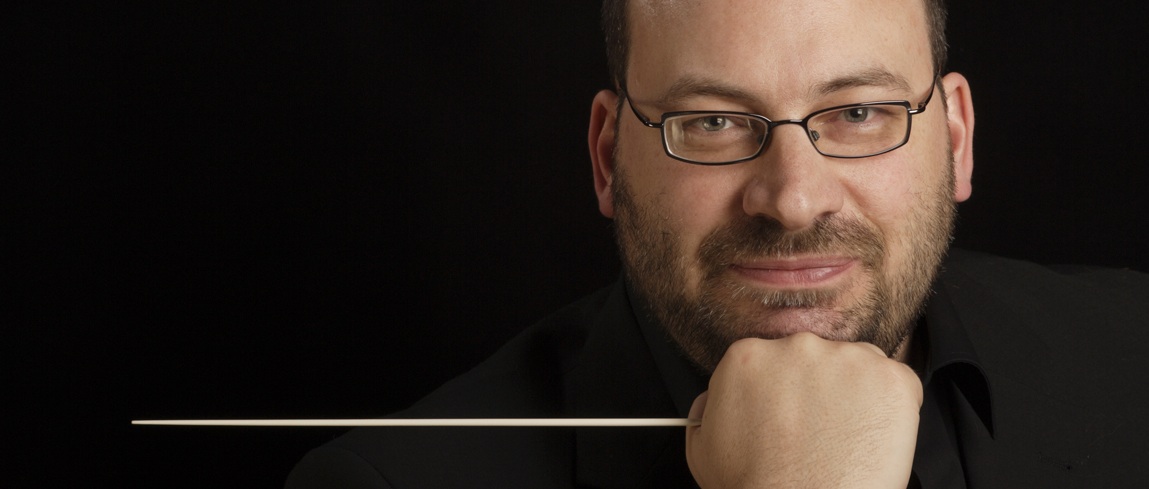
Continuing their reverse traversal of Mozart’s final three symphonies, the ESO and Kenneth Woods (above) tonight gave the 40th – most dramatic of the trilogy and whose innovations are easy to take for granted, but whose opening Allegro is never less than compulsive when the trade-off between its indelible main theme and tensile accompaniment was so intently maintained through to the fatalistic coda. The Andante can often feel flaccid but not when directed with such attention to its lilting gait and expressive intensity, while the Menuetto had a rhythmic trenchancy and harmonic acerbity offset by its trio’s repose. The final Allegro unfolded at an ideal tempo – its second-half repeat vindicated by an altered emphasis on the development’s visceral opening sequence, with a heady ratcheting-up of emotion in those very closing bars.
Impressive music-making, and just what was needed in what are suddenly dangerous times. Reason enough, therefore, for having begun this concert (as on the previous night) with the Ukrainian national anthem: an opportunity, however brief, for some much-needed reflection.
For further information on the ESO’s 2021/22 season click here, and for more on composer Philip Sawyers click here Meanwhile for more information on the artists, click on the names to access the websites of Daniel Rowland and Kenneth Woods. Meanwhile for more on musical events at Great Malvern Priory, click here





 Arcana.fm