

Ilya Gringolts (violin), BBC Symphony Orchestra / Roderick Cox
Debussy Prélude à l’après-midi d’un faune (1891-4)
Wennäkoski Prosoidia (BBC co-commission: world premiere)
Lyatoshinsky Grazhyna
Stravinsky The Firebird – suite (1919)
Barbican Hall, London
Friday 3 November 2023
Reviewed by Ben Hogwood. Pictures courtesy of BBC/Mark Allan
If the number of concertgoers whistling the Finale of Stravinsky’s Firebird down Silk Street to the tube was anything to go by, this typically creative BBC Symphony Orchestra program had made its mark.
This was in spite of a late change of conductor, Roderick Cox replacing the indisposed Eva Ollikainen – yet the transition was seamless, Cox an alert and subtly commanding presence who clearly enjoyed making music with his new charges. All those qualities were evident in a hazy, sensuous account of Debussy’s Prélude à l’après-midi d’un faune, the temperature raised in spite of the autumnal weather outside. This is, as Paul Griffiths observed in the booklet notes, where Debussy’s ‘music begins here afresh. So does modern music generally.’ Daniel Pailthorpe’s flute solo set the tone, the BBC Symphony Orchestra revelling in alluring wind melodies and hazy, soft-focus strings. The sense of the new – even 120 years after completion – was tangible throughout.
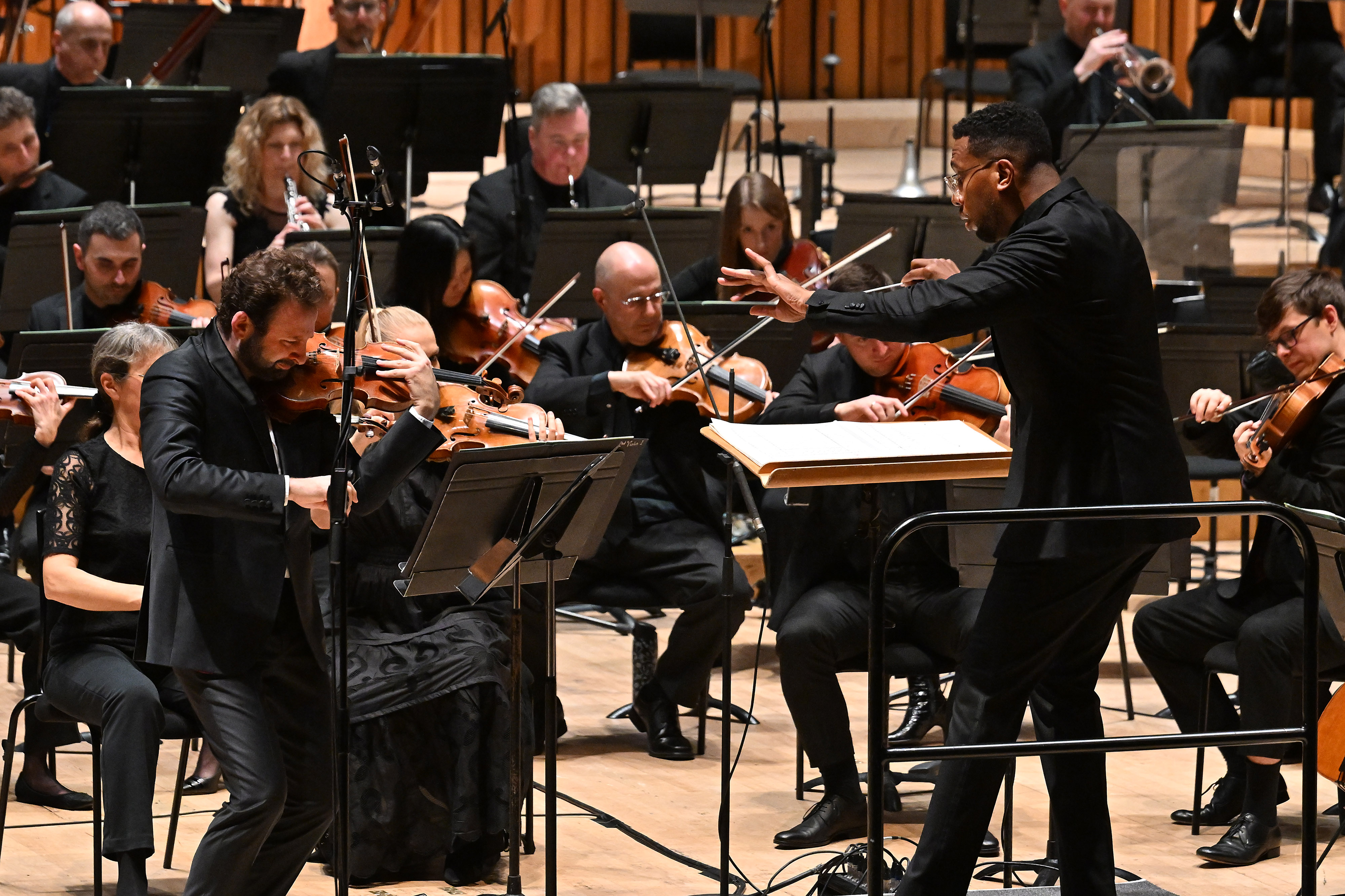
Lotta Wennäkoski’s Prosoidia was also new – still drying on the page in fact, as this was the world premiere of a co-commission from the BBC SO, Lahti SO and Norrlands Opera for violin and orchestra. Though not billed in the title as a violin concerto it assumed that function, though Ilya Gringolts (above) moved between his own solo statements and conversations as part of the orchestra. Throughout he showed impeccable technique and great expression. The orchestra’s role was headed by percussion and harp, with some exquisite shading especially in the quiet music. How refreshing to hear a composer confidently writing music that the audience strained to hear, the resultant effect all the more powerful for this restraint. Here Wennäkoski was reflecting linguistic instructions inspired by ‘prosody’ – the word referring to the musical properties of speech: rhythm, pitch, stress and pauses. Her focus gave the work a moving humanity, a concerto where wordless instrumental voices spoke with great intensity.
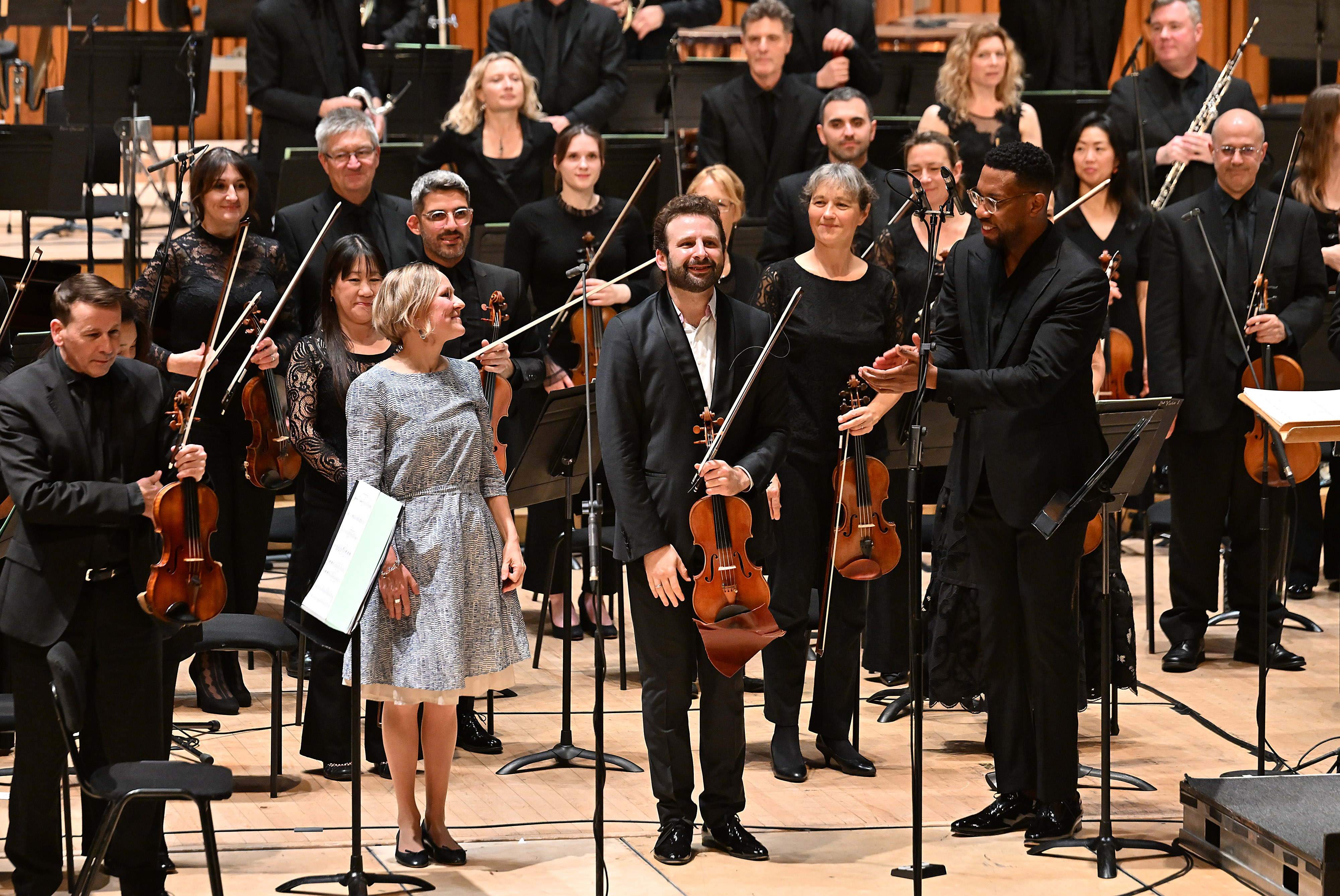
The second movement, Word Stress, had a primal savagery, the orchestral voices clamouring to be heard and on occasion drowning the violin. Here the influence of Bartók was palpable, Wennäkoski drawing perhaps on her studies in Budapest. A moving third movement followed, inspired by Ingmar Bergman’s film Cries and Whispers – and in particular a scene where the voices are replaced by the Sarabande from Bach’s Cello Suite no.5. Written in memory of the recently departed Kaija Saariaho, Wennäkoski’s teacher, it was an intimate discourse, recalling the equivalent passage in Berg’s Violin Concerto where the composer also quotes from Bach. Here the approach was less explicit but formed an engaging tableau, where the dynamic dimmed and textures became spare at the thoughtful close. A concerto with an appealing economy and frank musical language, Prosoidia deserves a regular place in the repertoire.
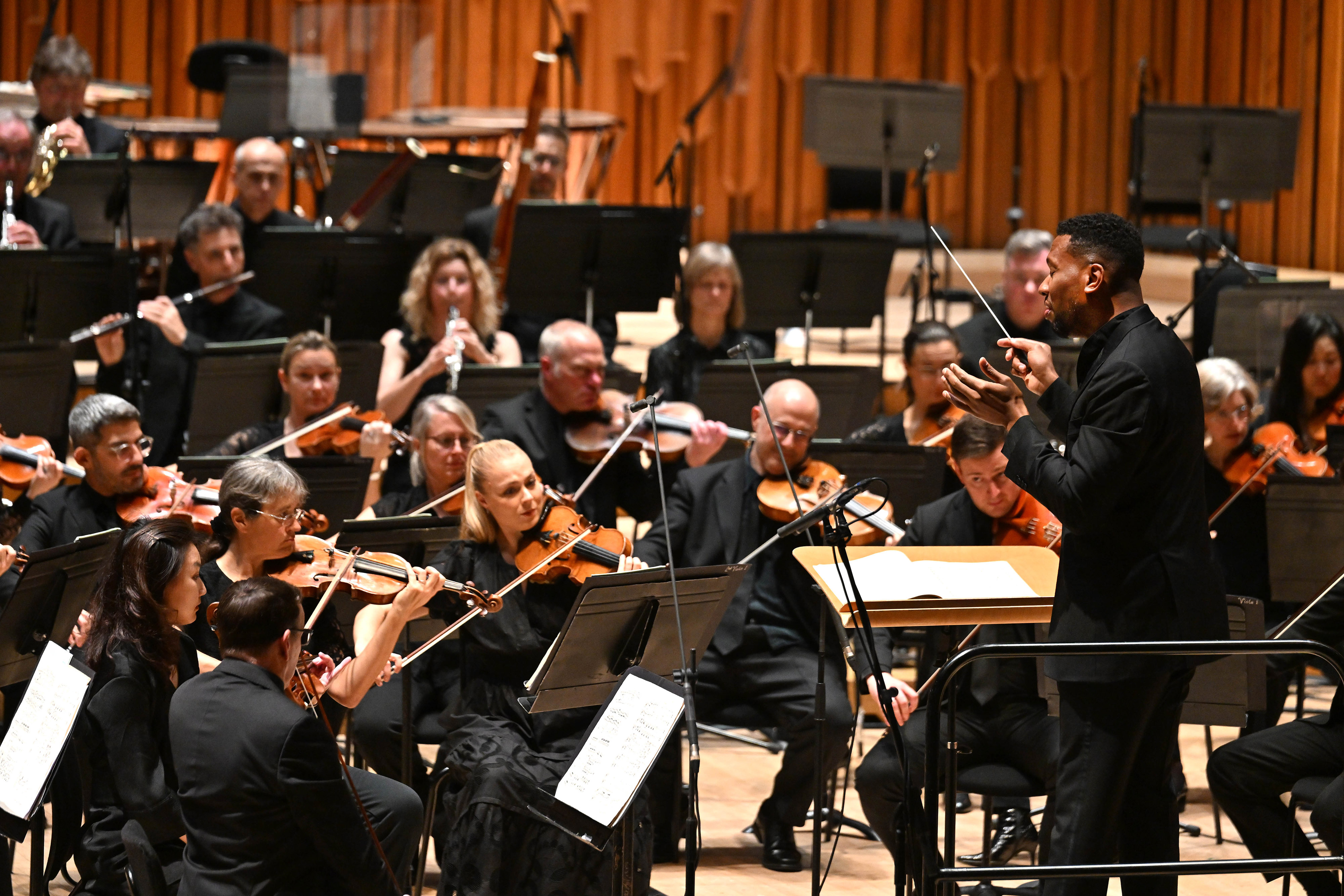
After the interval we heard music from Boris Lyatoshinsky, described in Martin Anderson’s composer profile as ‘the first explicitly Ukrainian composer of the modern age’. Grazhyna, a symphonic poem about a fictitious 15th century female Lithuanian chieftain, cast its eyes back to Liszt and Saint-Saëns in its orchestral narrative, but the modern harmonic language of 1955 spoke more of Myaskovsky and Shostakovich’s music for the stage, not to mention the lasting influence of Lyatoshinsky’s teacher Glière. Roderick Cox presided over a convincing interpretation, impressively grasping the piece in spite of what was surely limited preparation. From the brooding violas portraying the River Neman, we heard a plangent cor anglais lament from Max Spiers, then a high voltage tutti as the battle scene raged. Though short on distinctive melodies, Grazhyna was dramatic to the last as the river music returned, capping an atmospheric and compelling account.
This was also the case for Stravinsky’s 1919 suite from The Firebird, fashioned by the composer into a crowd-pleasing five movements, and creeping in stealthily on the lowest strings. This was an assured interpretation, Cox cajoling the well-drilled BBC SO through a thrilling Infernal Dance, having enjoyed the vivid colours of The Princesses’ Round Dance. The bassoon of Andrea de Flammineis excelled in the Berceuse, where Stravinsky’s ‘sweet and sour’ melodies were in evidence, before the bold as brass Finale that sent the audience home whistling. This was an impressive concert all round, showing the strength in depth the BBC Symphony Orchestra possess these days. Their ensemble, a winning combination of experience and raw talent, is enjoying a purple patch.
You can listen to this concert on BBC Sounds – and read all about the 2023/24 season and book tickets at the BBC Symphony Orchestra website. Click on the artist names for more on violinist Ilya Gringolts and conductor Roderick Cox, and for more on composer Lotta Wennäkoski
Published post no.1,999 – Saturday 4 November 2023

 Arcana.fm