

Sam Hayden
Picking up the Pieces (1991, rev. 2019) – Darragh Morgan (violin)
AXE[S] (1997, rev. 2009/19/21) – Mats Scheidegger (guitar)
Frammenti di divenire (2018) – Gianpaolo Antongirolami (soprano saxophone); Michele Selva (baritone saxophone)
Attente (2018-19) – Carla Rees (flute)
Remnants I (2018-19) – Richard Haynes (contrabass clarinet)
Remnants III (2021) – Karoline Öhman (cello), Tamriko Kordzaia (piano)
Métier MSV28622 [two discs, 84’51’’]
Producers/Engineers Mikey Parsons (Picking up the Pieces), Mats Scheidegger (AXE[S]), Francesco Sardella (Frammenti di divenire), Simon Paterson (Attente), Fabio Oehrli (Remnants I), Marcel Babazadeh (Remnants III)
Editing/Mixing Sam Hayden
Recorded 11 July 2019 at King Charles Court, London (Picking up the Pieces), 21 September 2021 at SRF Studio, Zurich (Remnants III), 7 January 2022 at Nottingham University (Attente), 25 February – 8 May 2022 at Home Studio, Zurich (AXE[S]), 13 May 2022 at Helvetiaplatz, Bern (Remnants I), 29 June 2022 at Pinkhouse Studio, Ancona (Frammenti di divenire)
written by Richard Whitehouse
What’s the story?
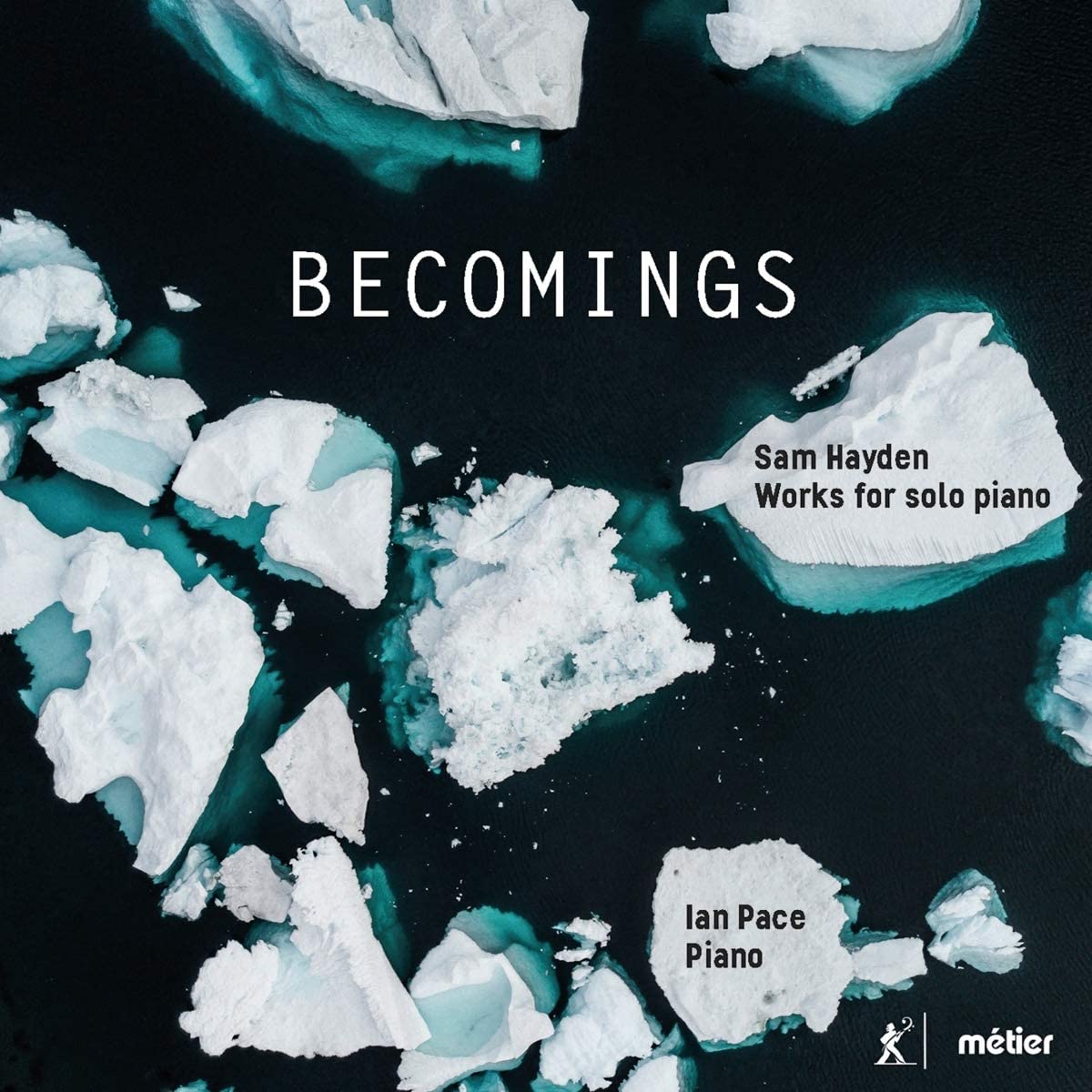
Métier continues its coverage of Sam Hayden (following that of his piano music Becomings) with this collection of solo and duo pieces drawn from either end of his composing career.
What’s the music like?
As one would expect from Hayden, his music brooks no compromises and takes no prisoners. Heard in the running sequence specified here, the works run chronologically with those most recent pieces coming first. The Italian saxophone duo makes the most of the volatile textural layering and fractured spectral harmony in Frammenti di divenire, then Carla Rees is no less inside the tensely expressive idiom of Attente with its multi-section discourse (whether those designated ‘IIIa’ and ‘IIIb’ are intended to be heard continuously or as alternatives is unclear).
Next come the first and third items in the Remnants series (the worklist at Hayden’s website does not yet extend after 2018, but the second is for bass trombone). The first of these finds Richard Haynes forcefully ejecting sounds and sequences that are the ‘composed’ remains of an elaborate computer-generated process, while the third pursues a more flexible though still rebarbative dialogue between cello and piano, where a variation-like evolution can be sensed as part of an ongoing and combative interplay between microtonal and conventional tunings.
The second half of this set features two large-scale works from earlier in Hayden’s output, and his involvement with the ‘new complexity’ movement then at its most potent in the UK. Despite (even because of) its title, Picking Up the Pieces unfolds as a tautly focussed entity – made more so by its initial ‘motto’ phrase that remains detectible throughout all manner of transformation on the harmonic, rhythmic and textural levels. Superbly realized by Darragh Morgan, it is among the most impressive instances of cohesion wrested from fragmentation.
If the epic which is AXE[S] does not quite achieve such an overall unity, this is likely a result of the work’s overall scale (virtually half an hour of uninterrupted music) and its tendency to discursiveness evident in those numerous types of material that are continuously crosscut in what becomes an odyssey for the instrument and its performer as much as the actual content. Having commissioned, premiered and worked towards its realization this past 25 years, Mats Scheidegger embraces the challenge of presenting this piece in all its uncompromising glory.
Does it all work?
Yes, if each listener wishes it so. As has frequently been remarked, Hayden’s work has never made any concessions to those performing or hearing it; nor has his recent involvement with spectral techniques brought any lessening of the technical rigour or expressive vehemence as has characterized his thinking for over three decades. To do so would not have necessitated a response of such unwavering commitment from its exponents, who ensure that the demands made on them become integral to the overall experience of coming to terms with this music.
Is it recommended?
Yes. The all-round excellence of these performances is matched by the focus and immediacy of the sound in each instance, together with detailed while not unduly abstruse notes from the composer. Those coming to his music afresh are not likely to remain emotionally uninvolved.
Listen
Buy
You can explore purchase options for this album at the Divine Art website. You can find out more on Mats Scheidegger at his Bandcamp page, and click here for more on composer Sam Hayden
Published post no.1,982 – Wednesday 18 October 2023
 Arcana.fm