Switched On – Hologram Teen – Captain Fluo (Hologram Opera)

by Ben Hogwood

What’s the story?

Morgane Lhote returns as Hologram Teen, the alias under which she has shown her enjoyment of electrofunk and disco. Captain Fluo is described as ‘a love letter to the Paris of the 1980s’, where slinky disco was the order of the day.

Lhote was once the keyboardist with Stereolab, from 1995-2001, a period many would consider to be the group’s imperial phase. Alongside the musical project Garden with James Ford (Simian Mobile Disco), she established Hologram Teen ten years back, in 2015.

What’s the music like?

Two words – breezy and summery. There is a broad sense of musical enjoyment here, immediately transmitted through a selection of dancefloor instrumentals and quality vocal guest slots.

Occasionally Lhote enjoys flirtations with the 1990s – Pack Ur Patience having a riff Electronic would have been proud of – but more often than not her joyous reference points are the 1980s.

She heads straight for the disco dancefloor with Actarus, staying there for a change of tempo as the low-slung funk of Connection transpacifique kicks in, here with a confidential but confident vocal from Sandra Zettpunkt, the nearest we get to Stereolab in musical form.

Zettpunkt appears again on the fun Pack Ur Patience, where chimes and chunky basslines trade off, while Eric D. Clark appears for an oblique Why Ya Wanna Wait? Frêquence Gaie, with Maxwell Farrington, is a richly scored slow disco number, its deadpan vocal making Phil Oakey prick up his ears.

Chunky groovers abound on the instrumental tracks, with Walkman, Lust Pill! and Memphis Sounds all good fun, the latter a quickstep with bubbly keyboards.

Does it all work?

It does. Hologram Teen treads just the right line between confidence and vulnerability, enjoying itself along the way.

Is it recommended?

Heartily. Summery sounds that raise a smile from the outset, with a blend of sassy songwriting and instrumental craft. Captain Fluo will raise many smiles.

For fans of… Stereolab, Human League, Can, Lipps Inc., Eurythmics

Listen / Buy

Published post no.2,575 – Wednesday 24 June 2025
On Record – Laetitia Sadier: Rooting For Love (Drag City)

by Ben Hogwood

What’s the story?

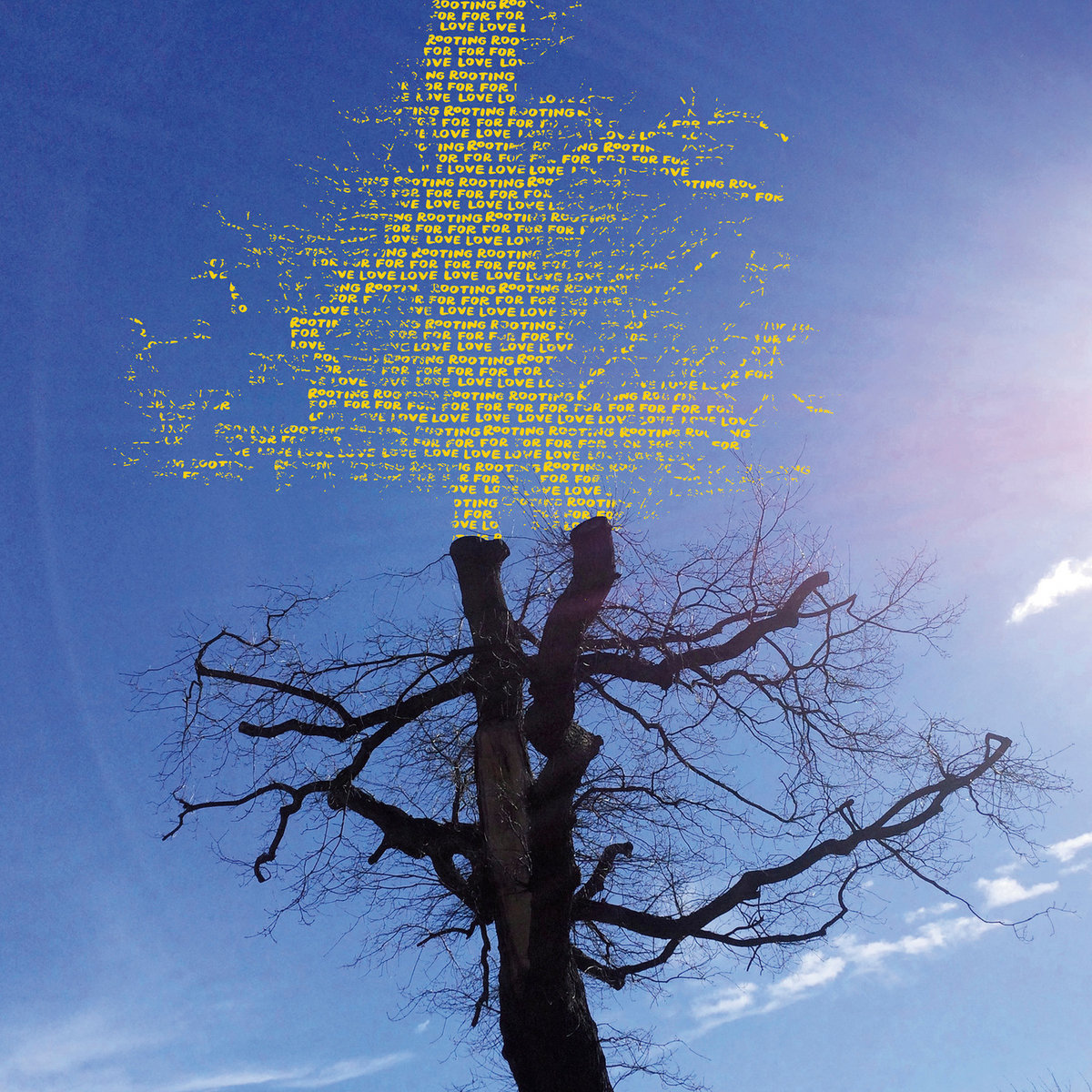
Laetitia Sadier is best known as the frontwoman of Stereolab, the band who have carved a wholly distinct niche for themselves in pop music over the last 35 years. Yet now and then she delves into some interesting side projects, including the band Monade – or her own solo work. Rooting For Love is her first such album in seven years.

On it, Sadier’s quest is to provide for the listener a way out from the state of the world today, looking for an end to suffering and moving towards healing of the traumas the human race has been suffering of late.

What’s the music like?

With such ambitious aims, the worry would be that Sadier’s work would be regarded as pretentious or having ideas way above its station. Happily neither is the case, for this is a deeply felt set of songs that really do go some way towards making their listener feel more empowered and less downtrodden.

Typically, Sadier sings some of the album in French and some in English, and it is easy for the listener to follow. Musically, however, the language is some of the most exploratory we have yet heard from her. There are still plenty of references to the pop, funk or bossa nova that frequently seeps into her work with Stereolab, but here the results are even less constrained, totally in response to the lyrical material.

As the album progresses, so the intensity heightens. While first song Who + What shows how much instrumental colour she has at her disposal, it also sets the scene for what lies ahead. La Nageuse Nue (The Naked Swimmer) has a starry backdrop, while sonically The Inner Smile makes a very strong impact, not just through Sadier’s resonant voice but the block organ chords surrounding it.

Yet the peak of intensity comes with the last song, Cloud 6. Here the rich brass and fuzzy atmospherics provide a backdrop to a strong vocal motif that gains in power, rather like a Philip Glass offshoot, and lyrics that culminate in Sadier’s striking pronouncement that “I’m not fucking around, you’re halfway dead.” With that the music suddenly cuts off, leaving silence in its wake.

Does it all work?

It does – and the way the intensity builds as the album progresses is rather striking. Sadier has much to say, and does so with poise and no little power.

Is it recommended?

It is. A mandatory purchase for Stereolab followers, but a great standalone purchase too. Laetitia Sadier remains at the peak of her powers.

Listen and Buy

Published post no.2,098 – Sunday 25 February 2024

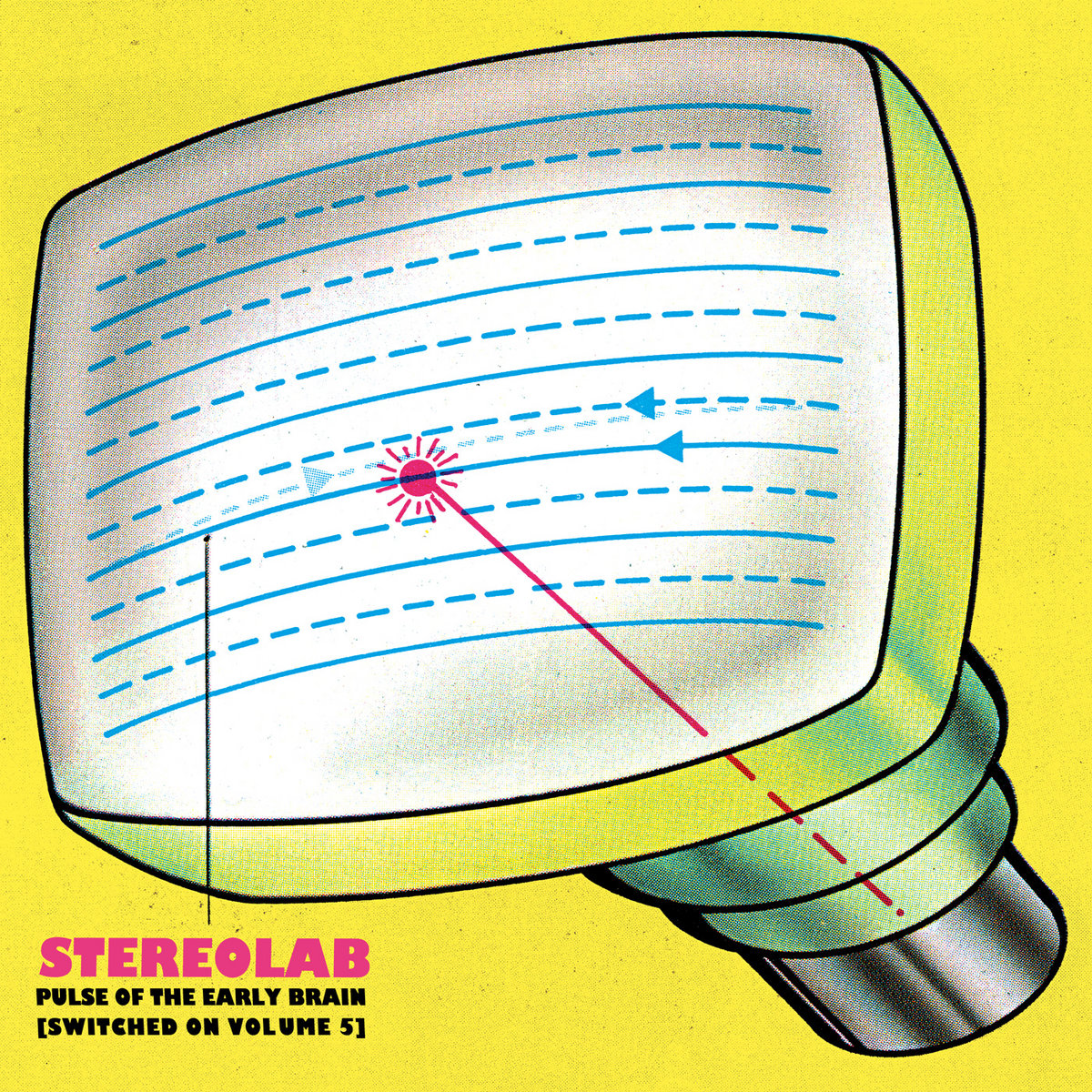
Switched On – Stereolab: Pulse of the Early Brain (Switched On, Vol. 5) (Warp Records)

Reviewed by Ben Hogwood

What’s the story?

The latest – and possibly last – in Stereolab’s Switched On compilation series brings together a range of projects from the 1990s and 2000s, tying up a number of odds and ends.

Two of the tracks (Robot Riot and Unity Purity Occasional) were written for sculptures made by Charles Long. The song for the latter, to quote the band, ‘is channeled through three tubes that simultaneously blow the visitors’ hands dry with warm jets of air’.

Other titbits and rarities include the limited edition Symbolic Logic Of Now!, XXXOOO from 1992, and a track for a Peter Thomas Sound Orchestra compilation album (Blaue Milch).

The biggest feature of the album, however, is the double collaboration between Stereolab and Nurse With Wound from 1997. Lasting 40 minutes, these two longform works were released on coloured vinyl.

What’s the music like?

This is a really enjoyable set of miscellaneous musical treasures, for as we have learned in the previous releases there is barely such a thing as a Stereolab cast-off that isn’t worth listening to.

The extended Nurse With Wound collaborations are especially rewarding. Simple Headphone Mind trips along nicely with enjoyable squiggles, and leads into Trippin’ With The Birds, adopting the same key but utilising an even more experimental approach. There is lots of electronic trickery, the birds making themselves known in a variety of different and imaginative ways.

The collection is well-sequenced, moving backwards and forwards between the earliest material of 1992 and the more dense offerings of later years. The Low Fi EP is a lot of fun, varoom! starting with a driving beat and typically sonorous vocal from Laetitia Sadier and disappearing in white noise. Laisser-faire has a more communal vocal, set back in the mix from the big beats, while Elektro [he held the world in his iron grip] gets some wonderfully woozy electronics together.

ABC feels especially low-fi, with a grubby riff, while Robot Riot is excellent. We don’t hear so much on the vocal front from Laetitia Sadier in particular on this compilation, but we have never heard her voice in the way it appears after Autechre have finished with it. Their remix of Refractions In The Plastic Pulse is an out of body experience, a dislocated vocal married to some particularly busy beats.

Does it all work?

It does, though this collection does now feel like a set of assortments given that these are seemingly the last remaining rarities to be hovered up and collected in the corner together.

Is it recommended?

It is – certainly to completists of the band. Those new to the treasures of Stereolab might want to pick up earlier on in the series, but are advised that this is still an extremely worthwhile addition to the collection.

Listen and Buy

Switched on – new music from Stereolab

Arcana bring good news to fans of Stereolab – having just announced a new album, the band are going back on a European tour in the Autumn.

The album first – and it’s the fifth in the popular ‘Switched On’ series that Warp Records have been exploring. Pulse of the Early Brain [Switched On Volume 5] will be released on September 2, via Warp Records and Duophonic UHF Disks. It will include some intriguing and desirable miscellany from the band, with its lead track, Robot Riot, a previously unavailable piece of music which was written for a Charles Long sculpture:

Also on the tracklisting for Pulse of the Early Brain are two Nurse With Wound collaborations from 1997, a second commission for a Charles Long sculpture, Unity Purity Occasional, and two tracks, Spool of Collusion and Forensic Itch, that made up a rare black vinyl 7” with the Chemical Chords LP in 2008.

This release includes both old and new, however, going back to the Low Fi EP, released on Too Pure in 1992, for four tracks (Low Fi, [Varoom!], Laisser-Faire and Elektro [he held the world in his iron grip].

And so it continues – for a total of 16 tracks. For full details visit the Stereolab Bandcamp site…and for a review of the album when it drops make sure you check back to Arcana!

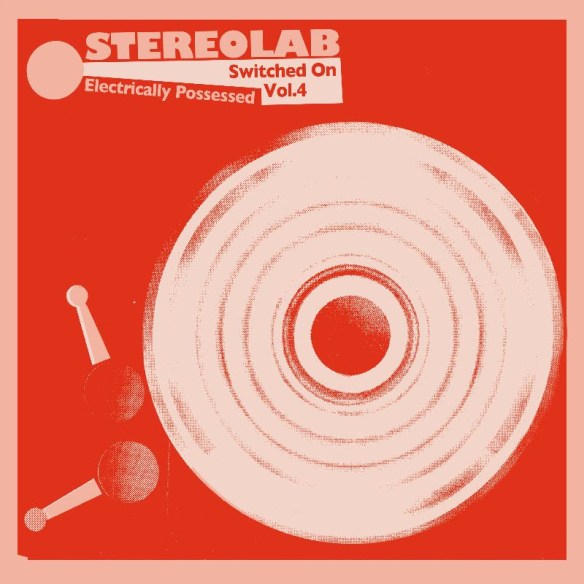
Switched On – Stereolab: Electrically Possessed [Switched On Volume 4] – Warp Records / Duophonic UHF Disks

reviewed by Ben Hogwood

What’s the story?

Stereolab fans tend to be completists, and with good reason. The long running, much-loved band have taken line-up changes and relationships in their stride to be well-known for the consistency of their output. In recent years a housekeeping exercise on the back catalogue has yielded three excellent Switched On volumes, gathering together the band’s extra-curricular tracks, EPs and album-avoiding singles. Volume four of the Switched On collection goes further, a complement to the deluxe album reissues made over the last couple of years. Being a Stereolab fan is an expensive business, but a worthwhile one it seems!

What’s the music like?

As seasoned fans will know, there is something immediately appealing about the Stereolab sound, giving off a comforting warmth. Yet this is never comfortable music, for the spirit of experimentation runs strong, especially in tracks where there are no constraints or boundaries.

Most of the tracks here are instrumental, but they give the listener an opportunity to revel in the sound the band make. Lovely warm keyboards often spill over into Krautrock-inspired riffing, while on occasion there is a lovely cool marimba (Intervals) or the friendly parp of a trombone (Free Witch And No Bra Queen, a track where two simultaneous loops wander out of phase in entertaining fashion). This track also has some deliciously clashing harmonies from the multi-tracked vocals of Laetitia Sadlier.

The vibraphone and trombone-powered groove of Outer Bongolia is rather wonderful, the listener able to bask in the sounds, while Laetitia’s vocalise at the end of Intervals goes nicely with the marimba. I Feel The Air (Of Another Planet) is a beatless wonder with a nice strings / Hammond organ combination, while other highlights include the perky keyboards of Solar Throw-Away (the original version) and the breezy loop powering The Super It. B.U.A is enjoyably far out, while the best riff – among strong competition – goes to Dimension M2, burning a bright light.

Another talent the band has is somehow finding a funky turn for some pretty obscure time signatures. L’exotisme Interieur is the best of these, a track set in 7/4 but still getting the feet tapping.

Does it all work?

Yes. Electrically Possessed may not be an album as such but it is arranged in a satisfying program, so that its 27 tracks never outstay their welcome. The spirit of invention runs through it, and with a consistently high quality threshold it is very rare to get the sense the band are coasting or not fully focussed. In other bands’ outputs the scraps from the cutting room floor should be just that, but in Stereolab’s case the offcuts are well worth hearing and a pleasure to listen to.

Is it recommended?

Very much so – to Stereolab completists but also to relative newcomers to the band. These tracks may not all be fully formed but they are stamped throughout with the familiar identity of breezy funk, experimentation, offbeat rhythms and warm, beguiling sounds. It is a lovely collection to get lost in.

Stream

Buy