Switched On – Craven Faults: Bounds (The Leaf Label)

by Ben Hogwood

What’s the story?

The mysterious Craven Faults knows exactly how to tell a story. The accompanying text for the four track album Bounds does just that, describing the third album as “another 37-minute journey through Northern England via a lifetime obsessing at the fringes of popular culture. New details and perspectives. Dusk gathering.

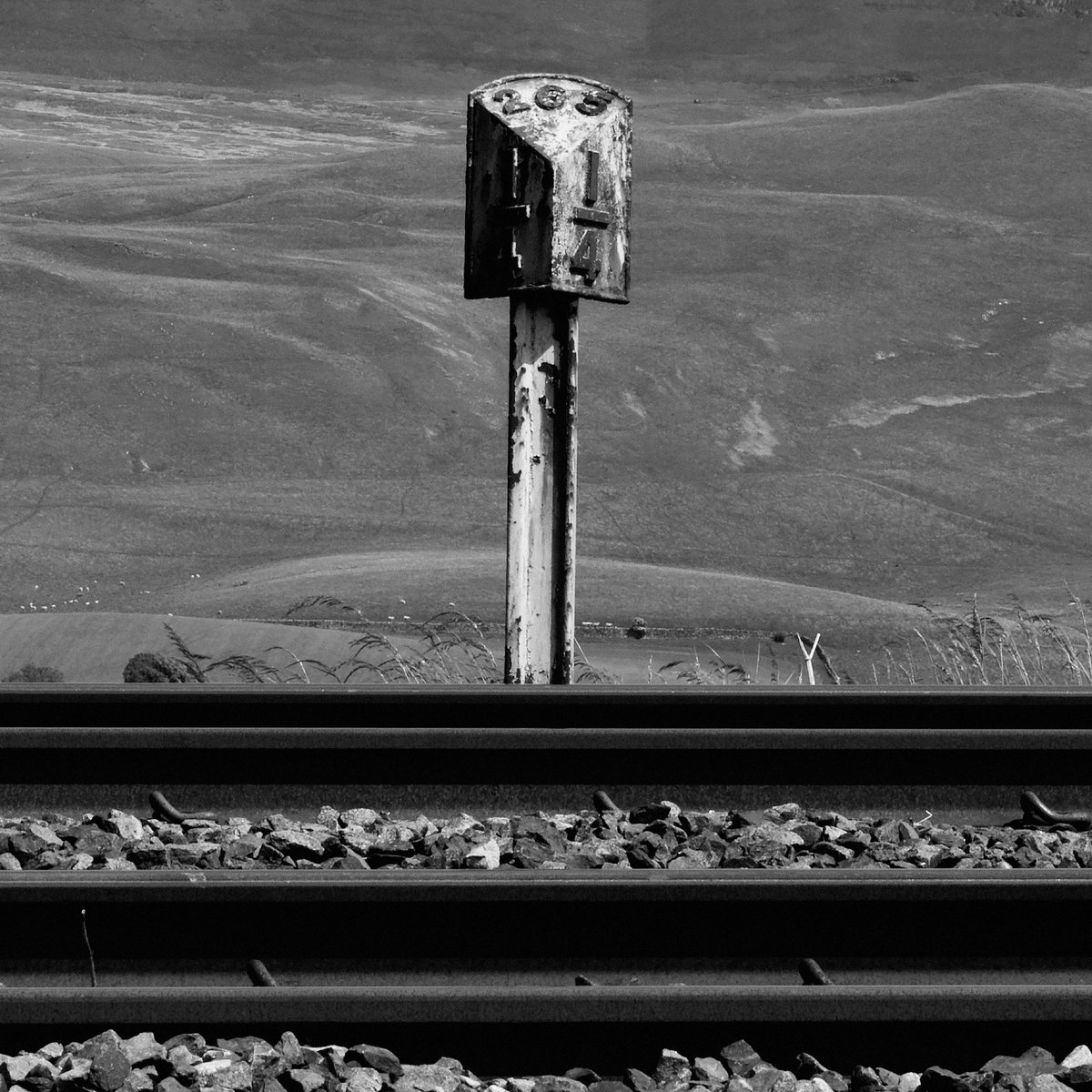
There’s some discussion over where this journey begins. Certainly, less than twenty miles north-west of the city, but possibly much closer. Ironic given we’re searching for a distance marker. A gritstone pillar is the prime candidate – destroyed by lightning almost 200 years ago, and then rebuilt a quarter of a mile away. A curiosity. Many a journey starts here these days, as we take flight and head further north and west. The tarn was drained in 1940 to protect critical infrastructure. We leave the sounds of heavy industry behind us to float weightlessly over the moors.

We pick up pace and hit those levels of repetition engineered to the highest standards in Düsseldorf and Köln, 1971. A gift to the world. At this point the altitude is no longer clear; there’s no sense of scale. We could be a matter of inches from the ground, but the patterns are the same. Eventually we arrive at a hillside with no defined boundaries. The limestone pavement is visible in parts, and snaps us into focus once again.

It’s a little way east for our next stop, very close to where the journey began on Standers. Documents from 1651 suggest an arbitrary drawing of boundaries, the distribution of power and wealth set down in pen and ink and then passed down through generations. We beat a path around the perimeter. The divides still exist although the crab apple tree is long gone. Melodies give way to bent notes and dissonance.

We take a circuitous trip to Hamburg and Rome for filming between February 11 and April 23, 1972. A slower pace. Less structure, but emotive, evolving. The master touch, indeed. One final job before retiring and living off the land for the next 373 years.”

What’s the music like?

Reading the text as an accompaniment to the music is very helpful, for it puts this slow-moving discourse in perspective. Yet in spite of its quite restrained nature, and its restricted tempo, Craven Faults secures music of stature, laden with atmospheric touches.

The four tracks unfold effortlessly, but not without tension, with each prompted by a sonorous, slow-moving bass. Groups Hollows moves at two speeds simultaneously, with the slow tread of the bass against a quicker rhythmic profile, and a twinkling loop adding colour up top.

Meanwhile the crossrhythms of Lampes Mosse create an intriguing picture before the epic, sprawling Waste & Demesne which casts a spell – again slow movement against quicker, before the elegant line at the top is left in isolation.

Does it all work?

It does. Craven Faults’ music has a timeless quality to it, and provided you experience the album with all frequencies available – especially bass! – you’ll get the most immersive experience from Bounds.

Is it recommended?

Yes, enthusiastically. Craven Faults are one of those outfits who have mastered the art of ‘less is more’, and this quartet of captivating tableaus tells as vivid a story as the text accompanying it. Essential listening for those who have already latched on to their talents.

For fans of… Luke Abbott, Boards Of Canada, Mogwai, Aphex Twin

Listen & Buy

Published post no.2,356 – Friday 8 November 2024

On Record – Laurence Pike – The Undreamt-of Centre (The Leaf Label)

by Ben Hogwood

What’s the story?

The idea of composing a requiem for voices, drums and electronics has sat with Australian percussionist Laurence Pike for some time. Having explored the ‘processes and ecstatic outcomes of rituals’ on the Holy Spring album of 2019, he became more and more interested in applying contemporary instrumentation to an ancient religious form.

The death of his father-in-law in July 2021, in the middle of another Covid lockdown in Sydney, brought a prolonged period of sombre reflection for Pike, along with the well-documented environmental disasters in his homeland. With a new-found appreciation for nature, inspired by his wife’s late father, Pike resolved to write the requiem. For inspiration on the text he turned from the Latin text usually associated with requiem to the poetry of Rainer Maria Rilke, and in particular his Sonnets to Orpheus – inspired by the classical Greek myth.

What’s the music like?

Both striking and moving. Pike has always shown great invention in his writing, whether in a solo capacity or as a third of the excellent Szun Waves, but here he goes above and beyond.

In his use of percussion the listener can link to Japanese ambient music, while the choral writing is a blend of the ancient – Allegri’s Miserere, perhaps, heard most explicitly in the apex of the Introit – and more modern and rarefied Estonian works for choir.

All these come together on the thrilling Mountains Of The Heart section, a remarkable sequence of energetic drumming and high, held notes from the choir that take the music to the air. This is music of immense power and energy, but it is balanced with thoughtful asides and reflective moments that give the listener space. Universal Forces and All Is Distance are two such sections, intense meditations where Pike also uses the mysterious effect of quarter tones.

Eurydice is a profound, piano-led instrumental, laced with percussive counterpoint and field recordings that complement rather than intrude. This leads to the Requiem Aeternam itself, a combination of stasis (the wordless choir) and movement (percussion), with electronics also intoning a melody of ancient origin. It is an intense song without words.

Does it all work?

It does – and an immense amount of credit should go to the performers, not least the Vox Sydney Philharmonia Choir, the twelve singers who take on any challenge thrown at them. Pike’s drumming has immense power at times

Is it recommended?

Yes, enthusiastically. Laurence Pike has made something very special here, a piece of music that contrasts moments of great energy and contemplation. The Undreamt-of Centre is very much an album for our times.

For fans of… Tonu Korvits, Arvo Pärt, John Tavener, Philip Glass

Listen and Buy

Published post no.2,311 – Tuesday 24 September 2024

On Record – Matthew Bourne: This Is Not For You (The Leaf Label)

by Ben Hogwood

What’s the story?

Matthew Bourne returns to first principles, with his first solo piano album since the 2017 release Isotach.

The press release reveals that there are, however, some restrictions around the recording of the album, “born from an off-hand comment by one of Matthew Bourne’s confidants. His instruction, “Do not delete,” provided Bourne with a commission of sorts, an ideal restriction to work within. Everything on the album was given a chance to shine in the studio, to be worked on amongst the freedom of that no deletion diktat – new inspirations now lie beside deep-mined remembrances. Cello and Dulcitone have been added sparingly for colour, but this is Bourne playing for his own enjoyment. Intimate. Reserved even. The real Matthew Bourne?”

What’s the music like?

There is a stillness about Matthew Bourne’s playing on this album that proves to be rather moving. Every note is carefully considered and weighted, and delivered in a conversational manner that makes the listener feel they are the only person in the room with him.

The titles give this away too, personal reflections like To Francesca, Dissemble (for Brian Irvine), Only When It Is (In Memoriam Bill Kinghorn) and Dedicated To You, Because You Were Listening (In Memoriam Keith Tippett) The first of these uses rich cello and crystalline Dulcitone beautifully to complement its lightly questioning phrases. The Bill Kinghorn and Keith Tippett tributes are stately, the latter with a mournful, tolling motif that gathers power before subsiding to near silence.

By contrast The Mirror And Its Fragments has an eerie undertone, with low cello again in the mix.

Does it all work?

It does – being a completely unforced way of making music. The emphasis is on communication of feelings and meanings more than anything else, with the result that the ‘less is more’ approach winds hands down.

Is it recommended?

It is. While Matthew Bourne’s exploits on the big screen should be encouraged, and his more experimental workings with keyboards and other instrumental groups, it is great to hear him go back to where it all began. With new insights, this is a piano-led album to savour.

For fans of… Yann Tiersen, Dustin O’Halloran, Zbigniew Preiser

Listen and Buy

Published post no.2,254 – Monday 29 July 2024

New music – Matthew Bourne: This Is Not For You (The Leaf Label)

published by Ben Hogwood, with text appropriated from the press release

Matthew Bourne has been a busy man of late. Hot on the heels of his Nightports collaboration Dulcitone 1804 he has returned to the piano on record for the first time since 2017’s Isotach.

As the press release says, “for such a restless and forward-thinking artist, perhaps we shouldn’t be surprised that Bourne can be a little reluctant to return to the instrument on which he made his name. At least in public. That would be too easy.”

It continues. “These days Bourne tends to find himself seated at his first instrument when working on collaborations or commissions for film and television projects. It’s often in these moments that inspiration strikes and the pieces are committed to tape. With outside deadlines, those sparks can often be left. Forgotten about. Recorded over.

This Is Not For You. was born from an off-hand comment by one of Matthew Bourne’s confidants. His instruction, “Do not delete,” provided Bourne with a commission of sorts, an ideal restriction to work within. Everything on the album was given a chance to shine in the studio, to be worked on amongst the freedom of that no deletion diktat – new inspirations now lie beside deep-mined remembrances. Cello and Dulcitone have been added sparingly for colour, but this is Bourne playing for his own enjoyment. Intimate. Reserved even. The real Matthew Bourne?”

You can listen to This Is Not For You. below:

Published post no.2,227 – Friday 12 July 2024

On Record – MINING: Chimet (The Leaf Label)

by Ben Hogwood

What’s the story?

The story behind this remarkable album is best read through quotes from the MINING Bandcamp site and press release, as it bears repeating.

“Chichester West Pole Beacon, also known as Chimet, is a comprehensive weather information system recording conditions in Hayling Bay, West Sussex, both in real-time and historically. Located at 50° 45′.45 N, 00° 56′.59 W, approximately one mile from the entrance to Chichester Harbour, the instrumentation on Chimet records data including air and water temperature; barometric pressure; wind speed and direction; water depth; wave height, period and frequency; and time of day.

Over a period of seven days in October 2017, the devastating Atlantic Hurricane Ophelia fed straight into another weather event, known as Storm Brian in the UK. MINING mapped the data from this storm onto various musical values and parameters, including harmonic range, pitch, density and volume – resulting in a continuous piece of electronic sound design that directly traces the contours of the two storm systems. After several iterations, improvised instrumental performances were added on piano, cello and synthesiser.

The album was created using 2,016 sampled data streams, collected every five minutes between 0030 on October 16th 2017 and 0025 on the 23rd, translating seven days of information into 67 minutes and 12 seconds of detailed and evolving music. With mother nature orchestrating the piece, she is joined by intuitive and powerful improvisations on piano, cello and synthesiser. The recording captures the sense of building expectation and tension, the dropping air pressure, the rising winds, the interlocking storm systems and the serene aftermath. The shifts are seamless, monumental and open to the elements.”

MINING was conceived by Craig Kirkpatrick-Whitby, with sound design and programming from PJ Davy. The improvised contributions on piano, cello and Lintronics are all made by Matthew Bourne.

What’s the music like?

Intense, yet ambient at the same time. The circumstances of composition mean that Chimet is certainly best heard as an uninterrupted stream (pun intended), describing the weather activity in remarkable detail.

Yet the crowning achievement of this project is that in their work together, Craig, PJ and Matthew have made something that has deep emotional content. The sound ‘beds’ are effectively drones, slowly shifting in deep colours, over which Bourne is able to work some carefully thought improvisation.

Ophelia develops very slowly, over a quarter of an hour, but there is something immediately ominous about its approach. The synthesizers pile up, with the occasional intervention from the piano – with layers of notes in swirling harmony, before they gradually retreat. Petrichor poses more of an initial threat, the foreboding low synth sounds presenting a dark outlook, before the relative calm of Latent – a slow piano meditation – dispels the worry.

The central section starts with a piece depicting Chimet itself, the remoteness of the open water apparent in Bourne’s distant musings on the piano. Then, with Arise, a series of long cello notes provide a swell in the texture, moving seamlessly into the elongated Force 10 Pts. 1 & 2. Here the held notes feel bleaker, until the inexorable build that piles them up towards the sky, a regular ticking holding everything in place. There is a strong sense of the ravaged seas, of craft blown this way and that, but also Chimet standing tall throughout.

The epilogue, Debris, has a synthesizer motif depicting the aftermath, with matter falling back to earth and settling, the long note underneath held until it passes from audible range.

Does it all work?

It does. For such incredibly slow music to maintain this level of intensity is remarkable indeed, something few artists can achieve. The melodies may be minimal, but getting caught up in the sweep of the extended piece is inevitable.

Is it recommended?

It is – a proper musical experience that should be played from start to finish, so the listener can get the whole awe-inspiring weather events recreated in their own environment.

For fans of… Loscil, Stars of the Lid, Biosphere

Listen and Buy

Published post no.2,118 – Friday 15 March 2024