
On Record – April Fredrick, Thomas Humphreys, ESO Chorus, English Symphony Orchestra / Kenneth Woods: Sawyers – Mayflower on the Sea of Time (Nimbus)

April Fredrick (soprano), Thomas Humphreys (baritone), ESO Chorus, English Symphony Orchestra / Kenneth Woods

Sawyers Mayflower on the Sea of Time (2018)

Nimbus NI6439 [58’57’’]
Producer and Engineer Tim Burton Engineer Matthew Swan
Live recording, 17 June 2023 at Worcester Cathedral

Reviewed by Richard Whitehouse

What’s the story?

Philip SawyersMayflower on the Sea of Time was to have been launched with performances in Worcester Cathedral four years ago, but the pandemic inevitably derailed this. Happily, the composer’s largest work so far was finally heard last June in the venue as originally intended.

What’s the music like?

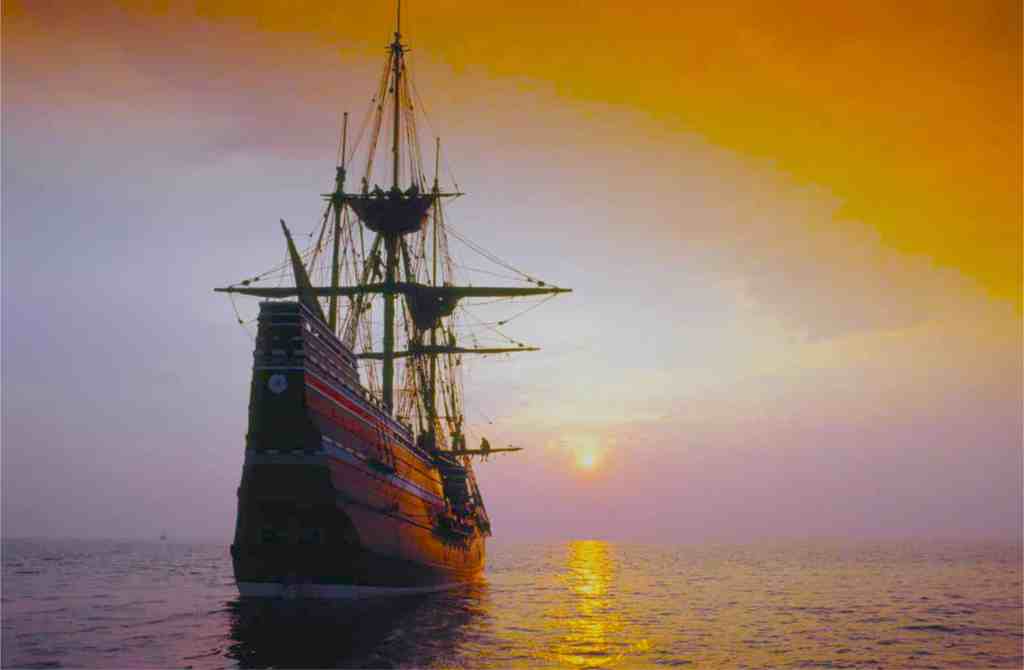
Commissioned to mark the 400th anniversary of the sailing of the Mayflower from Leiden to Plymouth, this is an oratorio in concept but equally a choral symphony in design. Its libretto, mainly by the artist Philip Groom, features set-pieces for various Old and New World figures largely for soprano and baritone alongside summative passages for chorus. Self-deprecating about his literary abilities, Groom yet achieves a viable balance between the characterization of individuals as part of a continuous and cumulative trajectory relating that of ‘the journey’.

There are four continuous parts: Persecution and Journey, a sonata design which informs the Pilgrims’ flight from religious persecution and their decision to cross the Atlantic; Arrival in the New World, a slow movement charting their arrival then tentative initial interaction with native cultures; Survival and Making our Community, a brief scherzo in which the Pilgrims’ industriousness and idealism all too soon becomes its own justification; and Our New World, a sizable rondo-finale whose looking to the future is framed by choruses of growing fervour.

Sawyers’ writing for the chorus is expert and resourceful, not least when this elides between a depiction of Pilgrims or Natives with that of a more abstract commentary, while solo sections allow his lyrical impulse free reign – not least towards the end of the second and fourth parts, closing with luminously ecstatic choruses that accentuate an essentially affirmative message. Worth noting is the poignant incorporation of a motet by Thomas Tomkins into its fourth part, which also sets lines by Walt Whitman with a tangible understanding of its expressive syntax.

Does it all work?

Almost always, and not least owing to the persuasiveness of this performance. April Frederick and Thomas Humphreys (the latter after a slightly strained start) can hardly be faulted in their commitment or insight, while the new-founded ESO Chorus evinces a power and immediacy abetted by Worcester Cathedral’s spacious acoustic to belie its modest forces. The ESO gives its collective all throughout, conveying the textural intricacy and the emotional heft of music whose overall formal integration is fully conveyed through Kenneth Woods’ astute direction.

The initial performances might have fallen through, but the associated educational project did go ahead and enabled several hundred youngsters to experience the piece at first hand. This is worth remembering given Mayflower should have a ready appeal for those who know little of the historical background or, indeed, contemporary music. That it can be rendered by around two-dozen singers ought to commend it to enterprising choral societies able to muster the 45 musicians, especially when Sawyers’ writing for both is often exacting but always practicable.

Is it recommended?

Very much so. The sound captures the resonance of its acoustic with no loss of definition, and there are detailed notes by composer, author and conductor. A pity the actual text could not be included, but that this can be scanned via a QR code is another incentive for younger listeners.

Listen & Buy

You can listen to sample tracks and purchase on the Wyastone website. For further information on the artists, click on the names for more on April Fredrick, Thomas Humphreys, the English Symphony Orchestra and their conductor Kenneth Woods. Click on the name for more on composer Philip Sawyers

Published post no.2,157 – Tuesday 23 April 2024
Online now – Philip Sawyers’ Mayflower on the Sea of Time

The latest addition to the English Symphony Orchestra library of online music is the first performance of Philip Sawyers‘ major choral work, Mayflower on the Sea of Time.

With its ‘luminous and ecstatic choruses’ picked out by Richard Whitehouse in his review of the initial concert, this is an affirmative and major piece by one of the finest contemporary English composers.

Soprano April Fredrick and baritone Thomas Humphreys are joined by the ESO Chorus and English Symphony Orchestra in the premiere from Worcester Cathedral, given on 17 June this year.

You can watch a preview clip below, and access the full performance at the English Symphony Orchestra website.

In concert – April Fredrick, Thomas Humphreys, English Symphony Chorus & Orchestra / Kenneth Woods: Voyage to America

April Fredrick (soprano), Thomas Humphreys (baritone), ESO Chorus, English Symphony Orchestra / Kenneth Woods

Dvořák Symphony no.9 in E minor Op.95 ‘From the New World’ (1893)
Sawyers Mayflower on the Sea of Time (2018) [World Premiere]

Worcester Cathedral
Saturday 17 June 2023

Reviewed by Richard Whitehouse

This final concert of the season by the English Symphony Orchestra brought us the premiere of a piece delayed from three years ago. Philip SawyersMayflower on the Sea of Time was to have been launched at the Three Choirs Festival in April 2020, but the pandemic derailed this as so many other events. Happily, the tenacity of conductor Kenneth Woods has paid off such that the composer’s largest work so far was finally heard, and in the venue originally intended, making for a notable addition to the English choral tradition and one wholly on its own terms.

Commissioned to mark the 400th anniversary of the sailing of the Mayflower from Leiden to Plymouth and thereby founding the United Sates of America, this is an oratorio in concept but equally a choral symphony in its overall design and thematic cohesion. Its libretto, mainly by the artist Philip Groom, features set-pieces for various figures from the Old and New Worlds duly taken by soprano and baritone soloists (those for treble being allotted to sopranos in the chorus), but these along with ones for chorus are drawn into an inherently musical evolution.

Formally, there are four continuous parts. Persecution and Journey, a sonata design such as informs the Pilgrims’ flight from religious persecution and their decision to cross the Atlantic; Arrival in the New World, a slow movement charting their embarkation and tentative initial interaction with native peoples; Survival and Making our Community, a scherzo where the Pilgrims’ industriousness and idealism quickly becomes its own justification; and Our New World, a rondo-finale whose looking to the future is framed by choruses of growing fervour.

As befits such a work, the choral writing is both extensive and resourceful – not least when it elides between depicting Pilgrims or Natives, and that of a more abstract commentary. No less assured, the writing for soprano and baritone allows Sawyers’ lyrical impulse free reign – not least in extended sections toward the end of the second and fourth parts; the latter, especially, rendering comparable passages by Delius or Tippett from a perspective wholly of the present. On either side, luminous and ecstatic choruses accentuate an essentially affirmative message.

The contributions of April Fredrick (no stranger to Sawyers via her long association with the ESO) and Thomas Humphreys could hardly be faulted for commitment or insight, while that of the ESO Chorus exuded a power and immediacy amplified by the resonance of Worcester Cathedral’s acoustic as to belie its relatively modest numbers. The ESO gave its collective all throughout, projecting the textural intricacy and emotional heft of music whose longer-term formal integration was securely conveyed through Woods’s precise yet unobtrusive direction.

Before the interval, Woods gave a notable account of Dvořák’s Ninth Symphony. The poised anticipation of its introduction and visceral drama of its coda were highlights of the opening Allegro, proceeded by a Largo of an eloquence epitomized by rapt cor anglais playing from Louise Braithwaite. Contrast between the incisiveness of the Scherzo’s outer sections and the lilting delicacy of its trio was pointedly underlined, then the final Allegro surged onward to a coda paying tribute to 19th-century symphonism while blazing a trail for what was to come.

Further information on the ESO’s latest Philip Sawyers release (Nimbus NI6436) can be found at the English Symphony Orchestra website. For more on the artists in this concert, click on the names of April Fredrick, Thomas Humphreys, Kenneth Woods and the English Symphony Orchestra themselves – and click here for more on composer Philip Sawyers.