
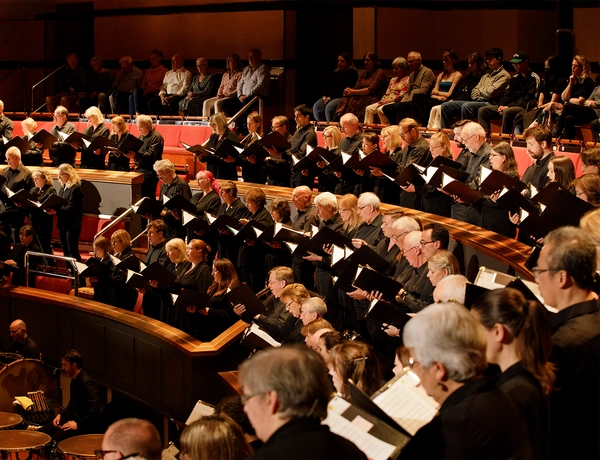
In concert – Katie Trethewey, University of Birmingham Voices, CBSO Chorus & Orchestra / Ludovic Morlot: John Luther Adams – Vespers of the Blessed Earth; Sibelius

Katie Tretheway (soprano), CBSO Chorus, University of Birmingham Voices, City of Birmingham Symphony Orchestra / Ludovic Morlot

John Luther Adams Vespers of the Blessed Earth (2021) [CBSO co-commission: UK premiere]
Sibelius Symphony no.2 in D major Op.43 (1901-02)

Symphony Hall, Birmingham
Thursday 9 May 2024

Reviewed by Richard Whitehouse

Almost eight years ago, the City of Birmingham Symphony Orchestra and Ludovic Morlot gave the UK premiere of John Luther AdamsBecome Ocean. Tonight they, with the CBSO Chorus and University of Birmingham Voices, gave that of his most recent large-scale work.

It may have been obliquely inspired by Monteverdi, but Vespers of the Blessed Earth is very much a humanist response to those ecological challenges of the present and, to this end, its texts have a concreteness and functionality which is wholly at the service of the music. Thus A Brief Descent into Deep Time sets words as depict the (reverse) geological evolution of the Grand Canyon, its emotional matter-of-factness in contrast to A Weeping of Doves with its unaccompanied setting of the call of the Papuan fruit dove in what is one of Adams’ most ravishing inspirations. Hardly less affecting is Night-Shining Clouds – an interlude, in the form of a chaconne, for strings that follows what the composer calls a ‘sub-harmonic’ series with its slowly spiralling descent to the depths for a graphic evocation of cloudly pollutants.
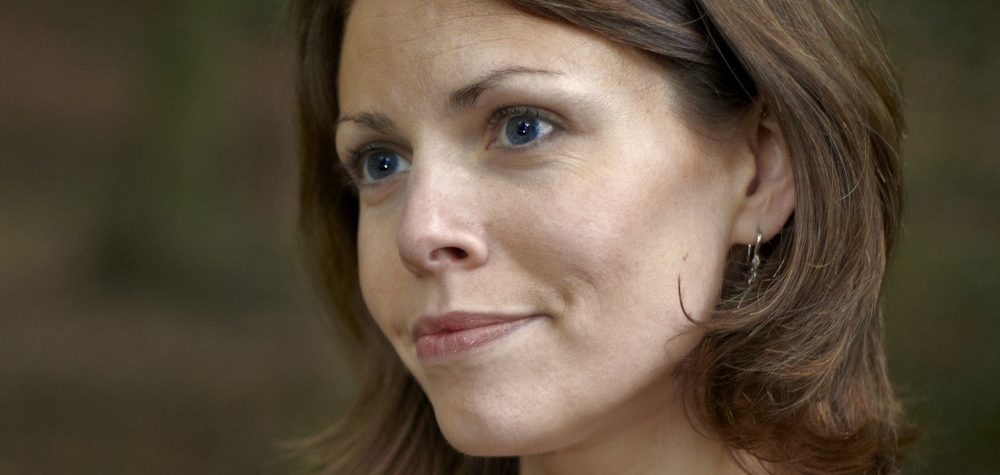
The fourth and climactic section, Litanies of the Sixth Extinction divides the choruses into four parts which between them chant the names of species in the process of or likely to face extinction – closing ominously with Homo Sapiens. It was here that an antiphonal placing of strings and percussion, along with choirs of woodwind and brass placed along either side of the upper circle, came into its own but, typically for Adams, the effect was one of cumulative if not intensifying emotion. Aria of the Ghost Bird followed with its transcribed rendering of the call from the now-extinct Kaua’i O’ō, tonight taken by Katie Tretheway (above) in what was a finale of the gentlest eloquence. It duly remained for offstage flute and chimes, here placed up in the grand tier, to see this inconsistent while always absorbing work to its wistful close.

In his thoughtful introductory remarks, Morlot spoke of the appositeness when juxtaposing Adams with Sibelius and the latter’s Second Symphony, which followed the interval, made his point admirably. Once the most popular such piece by Sibelius (and, indeed, of the last century), latter-day performances too often fight shy of its innate rhetoric or overt emotion. Without being disengaged, this account succeeded because of its methodical trajectory, not least a first movement whose restraint was never at the expense of its overall incisiveness.

With its stark contrast between conflict and consolation, the slow movement can easily fall into overkill but not here – Morlot evincing a keen sense of cohesion through to its baleful ending. The scherzo likewise secured keen cohesion from its alternate energy and raptness, then its surging transition into the finale brought an emotional frisson maintained through to an apotheosis whose grandeur never felt self-conscious or overbearing. Whether the triumph expressed is cultural or personal, the underlying essence of its affirmation was not in doubt.

It certainly set the seal on a memorable evening – one that confirmed the undoubted rapport between orchestra and conductor, while bridging the conceptual divide and almost 120 years between these pieces. Hopefully the CBSO and Morlot will be working together again soon.

Click on the link to read more on the current CBSO concert season, and on the names for more on soprano Katie Trethewey, conductor Ludovic Morlot, the University of Birmingham Voices and the CBSO Chorus. Meanwhile you can click on the name for more on composer John Luther Adams

Published post no.2,203 – Saturday 8 June 2024
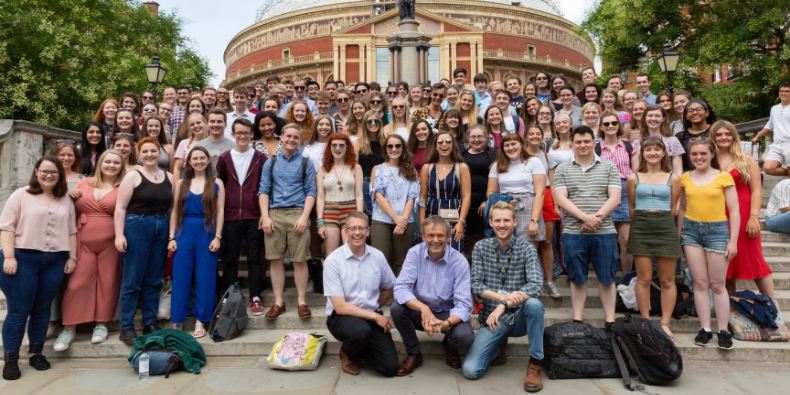
In concert – Soloists, University of Birmingham Voices & CBSO / Martyn Brabbins: Stanford: Requiem

stanford-requiem

Stanford Requiem Op.63 (1896)

Carolyn Sampson (soprano), Marta Fontanals-Simmons (mezzo-soprano), James Way (tenor), Ross Ramgobin (baritone), University of Birmingham Voices, City of Birmingham Symphony Orchestra / Martyn Brabbins

Symphony Hall, Birmingham
Saturday 25 July 2022

Written by Richard Whitehouse

Its official season may have ended over a week before, but the City of Birmingham Symphony Orchestra was heard this evening in a rare revival of a work whose premiere it gave 125 years ago at the Birmingham Triennial Festival – that of the Requiem by Charles Villiers Stanford.

As historian Paul Rodmell recounted in his programme note, this Festival saw the launching of a host of major choral works during its 128 years of existence – notably Mendelssohn’s Elijah in 1846 and Elgar’s The Dream of Gerontius in 1900. That the latter piece was soon regarded as trailblazing despite a largely unsuccessful premiere might be thought ironic given that, just three years earlier, Stanford’s Requiem had been received with some acclaim only to fall into obscurity along with the greater part of his sizable output in the wake of the First World War.

Not unexpectedly, Brahms instead of Berlioz or Verdi is the main presence – thus the Introit with its understated opening theme that recurs often in the work, while its distinction between sombre choral and aspiring vocal music is further emphasized by those expressive contrasts in the Kyrie. The vocalists come into their own in a Gradual whose orchestral textures find this composer at his most felicitous. A telling foil, moreover, to the Sequence with its menacing Dies irae or proclamatory Tuba mirum, then what follows bringing the soloists into individual focus: hence the heightened fervour of Carolyn Sampson, the more circumspect eloquence of Marta Fontanals-Simmons, slightly hectoring impulsiveness of James Way, and the brooding power of Ross Ramgobin; though the sequence overall exudes an almost symphonic cohesion.

Arguably the finest portion, however, comprises the final three movements. The Offertorium makes much of the contrast between warmly martial and intensively fugal sections, while the Sanctus has an ethereal radiance which carries through the ruminative Benedictus and into deftly resounding Hosannas. The funereal orchestral music preceding the Agnus Dei affords the darkest emotion of the whole work, but this only enhances the ensuing Lux aeterna with its serene fatalism that Frederic Leighton – artist and friend of Stanford, whose death early in 1896 was the catalyst – would doubtless have appreciated. Throughout this performance, the University of Birmingham Voices responded with alacrity to choral writing whose poise and translucency were always in evidence – not least in the most earnestly contrapuntal passages.

Special praise for Martyn Brabbins who, whether or not he considers it a masterpiece, directed this work with unwavering conviction. The balance between soloists or chorus and orchestra might largely take care of itself, but orchestral textures need astute handling if these are not to risk uniformity or even monotony and Brabbins drew a committed response from the CBSO such that the autumnal hues of Stanford’s writing came through unimpeded. Good to hear this performance is being released commercially, as it did full justice to a largely neglected work.

A last thought. One of Stanford’s earlier choral pieces is The Resurrection, a setting of the ode by Friedrich Klopstock. Maybe when the CBSO performs Mahler’s Second Symphony in a future season, it would be worth programming these assuredly very different works together?

For more information on the CBSO visit their website. For more information on Charles Stanford, meanwhile, visit the website of The Stanford Society