
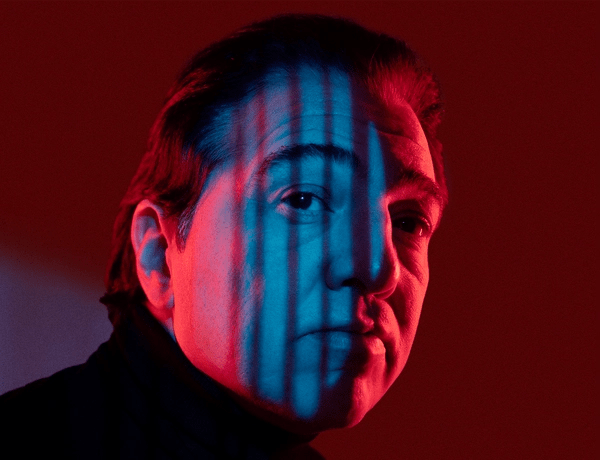
Fazil Say (piano), City of Birmingham Symphony Orchestra / Kazuki Yamada
Prokofiev Symphony no.1 in D major Op.25 ‘Classical’ (1916-17)
Saint-Saëns Piano Concerto no.2 in G minor Op.22 (1868)
Rachmaninoff Symphonic Dances Op.45 (1940)
Symphony Hall, Birmingham
Wednesday 4 October 2023
Reviewed by Richard Whitehouse. Picture (c) Fethi Karaduman
French and Russian music has dominated the start of this season by the City of Birmingham Symphony Orchestra, this afternoon’s programme continuing the trend with early pieces by Prokofiev and Saint-Saëns heard alongside Rachmaninoff’s last and arguably greatest orchestral work.
Prokofiev consigned two earlier such pieces as juvenilia prior to his Classical Symphony, an infectious refit of Haydn in the early 20th century and calling-card for a career that beckoned in the West. If Kazuki Yamada slightly over-egged the humour in the opening Allegro, as too a rather self-conscious take on the Gavotte, the limpid phrasing of the intervening Larghetto was as disarming as was the interplay of wind and strings in the Finale – a reminder, here as throughout, that such musical directness should not be mistaken for mere technical facility.
This could be said of the Second Piano Concerto that Saint-Saëns unleashed on an evidently nonplussed Parisian audience half-a-century earlier. True, the conflation of Bach – given a makeover worthy of Alexander Siloti – with Liszt affords the opening movement an almost makeshift design, but Fazil Say took it firmly in hand from a surging ‘chorale-prelude’ to a tersely decisive coda. A pity his pianism was not applied a little more deftly in the ensuing intermezzo, its ingratiating poise smothered by an almost hectoring insistence, but the final Presto suited this most demonstrative of present-day virtuosi to a tee – its perpetuum mobile undertow maintained with unflagging resolve through to those almost brutal closing chords. Credit to Yamada for enhancing the total effect with his astute and precise accompaniment.
Say, as much composer as pianist, responded to the applause with his Black Earth – a study in sonority alluding to the golden-age of Turkish balladry as well as the Saz (a Turkish lute) in a mood of sombre fatalism which, unlike his orchestral epics, did not outstay its welcome.
The CBSO has given frequent performances over the decades of Rachmaninoff’s Symphonic Dances, but none so incendiary. Not that there was anything overly powerhouse in Yamada’s conception of an initial piece whose outer sections felt trenchant in their energy, with the alto saxophone melody at its centre eloquently given by Kyle Horch and the coda rendered with melting grace. Nor was any lack of suavity in the central piece, its underlying waltz motion poised on a knife-edge of sardonic humour rightly given its head in the hectic closing pages.
Yamada had the measure, too, of the last piece with its dramatic introduction and impulsive continuation, but it was in the lengthy central episode this reading really came into its own – the composer creating music of an intoxicating expression via subtleties of harmonic nuance or textural shading rather than any defining melodic line. From here, impetus was seamlessly restored to a climactic emergence of the Dies irae plainchant then surged on to the explosive closing gesture that might have resounded longer had the audience not unreasonably erupted.
Yamada responded with Lezginka from Khachaturian’s ballet Gayane. An exhilarating close to an afternoon as began for early arrivals with what sounded like a medley from a mid-1970s children’s TV show on the first-floor performance space: it could only be here in Birmingham.
You can read all about the 2023/24 season and book tickets at the CBSO website. Click on the artist names for more information on pianist Fazil Say and conductor Kazuki Yamada
 Arcana.fm