Unknown's avatar

About Arcana

My name is Ben Hogwood, editor of the Arcana music site (arcana.fm)

On Record – Helen Field, David Wilson-Johnson, soloists, Millennium Sinfonia / James Kelleher: Havergal Brian: The Cenci (Toccata Classics)

Brian
The Cenci (1951-2)

Helen Field (soprano) Beatrice Cenci
David Wilson-Johnson (baritone) Count Cenci
Ingveldur Ýr Jónsdóttir (contralto) Lucretia
Stuart Kale (tenor) Cardinal Camillo/An Officer
Justin Lavender (tenor) Orsino/Bernardo
Jeffrey Carl (baritone) Giacomo/Savella/First Judge/Second Judge
Nicholas Buxton (tenor) Marzio/Third Guest/A Cardinal
Devon Harrison (bass) Olimpio/Colonna/Third Guest
Serena Kay (soprano) First Guest/Second Guest
The Millennium Sinfonia / James Kelleher

Toccata Classics TOCC0094 [two discs, 101’32’’]
Producer & Engineer Geoff Miles Remastering Adeq Khan
Live performance, 12 December 1997 at the Queen Elizabeth Hall, Southbank Centre, London

Reviewed by Richard Whitehouse

What’s the story?

Toccata Classics fills a major gap in the Havergal Brian discography with this release of his opera The Cenci, given its first hearing 27 years ago by a notable roster of soloists with The Millennium Sinfonia conducted by James Kelleher, and accorded finely refurbished sound.

What’s the music like?

The third among the five operas which Brian completed, The Cenci emerged as the second of its composer’s seminal works inspired by Percy Bysshe Shelley (1792-1822). While his ‘lyric drama’ on the first two books of Prometheus Unbound (1937-44) had set its text almost word for word, Brian was ruthless in adapting his ‘tragedy in five acts’ – the outcome being a rapid traversal of a drama whose themes of incest and parricide made it publicly unstageable in the UK until 1922, some 103 years after publication in Livorno where it had partly been written.

Two further operatic treatments emerged either side of that by Brian. Berthold Goldschmidt’s Beatrice Cenci (1949-50) won first prize in the Festival of Britain opera competition in 1951 but itself went unheard 1988 (ironically enough, in a concert performance at Queen Elizabeth Hall), and Alberto Ginastera’s Beatrix Cenci (1970-71) went unstaged in his native Argentina until as recently as 2015. Whereas both these operas centres on the heroine of Shelley’s play, Brian’s focusses more on its ensemble as to content with the emphasis shifting from father to daughter as it unfolds. Compared to the poised yet rather self-conscious lyricism favoured by Goldschmidt or the full-on expressionism of Ginastera, moreover, its often circumspect and sometimes oblique emotional demeanour renders Shelley’s drama from an intriguing remove.

Not its least fascination is the Preludio Tragico that, at 14 minutes, is less an overture than an overview of what ensues – akin to Beethoven’s Leonora No. 2 in its motivic intricacy and expressive substance – which would most likely warrant a balletic or cinematic treatment in the context of a staging. Perfectly feasible as a standalone item, this received its first hearing in 1976 and was recorded by Toccata Classics in 2009 (TOCC0113). Ably negotiated by his players, Kelleher’s lithely impulsive account accordingly sets the scene in unequivocal terms.

What follows are eight scenes which encapsulate this drama to compelling if at times reckless effect. The initial three scenes correspond to Shelley’s first act and culminate with the gauntly resplendent Banquet Scene, but Brian’s fourth scene goes straight to the play’s fourth act with the despairing exchanges of Beatrice and Lucrecia. The fifth scene finds daughter and mother in a plot to murder Count Cenci that soon unravels, then the last three scenes take in Shelley’s fifth act as fate intervenes with Beatrice, Lucretia and stepbrother Giacomo facing execution. Save for a crucial passage where the Papal Legate arrives to arrest Cenci, omission of which jarringly undermines continuity in the fifth scene, Brian’s handling of dramatic pacing leaves little to be desired – the one proviso being the excessive rapidity with which certain passages, notably several of Cenci’s, need to be sung that would have benefitted from a slight easing of tempo. Musically, this is typical of mature Brian in its quixotic interplay of moods within that context of fatalism mingled with defiance as few other composers have conveyed so tangibly.

Does it all work?

Very largely, owing to as fine a cast as could have been assembled. Helen Field is unfailingly eloquent and empathetic as Beatrice, with such as her remonstrations at the close of the fifth scene and spoken acceptance at that of the eighth among the highpoints of mid-20th century opera. David Wilson-Johnson brings the requisite cruelty but also a sadistic humour to Count Cenci, and Ingveldur Ýr Jónsdóttir is movingly uncomprehending as Lucretia. The secondary roles are expertly allotted, notably Justin Lavender’s scheming Orsino and stricken Bernardo. The Millennium Sinfonia responds to Brian’s powerful if often abrasive writing with alacrity under the assured guidance of James Kelleher, and if the sound does not make full use of the QEH’s ambience, its clarity and immediacy tease unexpected nuance from the orchestration.

This set comes with two booklets. One features the libretto devised by Brian, duly annotated to indicate omissions or amendments (yet a number of anomalies in this performance remain unaccounted for). The other features Shelley’s own preface to the first edition, with articles by Brian afficionados including John Pickard’s informative overview of the music and Kelleher’s thoughts on its performance. Charles Nicholl’s speculations as to the ‘real’ Beatrice Cenci are more suited to activities on a culture cruise than to Brian’s opera but are entertaining even so.

Is it recommended?

It is indeed. The Cenci is unlikely to receive further performances (let alone staging) any time soon, so this reading gives a persuasive account of its manifest strengths and relative failings. Kelleher is ‘‘formulating plans to return to conducting’’ and ought to be encouraged to do so.

Listen & Buy

You can listen to samples and explore purchase options on the Toccata Classics website Click on the names for more on conductor James Kelleher and to read more about the opera at the Havergal Brian Society website

Published post no.2,298 – Wednesday 11 September 2024
In concert – Dawn Landes @ Komedia (Studio), Brighton

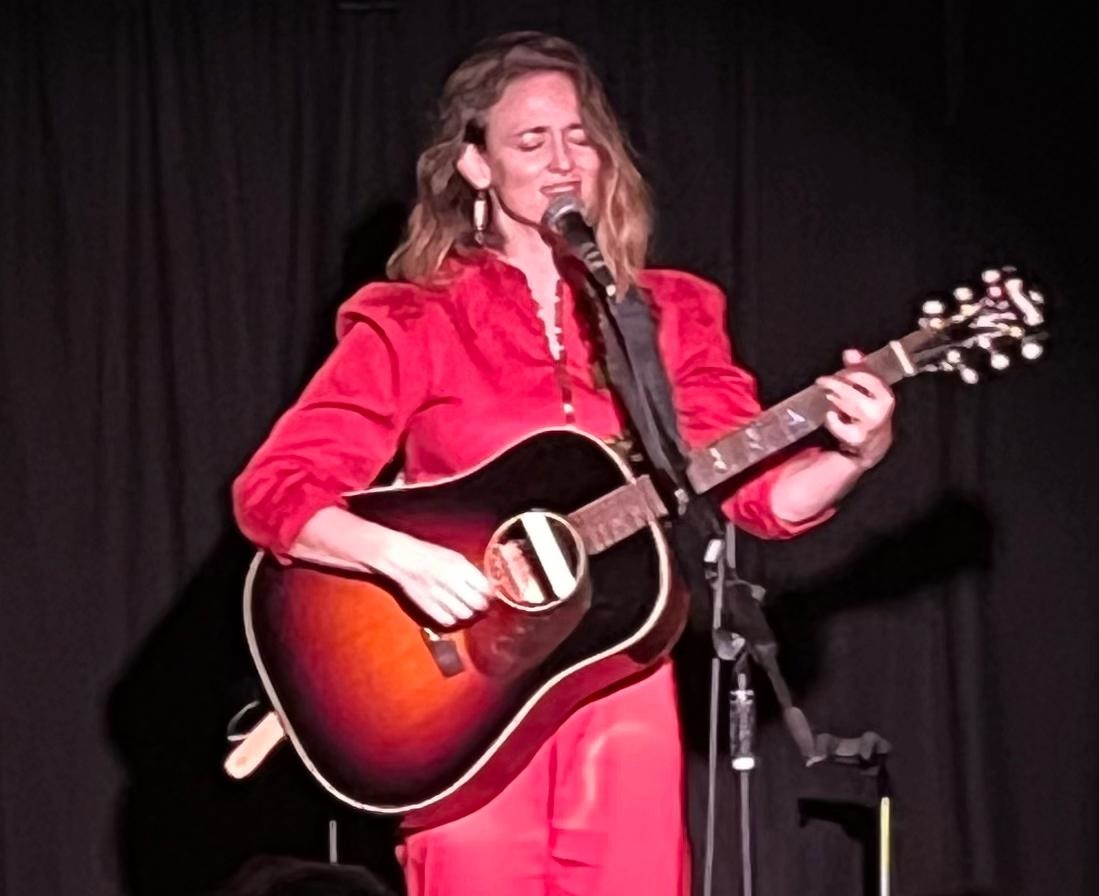
Dawn Landes (vocals, guitar) @ Komedia (Studio), Brighton, 8 September 2024

by John Earls. Photo (c) John Earls

Dawn LandesThe Liberated Woman’s Songbook is a remarkable album and project. It is Landes’ re-imagining of the book of the same title, originally published by folk singer, guitar teacher and author Jerry Silverman in 1971.

The night before this performance it was the subject of a major concert at London Barbican’s Milton Hall, where Landes was joined a number of special guests including folk legend Peggy Seeger and poet Jackie Kay.

Tonight it was a central (but by no means exclusive) feature of this solo acoustic set at the much smaller Studio space of Brighton’s Komedia. Telling the stories and highlighting the voices of women through songs spanning over 200 years, this section of the evening had the feel of the best kind of musical history lesson.

Hard is the Fortune of All Womankind, a traditional ballad from 1830, is the earliest of the collection  and was deeply affecting, as was The Housewife’s Lament (1866), whose lyrics come from the diary of a woman named Sarah A. Price in Ottawa, Illinois. She had seven children, all of whom died in her lifetime.

Bread and Roses (1912) was one of the songs for which Landes was ably joined by Sylvie Lewis. Along with The Mill Mother’s Lament (1929) – “Let’s stand together workers and have a union here”  – and Florence Reece’s Which Side Are You On (1931), it emphasised that many of these songs are not just based on women’s liberation but workers’ and trade union rights also. This was apposite given that the annual meeting of the Trades Union Congress was taking place just up the road (in which I declare an interest as an attendee).

This may all sound rather earnest, but whilst the seriousness of the issues was never diminished, there was plenty of humour throughout the evening. This was helpfully illustrated by this section’s ending with Meredith Tax’s adaptation of the children’s song There was a Young Woman Who Swallowed a Lie (1970). These songs and these women still need to be heard.

This Liberated Woman’s section of the performance was bookended by songs from some of Landes’ other albums. The show opened with Bluebird, from the album of the same name celebrating its 10th anniversary, which set the tone perfectly. From the start it was clear this was going to be intimate, beautiful and ultimately joyous.

Heel Toe was captivating and smoky, Wind and Rain – “Hands up if you’ve had enough”was fabulous, and there was an absolutely cracking version of Why They Name Whiskey After Men.

Dawn Landes has a gorgeous voice. The singing was clear and expressive, the guitar plucking deft and there were even some sparkling golden boots (“glitter makes things better!”) which were removed at times for some barefoot stomping or appended with tambourine.

All in all one genuinely got the sense that after the excitement of the previous night’s extravaganza this smaller club outing was a back to basics affair. Landes seemed to enjoy it and absolutely held the room.

John Earls is Director of Research at Unite the Union and tweets / updates his ‘X’ content at @john_earls

Published post no.2,296 – Tuesday 10 September 2024

St-Martin-in-the-Fields launches first Music for Mindfulness concert

published by Ben Hogwood, text from the press release

Thursday 10 October, 19:00
Tenebrae: Meditatio – Music for Mindfulness

Sandström / Praetorius Es ist ein Ros entsprungen
Donna McKevitt Lumen
Rachmaninov We Hymn Thee
Gibbons / Forshaw Drop, drop slow tears
Chilcott The Last Invocation
Kedrov Otche nash
Rachmaninov Rejoice, O Virgin
Lobo Versa est in luctum
Allegri Miserere
Stanford The Blue Bird
Golovanov Cherubic Hymn
Chilcott Even Such Is Time
Howells Requiem aeternum II

In a new initiative that combines well-being and musical excellence, St Martin-in-the-Fields presents an evening of Music for Mindfulness with award-winning vocal group Tenebrae and mindfulness coach Michael McCaffrey. Tenebrae’s Artistic Director Nigel Short has devised a sequence of beautiful and calming vocal masterpieces by Lobo, Allegri and Rachmaninov and others, while Michael McCaffrey will guide the audience towards deeper listening through a focus on the breath. No previous experience of meditation or mindfulness practice is required, and in the inspiring candlelit surroundings of St Martin-in-the-Fields, the unbroken sequence of music and mindfulness invites the audience to take an hour at the end of the day to relax and centre themselves.

Nigel Short explains, “I’ve wanted to experiment with this format ever since I
conducted a similar concert in Denmark several years ago. We all know that
people are living increasingly busy lives, and the constant stream of
information we receive through our phones is making it harder and harder to
switch off. Music has always been something that people have turned to for
comfort and solace, and arguably we need this now more than ever. We hope that
this combination of beautiful music and guided breathwork will allow everyone a
small bit of time and space to take some time out and slow down.”

Reversing the emotional arch of a standard concert programme, Short and McCaffrey have worked together to shape the evening to guide the audience towards deeper tranquillity at the midpoint of the concert, before gently bringing them back to the present moment. The concert will include choral masterpieces such as Allegri’s Miserere, and extracts from Rachmaninov’s Vespers and Howells’ Requiem. Analysing their social media, Tenebrae noticed that many listeners discovered their recordings through YouTube searches for music to aid relaxation and sleep, and wanted to create a live concert experience that would help people to switch off and slow down.

Michael McCaffrey says, “As both a musician and experienced mindfulness teacher, the power of music as a tool to tap into deeper states of being is apparent. Music speaks to those same states that meditation often guides us into. A sense of calm, a present moment consciousness, the alive, immediate ‘now’ of each moment. It is no coincidence that ancient practices that encourage these states often use sound as a direct means by which to enter the stream of calm that mindfulness delivers.”

Michael McCaffrey is a dedicated meditation, mindfulness and breathwork
guide, passionately committed to making the transformative benefits of these practices accessible to all. With a rich background in these various techniques, his teachings focus on demystifying mindfulness, offering clarity and guidance to beginners while providing depth and insight for seasoned practitioners. It is his belief that anyone can take something positive from these practices and achieve an overall sense of wellbeing. Michael creates an inclusive space where individuals can embark on a journey of self-discovery and
inner peace. Over the last decade he has built up a dedicated following for his sessions, working with individuals and also with companies such as Chelsea FC, NBC Universal, Amazon and Google.

Described as “phenomenal” (The Times) and “devastatingly beautiful” (Gramophone Magazine), award-winning choir Tenebrae is one of the world’s leading vocal
ensembles, renowned for its passion and precision. Under the direction of Nigel Short, Tenebrae performs at major festivals and venues across the globe, including the BBC Proms, Wigmore Hall, Elbphilharmonie Hamburg, Rheingau Musik Festival and Sydney Festival. The choir has earned international acclaim for its interpretations of choral music from the Renaissance through to contemporary masterpieces, and has commissioned new
music from composers including Judith Bingham, Joanna Marsh, Owain Park, Josephine Stephenson, Joby Talbot and Roderick Williams. Tenebrae has enjoyed collaborations with some of the UK’s leading orchestras, including the London Symphony Orchestra, Aurora Orchestra, the Academy of Ancient Music and Britten Sinfonia. The choir also undertakes regular session work, having contributed the vocals for Max Richter’s Voices (2020), Jean-Jacques Annaud’s Notre Dame brûle (2022), and blockbuster sci-fi movie Avatar: The Way of Water (2022) among others. Its extensive recording catalogue comprises a wide range of music on labels including Signum, LSO Live and Warner Classics, and has earned the choir two BBC Music Magazine Awards, an Edison Classical Award and a Grammy nomination.

Alongside its performance schedule, the choir runs a thriving Learning & Connection programme encompassing activities with London Youth Choirs, Tenebrae Effect workshops with amateur choirs, and Tenebrae Schools. In partnership with Ealing Music Service, this programme aims to embed a long-lasting culture of singing activities in local primary schools which might otherwise face barriers to music-making Through its Associate Artists programme, Tenebrae also provides talented young professional singers with vital experience and support in the early stages of their careers.

‘Passion and Precision’ are Tenebrae’s core values. Through its continued dedication to
performance of the highest quality, Tenebrae’s vision is to inspire audiences
around the world through dramatic programming, flawless performances and
unforgettable experiences.

St Martin-in-the-Fields is a landmark church, concert venue and visitor attraction on London’s Trafalgar Square. It is a friendly and forward-thinking community and the
building itself is steeped in beautiful Georgian architecture. With a huge
programme of services, concerts, events, exhibitions and lectures, St Martin’s
welcomes hundreds of thousands of visitors from all over the world each year.

A strong musical tradition flourishes at St Martin’s. Their concert series includes over 350 performances and gigs every year, featuring some of the UK’s finest ensembles, chamber orchestras, choirs and musicians. An outstanding music programme is provided by the Choir and Choral Scholars of St Martin-in-the-Fields, some of London’s finest voices who are regular performers on the BBC and in concert. In the Crypt you can find St Martin’s award-winning Café, Shop, Brass Rubbing Centre and a number of excellent spaces available for hire for meetings, celebrations and corporate events.

For further information, please head to the websites for St Martin-in-the-Fields or Tenebrae, where you can purchase tickets

Published post no.2,295 – Monday 9 September 2024

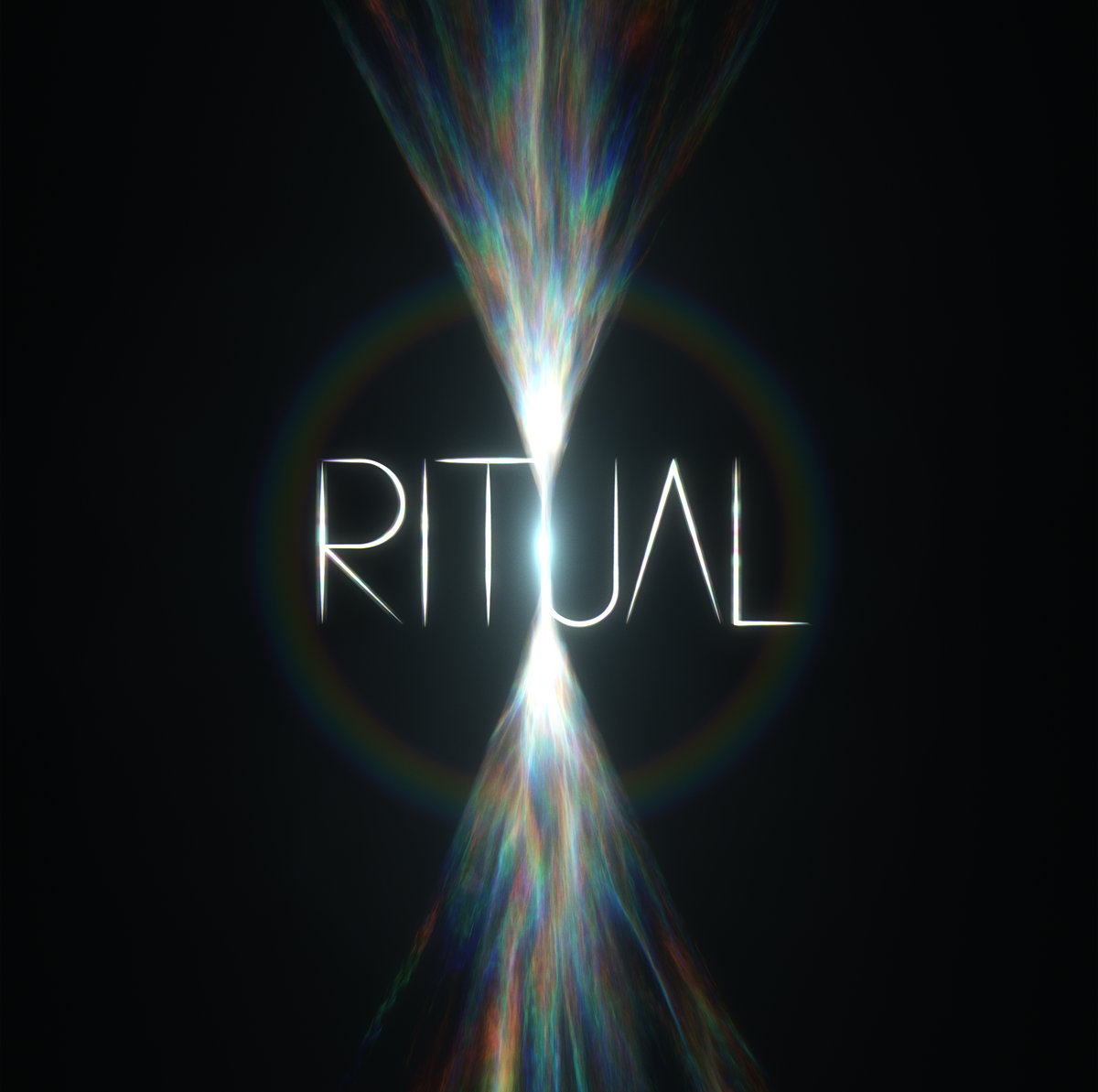
Switched On – Jon Hopkins – RITUAL (Domino)

by Ben Hogwood

What’s the story?

RITUAL, the latest from the ever-ambitious Jon Hopkins, is described as ‘a 41-minute electronic symphony built from cavernous subs, hypnotic drumming and transcendent melodic interplay’.

The project was conceived in 2022, when Hopkins received a commission for London’s Dreamachine experience. He wrote a shorter piece that became the cell from which RITUAL grew, with the help of collaborators Vylana, 7RAYS, Ishq, Clark, Emma Smith, Daisy Vatalaro and Cherif Hashizume.

What’s the music like?

RITUAL is a compelling piece of work – and a mindful treat. Best experienced in a single sitting, it grows from a small cell, a single pitch of ‘G’ – and a very similar opening to that of friend Brian Eno’s Reflection album.

Soon the differences become more pronounced, and Hopkins gathers the forces at his disposal – wordless voices, sonorous bass, slow moving drones at both ends of the audible scale, and rising energy levels, such as on the palace / illusion section, where a steady throb emanates from the bass drum.

The music expands still further, reaching its ultimate apex on solar goddess return, where the bass is joined by a bold treble and a rush of white noise, like walking outside and standing under a starry sky. Soon the bottom drops out of the sound, the listener left suspended through dissolution, before nothing is lost offers consolation through its piano loop.

Does it all work?

It does – thanks to a firm grip on the structure, Hopkins allowing the music to move at a natural pace.

Is it recommended?

It is. Jon Hopkins is becoming a very impressive long form composer, his credentials surely leading him towards a full-blown orchestral piece before long, bigger even than the music heard in his BBC Proms concert in 2023. RITUAL works both as a serious piece of keenly structured music, and as a musical mind cleanser. A very fine piece of work.

For fans of… Ólafur Arnalds, Jóhann Jóhannsson, A Winged Victory For The Sullen, Max Richter

Listen & Buy

Published post no.2,295 – Sunday 8 September 2024

Arcana at the Proms – Prom 62: Bavarian Radio Symphony Orchestra / Sir Simon Rattle – Mahler: Symphony no.6

Mahler Symphony no.6 in A minor (1903-04)

Bavarian Radio Symphony Orchestra / Sir Simon Rattle

Royal Albert Hall, London
Friday 6 September 2024

reviewed by Ben Hogwood Photos (c) Chris Christodoulou (taken from the previous night’s Prom)

This was Sir Simon Rattle‘s fifteenth encounter with the music of Gustav Mahler at the BBC Proms – and a third outing under his baton for the Sixth Symphony, which he first conducted in charge of the National Youth Orchestra of Great Britain 40 years ago.

This time he was visiting, having returned to Germany to take charge of the Bavarian Radio Symphony Orchestra, a feeling for the concertgoers akin to welcoming a distant relative and hearing about their latest job. The Munich ensemble have formidable Mahler credentials, no doubt introduced by Eugen Jochum from their founding in 1949 but notably honed by Rafael Kubelík, with whom they recorded all the symphonies for Deutsche Grammophon. This account of the Sixth proved them to be the ideal foil for Rattle, the Liverpudlian welcomed with great cheers around the hall.

Sir Simon knows his Mahler better than arguably any other living conductor, and the breadth and depth he brought to his interpretation was breathtaking. So too was the sheer audible spectrum, for which we have to thank Mahler, for this is one of those works that has simply everything, from the tiniest murmur from bass strings to the thunderous hammer strokes of the finale. Some way between that lies the tender theme he wrote for his wife Alma, a glowing light in the first movement under the tender caress of its beautiful wind choir. Around this and in the last movement were fleeting glimmers of sunshine from the cowbells, an unusual addition to the percussion section that charmed from their offstage position, evoking the open meadows but with shivers of cold wind from the rest of the orchestra, outlines icily drawn by strings and brass.

These moments were welcome respite from the tumult of Mahler’s marching music, obsessively hammered home in the fast movements, the orchestra turning this way and that at quick speed. The marching music, so virulent in the first movement, quickly develops a sour taste, and Rattle was alive to that in the scherzo – placed third. This is a time-honoured practice for him, in accordance with Mahler’s order of performance when conducting but not his initial order of composition. The controversy continues to follow the work around, and although many (this author included) prefer the scherzo placed second – ratcheting up the tension – Rattle’s shaping of the piece overall made his own choice a convincing one.

The orchestra were simply stunning. The strings – rarely given due credit in big symphonic performances such as this – were united beyond criticism, the violins in remarkable unison – and particularly beautiful in the serene opening to a magical slow movement. Brass were also as one in their clarion calls, but turned vulgar when they needed to. The wind section was beautifully shaped and coloured, with an appropriately plaintive oboe solo in the trio section of the scherzo. Underpinning the performance were the rolling timpani, the thunder to the lightning strikes of the percussion, whose power was simply brutal at times, The hammer blows, struck twice in the finale, were terrifying strokes of fate and delivered with appropriately cold theatre.

This was a performance that will stick in the memory for years, one from which my ears are still ringing. Mahler’s ghastly premonitions of later existence were brought to life in shocking technicolour, though Rattle revelled at the same time in its beautiful evocations of nature. These were ultimately swept aside, with red-blooded highs and cold-blooded lows, all blended into the same intoxicating musical cocktail. For sheer emotional power, this symphony – and this performance – had it all.

You can listen to the Bavarian Radio Symphony Orchestra and Sir Simon Rattle in their recent live recording of the Sixth symphony below:

Published post no.2,294 – Saturday 7 September 2024