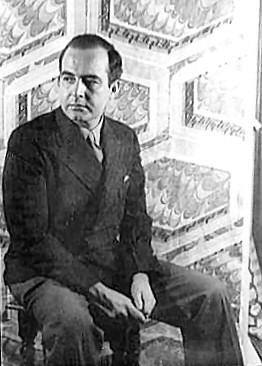
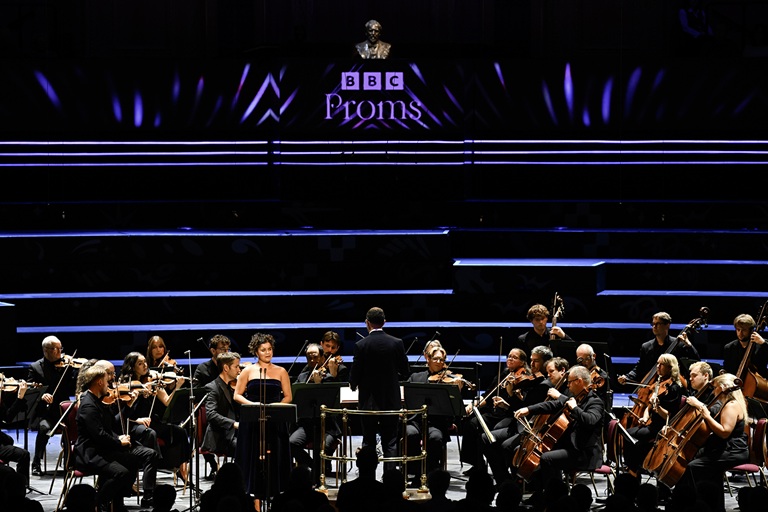
The BBC Proms came to a close last night with the feverish excitement of the Last Night. As ever it offered a huge range of music, but one performance in particular drew the eye – a spectacular account, from Yuja Wang and the BBC Symphony Orchestra conducted by Sakari Oramo, of Samuel Barber‘s Piano Concerto, completed in 1962.
Difficult to reconcile that this was the same composer of the Adagio for Strings, and the melt-in-the-middle Violin Concerto – this was forthright pianism, terrifically played but still with a deeply emotive heart.
You can watch Yuja Wang’s account here…but below is the premiere recording made by John Browning, who Barber had in mind when he wrote the work. Here he is with the Cleveland Orchestra and George Szell:
Published post no.3,316 – Sunday 13 September 2026
Simone Lamsma (violin), Royal Liverpool Philharmonic Orchestra / Andrew Manze
Vaughan Williams Fantasia on a Theme by Thomas Tallis (1910) Britten Violin Concerto in D minor Op.15 (1938-9) Smickersgill A Brick Thrown with Love (2026) [BBC co-commission: World premiere] Vaughan Williams Symphony No. 9 in E minor (1956-7)
Royal Albert Hall, London Friday 4 September 2026
Reviewed by Richard Whitehouse Photos (c) BBC / Chris Christodoulou
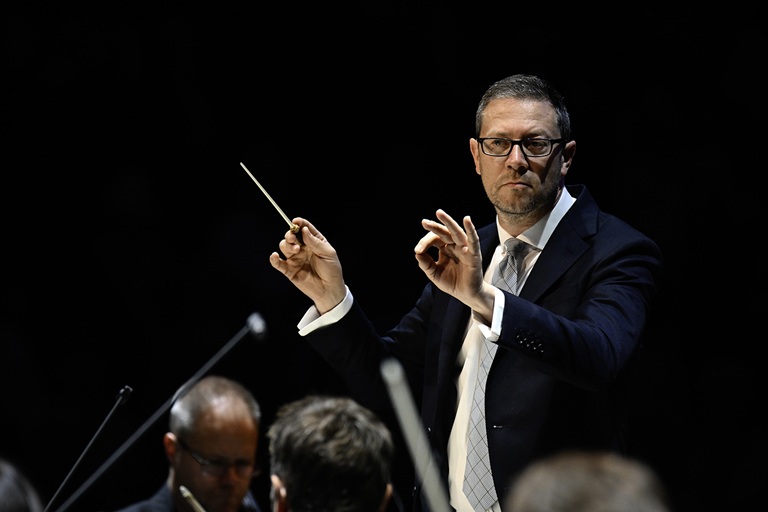
Andrew Manze’s eleventh appearance at the Proms, during which 28 years he has moved from being a Baroque violinist and director to a symphonic conductor, drew on just over a century of British music for what proved a typically thoughtful and absorbing programme.
Not consistently successful, though – hence an account of Vaughan Williams‘ Tallis Fantasia whose avoiding of old-school eloquence leant it a certain uniformity of expression. In particular, the second (nine-piece) orchestra sounded rather un-atmospheric placed just behind the main body, leaving it to the solo quartet to instil a degree of intensity as the piece built toward its fervent if generalized climax before heading into subdued retrospection. Assured playing among the ranks of the Royal Liverpool Philharmonic Orchestra strings did not make it other than an unexceptional reading.
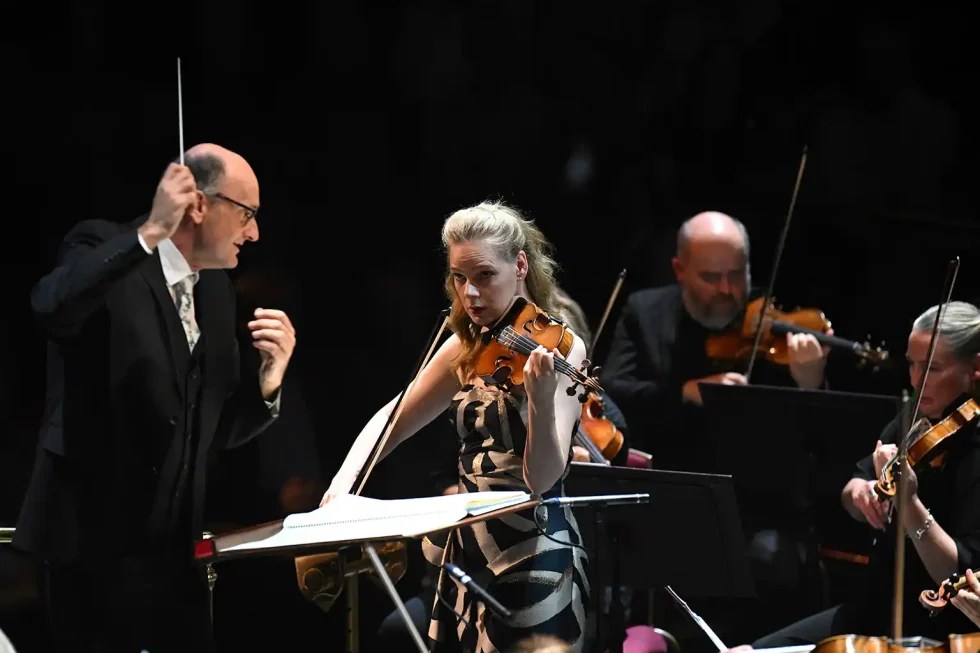
The surprise about Simone Lamsma’s Proms appearance was this being her first, but anyone having heard her in Saint-Saëns’s Third Concerto knows her to be a soloist of the first order -as was the case with Britten’s Violin Concerto. The Moderato’s alternating of enervation and incisiveness was deftly handled, then the Vivace’s impetus did not omit a soulful response in its central episode with a magical transition on piccolos and tuba back to its initial animation. Nor was the cadenza other than integrated thematically into an overall structure as concludes with one of Britten’s most deeply felt passacaglias. Spanish elements which keenly offset any formal severity with expressive spontaneity bring about its powerful climax; the equivocation between hope and resignation unerringly judged at the end of what was a memorable reading.
Those responsive to her earlier ensemble works should have found Carmel Smickersgill’s new Proms piece no less intriguing. Its three (more or less) continuous sections of A Brick Thrown with Love provide an unforced trajectory where reckless negativity is countered with diverse responses, before the coming together in a mood of determined positivity. Lucid textures and iridescent scoring banish any hint of agit-prop with an appealing demonstration of orchestral prowess; one whose warm reception the composer chose to acknowledge from the rear stalls.
Vaughan Williams’s Ninth Symphony receives more hearings than ever in the seven decades since it premiered to a lukewarm response. Manze had the measure of the opening Moderato with its luminous scoring for three saxophones and a restiveness allayed if not resolved by its twilit coda. The ensuing Andante drew potent contrast from its hieratic and human elements, thrown into relief by a flugelhorn refrain (evocatively played by Tom Fountain) that reaches back into the composer’s distant past, then the Scherzo purposefully offset its capricious and militant aspects with a haunting lyricism as comes into its own in the finale. Less protracted than on Manze’s recording (Onyx), this unfolds in ever more elaborate arcs of accumulating activity to what is less a coda than an apotheosis which here was inevitable and unequivocal.
Just what those closing bars are conveying has been the subject of considerable speculation over time. Without overstating his case, Manze allowed this ‘journey of a life’ to envelop the Albert Hall’s expanse in what was an affecting end to a memorable evening’s music-making.
Julie Roset (soprano), Sinfonia of London Strings / John Wilson
Berkeley Serenade for Strings Op.12 (1938-9) Bridge Lament H117 (1915) Britten Les illuminations Op.18 (1939) Imogen Holst Suite for String Orchestra (1943) Britten Variations on a Theme of Frank Bridge Op.10 (1937)
Royal Albert Hall, London Sunday 6 September 2026, 11am
Reviewed by Richard Whitehouse Photos (c) BBC / Chris Christodoulou
Just weeks after the heady excess of Respighi’s ‘Roman Triptych’, John Wilson and Sinfonia of London were back at the Proms with a typically resourceful programme of British works for and with string orchestra. One which opened with the fourth appearance at these concerts for Lennox Berkeley’s Serenade for Strings, its modest dimensions belying an intensifying trajectory from the high-spirited Vivace, through a suave Andantino then impetuous Allegro, to a Lento whose inward plangency is a sure reflection of events in the latter months of 1939.
Following on naturally, Frank Bridge’s Lament – remembering a nine-year-old girl drowned with the sinking of RMS Lusitania in May 1915 – found a more apposite context than its two previous Proms appearances; not least as Wilson drew such fastidious poise from his players.
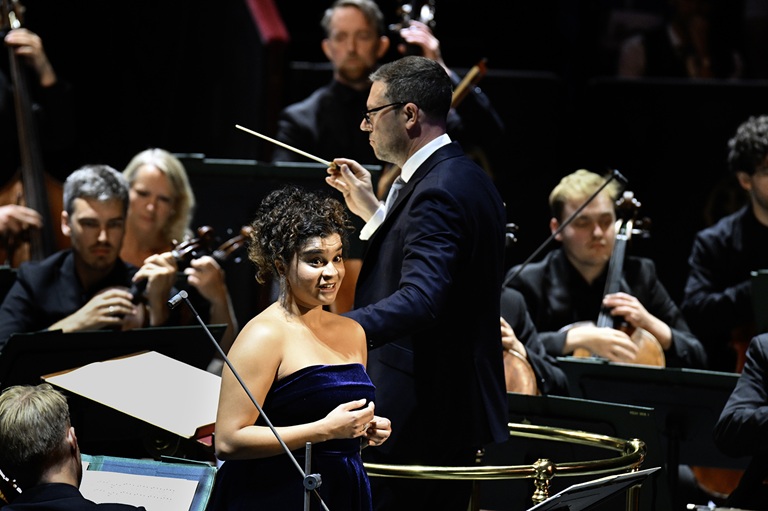
Although hardly ineffective given with tenor, Britten’s Les illuminations conveys its essence more fully as conceived with soprano and Julie Roset’s rendering (above) of Arthur Rimbaud’s often disquieting texts was nothing if not idiomatic. From the insistent activity of Villes, via the suspenseful Phrase and elegant Antique to the portentous Royauté and playful Marine – this was a reading to savour. As enticing were the yearning sensuality of Being Beauteous then capricious contrasts of Parade; this latter’s climactic setting of lines first encountered in Fanfare then Interlude as if completing a circle, from where Départ brings the whole sequence to a resigned though fulfilled conclusion. Roset’s insights were ably underpinned by the strings, even if a slightly more visceral response would at times have been welcome.
Her output can suggest an ambition waylaid if not frustrated at every turn, but Imogen Holst left numerous works of intrinsic as opposed to practical worth. Not least her Suite for Strings, its inquiring spirit evident in a restless Prelude then taciturn Fugue with a tellingly queasy final cadence. Despite its title, the Intermezzo that follows makes for a slow movement of unforced eloquence; one whose barely concealed depths inform the final Jig such that the latter’s impetus is not without a growing ambivalence only just dispelled towards its close.
Commemorating Britten at these concerts in the 50th anniversary of his death means, almost by definition, focussing on those works for orchestra largely absent from his post-war output. Among which, Variations on a Theme of Frank Bridge remains among the most impressive – not least in a performance as finely conceived and executed as this. As if mindful of an early comment that ‘‘neither [Britten’s] seriousness nor his levity is intense enough’’, Wilson duly pushed expressive contrasts across its 10 variations to their limits. Characterful as were those earlier vignettes, it was in the sequence of glowering Funeral March, ominous Chant then closing Fugue and Finale that his approach came into its own – not least in the way that the latter’s animation came to a standstill before its belated if impulsive surge to a decisive close.
A pity that Wilson did not consider including an encore (one or other of Bridge’s Two Old English Songs would have been ideal for this context) but the all-round excellence of what was heard, at what might be thought a ‘Proms matinee’, was assuredly its own justification.
Augustin Hadelich (violin), Berliner Philharmoniker / Kirill Petrenko
Beethoven Violin Concerto in D major Op.61 (1806) Scriabin Symphony no.3 in C minor, Op.43 ‘Le poème divin’ (1902-04)
Royal Albert Hall, London Thursday 3 September 2026
Reviewed by Richard Whitehouse Photos (c) BBC / Chris Christodoulou
Their second appearance this season saw Kirill Petrenko and the Berliner Philharmoniker tackling pieces that, written almost a century apart, could hardly have offered greater contrast in terms of their aesthetic and which made the cohesion of tonight’s programme the more impressive.
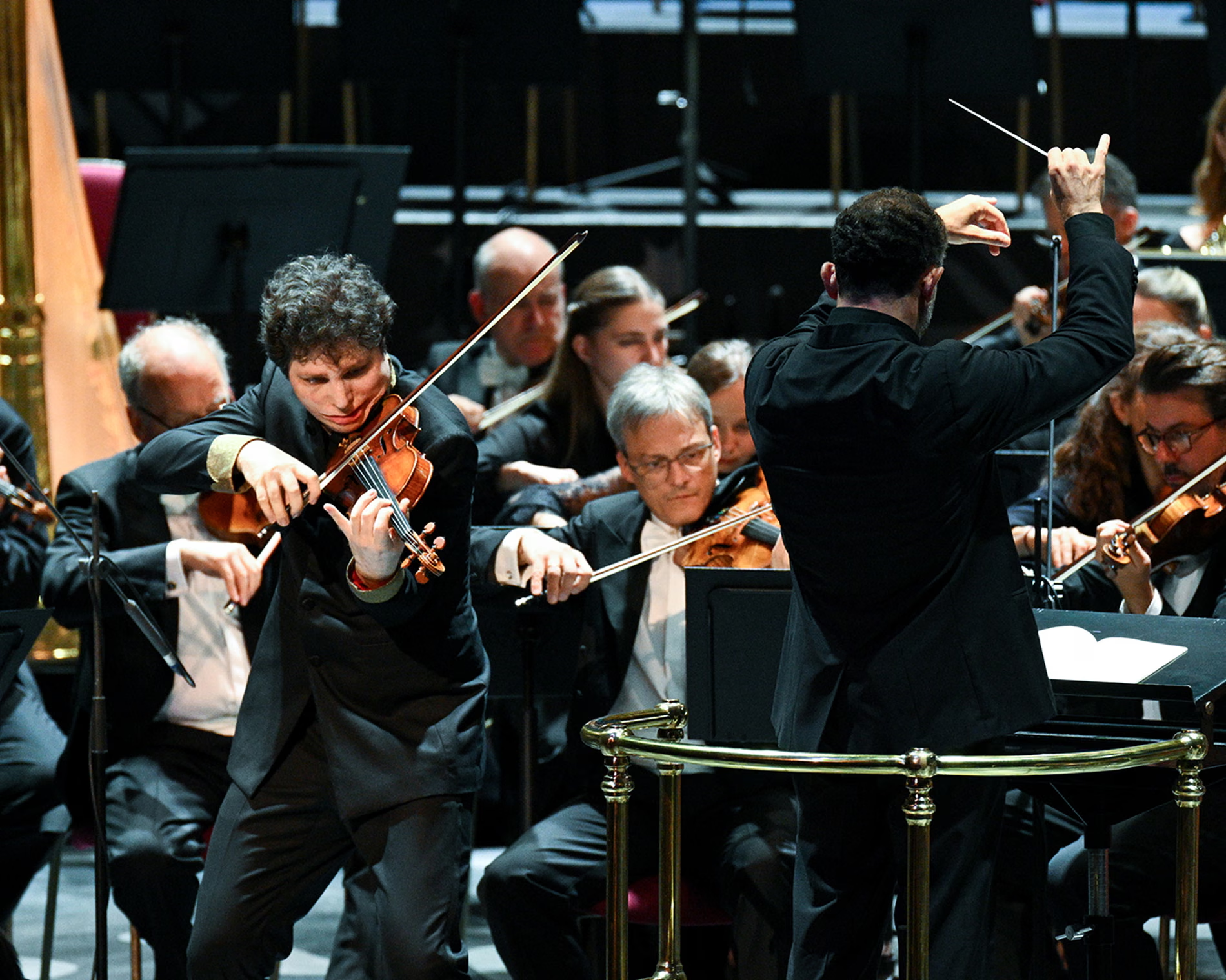
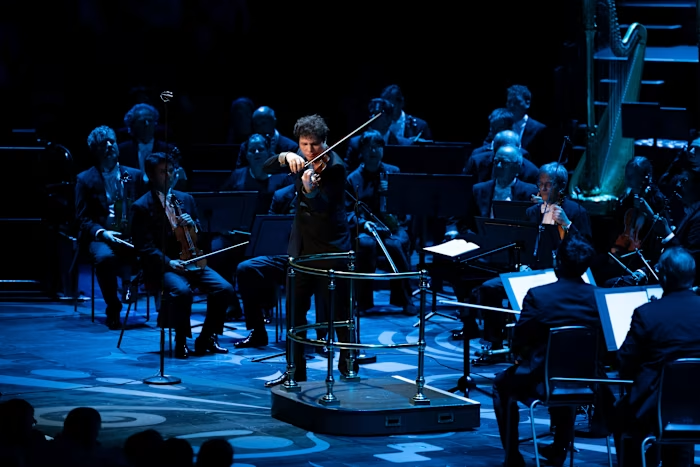
His fifth visit to the Proms in just a decade found Augustin Hadelich giving a performance of Beethoven’s Violin Concerto full of interest if on occasion neglecting the wood for the trees. Not that, other than momentarily in its development, the opening Allegro hung fire but this most spacious such movement in Beethoven’s output lacked an underlying impetus without which it all too easily loses focus. The (unexpected) highlight was a Kreisler cadenza which renewed respect for its motivic ingenuity then segued into the coda with acute seamlessness.
There was little to fault thereafter. The Larghetto duly emerged as the most eloquent of those variational slow movements that Beethoven favoured at this time, with orchestral playing of fastidious poise then an ideal transition into the final Rondo – the incisiveness of whose main theme threw into relief its genial secondary idea then the plaintiveness of its central episode. It rounded off what was a never less than perceptive reading, and Hadelich returned with his own arrangement of Träumerei from Schumann‘s Kinderszenen as a raptly affecting encore.
Some 98 years after Beethoven’s most intrinsically abstract symphonic work found Scriabin flexing his extra-musical muscles in the last if most ambitious of his numbered symphonies. Given its UK premiere at these concerts by Sir Henry Wood in 1918 and repeated three years later, The Divine Poem had to wait nine decades for its Proms revival but has now secured its place in the repertoire. Certainly there was no element of ‘special pleading’ in an account as underlined that structural integration between its three (continuous) movements as across the work overall. However overreaching Scriabin’s theosophical aspirations may have been, his musical instinct was such that nothing is left to chance in a design as surveys the ‘tragedy to triumph’ trajectory beloved of late-Romanticism from an arresting and productive vantage.
The defining motto drawn unerringly into its evolution, the opening Luttes made a virtue of its discursive unfolding with a sure balance between its agitated and ethereal themes; building to a resplendent if short-lived climax in its development then methodically retracing its steps. There was no lack of sensuousness in the central Voluptés, offset by an ominous undertow resolved in the final Jeu divin with its capricious trumpet idea and its pointed revisiting of earlier material as made the eventual apotheosis not just inevitable but necessary as a formal and expressive QED. Felicities of phrasing and of texture abounded in an interpretation that demonstrated the rapport of conductor and orchestra, now at the start of their eighth season together, at its most tangible with music on the cusp between Romanticism and Modernism.
As on their earlier visits, there was no encore with Petrenko’s blowing a kiss to the audience his most overt acknowledgement of what seemed a genuine enthusiasm for the piece as heard in this performance. Their next Proms appearance (in 2028?) can only be eagerly anticipated.
Alice Boyd (soundscapes, synthesizers, vocals), Belle Chen (piano, synthesizers), Lucinda Chua (cello, vocals), Erland Cooper (electronics, piano, presenter, tape machines), Katherine Tinker (piano, synthesizers), Isobel Waller-Bridge (piano), BBC Symphony Chorus, City of London Sinfonia / Alexandra Wood (violin)
Royal Albert Hall, London Thursday 20 August 2026
Reviewed by Ben Hogwood Photos (c) BBC /
The role of classical music in modern society is changing. With the need to ‘unwind’ greater than ever before, thanks to an age of conflict, hardship and technology – constant visual and audio bombardment from our devices, among many other things – there is a space where calm and undemanding music can make its understated mark.
This can of course happen in operas and substantial Prom concerts, but that Radio 3 should introduce Unwind, their digital counterpart to the main station, says a lot about the mental health of our generation and our short attention span, constantly fraying at the edges as we deal with anxieties, the media and too much attention to social media (I’m speaking for myself here!)
Ultimate Calm is a programme residing on the new channel, beginning on Radio 3 itself under the guidance of the well-qualified Olafur Arnalds before finding its new spiritual home. So how do the BBC Proms achieve ultimate calm, and is it better in person or experienced at home?
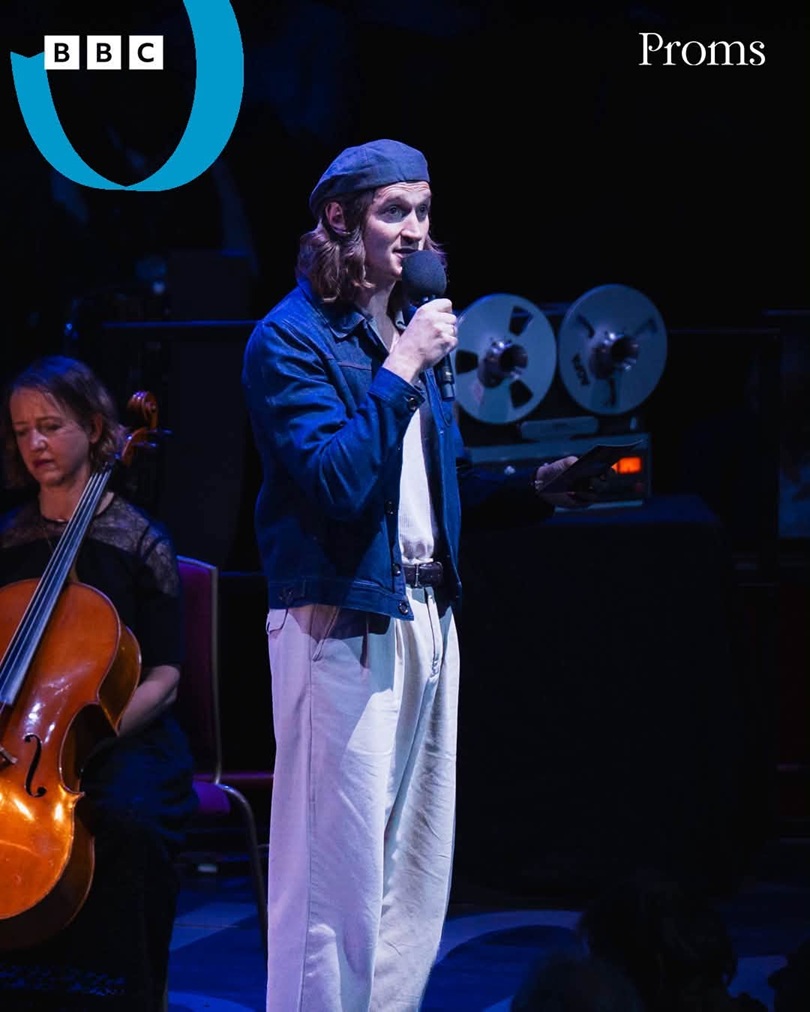
The first sounds on arriving in the arena at the Royal Albert Hall were those of blackbirds, surely the idea of Orcadian composer and multi-instrumentalist Erland Cooper – who, as a regular Unwind contributor, curated this Prom. The music was in the most part enhanced by the birdsong and other field recordings, reminding us of the importance and appreciation of natural beauty.
The published programme proved helpful to a point, listing the pieces but not in the order they were performed. Cooper’s music secured a sonorous and comforting start, his Music for Growing Flowers (Nocturne) presented in a new arrangement blossoming like its subject. The yearning tones of the BBC Symphony Chorus were supplemented by cleverly wrought percussion with the hands imitating rain and wind and complemented by the soft bed of City of London Sinfonia strings.
This curtain raiser / light dimmer was the first work of what became a streaming playlist in live form, with little between the tracks save for field recordings, allowing the listener to picture a natural space. The musical language was largely simple – not a criticism – as it allowed the mind to wander, and – ultimately – to unwind.
Pianist Belle Chen chose well with her pieces, two excerpts from the excellent Ravel In The Forest album that included evocative forest noises from a synthesizer positioned on top of the piano. Moonrise, the first excerpt, leant on Barber’s Adagio for Strings for its inspiration and proved effective in this context.
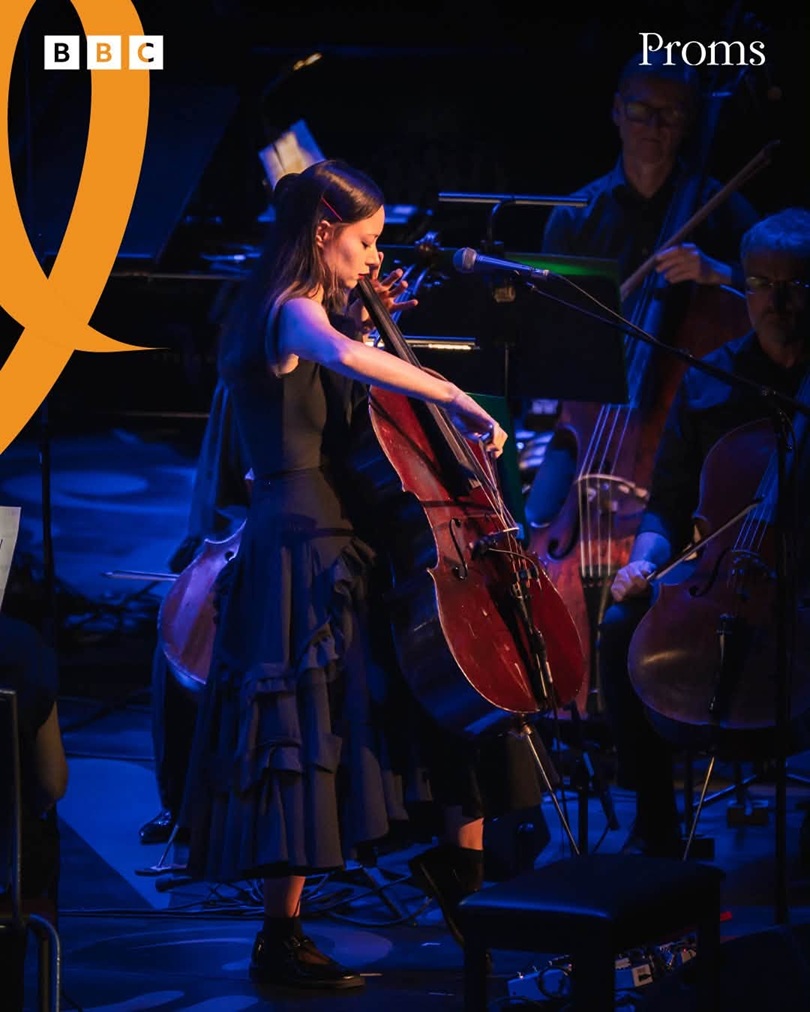
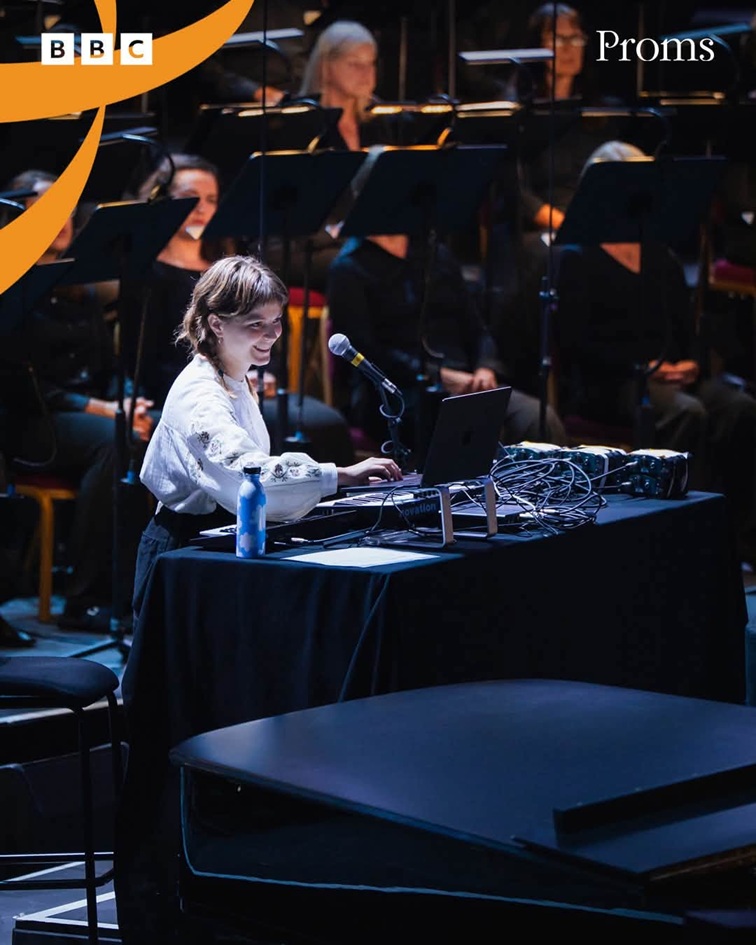
Lucinda Chua’s cello (above) then explored rich, multitracked sonorities on I Left the Earth, while a vocal number, Something Other Than Years, provided a musical affirmation with its catchphrase, “show me how to live this life”. At this point, even allowing for the plaintive Symbiosis from Alice Boyd (below) and the deep resonance of Jóhann Jóhannsson’s A Pile of Dust, we were walking a fine line between background and foreground music, the audience a mixture of calm and fidgeting, as though in the half hour before sleep. Oddly, the unwinding music also drew vivid parallels with coffee shop culture rather than the Royal Albert Hall.
Standing out in the foreground was the craftsmanship of Finzi, Sibelius and Debussy. Finzi’s gorgeous Romance stole the show in a passionate performance from the string orchestra, who also captured the warmth of Sibelius’s Andante Festivo along with its elusive emotions. Meanwhile a sensitive arrangement by Erland Cooper of Debussy’s Clair de Lune also hit the spot, with a special solo from cellist Will Schofield. The City of London Sinfonia strings played dreamily under the direction of Alexandra Wood, the 55-year-old ensemble infrequent Proms visitors but extremely welcome here. The BBC Symphony Chorus, used more sparingly, contributed a brief but moving Abendlied from Josef Rheinberger.
The principal problem with experiencing such a Prom in the flesh was the approach of the midnight hour, and with it the anxiety that the last form of transport home was imminent, making it impossible to unwind completely. With this in mind your correspondent took his leave just as a world premiere was beginning, a new arrangement of Isobel Waller-Bridge’s Solitudes (after Satie) for two pianos, wordless choir and string orchestra. Listening back on BBC Sounds, it proved an affecting piece whose ripples spread out far beyond the hall with waves of wordless singing from the chorus.
As an advert for Radio 3 Unwind, this concert was a strong promotion and will hopefully propel the right audience to its channel. As a way into classical music it is persuasive and low maintenance, especially with the natural link. Yet it is to be hoped such an audience can blossom in the way of Erland Cooper’s flowers, encouraged to explore more substantial works by the composers whose relaxing sounds they have heard. Debussy, Ravel and Sibelius in particular have all written music with great kinetic energy! Yet that is for another day…for this Prom, sensitively staged if somewhat out of place for the live visitor, will leave a lasting legacy online.
Repertoire: Cooper Music for Growing Flowers (Nocturne) Belle Chen Ravel In The Forest: Moonrise; Three Birds Finzi Romance for string orchestra Lucinda Chua I Left the Earth; Something Other Than Years Jóhannsson A Pile of Dust Sibelius Andante festive Rheinberger Abendlied Alice Boyd Symbiosis Debussy arr Cooper Clair de Lune (Suite bergamasque) Isobel Waller-Bridge Solitudes (after Satie)