John Findon (tenor), Niamh O’Sullivan (mezzo-soprano), David Ireland (bass-baritone), Three Choirs Festival Chorus, Philharmonia Orchestra / Adrian Partington
Wagner Parsifal – Prelude to Act One (1878) Elgar The Dream of Gerontius, Op. 38 (1899-1900)
Gloucester Cathedral Saturday 1 August 2026
Reviewed by Richard Whitehouse Photo credits (c) James O’Driscoll
Closing this latest edition of the Three Choirs Festival with Elgar’s The Dream of Gerontius felt both inevitable and fitting, given its seminal place in the annals of the English choral tradition as of this festival, in what proved if not an unblemished then certainly a memorable realization.
Hearing this work now is to feel surprise how, aside from aspects of Cardinal Newman’s text, its musical treatment could have seemed so problematic whether technically or interpretively. Maybe the musical lineage on which it drew being not yet fully assimilated by musicians and listeners, or its contrasts between life and after-death being so emotionally charged, presented challenges to be overcome only with time and perseverance. If such were the case, then those challenges have certainly been met in the 124 years since its first hearing at the Three Choirs.
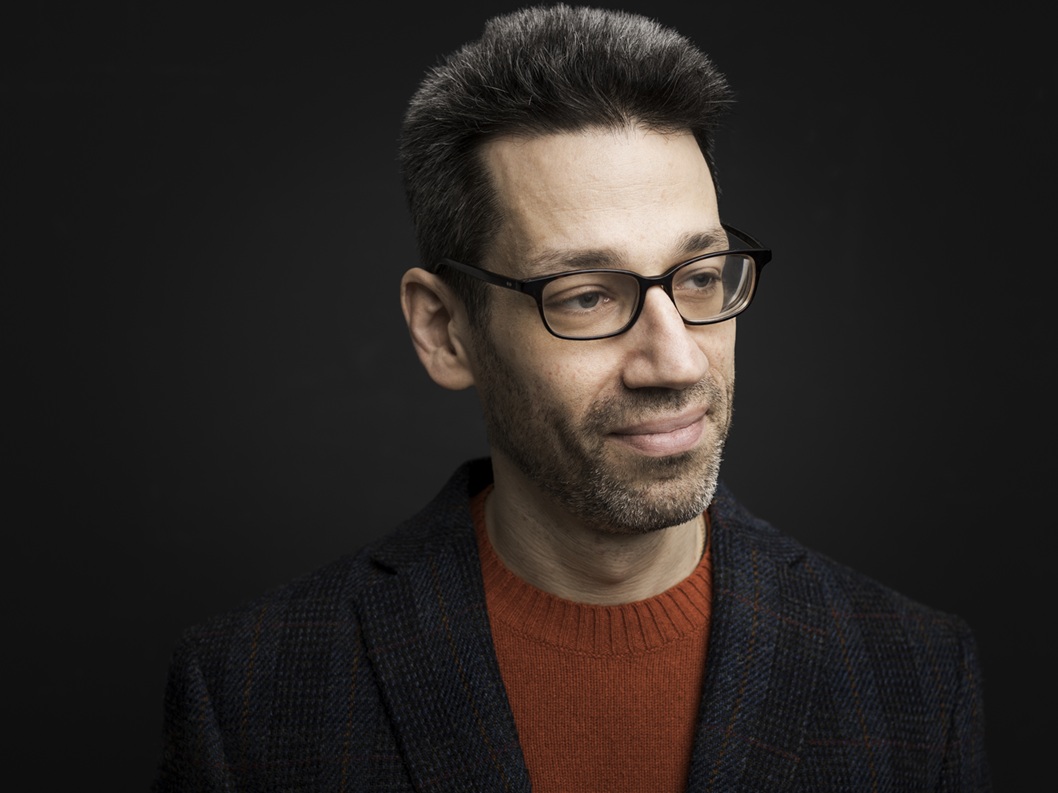
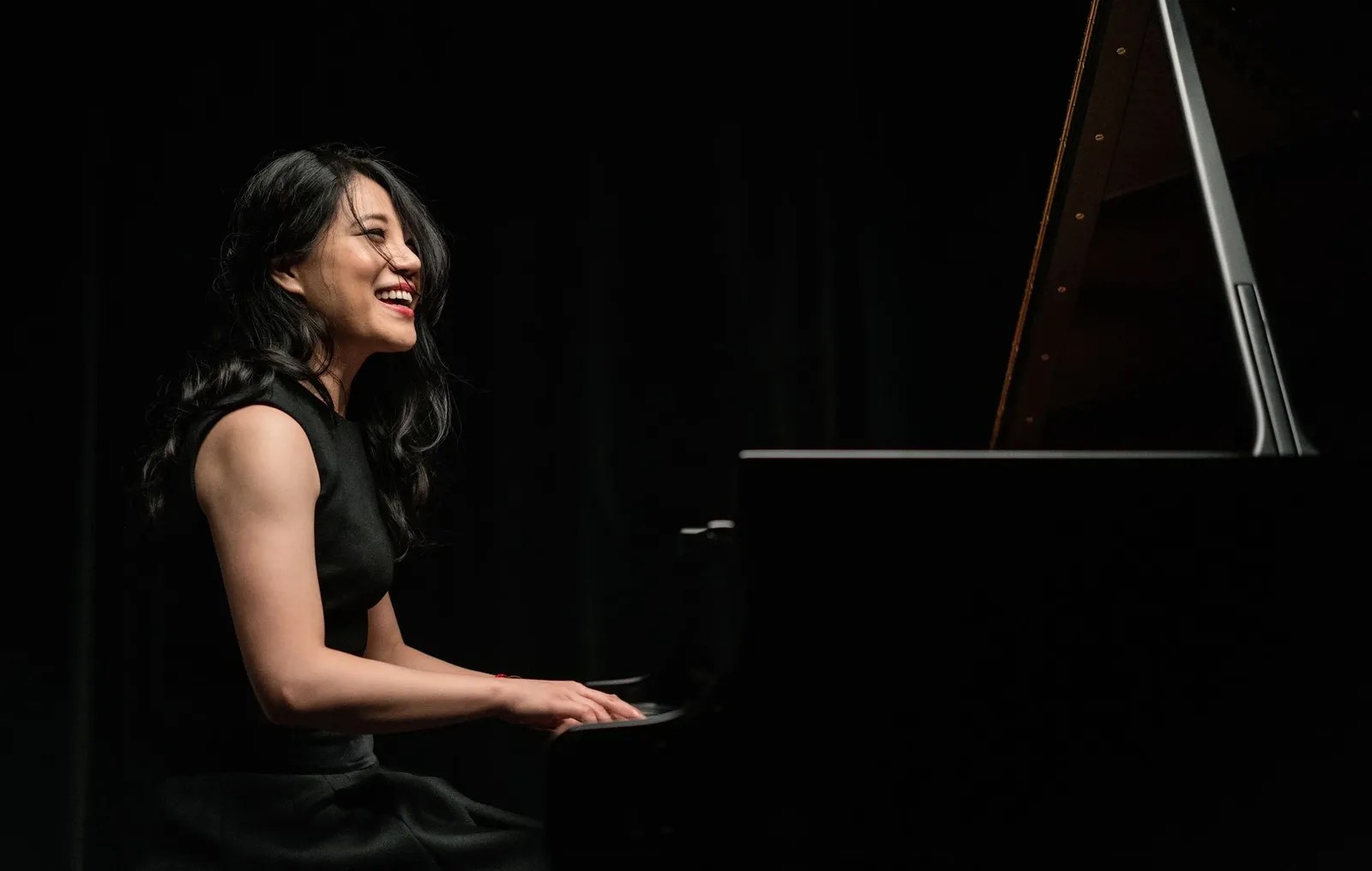
Allotting the vocalists so they merge into a balanced and complementary whole is a task this evening’s performance met convincingly. John Findon (above) brought fervour and an immediacy to Gerontius which never threatened overkill. Witness the assured pacing of his ‘Sanctus fortis’ solo so it dominated the opening part without undermining the latter’s formal and expressive trajectory; or the respective poise and fervour of ‘I went to sleep’ and ‘Take me away’, at the start then climax of the second part, in furthering overall dramatic flow.
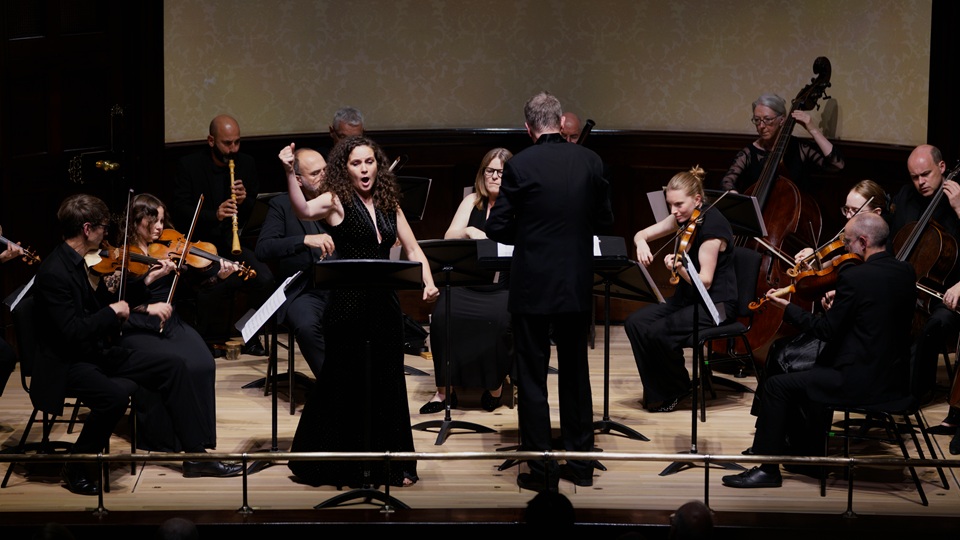
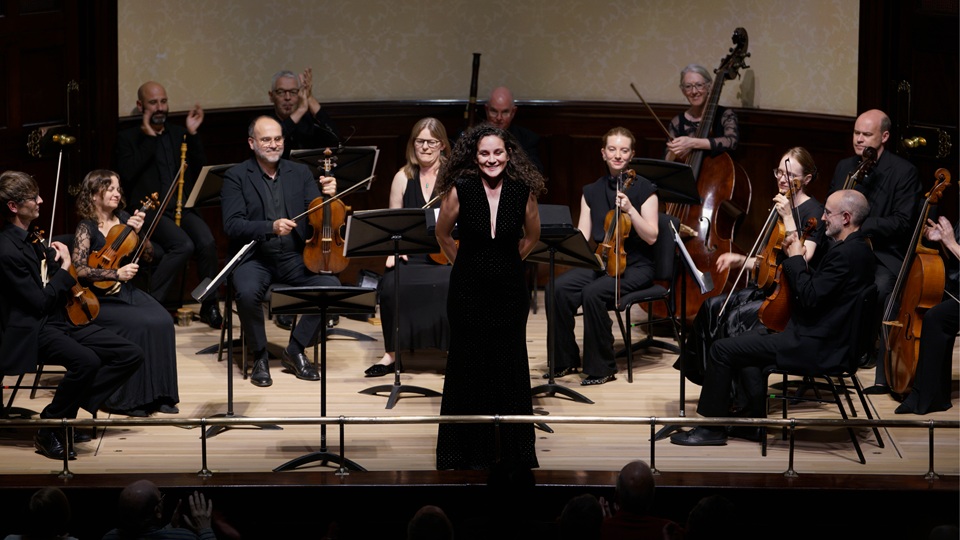
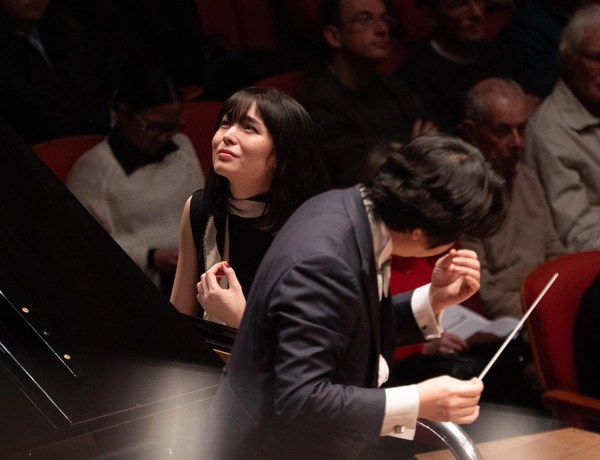
A little too detached initially, Niamh O’Sullivan (above, with Findon) duly entered into the persona of the Angel such that ‘Softly and gently’ exuded an affecting poise. Starkly implacable as the Priest, David Ireland (below) brought to Angel of the Agony an understatement preferable to that wanton rhetoric often encountered.
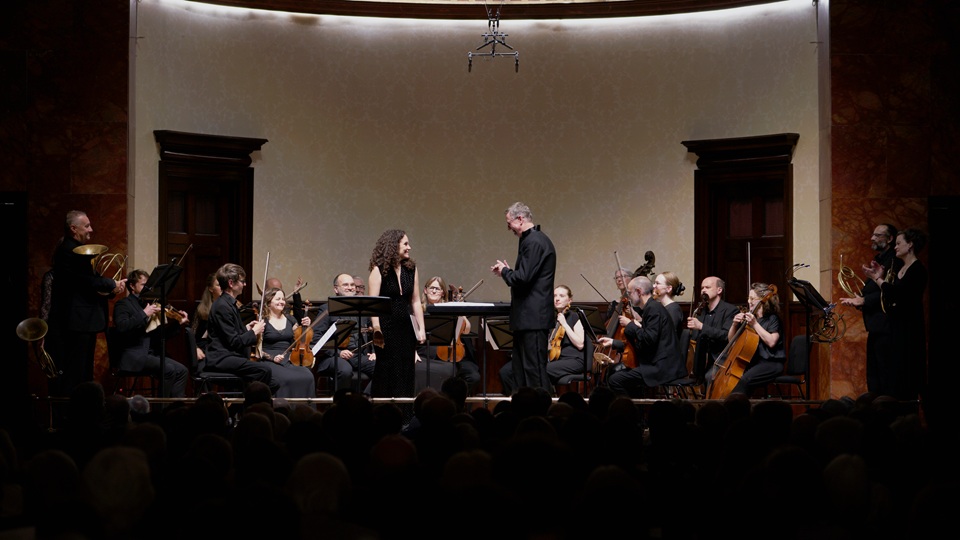
Few such works have so extensive and varied a choral component as Gerontius, in which the Three Choirs Festival Chorus did not disappoint. Thus the distant response of the Assistants, menacing aggression of the Demons, accumulating power of the Angelicals in their majestic ‘Praise to the Holiest’ or ethereal chant of the Souls in Purgatory were all characterized with the requisite insight. Nor was the Philharmonia found wanting in Elgar’s always resourceful though often demanding orchestral writing, notably a Prelude such as unfolded purposefully towards its eloquent culmination. Here, as throughout, Adrian Partington (below) gave notice of his deep knowledge of and unfailing involvement with this score – not least when bringing out those sombre if luminous hues as were a hallmark of the composer’s orchestration forthwith.
Orchestral and conductor were also at one when delineating the hieratic mystery or grandeur of the Prelude to Wagner’s Parsifal. Its inclusion prior to Gerontius has often found favour in recent years yet, other than pointing up that debt which Elgar repaid handsomely in his own terms, it hardly seems necessary given the emotional scope or inclusiveness of what follows. If it is included then better, surely, to play this piece without its Act One ‘resolution’ then go straight into the Elgar to point up their conceptual connection and ensure cohesion forthwith.
Attendees at the performance had the benefit of programme notes by Martin Lee-Browne – author, authority on British music (not least Delius) and one-time Chairman of Gloucester Three Choirs – whose presence at and contributions to this festival will be greatly missed.
Louise Alder (soprano), London Philharmonic Orchestra / Edward Gardner
Tjøgersen Between Trees (2021) Canteloube from Chants d’Auvergne (1923-55): La pastoura als camps; La delaïssádo; Deux bourrées; Lou coucut; Baïlèro Richard Strauss Eine Alpensinfonie Op.64 (1911-15)
Royal Albert Hall, London Monday 27 July 2026
Reviewed by Ben Hogwood Photos (c) BBC / Chris Christodoulou
The music for this invigorating Prom drew us outdoors, to Norwegian woods, the fields of Auvergne and the mountains of the Alps – all brought to us in glorious technicolour by an orchestra on top of their game.
The Norwegian forest was first, a 360 degree view turning the Royal Albert Hall itself into a vast canopy. Kristine Tjøgersen’s Between Trees was full of sonic invention, an intriguing portrait by turns humorous, ominous, light, heavy, happy and sad. The instrumental effects (water in the brass instruments, ‘prepared’ harp and strings) would have been gimmicky in the wrong hands, but Tjøgersen clearly knows her way around a symphony orchestra and ensured all were used to the greater good.
The creak of a branch, the snap of a twig and even the underground workings of fungi and insect life – all were vividly evoked, to the point of wondering if the casing around the organ was even swaying in the light wind! Every rustle had a purpose, pointed towards the more conventional passages for horn quartet and strings in the closing pages, where unexpectedly sharp points of emotion lay in wait. Tjørgersen, who was in the audience, begins a three-year residence with the Oslo Philharmonic Orchestra next season. On this evidence hers is a striking, individual voice, a composer to follow closely.
Canteloube is a rare visitor to the Proms on account of his small output, heavily weighted towards his crowd-pleasing Chants d’Auvergne. These settings of traditional Auvergnian folksongs for soprano and orchestra are largely pastoral affairs, descriptively bringing their shepherds and birds to life. It proved impossible to listen, however, without a strong pull of sympathy for those suffering at the hands of the fires in France, a feeling heightened by the sorrowful La delaïssádo (The Abandoned Shepherdess). The part was inhabited with great feeling by soprano Louise Alder, supported by meltingly beautiful solos from cor anglais (Sue Böhling) and oboe (Ian Hardwick).
By contrast the bright La pastoura als camps (The Shepherdess in the Pasture) revelled in the open air, while the Deux bourrées danced lightly, the second (Lo calhé) especially, the quail a worrisome presence as it protected its nest. Lou coucut (The Cuckoo) was funny, heightened by Alder’s side glances to the audience, but inevitably the showstopper was Baïlèro, the shepherd’s song drawing an exquisite tone from the soprano and the supporting London Philharmonic Orchestra woodwind.
Donning our crampons after the interval, we joined Edward Gardner in an ascent he knows well, scaling the peak of Richard Strauss’s Eine Alpensinfonie, a piece both he and the LPO have captured on record. Familiarity in this case brought a tight structural grasp of the arching structure, whose 22 sections lasted 48 minutes – a relatively quick interpretation. Some of the sections did indeed move a little too quickly, the ascent taken by quick mountaineers, but the vistas on display were stunning in their sound quality.
The brass in particular excelled, trombones (led by Mark Templeton), trumpets (Tom Nielsen), tubas (Lee Tsarmaklis) and horns, both onstage (John Ryan) and off (Annemarie Federle), the latter expertly marshalled in the gallery by conductor Wilson Ng, who successfully accounted for the sonic delay.
Meanwhile the percussion took the brunt of the Thunderstorm, the wind machines whirring as timpani rolled and struck with ever greater danger, the mountain revealing its dark side. As an orchestral sound painter, Strauss is almost without equal, and his gifts were shown off repeatedly as Gardner showed us the waterfall, flowery meadows, mountain pasture and glacier in glorious technicolour. The LPO woodwind were crystal clear in the rarefied air, the burnished strings enjoying the rich melodies and cadences. Balancing everything was Richard Gowers on the Albert Hall organ, his church solo ideally rendered as the magical coda approached, setting us back on the arena floor where this extended musical paragraph began.
Jonathan Aasgaard (cello), Sinfonia of London / John Wilson
Verdi Overture: La forza del destino (1861-2, revised 1869) Walton Cello Concerto (1955-56) Respighi Feste romane (Roman Festivals) (1928); Fontane di Roma (Fountains of Rome) (1915-16); Pini di Roma (Pines of Rome) (1923-4)
Royal Albert Hall, London Friday 24 July 2026
Reviewed by Ben Hogwood Photos (c) BBC / Chris Christodoulou
On a sultry Friday evening at the BBC Proms it was entirely appropriate for John Wilson and the Sinfonia of London to relocate their audience to the heat of Italy.
Verdi’s overture to La forza del destino was the curtain raiser, beautifully phrased and with its ‘fate’ theme brilliantly delivered by the strings. The lyrical counterpart – recognizable from certain beer adverts – simply floated on air.
Walton’s Cello Concerto was similarly airborne, though this is a very different work, written while the composer was living on Ischia, in the Bay of Naples. The opening bars, though precise, were shrouded in mystery, the ticking chords from the orchestra striking an unease from which it took soloist Jonathan Aasgaard a while to emerge. The cello’s opening melody, one of Walton’s finest, was initially tentative but subsequent reappearances gave it more conviction, the orchestra providing exquisitely shaded support.
Aasgard has recorded the work with the Sinfonia of London, whose cello section he leads, and the established togetherness with the orchestra was a clear asset. As the faster music evolved, there was a singularity of voice, though not the extravert approach of some performances, the anxieties in Walton’s music remaining. These were ultimately banished by a lyrical third movement, then a terrific cadenza and some lively exchanges between soloist and orchestra, though even here the closing bars were left with an open-ended question. A compelling performance, nonetheless – and one to revisit.
To say Respighi throws open the doors and windows when writing for orchestra would be an understatement. It is rare to encounter works of such colour and characterisation, secured through an experienced hand whose training with Rimsky-Korsakov and Martucci yielded a bold and often extravagant style. Coarse, too, on occasion, as Wilson and his charges illustrated with the beginning of Roman Festivals.
The first of a triptych written by Respighi in homage to his home city, the festivals are not for the shrinking violet, with Christian martyrs thrown to the lions even before the end of the first movement. The loud music was suitably dramatic but there was reverence and restraint in the quiet passages, where we could have been in the depths of the Colosseum itself. Here there was extraordinary control, a quality not always associated with Respighi but one which served him well here. Jubilee was terrific, as was the cut and thrust of The October Festival, and it is a credit to Wilson that the most uneven piece of the triptych was brought off with conviction, its finale reminding us of Stravinsky’s influence on the composer.
This is also evident in Fountains of Rome, but the riot of colour that found the orchestral virtuosos in their element is purely of Respighi’s hand. The wind and brass excelled through the undulations of The Fountain of Valle Giulia at dawn, with beautiful solos from oboe (Fergus McCready) and horn (Christopher Parkes), while Respighi’s lavish illustrations of the Triton and Trevi fountains were rendered with equal parts care and extravagance. The latter rose to full-bodied splendour as an ideal balance was struck between organ (Richard Hills) and orchestra. Delicacy was however once again evident in The Fountain of the Villa Medici, Wilson’s eye for detail highlighting the twinkling edges of Respighi’s wonderful part writing.
And so to the biggest crowd pleaser, the Pines of Rome, whose opening flourish in the Pines of the Villa Borghese set the tone in glorious technicolour. The murky, dusty humidity of the Pines near a catacomb was vividly portrayed, the solemn utterance of its Gregorian chant growing to an awesome climax of poise and power. Pianist Ben Dawson was superb in the rippling textures of The Pines of the Janiculum Hill, as was the baleful clarinet of Chris Richards. The movement ended memorably with the recording of the nightingale, with which Respighi transfixed his audience from a gramophone back in 1924. Over a century on, it once again held the Albert Hall in its grasp. From the depths emerged the final march, The Pines of the Via Appia. This was the night’s crowning glory, a long and brilliantly managed crescendo that somehow kept getting louder, 130 players giving their all in a thunderous and exultant finish to raise the roof.
This moment alone was worth the admission, but there was a final treat in the form of Rossini, the final galop from his overture to William Tell, entirely appropriate and given with evident pleasure. For this is what John Wilson and the Sinfonia of London are all about, their pure enjoyment of music translated into performances of rare distinction and character. No wonder the house was full, the cheers long and loud – we all knew we had seen one of the standout moments of this year’s Proms festival.
It was likely coming after the ‘official’ end of the City of Birmingham Symphony Orchestra’s season that brought a disappointingly low turnout for this concert, itself the culmination of the initial CBSO Orchestral Residency. This saw some five-dozen musicians, aged from 21 to 25, working alongside the orchestra’s musicians for an intensive week of rehearsals with Edward Gardner – principal guest conductor of the CBSO during 2010-16 and whose expertise across a broad range of repertoire was duly demonstrated by the ambitious programme heard tonight.
A first half devoted to Edgard Varèse ensured a testing workout for percussion in particular – 13 of them placed across the rear of the platform for the scintillating interplay of timbre and texture that is Ionisation; not the first such piece for the concert hall, but certainly the first of consequence. A pity that remarks by the conductor and Residency musicians did not precede rather than follow it, allowing the climactic entry of tuned instruments (chimes, glockenspiel and piano) to fade into the solo flute as commences Amériques with spellbinding immediacy.
Long notorious in terms of scale and impact, the latter work has now become something of a showpiece as this builds from post-impressionist musing, via passages alternately speculative and strident, to an apotheosis where jousting brass underpinned by a ‘walking bass’ uncannily anticipates symphonic jazz a generation hence. Under Gardner’s guidance, there was no risk of its losing focus – the players responding with discipline and no little relish to music as has lost none of that capacity to provoke and enthral just a century after its Philadelphia premiere.
The CBSO has an association with Harmonielehre stretching back more than 30 years to the recording (only the second) made with Simon Rattle. That this orchestra, with its Residency contingent, now brings greater freedom and flexibility says much about the development in orchestral playing over that time – along with the integration of John Adams’s work into the repertoire such that, far from being a polemic for reasserting the supremacy of ‘tonality’, it now yields all the attributes of a showpiece and may even be thought of as a crowd-pleaser.
Symphonic in aim if not necessarily intent, let alone attainment, this is music that can easily sprawl and it was to Gardner’s credit the un-titled first movement – with its alleged imagery of a super-tanker taking flight – maintained the impetus of those seismic opening chords, via music of expressive luxuriance, to a conclusion that fairly hit the ground running. Even finer was The Anfortas Wound, its brooding sombreness suffused with wrenching starkness on the way to a climax whose anguish references a comparable passage in Mahler 75 years on.
As with many symphonies actual or otherwise, the finale seems more a rounding-off than a resolution of the issues at stake, though there was no lack of purpose in Meister Eckhardt and Quackie as this imaginary encounter between a Medieval theologian and the composer’s infant daughter yielded unstoppable momentum prior to a headily affirmative close. Nor was there any doubting the conviction by which an expanded CBSO brought this work, and with it the whole concert, to its impressive conclusion. Roll on the Orchestral Residency for 2027.
In this second interview centred around this year’s Aldeburgh Festival, James Baillieu talks to Ben Hogwood about the art of picture painting on the piano in music by Schubert and Britten. Though the festival has since passed, Arcana publishes this interview that also focuses on his Live At The Met album with soprano Lise Davidsen, as well as his work with baritone Benjamin Appl.
Picture credit: David Ruano
My first question to pianist James Baillieu is to ask him to recall his first connection with the Aldeburgh Festival. “The first time I went to the festival was when I was a kid. I have a connection through the Young Artist Programme, but my dad’s mother lived there. A couple of times, as kids from South Africa, we spent summers in Aldeburgh. As a grown-up it would have been the second year of my postgrad studies, where I did one of the masterclasses, and I was chosen to do one of the concerts in the Jubilee Hall the following year. The concert was with the soprano Katherine Broderick, and we did some Clara Schumann, Mendelssohn songs and Robert Schumann.”
Has James always gravitated towards playing piano with singers? “I would say the balance is probably 60/40, between vocal and instrumental repertoire. When I trained in South Africa I was doing a lot of solo repertoire, but in Cape Town there is a huge opera school, so I ended up doing a lot of vocal repertoire just for fun. Coming to London was really a focus of training, and I found I loved the fusion of text and music, and had a very instinctive understanding of voices. I found I could play in a way that could highlight that. It was a lucky thing that I ended up specialising in this field, because it suits the way I play and my instincts.”
The spirit of collaboration also appeals. “What I really love about working with people is that that I’m lucky to have a handful of long-term partnerships. We do a lot together, and there is real trust in the relationship. That’s when it can be really exciting because our job is to empower our partners and make them sound the best version of themselves. That often by being very supportive, but also by being difficult, pushing in a different way to create something. When you have these strong partnerships, you can do that and things can be musically alive and interesting. It’s having the trust to change something, but also knowing if it’s a bad day, and people aren’t feeling well, then helping navigate through difficult areas. It’s having the in-depth knowledge of someone’s instrument.”
With Aldeburgh as our subject matter, talk inevitably turns to the music of Benjamin Britten. Baillieu’s first encounter was the folk song arrangements, which left a lasting impact. “I found that very interesting. I think Britten is one of the most musical people. I love the recordings of his song accompaniments. I found the folk song arrangements really fascinating in a clever way, because simple shifts of tonalities and use of gesture highlights the text in a very natural way. That was a window into his music, and then early in my postgraduate studies I worked with Allan Clayton on Canticle I: My beloved is mine and I am his. At first I didn’t quite get it, but then it suddenly clicked. The notes aren’t always the most obvious, but it’s gesture, colour and musicality that comes across. The notes are sometimes quite random!”
Britten’s music, we agree, has a habit of drawing people back. “Canticle I is such a personal tribute to Peter Pears, and you feel such genuine respect in the writing, respect for music and gesture.” James is fully aware of the importance of the piano in Britten’s songwriting. “Allan and I did this at the beginning of our studies, but then a couple of years ago we completed all the Britten cycles at the Wigmore Hall, and it was amazing to see the variety of everything. Just last week I worked with another tenor, David Butt Philip, and we did The Holy Sonnets of John Donne in Tokyo. The Japanese people loved it! They love serious things and those are very serious. It’s a wonderful cycle, really satisfying to play.”
Britten’s music does indeed travel well. “I think also he had a good sense of entrepreneurship, and he knew how to make a show.” The John Donne sonnets were written in response to a visit to the Belsen concentration camp in 1945, where Britten gave a concert with violinist Yehudi Menuhin. Baillieu recreated this concert at Aldeburgh with Maria Wloszczowska. “She’s a wonderful player, and being from Poland brings something very meaningful. Britten’s beliefs are about peace, and with the state of the world right now it felt right to bring something meaningful, to focus on that.”
At the heart of Aldeburgh is the new Festival Academy, of which Baillieu is a director with one of his regular partners, soprano Lise Davidsen, Nicky Spence, Caroline Dowdle and Julia Faulkner. He reflects on the festival’s attendance. “For me the unique thing is that the audience has been very well trained. They trust the festival and challenge themselves. They’re not scared of anything, which is very different to a lot of festivals right now where it’s all about getting the biggest stars to sell the most number of tickets. That doesn’t have a real curiosity. My role is fabulous because the artists really invest in everything the young artists do.”
Baillieu himself is a graduate of the YCAT scheme, one of the most successful and supportive enterprises for young artists. “I feel enormously lucky and grateful that I had all these wonderful opportunities”, he says warmly. “YCAT was pivotal in helping me become the artist that I needed to become. I feel very honoured that the custodianship of this young artist programme that was very pivotal in in in my development has been granted to me. The climate for young artists right now is pretty brutal. Loads of schemes have been shut down and competitions reduced or cut. I wanted to bring the ethos and legacy that Britain and Pears created with this young artist programme, to keep all the cultural enrichment and deep musical training, but to make sure we respond to the musical world as it looks today. If I was graduating tomorrow, things would look very different now, and it’s making sure that as an organisation we’re responding to that.”
James clearly relishes the thought of giving a lot back through teaching and support. “I was so well supported that I really want to do what I can to help, because there’s so much fabulous talent around. The Britten Pears programme works with other organisations to amplify opportunities as much as possible. I keep saying ‘young people’, I still feel like a young artist! Career-wise I couldn’t be happier, but it’s still very fresh in my mind, so I think it’s useful that I know what it feels like to build this pathway.”
With soprano Lise Davidsen, Baillieu gave a full concert of Schubert lieder – a marked contrast to the big stage roles she has also inhabited. “Lisa is one of my close musical partners and also a very close friend. It has been super exciting to be part of her journey, and for the last decade or so we have done various mixed programmes. For the last one we put in a set of Schubert, and it was amazing just how well it fitted. It wasn’t always the most obvious fit to me, but somehow the magnitude of her voice, with something like Strauss songs, you do feel a little bit shortchanged with just a piano version rather than a huge orchestra. But with the simplicity of Schubert, it somehow works better.”
The listeners agreed. “Because the response to that small shipper group was so overwhelmingly and kind of universally positive, we decided to be brave and put together a whole evening of Schubert.” Schubert features as part of the recently released Decca album Live at the Met, where Davidsen and Baillieu added music by Puccini, Richard Strauss, Sibelius and Grieg. The concert took place in September 2023, and the pianist remembers it vividly. “It was an extraordinary experience, and was equally terrifying! The day before I’ll never forget, because in America they have all these unions, and all the stagehands were there even when I needed the piano to be moved 10 centimetres to the right – just two of us in a venue for orchestra, chorus and principles. The music staff were amazingly supportive, and they put an acoustic shell around the piano, which really helped. When we rehearsed the day before I felt immediately calm, because the acoustic is actually fabulous. On the day itself I felt like a rock start. The audience was just so joyous, and there was such a good energy from the hall, that I just loved it.”
The concert (above) included music by Richard Strauss, whose music presents all sorts of challenges for the pianist. “They are very virtuosic and dense”, he agrees. “Most of my training I thought about the famous book by Gerald Moore, Am I Too Loud, but with Lise it’s “Am I too soft?!” If I know that I’m going to do a patch with her I started beefing up myself, whereas with other things it’s about finesse and scaling down. It’s a different challenge.”
Baillieu works with a wide variety of artists, including baritone Benjamin Appl and flautist Adam Walker. Does one complement the other? “I’ve been very lucky that my partnerships have generally been long term and very close, and I have worked with a lot of vocal partners and niche instruments – flute, clarinet, and trombone, working with Peter Moore recently. I actually haven’t done all that much kind of traditional Beethoven sonatas, but I don’t mind. Now I have quite a close partnership with viola player Timothy Ridout and have learned a lot of interesting repertoire.”
Both are YCAT alumni. “Someone like Yuja Wang would not need that, because she had a very clear trajectory and was a big star and won everything. YCAT helped people like me who were perhaps musically interesting but without a completely clear pathway. I guess those like-minded souls stick together, and so a lot of my partners have been from YCAT days. They’re very brave, taking the ‘interesting misfits’ and putting them into the mainstream!”
Returning to Schubert, Baillieu filmed Schubert’s Winterreise with Appl under the direction of John Bridcut. With Appl he also worked on the music of György Kurtág – subject of a previous Arcana interview. “It was an unforgettable, intense and unrelenting few days!” he says with a glint in the eye, “but I was very grateful to have had that experience.” And what was it like filming Winterreise with Appl in the Alps? “It was also challenging. In our partnership, Ben and I have done some very strange things in our lives together! What we hadn’t quite taken on board is how different filming is to recording, and that the focus is completely visual. We had to fight a lot for giving the sound equal importance, but if you had the heating on in the tower it made a noise! We managed to find a happy medium, but the visuals are very striking. Ben then had to go and sing outside with just an earpiece, so I prerecorded some of the songs and he went and did that outside.” The weather also proved unpredictable. “When we arrived, there was absolutely no snow, so we thought the whole project was going to be cancelled, but thankfully the snow came in the evening and there was something to film!”
What would James say are the principal qualities of a good Schubert pianist, when it comes to the songs? “I always feel that what we get from Schubert is someone that understands humanity in sound. I always said I think he would have been a genius psychotherapist, because he manages to get the human condition into sound. In terms of music there are a lot of Classical influences, the elegance and structure of phrases, but I think it’s empathy. If you are empathetic, that’s when Schubert is most successful, because he was obviously very empathetic. He is also unique with the incredible friendships with various poets with whom he had intense connections. He was clearly something of a “connector” – but empathy is the main one I would say.”
His music has proved far reaching. “With Ben we have taken Schubert to Hong Kong, and he’s done projects in India and Australia. It speaks to people, there is a universality about it, and I think it’s because he understands the human spirit. There is also the simplicity. That’s what makes Schubert so hard, because there is a timeless elegance, and a perfect quality that makes it a little bit scary. But there is nothing better than some of those songs!”
You can read more about this year’s Aldeburgh Festival at the Britten Pears Arts website, with full concert information and details. For biographical information on James Baillieu himself, you can visit his artist page