posted by Ben Hogwood, with text from the press release
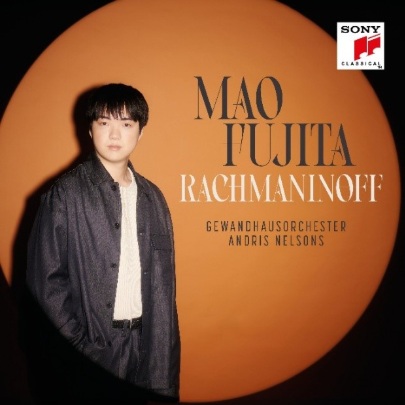
On November 27th, 2026, Sony Classical will release Rachmaninoff, the new album by acclaimed young pianist Mao Fujita. Together with the Gewandhausorchester under the baton of Andris Nelsons, Fujita presents here one of the most personal and ambitious projects of his career to date, bringing together Rachmaninoff’s monumental Piano Concerto No. 3, both Piano Sonatas and a selection of lyrical solo works and song transcriptions.
At the heart of the album stands Rachmaninoff’s legendary Piano Concerto No. 3, often regarded as the ultimate challenge in the piano repertoire. Described by the composer himself as a “concerto for elephants”, the work has become synonymous with virtuosity, endurance and technical brilliance. Yet its fascination lies not only in its difficulty but also in its extraordinary poetry, clarity and architectural sophistication. Fujita’s acclaimed performances of the concerto, including his silver medal-winning appearance at the 2019 International Tchaikovsky Competition, reveal the pianist’s deeply lyrical approach, bringing out the poetry within this highly virtuosic work. The concerto was recorded with the renowned Gewandhausorchester and Andris Nelsons.
Fujita’s interpretation reflects his close study of Rachmaninoff’s own recordings, which he regards as essential listening rather than simply a source of reference or interest. For Fujita, hearing the composer perform his own monumental works is an extraordinary privilege. Although Rachmaninoff’s unique, lyrical, and beautiful playing moves him deeply, Fujita does not seek to reproduce it. Instead, he developed the most convincing interpretation he could through his own technique, musical understanding and individuality.
Alongside the concerto, the album presents both of Rachmaninoff’s Piano Sonatas. The Second Sonata, completed in 1913 at the composer’s beloved Ivanovka estate and later revised in 1931, remains one of the most dramatic and technically demanding works in the repertoire. Less frequently performed but equally compelling is the First Sonata, inspired by Goethe’s Faust and composed during Rachmaninoff’s years in Dresden. It was composed around 1908. Together they reveal different facets of the composer’s imagination, from dark passion and demonic intensity to extraordinary structural mastery.
Offering a contrast to these large-scale works are the lyrical miniatures that complete the programme. Fujita performs his own piano transcription of Zdes’ khorosho from the Twelve Romances, alongside Alan Richardson’s celebrated transcription of the famous Vocalise. He also turns to Rachmaninoff’s beloved Morceaux de fantaisie, Op. 3, a collection that already reveals the melodic gift and emotional immediacy that would become hallmarks of the composer’s mature style. Fujita particularly values the way Richardson’s transcription preserves the simplicity and lyricism of the original Vocalise. For him, the pianist’s challenge is to make the piano sing and sustain the long melodic line as naturally as a voice, while allowing the accompaniment to remain transparent. He therefore approaches the work above all as a song rather than as a virtuoso piano transcription. The same vocal quality also characterizes his own transcription of Zdes’ khorosho.
Fujita agrees with the description of Rachmaninoff as the ‘last Romantic’, although he defines it somewhat differently. In his view, Rachmaninoff carried the musical language of previous eras to its very limits. He continued to give meaning to harmony until the very end and placed enormous importance on the relationships between notes, musical architecture, and rhythm. In this sense, he took everything inherited from previous generations and placed his faith in its final possibilities.
Rachmaninoff will be available on 2 CDs and digitally in stereo and the immersive audio format Dolby Atmos.
Published post no.3,057 – Saturday 24 October 2026
In this second interview centred around this year’s Aldeburgh Festival, James Baillieu talks to Ben Hogwood about the art of picture painting on the piano in music by Schubert and Britten. Though the festival has since passed, Arcana publishes this interview that also focuses on his Live At The Met album with soprano Lise Davidsen, as well as his work with baritone Benjamin Appl.
Picture credit: David Ruano
My first question to pianist James Baillieu is to ask him to recall his first connection with the Aldeburgh Festival. “The first time I went to the festival was when I was a kid. I have a connection through the Young Artist Programme, but my dad’s mother lived there. A couple of times, as kids from South Africa, we spent summers in Aldeburgh. As a grown-up it would have been the second year of my postgrad studies, where I did one of the masterclasses, and I was chosen to do one of the concerts in the Jubilee Hall the following year. The concert was with the soprano Katherine Broderick, and we did some Clara Schumann, Mendelssohn songs and Robert Schumann.”
Has James always gravitated towards playing piano with singers? “I would say the balance is probably 60/40, between vocal and instrumental repertoire. When I trained in South Africa I was doing a lot of solo repertoire, but in Cape Town there is a huge opera school, so I ended up doing a lot of vocal repertoire just for fun. Coming to London was really a focus of training, and I found I loved the fusion of text and music, and had a very instinctive understanding of voices. I found I could play in a way that could highlight that. It was a lucky thing that I ended up specialising in this field, because it suits the way I play and my instincts.”
The spirit of collaboration also appeals. “What I really love about working with people is that that I’m lucky to have a handful of long-term partnerships. We do a lot together, and there is real trust in the relationship. That’s when it can be really exciting because our job is to empower our partners and make them sound the best version of themselves. That often by being very supportive, but also by being difficult, pushing in a different way to create something. When you have these strong partnerships, you can do that and things can be musically alive and interesting. It’s having the trust to change something, but also knowing if it’s a bad day, and people aren’t feeling well, then helping navigate through difficult areas. It’s having the in-depth knowledge of someone’s instrument.”
With Aldeburgh as our subject matter, talk inevitably turns to the music of Benjamin Britten. Baillieu’s first encounter was the folk song arrangements, which left a lasting impact. “I found that very interesting. I think Britten is one of the most musical people. I love the recordings of his song accompaniments. I found the folk song arrangements really fascinating in a clever way, because simple shifts of tonalities and use of gesture highlights the text in a very natural way. That was a window into his music, and then early in my postgraduate studies I worked with Allan Clayton on Canticle I: My beloved is mine and I am his. At first I didn’t quite get it, but then it suddenly clicked. The notes aren’t always the most obvious, but it’s gesture, colour and musicality that comes across. The notes are sometimes quite random!”
Britten’s music, we agree, has a habit of drawing people back. “Canticle I is such a personal tribute to Peter Pears, and you feel such genuine respect in the writing, respect for music and gesture.” James is fully aware of the importance of the piano in Britten’s songwriting. “Allan and I did this at the beginning of our studies, but then a couple of years ago we completed all the Britten cycles at the Wigmore Hall, and it was amazing to see the variety of everything. Just last week I worked with another tenor, David Butt Philip, and we did The Holy Sonnets of John Donne in Tokyo. The Japanese people loved it! They love serious things and those are very serious. It’s a wonderful cycle, really satisfying to play.”
Britten’s music does indeed travel well. “I think also he had a good sense of entrepreneurship, and he knew how to make a show.” The John Donne sonnets were written in response to a visit to the Belsen concentration camp in 1945, where Britten gave a concert with violinist Yehudi Menuhin. Baillieu recreated this concert at Aldeburgh with Maria Wloszczowska. “She’s a wonderful player, and being from Poland brings something very meaningful. Britten’s beliefs are about peace, and with the state of the world right now it felt right to bring something meaningful, to focus on that.”
At the heart of Aldeburgh is the new Festival Academy, of which Baillieu is a director with one of his regular partners, soprano Lise Davidsen, Nicky Spence, Caroline Dowdle and Julia Faulkner. He reflects on the festival’s attendance. “For me the unique thing is that the audience has been very well trained. They trust the festival and challenge themselves. They’re not scared of anything, which is very different to a lot of festivals right now where it’s all about getting the biggest stars to sell the most number of tickets. That doesn’t have a real curiosity. My role is fabulous because the artists really invest in everything the young artists do.”
Baillieu himself is a graduate of the YCAT scheme, one of the most successful and supportive enterprises for young artists. “I feel enormously lucky and grateful that I had all these wonderful opportunities”, he says warmly. “YCAT was pivotal in helping me become the artist that I needed to become. I feel very honoured that the custodianship of this young artist programme that was very pivotal in in in my development has been granted to me. The climate for young artists right now is pretty brutal. Loads of schemes have been shut down and competitions reduced or cut. I wanted to bring the ethos and legacy that Britain and Pears created with this young artist programme, to keep all the cultural enrichment and deep musical training, but to make sure we respond to the musical world as it looks today. If I was graduating tomorrow, things would look very different now, and it’s making sure that as an organisation we’re responding to that.”
James clearly relishes the thought of giving a lot back through teaching and support. “I was so well supported that I really want to do what I can to help, because there’s so much fabulous talent around. The Britten Pears programme works with other organisations to amplify opportunities as much as possible. I keep saying ‘young people’, I still feel like a young artist! Career-wise I couldn’t be happier, but it’s still very fresh in my mind, so I think it’s useful that I know what it feels like to build this pathway.”
With soprano Lise Davidsen, Baillieu gave a full concert of Schubert lieder – a marked contrast to the big stage roles she has also inhabited. “Lisa is one of my close musical partners and also a very close friend. It has been super exciting to be part of her journey, and for the last decade or so we have done various mixed programmes. For the last one we put in a set of Schubert, and it was amazing just how well it fitted. It wasn’t always the most obvious fit to me, but somehow the magnitude of her voice, with something like Strauss songs, you do feel a little bit shortchanged with just a piano version rather than a huge orchestra. But with the simplicity of Schubert, it somehow works better.”
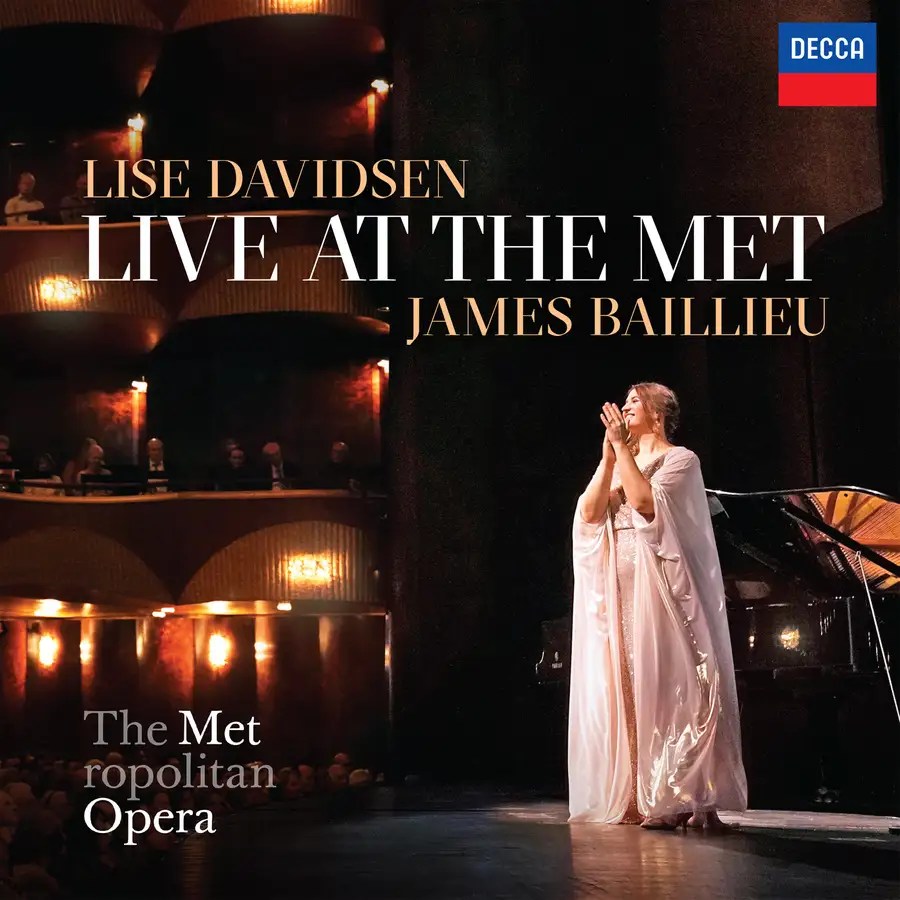
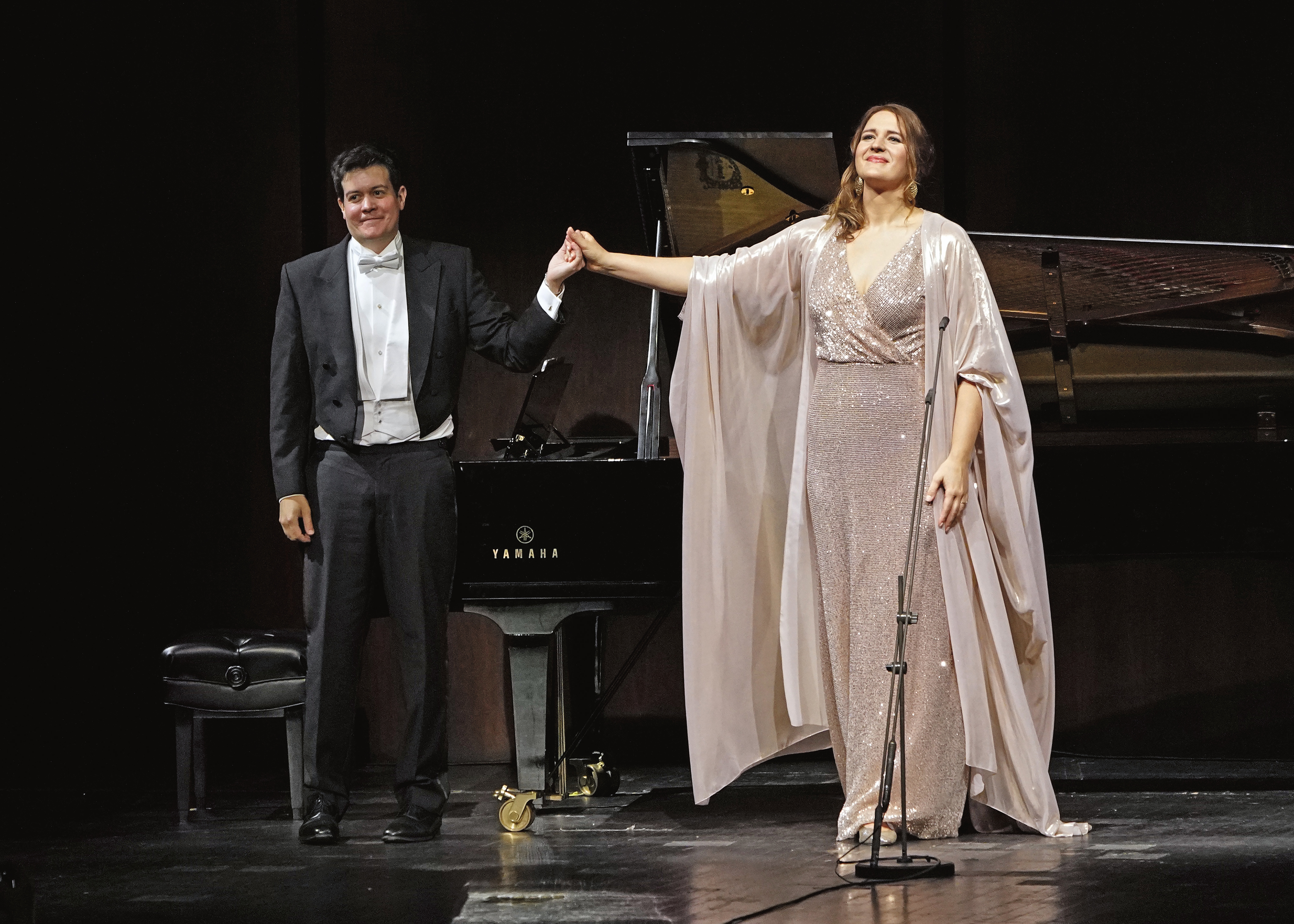
The listeners agreed. “Because the response to that small shipper group was so overwhelmingly and kind of universally positive, we decided to be brave and put together a whole evening of Schubert.” Schubert features as part of the recently released Decca album Live at the Met, where Davidsen and Baillieu added music by Puccini, Richard Strauss, Sibelius and Grieg. The concert took place in September 2023, and the pianist remembers it vividly. “It was an extraordinary experience, and was equally terrifying! The day before I’ll never forget, because in America they have all these unions, and all the stagehands were there even when I needed the piano to be moved 10 centimetres to the right – just two of us in a venue for orchestra, chorus and principles. The music staff were amazingly supportive, and they put an acoustic shell around the piano, which really helped. When we rehearsed the day before I felt immediately calm, because the acoustic is actually fabulous. On the day itself I felt like a rock start. The audience was just so joyous, and there was such a good energy from the hall, that I just loved it.”
The concert (above) included music by Richard Strauss, whose music presents all sorts of challenges for the pianist. “They are very virtuosic and dense”, he agrees. “Most of my training I thought about the famous book by Gerald Moore, Am I Too Loud, but with Lise it’s “Am I too soft?!” If I know that I’m going to do a patch with her I started beefing up myself, whereas with other things it’s about finesse and scaling down. It’s a different challenge.”
Baillieu works with a wide variety of artists, including baritone Benjamin Appl and flautist Adam Walker. Does one complement the other? “I’ve been very lucky that my partnerships have generally been long term and very close, and I have worked with a lot of vocal partners and niche instruments – flute, clarinet, and trombone, working with Peter Moore recently. I actually haven’t done all that much kind of traditional Beethoven sonatas, but I don’t mind. Now I have quite a close partnership with viola player Timothy Ridout and have learned a lot of interesting repertoire.”
Both are YCAT alumni. “Someone like Yuja Wang would not need that, because she had a very clear trajectory and was a big star and won everything. YCAT helped people like me who were perhaps musically interesting but without a completely clear pathway. I guess those like-minded souls stick together, and so a lot of my partners have been from YCAT days. They’re very brave, taking the ‘interesting misfits’ and putting them into the mainstream!”
Returning to Schubert, Baillieu filmed Schubert’s Winterreise with Appl under the direction of John Bridcut. With Appl he also worked on the music of György Kurtág – subject of a previous Arcana interview. “It was an unforgettable, intense and unrelenting few days!” he says with a glint in the eye, “but I was very grateful to have had that experience.” And what was it like filming Winterreise with Appl in the Alps? “It was also challenging. In our partnership, Ben and I have done some very strange things in our lives together! What we hadn’t quite taken on board is how different filming is to recording, and that the focus is completely visual. We had to fight a lot for giving the sound equal importance, but if you had the heating on in the tower it made a noise! We managed to find a happy medium, but the visuals are very striking. Ben then had to go and sing outside with just an earpiece, so I prerecorded some of the songs and he went and did that outside.” The weather also proved unpredictable. “When we arrived, there was absolutely no snow, so we thought the whole project was going to be cancelled, but thankfully the snow came in the evening and there was something to film!”
What would James say are the principal qualities of a good Schubert pianist, when it comes to the songs? “I always feel that what we get from Schubert is someone that understands humanity in sound. I always said I think he would have been a genius psychotherapist, because he manages to get the human condition into sound. In terms of music there are a lot of Classical influences, the elegance and structure of phrases, but I think it’s empathy. If you are empathetic, that’s when Schubert is most successful, because he was obviously very empathetic. He is also unique with the incredible friendships with various poets with whom he had intense connections. He was clearly something of a “connector” – but empathy is the main one I would say.”
His music has proved far reaching. “With Ben we have taken Schubert to Hong Kong, and he’s done projects in India and Australia. It speaks to people, there is a universality about it, and I think it’s because he understands the human spirit. There is also the simplicity. That’s what makes Schubert so hard, because there is a timeless elegance, and a perfect quality that makes it a little bit scary. But there is nothing better than some of those songs!”
You can read more about this year’s Aldeburgh Festival at the Britten Pears Arts website, with full concert information and details. For biographical information on James Baillieu himself, you can visit his artist page
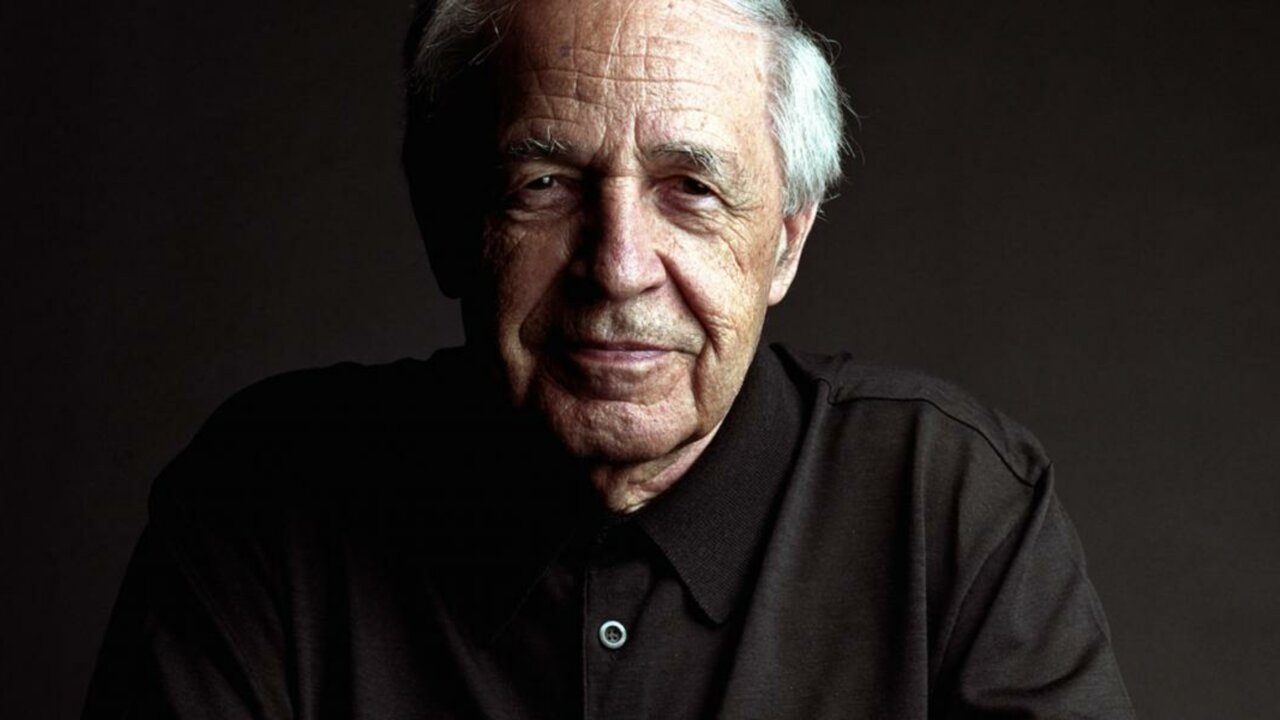
Today marks the centenary of the birth of composer and conductor Pierre Boulez, a towering figure in 20th century classical music.
There are so many recordings conducted by Boulez that I thought it best to share a playlist centred on memories of concerts I saw him conduct, largely from the 1990s and 2000s.
My first encounter with him was a rare appearance with the City of Birmingham Symphony Orchestra at the Royal Festival Hall. There he conducted Bartók’s Piano Concerto no.1 with customary clarity, soloist Krystian Zimerman delivering a memorable performance of percussive drive as he does here. On the second half of the concert was Stravinsky’s Petrushka, well-represented here by Boulez’s recording for DG in Cleveland.
Another South Bank visit in the 1990s brought an unusual appearance for Schoenberg’s monodrama Erwartung, sung memorably by soprano Jessye Norman. I remember vividly several visits to the Barbican to see Boulez conduct the London Symphony Orchestra in the 1990s, and one performance that particularly stands in the memory was that of Ravel’s Valses nobles et sentimentales, a colourful yet brisk performance that danced with a glint in its eye.
One other eyeopener, which I will never forget, was Boulez conducting Prokofiev’s Scythian Suite at the Barbican – a work he never recorded. Simultaneously on the bill was Szymanowski’s Violin Concerto no.1. Here was a composer Boulez seemingly re-evaluated later in his life, recording the concerto with violinist Christian Tetzlaff for DG.
From the recorded side I have included Maurizio Pollini’s pioneering account of Boulez’s own Piano Sonata no.2, a challenging piece that I must admit I have not yet conquered – but whose importance is clear.
To finish, my favourite Boulez recording, which finds him back in Cleveland conducting Debussy’s Nocturnes, a recording notable for its ideal pacing, beautiful colouring and immaculate rhythmic direction.
You can listen to this selection on Tidal by clicking on the playlist link below:
If you’ve been near any social media platform in this country, you’ll have surely worked out why, as BBC Radio 2 is undergoing an overhaul on its daytime schedule. You will probably have been blasted by the massed choirs heralding the arrival of Scott Mills on breakfast…but I would argue that the real star of the show so far has been Trevor Nelson.
On the evidence of the shows I’ve heard so far, his transition from late evenings to afternoons has been a seamless one – helped by bringing the ’5 Seconds To Name’ feature quiz with him and bolstering it with the superb ‘Old School Run’.
Yet there is another factor to his early success – his new jingle. Trevor has been fortunate with jingles – he had a couple of crackers on the Rhythm Nation show – but this one, co-written and sung by Zoe Birkett, is a proper ‘diva moment’. Listen to the jingle and watch its recording here:
📻ITS OUT !!! Waghhhhh!! 📻 Buzzing to have recorded the vocal jingle for Dj Trevor Nelson @DjSpoonyofficial new radio show on @BBC Radio 2 I had so much fun with the writer in the studio, I was given a brief 2 days before recording but when I got into the booth the writer let me go loose vocally to pop my own spin on it , they were all so supportive and loved what I gave , and I can’t wait to tune in tonight to hear Spoonys jingle as hearing them LIVE on radio is there first time I’ve heard them ! Did anyone hear it ? ☺️ #singer#radio#bbcradio2#fy
From personal experience, writing such a short piece of music is anything but easy. The Darkness singer Justin Hawkins, no less, started out in music writing adverts for IKEA and Yahoo. He and his contemporaries deserve so much more credit than they get, for everyone recognises the old start-up for Microsoft Windows, the double, slightly stuttered chord that brings the start of another Netflix show, or even the cosmic flash with which ITVX is introduced.
Trevor’s jingle has a lot going on. Birkett – who finished fourth in the original Pop Idol competition – has gone for broke with a killer vocal, her convictions backed up by some spicy harmonies and a production suggesting big room funk from the 1980s, with an especially big cadence that brings the likes of Parliament to mind.
Birkett hasn’t stopped there either, delivering a similarly classy jingle for DJ Spoony’s Good Groove show. Proof that the art of the jingle is alive and kicking – those writers and performers deserve a good deal of credit!
Clyne Overflow (2020) Mozart Serenade no.10 in B flat major K361 ‘Gran Partita’ (1781)
Town Hall, Birmingham Sunday 26 January 2025 (3pm)
Reviewed by Richard Whitehouse
An interesting and worthwhile strand in the City of Birmingham Symphony Orchestra’s current season is the series of Sunday afternoon programmes focussing on each of the orchestra’s sections. Last November brought the strings for a perceptive account of Bach’s Goldberg Variations, as arranged by Dmitry Sitkovetsky and the present recital duly centred upon the woodwind in what was dominated – not unreasonably so – by a performance of Mozart’s epic Gran Partita.
Still the finest and probably longest work ever composed for wind ensemble, it also remains the canniest example of ‘functional’ music raised to a level such as transcends its immediate purpose. Not the least of its virtues is the way in which its orchestration – comprising pairs of oboes, clarinets, basset horns and bassoons along with four horns and double-bass – suggests timbral and textural possibilities as profound as they are far-reaching. Put another way, this is ‘Harmoniemusik’ which makes of a localized and even provincial genre something universal.
Such a quality was rarely less than present in this performance. Right from its trenchant yet never portentous introduction, the opening Allegro found an enticing balance between poise and impulsiveness matched by that between tutti and ensemble passages. The first Menuetto was notable for the winsome elegance of its second trio, then the ensuing Adagio yielded no mean pathos without risk of sentimentality at a flowing tempo abetted by that effortlessness of dialogue which proved a hallmark of this movement as of the performance taken overall.
Although less overtly characterful than its predecessor, the second Menuetto did not lack for personality and while the Romanze feels the least essential part of the overall conception, it still made for a pertinent entrée into the Tema con variazioni. This longest and most varied movement also encapsulates the work overall in its expressive contrasts which were to the fore here – the last variation preparing unerringly for a final Allegro whose relative brevity was belied by a drive, even forcefulness that propelled the whole work to its decisive close.
It was a testament to the excellence of these musicians that one never suspected the absence of any guiding hand, for all that guest first oboist Nicholas Daniel could be seen encouraging the players whenever his part permitted. Neither was there any sense of the latter being other than integral to the overall ensemble, such was the underlying felicity and finesse with which it conveyed the depths of what must surely rank among its composer’s greatest achievements. Not a bad way, moreover, for the CBSO’s woodwind to savour its occasion ‘in the spotlight’.
The programme had commenced just over an hour earlier with Overflow, a short but eventful piece where Anna Clyne draws inspiration from Emily Dickinson’s poetry (and, in turn, that by Jelaluddin Rumi) in music which treads an audibly viable balance between the ruminative and capricious. It made an understated showcase for the CBSO woodwind, whose brass and percussion colleagues are heard in the next of these recitals when Alpesh Chauhan directs a varied programme climaxing in Pictures at an Exhibition arranged by the late Elgar Howarth.
List of players: Marie-Christine Zupancic and Veronika Klirova (flutes), Nicholas Daniel and Emmet Byrne (oboes), Oliver Janes and Joanna Paton (clarinets), Anthony Pike and Steve Morris (basset horns), Nikolaj Henriques and Tony Liu (bassoons), Elspeth Dutch and Neil Shewan (horns), Julian Atkinson (double bass)