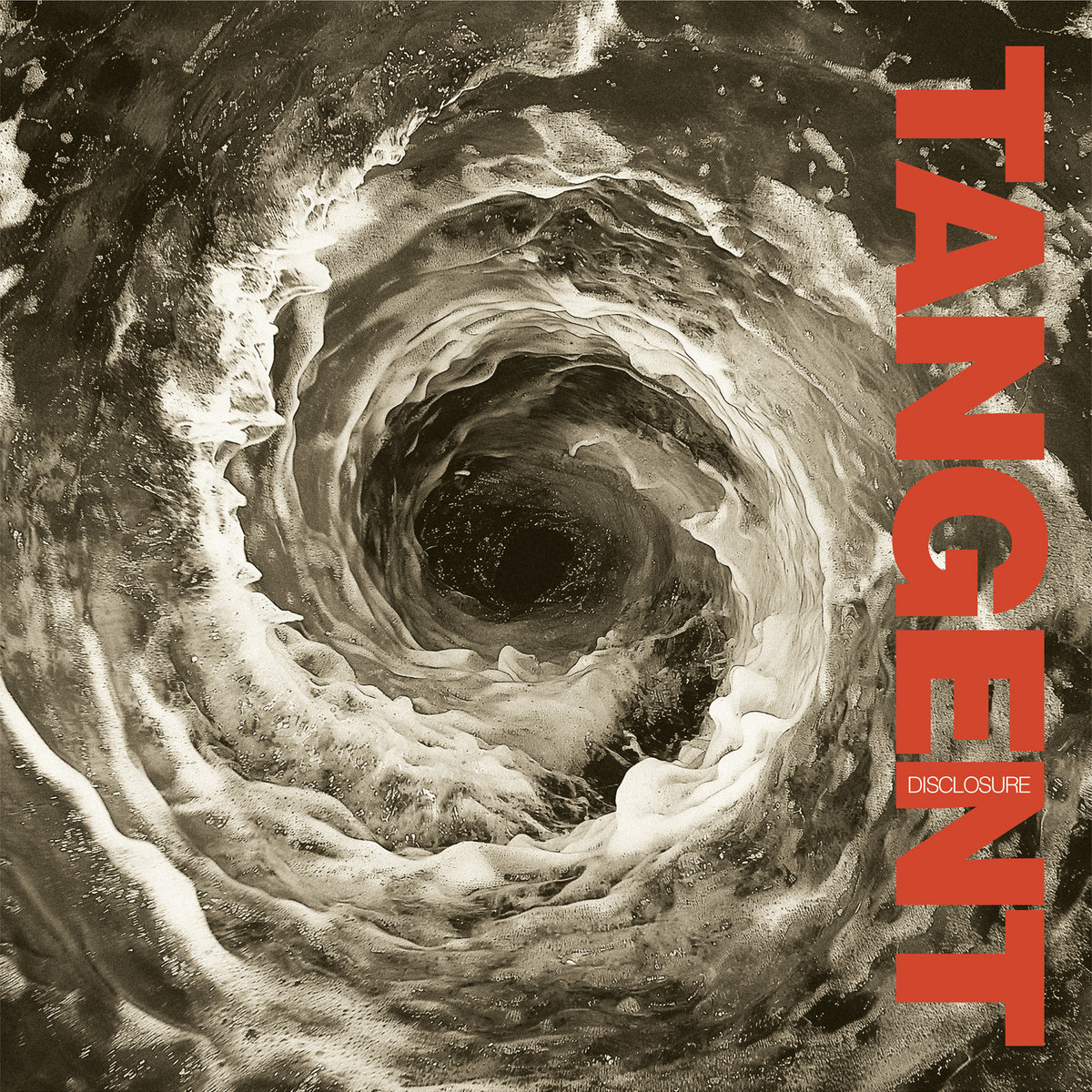
Dutch duo Tangent – Ralph van Reijendam and Robbert Kok – return with their seventh album.
Their distinctive sound has been honed through what their press release describes as “built from dense electronic textures, ghostly synths, intricate rhythms, and a persistent sense of movement between the organic and the synthetic.
Disclosure is their return from a three-year absence, and looks to bring a modular and analogue dimension to their atmospherics.
What’s the music like?
Dark and cinematic – but much more than mere mood music. The fluid, instinctive way in which the tracks are worked out show two musicians at ease with their musical instruments, but also in their way of structuring tracks that works really well.
Glitchy rhythms pile up in impressive percussive displays, but never at the expense of the melodies and harmonies around them. The music is moody and rather magnificent, the full drum sections and brooding keyboards working extremely well together.
To illustrate, Unfounded Existence has glitchy drums that ricochet around the stereo picture. Denial carries some impressive weight, with rolling beats and expressive soundscapes, while Vector Of Acceleration simmers nicely, too.
The spacey time out of Sonoluminescence works a treat, led by dreamy piano and swirling, misty white noise, before the fulsome drums return.
Does it all work?
Yes – and keeps on giving with repeated listening.
Is it recommended?
Yes – atmospheric music, and meaningful with it. An excellent album, and a brooding soundtrack to fill your stereo field.
For fans of…Trentemøller, Jon Hopkins, Daniel Avery, A Winged Victory For The Sullen
Listen / Buy
Published post no.3,055 – Thursday 22 October 2026
Reich’s short but dazzling group of pieces for tape signs off with Melodica. The composer lays out clear instructions in the score, an image of which appears in his Writings On Music compendium. He describes its genesis in typically concise fashion:
“Melodica is composed of one tape loop gradually going out of phase with itself, first in two voices and then in four. The original loop is of myself playing the four-note pattern on the melodica, a toy instrument. I dreamed the melodic pattern, woke up on May 22nd, 1966, and realized the piece with the melodica and tape loops in one day. Melodica was composed of musical pitches, as opposed to the speech fragments used in my two earlier tape pieces, It’s Gonna Rain (1965) and Come Out (1966). It proved to be both a transition phase shifting process, and the last tape piece I ever made.”
Listen
Thoughts
For the first time, Reich’s music does away with speech, applying the development of phase patterns to pitched music played on an instrument. This is a simple, jerky four note motif played on the melodica – whose repetitions can be jarring to start with. The key moment is just before two minutes in, where the phase shifting becomes noticeable to the untrained ear, and the echo effects start off those now-familiar sensations where the ear starts to pick out fleeting movements between the parts.
As the parts double from two to four, the melodic shapes dance in the mind’s eye, the rhythms bouncing off the walls – a dazzling effect for something so apparently simple! Then, almost without warning, the music stops, like switching off a radio – but continues to reverberate in the listener’s ears long after the sounds have died.
A postcard of minimalism, Melodica is a critical stage in Reich’s development as the emphasis shifts to instrumental music.
Recordings
Melodica – to my surprise – does not appear anywhere in Reich’s recorded oeuvre, though as you see above is easily accessed on YouTube.
Also written / released in 1966 Marvin GayeMoods of Marvin Gaye; Frank Sinatra Strangers in the Night; Ligeti Lux Aeterna
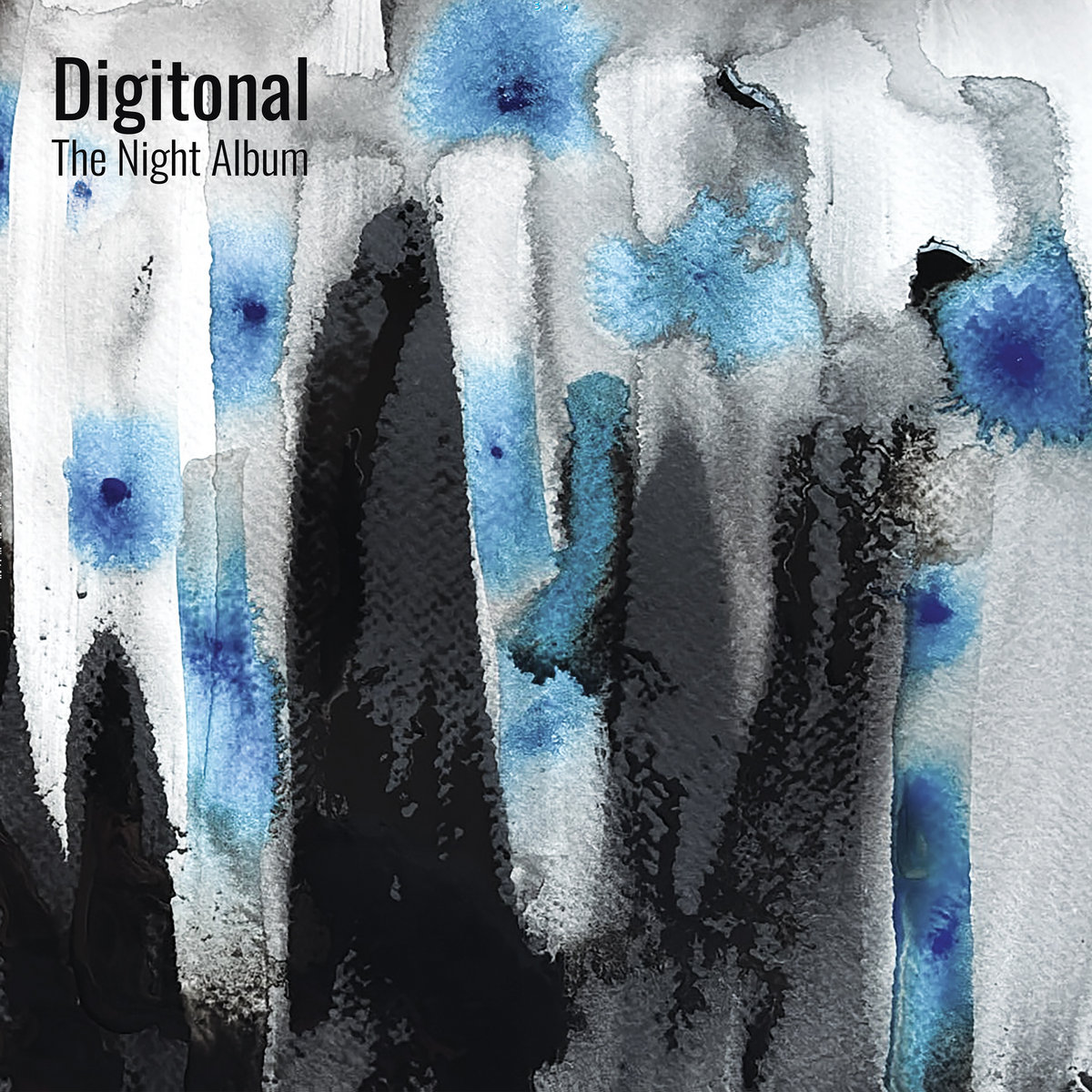
A great deal of thought has gone into Andrew Dobson‘s return to the long playing format under the Digitonal alias, after an absence of six years. The Night Album, released close to midsummer’s day in the UK, takes the small hours as its inspiration.
Dobson decided this would be his first fully solo album, and in addition – conscious of the lurking presence of AI – decided he would play all the instruments himself. As he said, “The electronics became a provocation for me to respond to and the production process a way of pushing my own limits and shaping something intentional.”
Having moved from London to Suffolk, Dobson experiences a slower pace of life – and reflects that in the album, designed as a nine-part suite journeying through the night time.
What’s the music like?
There has always been a poise to Dobson’s best work, and here it runs right through the music of The Night Album. To that we can add a deeper emotion, for there are some exquisite moments here that reward attentive listening in particular.
The clarinet has always been involved in Digitonal’s best moments and so it proves again here, with the beautifully weighted For The Birds. The riff is a subtly nagging one, mellow and thoughtful, while the cool accompanying keyboard sets just the right, peaceful mood. Similar qualities are at work in The Night Sparrow, though here the textures twinkle in the higher register. Evening Song takes the weight off its feet with a deceptively easy keyboard, mulling over its possibilities, while the closing Moon Sequence is a dappled beauty, resting easily if thoughtfully.
Does it all work?
It does, and works in all areas where noise-free listening can be secured. While very pleasant in the background, foreground listening is the way to go.
Is it recommended?
Yes. Digitonal maintains his high quality musical output but this is a notable step forward, allowing people to find peace in the small hours when they have The Night Album for accompaniment. From experience, it’s just as good in the middle of the day!
“I had never heard anyone deal with music or language in that way, turning language into music that had political content. I was completely floored by it” – sculptor and artist Richard Serra on hearing Come Out for the first time (from Steve Reich: Conversations)
Background
“I had to like open the bruise up and let some of the bruise blood come out to show them.”
As Reich details in his Writings on Music, this is the voice of Daniel Hamm…one of the six boys arrested for murder during the Harlem riots of 1964. After a beating taken in Harlem’s 28th precinct police station, Hamm and the boys were about to be “cleaned up” – but the police were only taking those with visible bleeding. Since Hamm had no open bleeding, he proceeded to open a bruise on his leg to ensure he was taken to hospital. This article on Pitchfork provides valuable political background to the piece.
Reich took a loop of the words quoted above, “recorded on both channels. First the loop is heard in unison with itself. As it begins to go out of phrase, a slowly increasing reverberation is heard. This gradually passes into a canon or round for two voices, then four voices and finally eight.”
Listen
Thoughts
After an eye-opening encounter with It’s Gonna Rain, there is less of a surprise element when listening to Come Out. And yet its impact is even more profound, sinister even, within a piece that once again stands as a blueprint for future sonic innovations. The protest made by Reich’s treatment of the musical speech elements is unswerving, and uncomfortable, with an urgency to the work demanding immediate action.
After an exposition of Hamm’s material, the speech works its way into the tight canon Reich describes, the process anticipating the work of acts such as Cabaret Voltaire a decade or two later. Looking further ahead, as the canons get more complicated, the breakdowns of big, euphoric rave numbers from the late 1980s onwards are clearly set out. Landmark tracks such as M|A|R|R|S’ Pump Up The Volume are also anticipated. If you put Reich’s manipulations to a techno beat now, few people would be any the wiser!
Yet considering the original music made in 1966, how stark this is – and what a powerful statement it makes, its relevance running all the way through to Black Lives Matter and beyond.
Quotes / Legacy
Stephen Sondheim, from Conversations… “What you do quite often, particularly with the speech pieces, is that by looping them and working with them, sounds come out of them that aren’t part of the actual language. And what happens is the listener’s ear mixes the sound. That’s exactly, of course, what (Georges) Seurat was doing with colour. He was making the eye mix the colour instead of making it on the palette. I thought that’s another thing you and I have in common, is that you have the ear-mix and Seurat has the eye-mix.”
“It was, I have to say, one of the three to four really life-changing musical events of my life” – Brian Eno on hearing Steve Reich‘s It’s Gonna Rain for the first time (from Steve Reich: Conversations)
Background
Reich’s recording of preacher Brother Walter was made in Union Square, San Francisco, in 1964. The preacher was referring to Noah’s Flood, and the forty days of continuous rain in the Bible, but the contemporary significance – with the Cuban missile crisis gripping the Western world – gripped the composer.
Once recorded, Reich took to the studio, and with two recordings of the preacher playing side by side, he observed during playback how one tape was slowly going out of phase with the other. The resultant sounds were bringing some extraordinary effects to the speech and its resultant melody and rhythm, which Reich honed in on for the final edited tape piece.
The piece is effectively in two movements – the first hones in on the words “It’s Gonna Rain”, looping them relentlessly, while the second takes on snippets of the scene in the ark: “But Noah couldn’t open the door; it had been sealed by the hand of God!”
Listen
Part 1:
Part 2:
Thoughts
Nothing quite prepares you for your first encounter with Brother Walter. The impassioned message is powerful enough, given extra perspective by the street sounds, but when it starts to go through Reich’s phrasing process all sorts of weird and wonderful musical tricks are created.
The baton is quickly passed to the listener, and the ear zooms in on unexpected micro details, with fragments of words and music taking on new effects and meanings. On headphones the effect is overwhelming; on a home stereo it is still incredibly powerful. My two live encounters with this piece have generated a headache through the overstimulation!
What Reich is also doing here, unexpectedly, is preparing the way for rap music. Brother Walter’s speech is so melodic, and so rhythmic, that it creates a profile all of its own, a dance only enlivened by the phased repetitions.
The stereo picture shifts, an unsettling experience but also a wholly stimulating one. The melodic properties of the speech of “It’s Gonna Rain” hit home in a kind of microtone key, between D and E flat major. When the two tapes reach the maximum distance apart the effect is that of an aural eclipse, with intense kinetic energy generated at the expense of all other noise.
With the second part we know a little more what to expect, but here the effect is that of a sonic whirlpool. As Reich’s process works through the manic intensity grows, the perspective of the voice changing as it gets chewed up by the machine. The vortex takes hold so that halfway through the words inaudible, and then the effect – to this listener at least – becomes that of a sonic plane coming into land, the pitch of the tape sinking towards the ground before disappearing slowly into the distance. A quite extraordinary piece!
Quotes / Legacy
Brian Eno again, from Conversations… “Everything I thought I understood about music needed to be revised. It had a very, very big impact on me. it really set me thinking again about what music could be, and what the act of listening consisted of, because it made me realise that listening was a very creative activity”