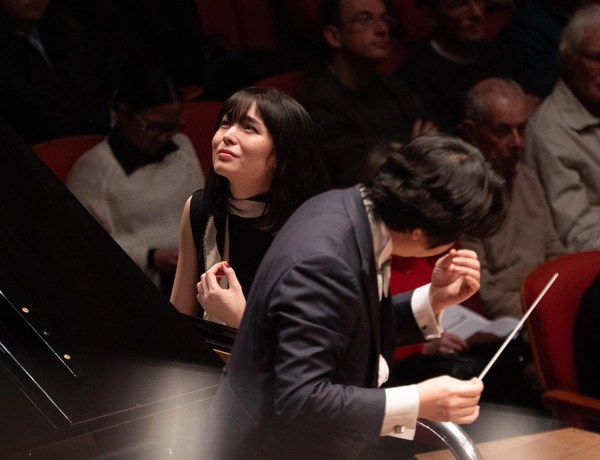
In concert – Alice Sara Ott, CBSO / Kazuki Yamada: Grieg, Bax, Clyne & Debussy

Alice Sara Ott (piano), City of Birmingham Symphony Orchestra / Kazuki Yamada

Bax Tintagel (1917-19)
Grieg Piano Concerto in A minor Op.16 (1868)
Clyne Restless Oceans (2018)
Debussy La mer L109 (1903-05)

Symphony Hall, Birmingham
Tuesday 22 September 2026

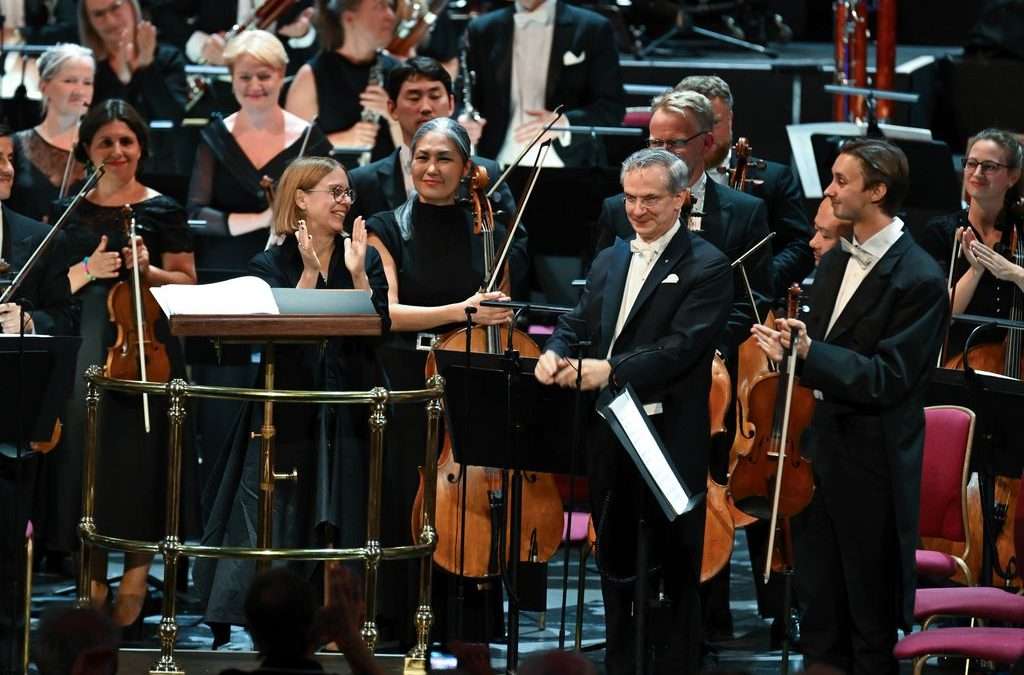
Reviewed by Richard Whitehouse Photo (c) Hannah Blake-Fathers

The sea, in various manifestations, was a dominant factor in this evening’s concert by the City of Birmingham Symphony Orchestra. One which began with Tintagel, long the most familiar (if not the only one now being revived) of Bax’s tone poems, where Kazuki Yamada showed a sure grasp of music more a reflection of its composer’s involvement with the pianist Harriet Cohen than of Arthurian times or places. Its ‘love music’ lacked nothing in rapture, yet it was the seascape from which it emerges then to which it returns that made the lasting impression.

Grieg’s Piano Concerto might not convey any overt maritime associations, but its expressive ambience is audibly that of the outdoors (unlike that of the Schumann concerto that provided its model in many particulars) and Alice Sara Ott – CBSO Collaborative Artist these next two seasons – responded with playing as impetuous and soulful as its opening movement requires. Fleeting hesitancies aside, there was no mistaking the rapport between her and Yamada; with its cadenza an emotional culmination in every respect. Soulful while never inert expressively, the central Adagio exuded inward warmth as found ideal contrast in the bracing energy of the finale – its poetic middle section artlessly rendered, and its apotheosis opulent with no undue bathos. Ott’s limpid rendering of John Field’s Ninth Nocturne made for an appealing encore.

The second half got off to a short if by no means sweet start with Restless Oceans, a compact yet eventful celebration of female identity from Anna Clyne – CBSO Composer in Residence for the current season – that lacked little in presence. Rhythmically incisive and harmonically expressive ideas, alternating purposefully on their way to the tersely unequivocal conclusion, were offset by vocal and gestural contributions from the musicians that added a layer of vivid theatricality. Further and more extended instances of Clyne’s music will follow in due course.

Bax can only have been too aware when writing Tintagel of Debussy’s La mer – this latter a game-changer in terms of orchestral composition, whose influence continues to radiate some 120 years on. Right from the opening of From dawn to midday on the sea, it was apparent Yamada had found the balance between the placing of detail within an overall structure that, if not symphonic per se, has a formal integration and expressive sweep as feels nothing if not symphonic – witness the majestic peroration with which this opening movement culminates.

Much the most elusive of these symphonic sketches, Play of the Waves yielded a lightness of touch and deftness of motion that only emphasized its emotional ambivalence. Unerringly phrased, its coda prepared ideally for Dialogue of the Wind and the Sea, a finale where the combative and alluring are brought together for what proved a thrilling culmination (though Yamada might have dispensed with those trumpet entries which Debussy subsequently and unwisely added). Certainly it brought this concert to its unequivocal and impressive close.

Yamada returns to Birmingham just before Christmas and Ott does likewise next May, while the CBSO is back in a week’s time with a programme featuring Elgar’s Enigma Variations as well as a second hearing for the co-commissioned Saxophone Concerto by Gwilym Simcock.

To read more about the CBSO’s 2026/27 season, visit the CBSO website. Click on the names to read more on pianist Alice Sara Ott and conductor Kazuki Yamada, and more on composer Anna Clyne

Published post no.3,027 – Thursday 24 September 2026
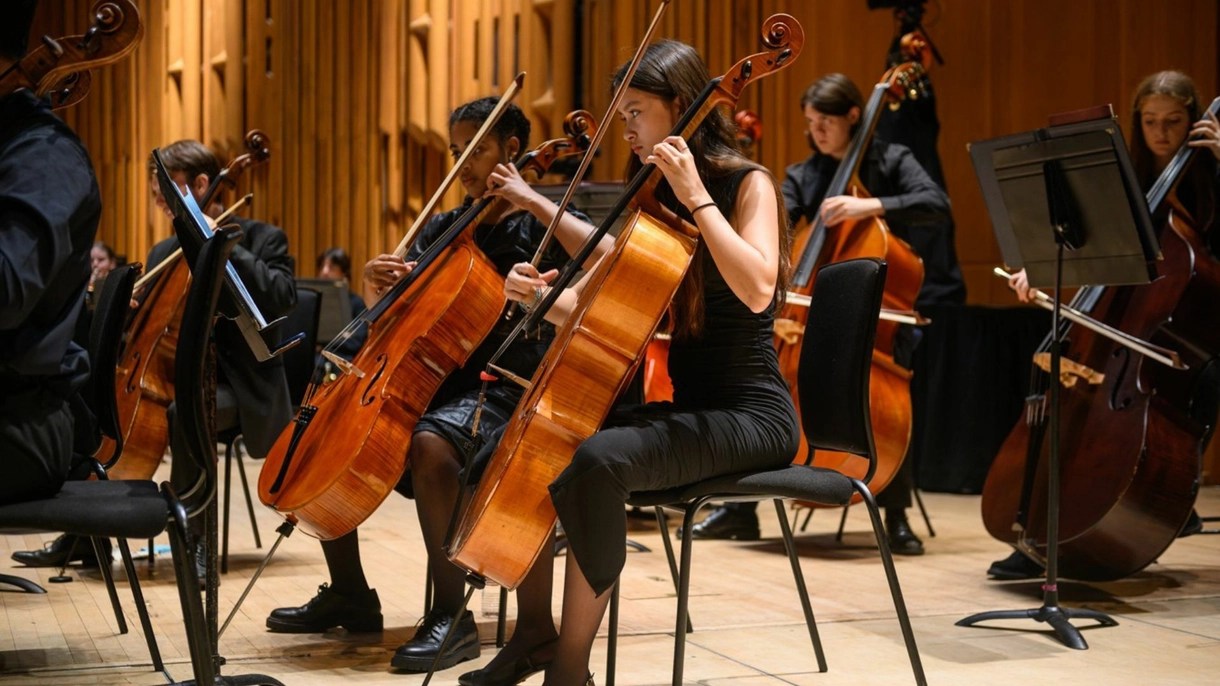
In concert – London Schools Symphony Orchestra @ Fairfield Hall – Voyages and Visions

London Schools Symphony Orchestra / Enyi Okpara / *Sitali Dewan

Smyth The Wreckers (1902-04) – Overture*
Pickard Sea-Change (1988-89)
Clyne Restless Oceans (2018)
Rimsky-Korsakov Scheherazade Op.35 (1888)

Fairfield Halls, Croydon
Tuesday 15 September 2026

Reviewed by Richard Whitehouse

Ever enterprising, the London Schools Symphony Orchestra ended its season with this wide ranging exploration of music inspired or pervaded by the sea. Conductor in residence Sitali Dewan duly took the podium for a performance of the overture to Ethel Smyth’s opera The Wreckers as more than made up for what it lacked in cohesion with vibrant characterization of its thematic contrasts – energetic, introspective and hymnic – towards a culmination that accorded the ultimately redemptive essence of what is a very human drama tangible focus.

Preferable though it might have been to place Anna Clyne’s Restless Oceans next instead of at the start of the second half, this brief if eventful celebration of female identity lacked nothing in presence. Its alternating rhythmically incisive and harmonically expressive ideas, building to a tersely unequivocal close, was enhanced by a contribution from the musicians that made for a vividly theatrical conclusion. The sort of piece, moreover, that doubtless left its mark on those participants at the World Economic Forum in Davos – where it was first heard in 2019.

Enyi Okpara had been no less assured when directing John Pickard’s Sea-Change. A typically unequivocal instance of his early music, its title refers less to Shakespeare than to the layered eddying of waves, currents and tides; their contrasts in motion given focus by consistency of pulse and a tonal trajectory centred, however obliquely, around E. Music which is visceral as well as inevitable in its progress, this demands a committed response and the LSSO was not found wanting; whether in its impetuous opening phase, mounting aggression at its centre or that remorseless accumulation whose ultimate catharsis is shot through with ominous import. This is a piece written for while making no concessions to younger players, and those tonight clearly enjoyed the encounter as much as Okpara relished making it his own interpretatively.

If it inhabits far more descriptive terrain, Rimsky-Korsakov’s Scheherazade was not without its formal and emotional subtleties in this insightful reading. Thus there was no lack of drama in The Sea and Sinbad’s Ship to offset its repetition of motion and material, while The Tale of the Kalender Prince had no absence of pathos to balance the quirky humour of its call-and-response between brass or thrilling defiance of its last crescendo. Nor was The Young Prince and the Young Princess less than rapturous in the coming together of its contrasted melodies.

A culmination in every respect, The Festival at Baghdad brings back earlier ideas in varied and ingenious guise; all the while generating a momentum that made its seismic culmination the more impressive and the enfolding resignation of those closing pages the more affecting. Throughout this performance, the LSSO principals were heard to advantage – none more so than leader Erin Healy, her rendering of the violin solos that punctuate each movement of a poise and eloquence such as endowed Rimsky’s technical wizardry with unfailing humanity.

A fitting conclusion, then, to a memorable concert that the LSSO rounded off with a lively medley of maritime melodies that evidently went down a storm on TikTok and in which all participants (not least both conductors) gave their collective all in what was a heady encore.

You can read more about the orchestra at the London Schools Symphony Orchestra website – and click on the names to read more about conductors Enyi Okpara and Sitali Dewan and composers Anna Clyne, John Pickard and Dame Ethel Smyth. For concert information you can also visit the Fairfield Halls website

Published post no.3,020 – Thursday 17 September 2026

In concert – Soloists, Danish National Concert Choir & Symphony Orchestra / Fabio Luisi @ BBC Proms: Beethoven 9th Symphony, Bent Sørensen & Anna Clyne

Clara Cecile Thomsen (soprano), Jasmin White (contralto), Issachah Savage (tenor), Adam Palka (bass), Danish National Concert Choir, Danish National Symphony Orchestra / Fabio Luisi

Bent Sørensen Evening Land (2017)
Anna Clyne The Years (2021)
Beethoven Symphony no.9 in D minor Op.125 ‘Choral’ (1811-24)

Royal Albert Hall, London
Thursday 21 August 2025

Reviewed by Ben Hogwood Photos (c) BBC / Chris Christodoulou, Ben Hogwood (soloists)

Celebrating their centenary this year, the Danish National Symphony Orchestra and chief conductor Fabio Luisi led us from the quiet of evening to the blazing light of a sunny morning in the course of this concert.

The challenge facing any concert programmer containing Beethoven’s Choral Symphony is how to lead up to it. This Prom approached from a contemporary angle, beginning in near silence with Bent Sørensen’s contemplative Evening Land. The Danish composer’s imaginative orchestration was key to the success of his picture painting, beautifully rendered by Luisi, as was the threadbare violin solo with which leader Christina Åstrand began. Childhood reminiscences of the Danish island Zealand took place in the half-light, contrasting with visions of nocturnal Manhattan that came through in bursts of technicolour, honouring Leonard Bernstein. Making a lasting impression, however, was the beautiful oboe solo from Kristine Vestergaard that marked the illness and subsequent passing of Sørensen’s father.

Having eavesdropped on this intimate opening piece, the Danish National Concert Choir rose for Anna Clyne’s musical account of the Covid pandemic – already consigned to history, it seems. Few people would like to revisit those days in a concert experience, but Clyne’s message – channelling the text of Stephanie Fleischmann – was one of underlying resilience. The choir began in stasis, occupying an added note chord which somehow drew parallels with the Björk song Possibly Maybe for this correspondent, before the piece flourished. A dreamlike mood was enhanced by a pure, almost complete lack of vibrato from both choir and orchestra, while the harmonic language drew strong parallels with the latter stages of Holst’s suite The Planets – Saturn and Neptune in particular. An autumnal chill was evident in spite of increasingly frenetic activity in the orchestra, and the piece ended in an uneasy acceptance of events passed, rather like our own emergence from lockdown.

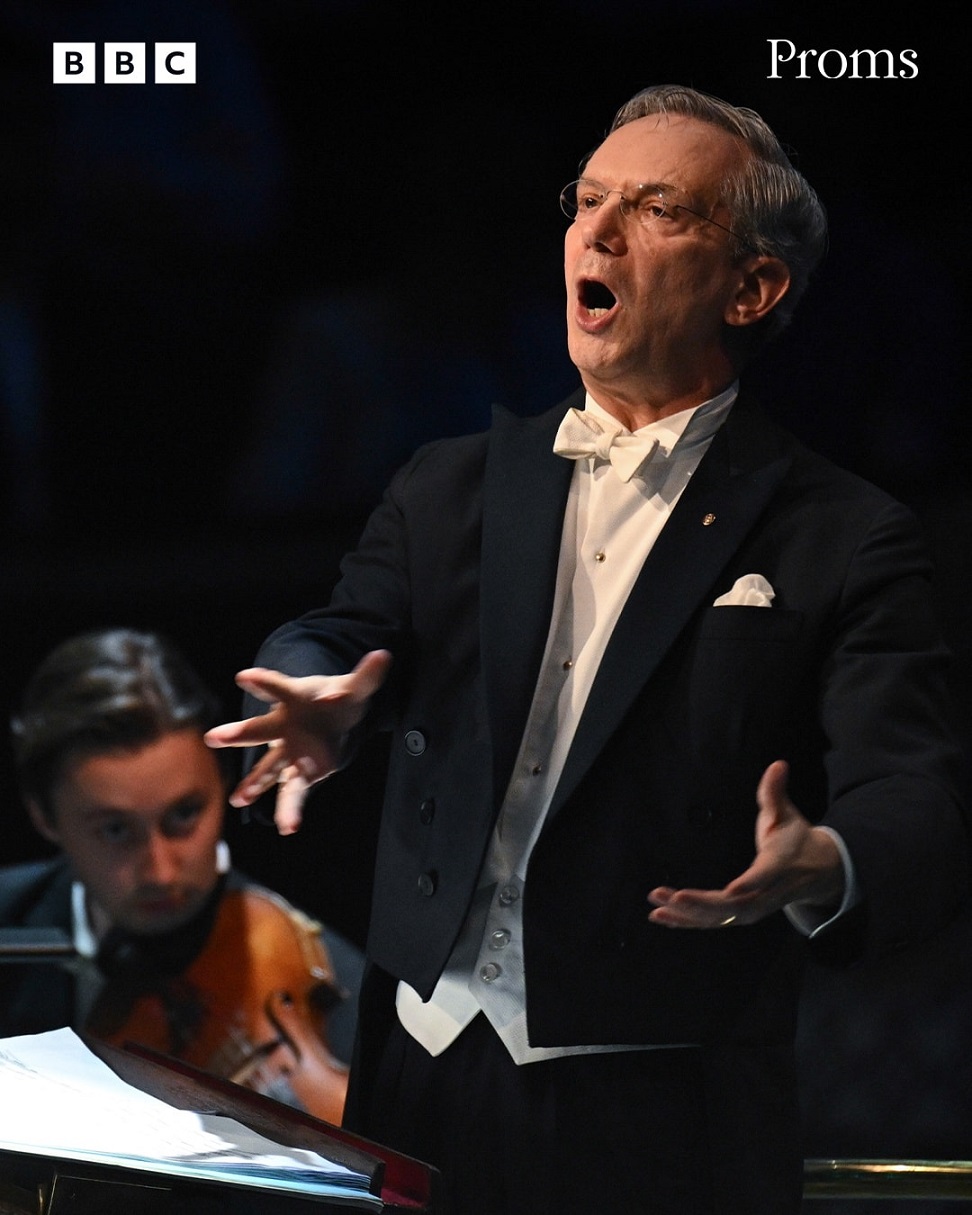
Beethoven’s Ninth Symphony is the ultimate hymn to freedom, though it does of course go through a titanic struggle before that release, in the form of Schiller’s Ode To Joy, can be attained. Luisi led us through the dark, pre-twilight moments in an account notable for its poise and guile. Using relatively fast speeds, the first movement took a little while to light the touch paper, but once ignited the music powered forward with increasing determination. The scherzo was quick, quite matter of fact with its timpani interventions, and balanced by a bucolic trio where the wind kept pace heroically with Luisi’s quick baton. Their attractive textures and warm melodic phrasing were a key feature of both this and the Adagio, again on the quick side, but managing its fanfare interventions impeccably.

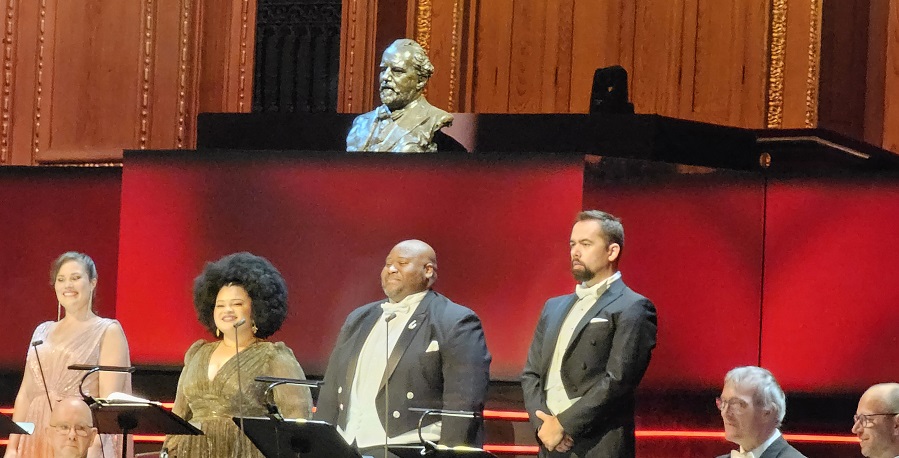
Left to right: Clara Cecile Thomsen (soprano), Jasmin White (contralto), Issachah Savage (tenor), Adam Palka (bass), beneath the bust of Sir Henry Wood @ BBC Proms

And so to the finale, with a memorable exposition for the Ode to Joy theme from sotto voce cellos and basses, the Royal Albert Hall hushed in anticipation. The choral passages were suitably exultant, the 75-strong choir drilled to perfection if cooler in temperature than the orchestra. The four soloists (above) were led by impressive bass Adam Palka, whose authoritative recitative “O Freunde, nicht diese Töne!” was a highlight, and while the quartet’s ensemble pieces wavered a little in tuning the sense of release and elation was keenly felt and clearly relished. The smile on the face of the music spread to the audience in the exhilarating closing bars as the orchestra took flight, completing an impeccably controlled interpretation on the part of Luisi that came to the boil at just the right time.

You can listen back to this Prom concert on BBC Sounds until Sunday 12 October.

Click to read more about the BBC Proms

Published post no.2,634 – Friday 22 August 2025

In concert – CBSO Winds / Nicholas Daniel: Anna Clyne ‘Overflow’ & Mozart ‘Gran Partita’

CBSO Winds / Nicholas Daniel (oboe, above)

Clyne Overflow (2020)
Mozart Serenade no.10 in B flat major K361 ‘Gran Partita’ (1781)

Town Hall, Birmingham
Sunday 26 January 2025 (3pm)

Reviewed by Richard Whitehouse

An interesting and worthwhile strand in the City of Birmingham Symphony Orchestra’s current season is the series of Sunday afternoon programmes focussing on each of the orchestra’s sections. Last November brought the strings for a perceptive account of Bach’s Goldberg Variations, as arranged by Dmitry Sitkovetsky and the present recital duly centred upon the woodwind in what was dominated – not unreasonably so – by a performance of Mozart’s epic Gran Partita.

Still the finest and probably longest work ever composed for wind ensemble, it also remains the canniest example of ‘functional’ music raised to a level such as transcends its immediate purpose. Not the least of its virtues is the way in which its orchestration – comprising pairs of oboes, clarinets, basset horns and bassoons along with four horns and double-bass – suggests timbral and textural possibilities as profound as they are far-reaching. Put another way, this is ‘Harmoniemusik’ which makes of a localized and even provincial genre something universal.

Such a quality was rarely less than present in this performance. Right from its trenchant yet never portentous introduction, the opening Allegro found an enticing balance between poise and impulsiveness matched by that between tutti and ensemble passages. The first Menuetto was notable for the winsome elegance of its second trio, then the ensuing Adagio yielded no mean pathos without risk of sentimentality at a flowing tempo abetted by that effortlessness of dialogue which proved a hallmark of this movement as of the performance taken overall.

Although less overtly characterful than its predecessor, the second Menuetto did not lack for personality and while the Romanze feels the least essential part of the overall conception, it still made for a pertinent entrée into the Tema con variazioni. This longest and most varied movement also encapsulates the work overall in its expressive contrasts which were to the fore here – the last variation preparing unerringly for a final Allegro whose relative brevity was belied by a drive, even forcefulness that propelled the whole work to its decisive close.

It was a testament to the excellence of these musicians that one never suspected the absence of any guiding hand, for all that guest first oboist Nicholas Daniel could be seen encouraging the players whenever his part permitted. Neither was there any sense of the latter being other than integral to the overall ensemble, such was the underlying felicity and finesse with which it conveyed the depths of what must surely rank among its composer’s greatest achievements. Not a bad way, moreover, for the CBSO’s woodwind to savour its occasion ‘in the spotlight’.

The programme had commenced just over an hour earlier with Overflow, a short but eventful piece where Anna Clyne draws inspiration from Emily Dickinson’s poetry (and, in turn, that by Jelaluddin Rumi) in music which treads an audibly viable balance between the ruminative and capricious. It made an understated showcase for the CBSO woodwind, whose brass and percussion colleagues are heard in the next of these recitals when Alpesh Chauhan directs a varied programme climaxing in Pictures at an Exhibition arranged by the late Elgar Howarth.

List of players: Marie-Christine Zupancic and Veronika Klirova (flutes), Nicholas Daniel and Emmet Byrne (oboes), Oliver Janes and Joanna Paton (clarinets), Anthony Pike and Steve Morris (basset horns), Nikolaj Henriques and Tony Liu (bassoons), Elspeth Dutch and Neil Shewan (horns), Julian Atkinson (double bass)

For details on the upcoming CBSO Brass & Percussion concert, heard to the City of Birmingham Symphony Orchestra website. Click on the names for more on Nicholas Daniel and composer Anna Clyne

Published post no.2,426 – Wednesday 29 January 2025

In concert – Jeremy Denk, CBSO / Kazuki Yamada: Gershwin, Clyne, Ravel & Mussorgsky / Wood

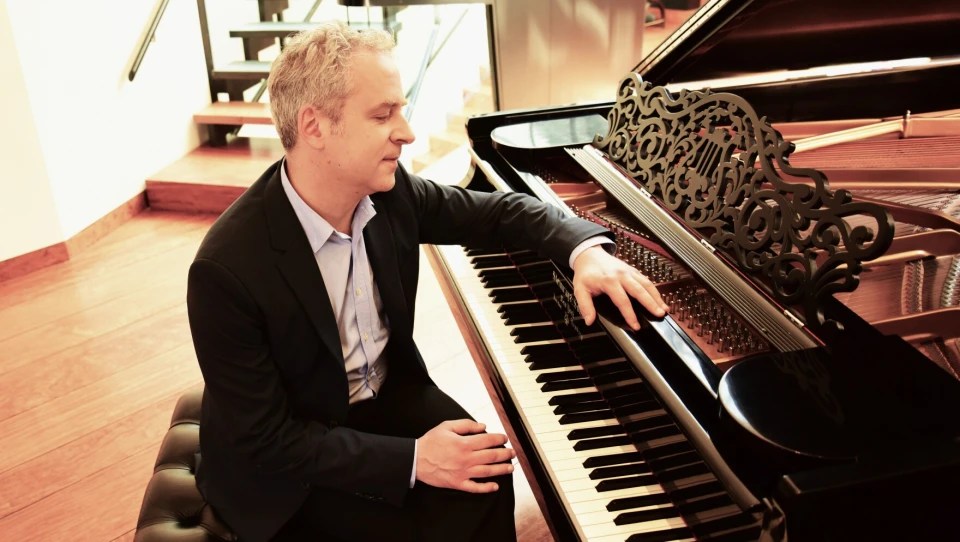
Jeremy Denk (piano, above), City of Birmingham Symphony Orchestra / Kazuki Yamada

Gershwin An American in Paris (1928)
Clyne ATLAS (2023) [CBSO Co-Commission: UK Premiere]
Ravel Pavane pour une infante défunte (1899, orch. 1910)
Mussorgsky orch. Wood Pictures at an Exhibition (1874, orch. 1915)

Symphony Hall, Birmingham
Wednesday 1 May 2024

Reviewed by Richard Whitehouse

This evening’s concert by the City of Birmingham Symphony Orchestra may have taken its overall title from the final work, but ‘pictures’ were everywhere in evidence and not merely those ‘at an exhibition’ – not least with Kazuki Yamada as enthusiastic as ever at the helm.

While it loses out to his Rhapsody in Blue in the popularity stakes, Gershwin’s An American in Paris is surely the most successful of his orchestral pieces for matching its immediacy of imagery to a resourceful structure. Encouraging the CBSO to a bracing response in the outer sections, and with Jason Lewis’s nostalgic trumpet initiating that pathos-laden central phase, Yamada secured a response whose full-on expression was offset by too sectional an approach – the music proceeding in a stop-start fashion rather than unfolding organically as it should.

Over recent years, the New York-based Anna Clyne has emerged among the leading British composers of her generation, with this first UK hearing for her piano concerto ATLAS keenly anticipated. Inspired by the eponymous and epic collection of the artist Gerhard Richter, this likewise falls into four ‘volumes’ rather than movements, which also underlines their relative formal freedom. Certainly, the ingenious interplay between soloist and orchestra is a tough challenge which Jeremy Denk met head-on – whether in the coursing energy then yielding eloquence of the opening Fierce, alluring textural overlaps of Freely, intimate, the lilting nonchalance of Driving or cumulative activity of the final Transparent with its surge to an emphatic close that (as with this work overall) was capricious and allusive in equal measure.

Doubtless motivated by Denk’s coruscating virtuosity, the CBSO gave its collective all in a work which (rightly) appealed to those present – the pianist responding with his deft take on the Heliotrope Rag co-written by Scott Joplin and the tragically short-lived Louis Chauvin.

After the interval, a rare moment of calm – Ravel’s Pavane for a Dead Princess given with a studied if never stolid grace, Elspeth Dutch’s horn and Katherine Thomas’ harp enhancing its appeal. As with Fauré’s Pavane, this is ideal music for opening the second half of a concert.

And so, to Mussorgsky’s Pictures at an Exhibition – heard here in the orchestration by Henry Wood which preceded and was duly superseded by Ravel’s. Wood is more interventionist, not least by reducing the recurrent ‘Promenade’ to a stealthy introduction, but not necessarily less faithful to the piano work’s spirit – hence the scabrous immediacy of Gnomus, sombre aura of The Old Castle (Andrew McDade’s tuba balefully intoning on high above stage-right), or fatalistic tread of Bydlo with its evocative percussion. Respighi was probably taken by this glowering depiction of Catacombs with a ghostly recollection of the promenade hardly less effective, and if Baba Yaga gets summarily curtailed here, the crescendo of bells launching The Great Gate[s] of Kiev set the tone for a treatment whose opulence borders on overkill.

Not that this inhibited the CBSO from projecting Wood’s organ-clad texture to the maximum, to the enthusiasm of an audience that erupted in the lingering resonances at its close. Quite a way to end an impressive performance, and a memorable concert, on a day that saw Yamada become this orchestra’s Music Director and the CBSO launch ‘A Season of Joy’ for 2024/25.

Click on the link to read more on the current CBSO concert season, and also to read about the recently announced 2024/25 programme. Click on the names for more on pianist Jeremy Denk, conductor Kazuki Yamada, and composer Anna Clyne

Published post no.2,168 – Saturday 4 May 2024