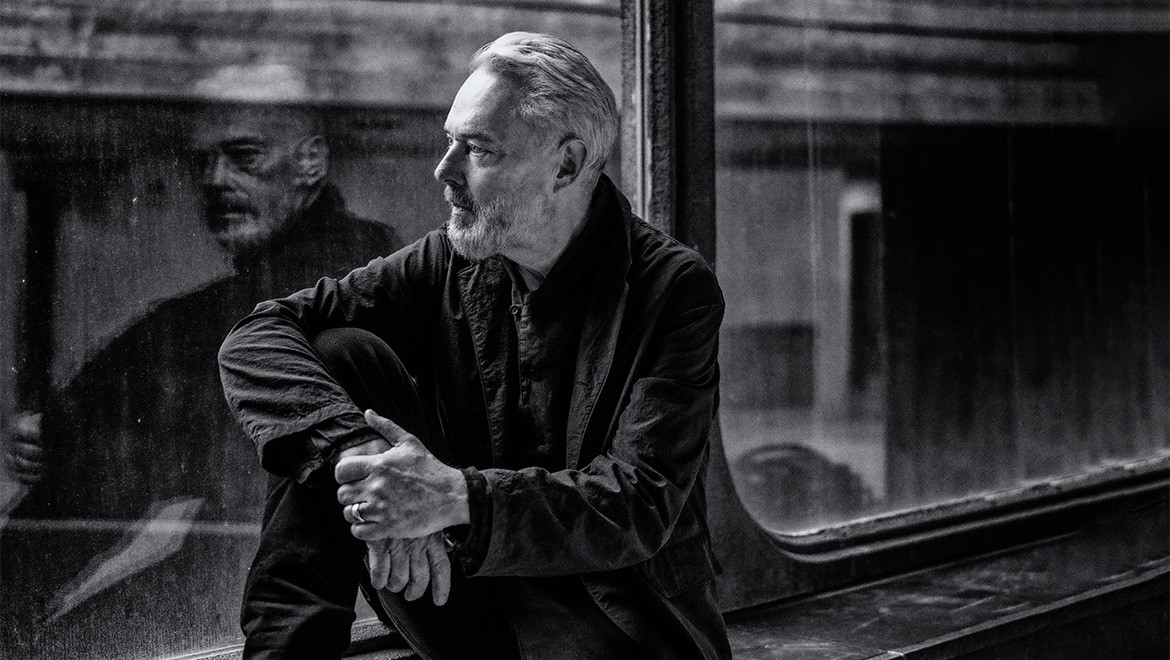
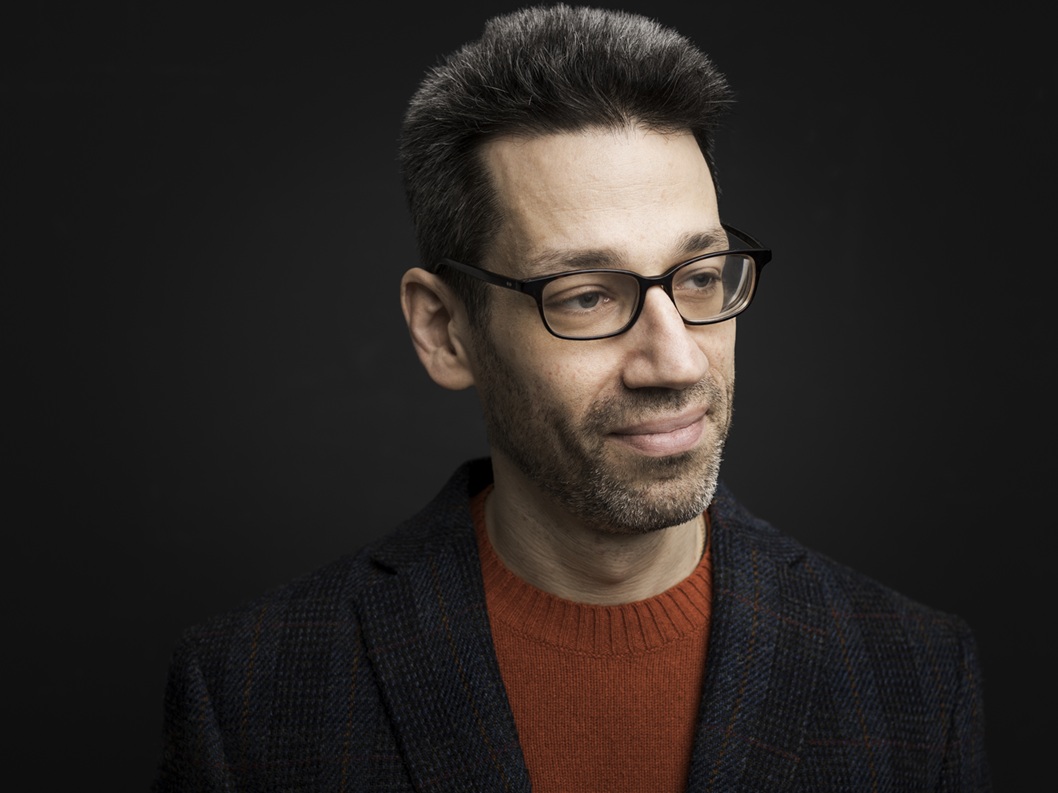
Mark Padmore (tenor, above), Jonathan Biss (piano, below)
Wigmore Hall, London Thursday 24 September (lunchtime)
Schubert Der Wanderer an den Mond D870 (1826), Im Freien D880 (1826), Der Einsame D800 (1825), Der Winterabend D938 (1828) Schumann Kerner Lieder Op.35
Reviewed by Ben Hogwood Photo credits Marco Borggreve and Benjamin Ealovega
Storytelling is of course an essential part of any Lieder recital, but the extent to which Mark Padmore and Jonathan Biss brought the seventeen songs of this BBC Radio 3 Lunchtime Concert to life was a joy to behold.
Padmore is one of Britain’s finest tenors, a versatile artist at ease in contemporary music as he equally is in Bach or Britten, for instance, with one of his strongest qualities an elegance to the delivery that suited these brighter examples of Schubert’s song output. So, too, did the pianism of Jonathan Biss, finding and projecting all of the composer’s countermelodies with consummate ease.
The pair began in the moonlight – naturally – Der Wanderer an den Mond beginning in strident fashion before the brighter light of its major key second half. Biss then led the phrasing for a beautifully poised account of Im Freien, before the chirpy crickets of Der Einsame raised a smile. In a magical account of Der Winterabend, from the early part of Schubert’s final year, time was taken to evoke the long evening and the slowly falling snow, with a memorable turn towards blissful peace, as tenor and pianist found themselves in easy, slow moving alignment.
The calm repose cast by this song was rudely broken by Schumann’s arresting Lust der Sturmnacht, the switch from sonorous B flat major to turbulent E flat minor something of a jolt. In his Kerner Lieder, Schumann writes less of a thematically linked cycle, but a common thread to the songs are their capture the feverish passions, good and bad, of his new marriage to Clara. Though there is union and delight in the potential happiness ahead, some of the songs are fraught and wracked with worry, making the group ripe for dramatic concert performance.
Padmore and Biss (above) homed in on the drama of Justinus Kerner’s verse, the tenor allowing his voice to fray a little when the emotion of the song demanded it. Such moments occurred towards the top of the register in Stille Liebe and Stirb’, Lieb’ und Freud’!, where earlier in the song he had clasped his hands in reverent prayer.
Auf das Trinkglas eines verstorbenen Freundes was a captivating centre piece of the cycle, majestic and sombre in equal turn, while the rousing Wanderung had the musical effect of putting on boots and coat for a long walk. Heights of expression were found in the devotional love expressed in Sehnsucht nach der Waldgegend, a Christmas present for Schumann’s new wife in the year of composition.
The extremes of movement made the stillness of Alte Laute all the more affecting, Padmore’s control held to perfection while Biss ensured once again that the phrases of Schumann’s countermelodies were beautifully sculpted.
As Padmore said, few encores could be entertained in the light of such a moving musical paragraph, yet one fitted perfectly – Schubert’s Frühlingsglaube, D686, lightening the mood without changing the tonality or elegance of delivery.
Padmore and Biss continue to finish each other’s sentence in this ideally matched partnership, at ease in each other’s company to forego obvious gestures other than the musical – which in this case resulted in a very special hour of music indeed.
You can listen back to this concert until 4 November on BBC Sounds
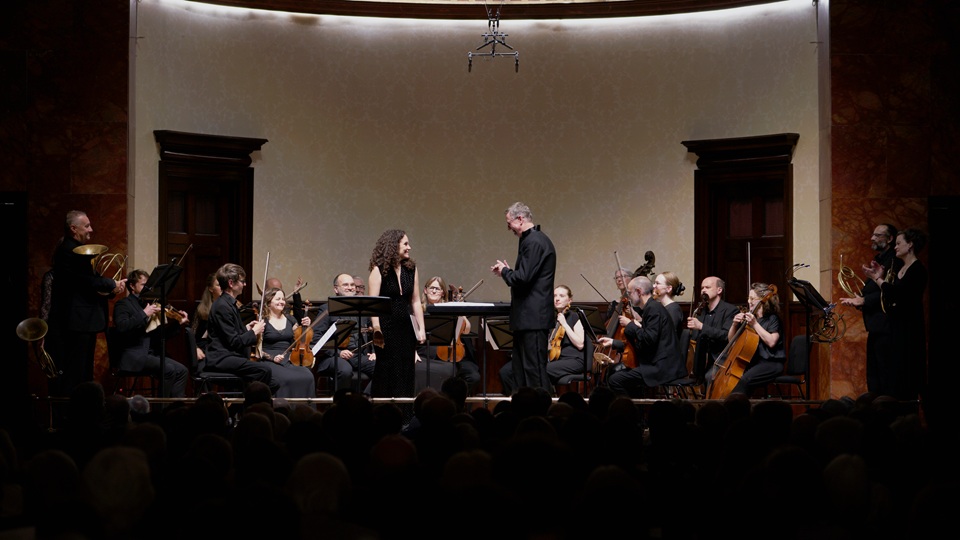
Chiara Skerath (soprano), The Mozartists / Ian Page
Kraus Symphony in C minor VB142 Gluck Dieux puissants que j’atteste…Jupiter, lance la foundre (from Iphigénie en Aulide) Jammelli Ombre che tacite qui sede (from Fetante) Mozart Vorrei punirti, indegno (from La finta giardiniera K196) Traetta Ombra cara, amorosa…li resti sempre a piangere (from Antigona) Haydn Amore nel moi petto (from Lo Speziale) Haydn Symphony no.45 in F# minor ‘Farewell’
Wigmore Hall, London Thursday 24 September 7:30pm
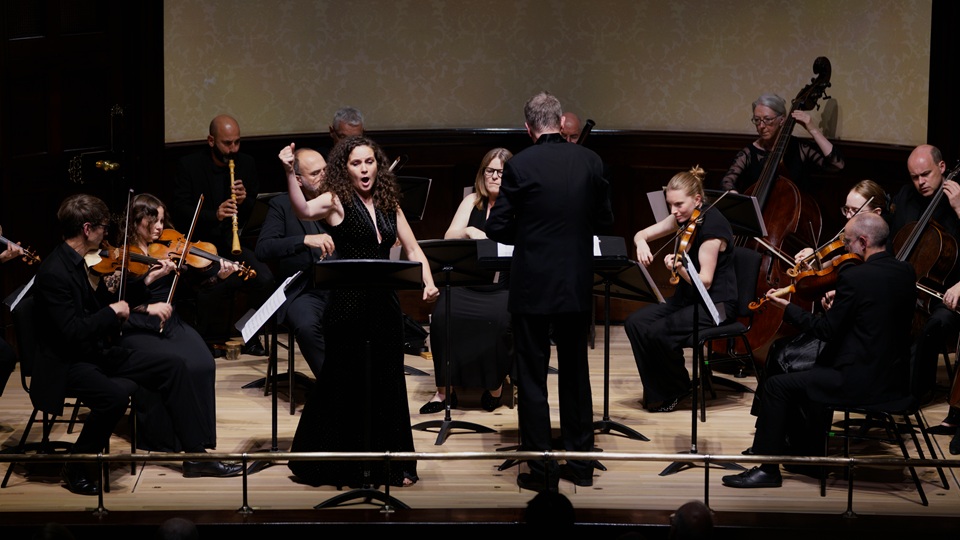
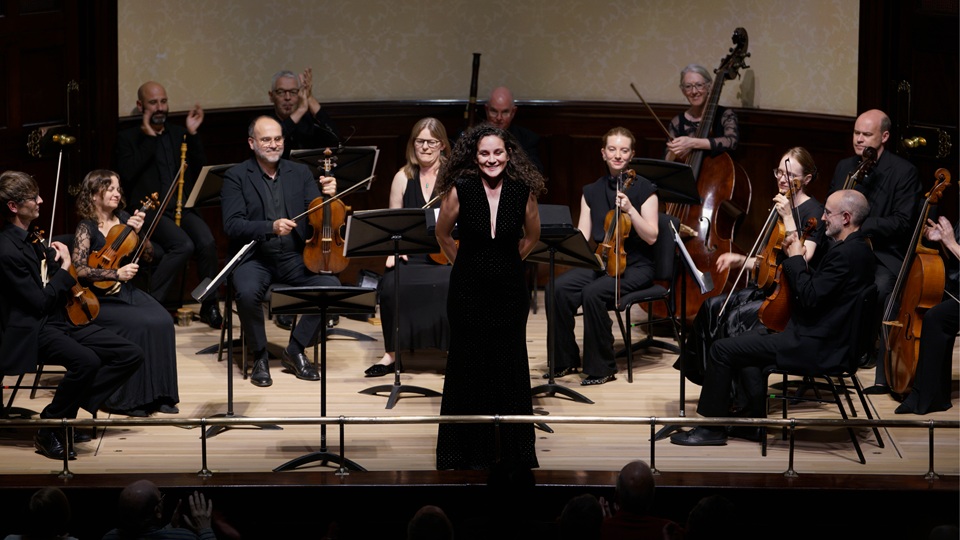
Reviewed by Ben Hogwood Pictures (c) Bertille Cascio
Ian Page and The Mozartists continued their remarkable and revealing turning over of scores from the 18th century at the Wigmore Hall. Their exploration of Sturm and Drang marked 250 years’ use of the phrase, since title of a play by the German Friedrich Maximilian von Klinger – and also the Mozartists’ fourth album exploring music written in this feverish mood.
Three of the composers here are virtually unknown today, while Haydn – whose Farewell symphony closed the program – is the one most associated with the phrase. More of him later, for the early part of the concert belonged to Joseph Martin Kraus. The Frankfurt-born composer, who relocated to Sweden in 1778, wrote a Symphony in C minor of some stature five years later, its power sufficient for me to check there were only 20 players on the Wigmore Hall platform. Page marshalled a performance with poise and drama, the lean tones of the Mozartists’ strings complemented by wonderfully grainy woodwind and a fulsome horn quartet who stood to play, two either side of the stage. The solemn counterpoint of the introduction harked back unexpectedly towards the slow movements of Bach’s Brandenburg Concertos, before the urgent Allegro raced ahead in dramatic fashion. The striking Adagio was initially pared-back but blossomed in the wind section, before the sharply defined third movement returned to the cut and thrust of the first. With lively dialogue and fierce energy, this was a performance to savour.
So, too, was the Haydn with which the concert ended, though at times Page appeared to be pressing too hard on the accelerator, with some phrases in the first movement of the Farewell needing more time to breathe. There was considerable tension here though, as there was in the second movement, albeit expressed through austere colours and stretched phrases. The Minuet was lightly defined but offered little relief, while the finale, surely one of the first examples of instrumental protest music, was brilliantly done. The players left the stage incrementally as Haydn requested of his Esterházy musicians, so at the end we were left with just violinists Matthew Truscott and Daniel Edgar. Typically Haydn’s humour was retained, but this time with a darker edge.
Between the symphonies lay five well-chosen arias, themselves a history lesson – in excellent performances from soprano Chiara Skerath (above), standing in for the indisposed Alexandra Lowe. She immediately seized the audience’s attention with Clytemnestre’s aria from Gluck‘s Iphigenie et Aulide, her horrific realisation that her husband Agamemnon was thinking of sacrificing his own daughter. This was a dramatic a, a dramatic affair, with appropriately sharp interjections from the orchestra. The aria Ombre che tacite qui sede, from Niccolò Jammelli’s Fetante, breathed much cooler air, the soprano low in her range at times, before the concert’s only fleeting reference to Mozart himself. Here we returned to the minor key for an aria from composer’s first mature opera, La finta giardiniera. Skerath’s communication with both orchestra and audience was captivating, revealing the extent of Arminda’s anger at the arrival of her fiancée’s former lover.
The next composer to prove his worth as a dramatic scene setter was Gluck’s Italian contemporary Tomasso Traetta, the cold introduction to Ombra cara balanced by beautiful control from Skerath. We then had a rare outing for the stage music of Haydn himself, keeping the theme of G minor tonality. The humour on show in Amore nel moi petto may not have been as immediate as his wit in the symphonies, but Skerath’s expression gave it the best chance.
As ever, Ian Page deserves enormous credit for an imaginative and entertaining program, balancing education and entertainment. By bringing fresh insight to the familiar repertoire and a chance to shine for the lesser-known names, he has made the ensemble’s Wigmore Hall series an unmissable date in the calendar. The players clearly enjoy it, too, as their encore – a palette cleansing major key slow movement from English composer Carl Friedrich Abel – was wreathed in smiles.
Published post no.3,029 – Saturday 26 September 2026
Schubert arr. Liszt Der Müller und der Bach from Die schöne Müllerin S565/2 (1846); Liebesbotschaft from Schwanengesang S560 (1839) Schubert Piano Sonata no.19 in C minor D958 (1828) Liszt Les jeux d’eaux à la Villa d’Este (from Années de pèlerinage, troisième année S163) (1877-82) ; Tarantella (from Venezia e Napoli S162) (1859)
Wigmore Hall, London Thursday 24 September (lunchtime)
Reviewed by Ben Hogwood
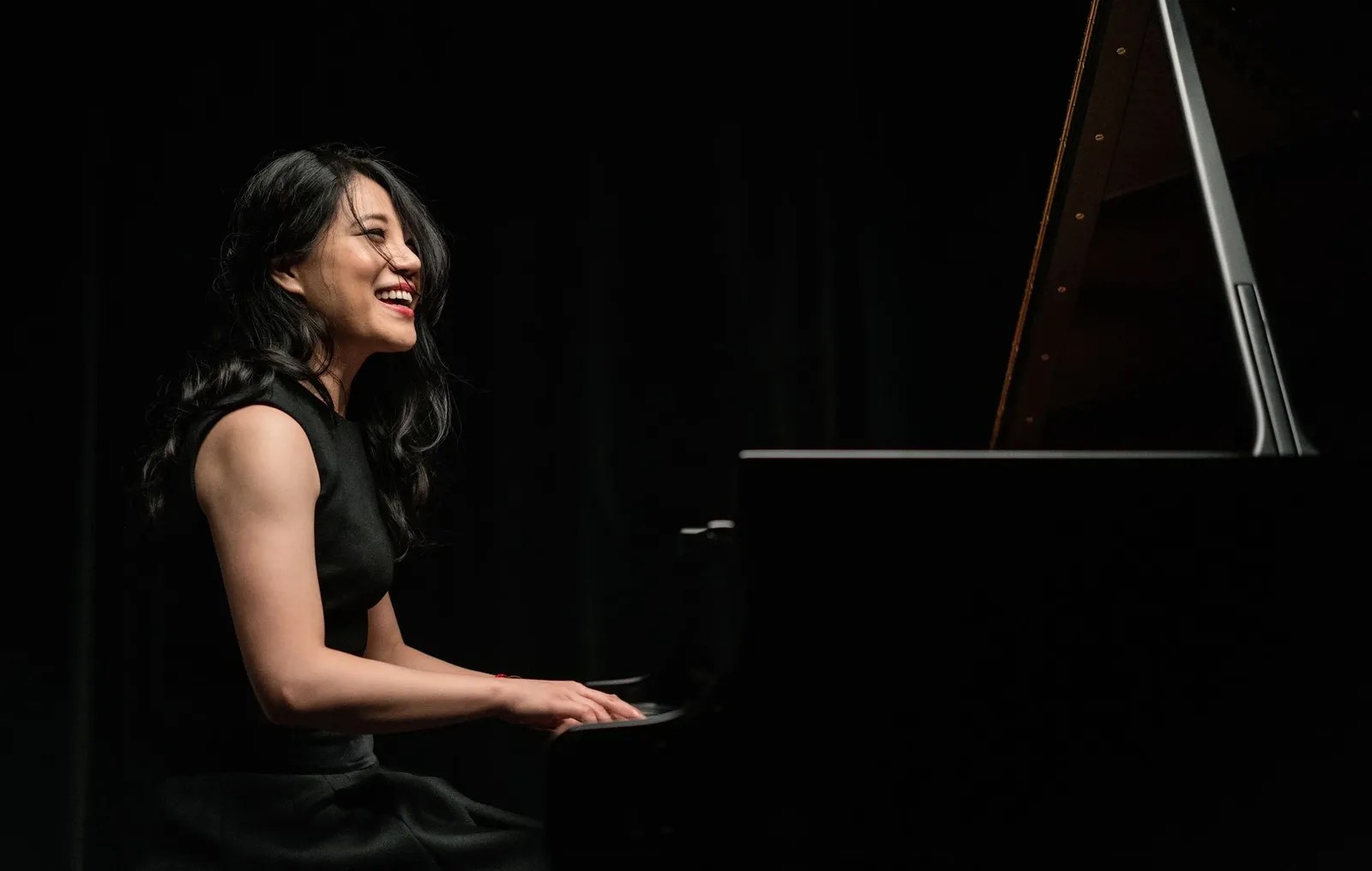
Facing the end of his life at the age of just 31, Schubert dug deep to deliver a series of remarkable late works, with a speed of composition whose quality and quantity was truly remarkable. Among the celebrated works delivered were three large scale piano sonatas, the first of which – the Piano Sonata no.19 in C minor D958 – formed the centrepiece of this lunchtime recital.
Zee Zee (the stage name for Chinese-American pianist Zhang Zuo) delivered a commanding performance, stern in expression but always allowing room for the dance that is never far from the surface of Schubert’s music. Even before the sonata began she established the atmosphere, taking a minute for performer and audience to fully settle before the first notes were delivered. It was a highly effective tactic, typical of a deeply felt and carefully planned account that has matured over time since Arcana last reviewed her interpretation in 2015. Zee’s left hand was notable for its melodic clarity, the right delivering the second theme of the first movement with attractive, balletic phrasing. The turbulent development section often chased the restless right hand but Zee Zee was sure in her direction, contrasting the warmth of the second theme when in C major with the chill wind as things turned sour in the minor key.
The Adagio was intimate, yearning for the lighter moments that appeared like shafts of light in Schubert’s unexpected switches of tonality, though these were ultimately snuffed out and earthbound by the ideally paced closing pages. The serious Menuetto – its trio dancing in spite of the musical weight upon it – was fluently played, leading without a break into the finale. Here Zee Zee’s definition of the repeated notes was crystal clear, the agile left hand ably supporting the Tarantella theme at every turn, before an emphatic signing off to seal a most impressive account.
The Schubert was framed by four watery Liszt pieces – beginning with well-studied accounts of two of his many Schubert song transcriptions. The temptation with Liszt is often to show virtuosity at the expense of musicality, but here the blend between the two was perfect. Zee Zee told the story through the wordless singer’s lines, dressed with exquisite accompaniment.
The first of the two Liszt originals brought the Fountains of the Villa d’Este to life, the rush of water evident in the brilliant right-hand figurations, adding colour but leaving room to define the left-hand melody through the spray. Again the technique was impeccable, with well-chosen ‘rubato’ ensuring the music breathed as it should. The sparkling Tarantella was a study in pace, poise and power, delivered with the minimum of fuss but with no mean virtuosity. Zee Zee’s octave work – so critical in Liszt – was without blemish; equally her quiet playing was also beautifully rendered.
This was a superb recital, with one more feather in its cap in the shape of a beautifully flowing encore, the Intermezzo from Schumann’s Faschingsschwank aus Wien. Zee Zee will hopefully return to the Wigmore Hall before long, for as this healthy lunchtime audience appreciated, pianist and venue are a great match.
Published post no.3,028 – Friday 25 September 2026
Next week sees the start of Autumn programming for classical concert venues – among them London’s much-loved Wigmore Hall.
Once again they will be presenting a series of weekly Monday lunchtime concerts, broadcast live on BBC Radio 3 and featuring much-loved international artists and young, up-and-coming performers from the BBC New Generation Artists scheme.
Starting on Monday 14 September, the series can be viewed on the Wigmore Hall website but is spearheaded by an opening concert of Mahler and Tchaikovsky, from mezzo-soprano Alice Coote and pianist Sergey Rybin.
Further highlights include Barry Douglas playing Mussorgsky’s Pictures at an Exhibition, recitals by pianists Elisabeth Brauss and Richard Goode and performances from tenor Mark Padmore and pianist Jonathan Biss, wife-and-husband duo Elena Urioste and Tom Poster, the NOVO and Modigliani Quartets, the Orsino Ensemble, cellist Steven Isserlis and pianist Connie Shih, mezzo-soprano Helen Charlston and pianist Sholto Kynoch, violinist Bomsori Kim and pianist Thomas Hoppe, the Leonore Piano Trio and Lawrence Power, clarinettist Olga Shebeta-Dragan and pianist Kristoffer Hyldig and finally a Christmas carol music from The Cardinall’s Musick. And that’s just for starters!
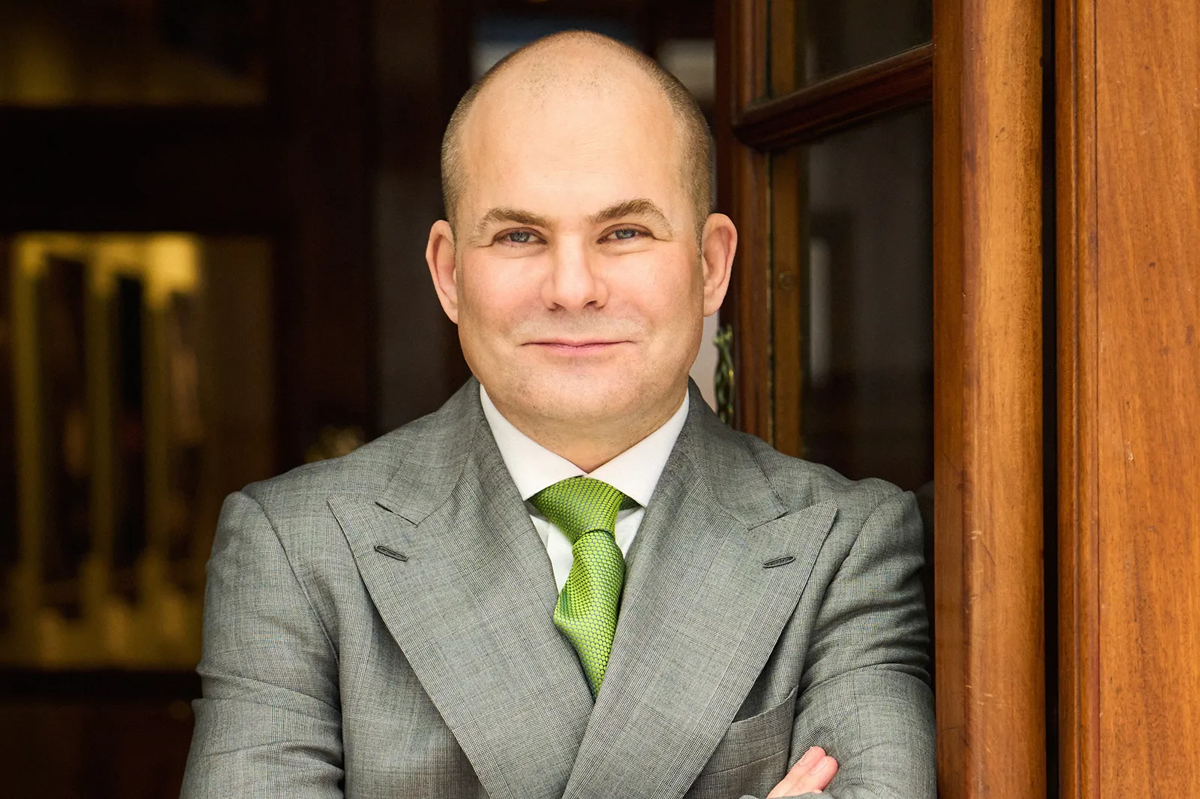
The Wigmore Hall director talks to Ben Hogwood about the London venue’s 125th anniversary celebrations, the 2026-27 season and what keeps him motivated in his role after 25 years.
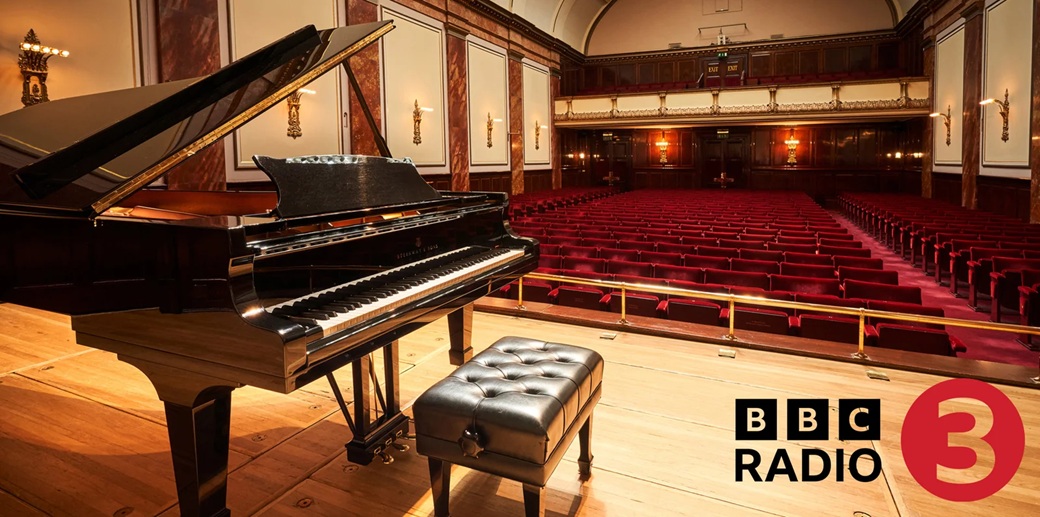
Since the beginning of the 20th century, there has been a concert hall on London’s Wigmore Street, just a couple of minutes’ walk from the hullabaloo of Oxford Street. Opened as the Bechstein Hall in 1901, the Wigmore Hall has become an institution in British musical life. For its last 25 years the hall has been under the artistic direction of John Gilhooly, who is also the venue’s executive director. John generously gave Arcana a chance to discuss his plans for the hall in its 125th anniversary year and a packed, vibrant 2026/27 season. To begin, however, I asked him to recall his first visit to Wigmore Hall.
“It was in the 1990s, to hear Sir Thomas Allen in a program of mostly French song. The hall wasn’t quite full, and I got a last-minute ticket as a student. I ended up sitting in the back row. My memory was that Tom sang very well, and that Roger Vignoles was accompanying him. He sang some Fauré, but I remember three men sitting beside me at the time, all scribbling, and thinking they must be the critics.”
A link had already been forged, however. “Wigmore concerts used to come to my home town of Limerick, and the local music promoter, John Ruddock, the principal of the Protestant school beside my Catholic school, ran the Limerick music society with his wife. So I heard András Schiff, the Takács Quartet – who remembered me in the audience! – Imogen Cooper and Wolfgang Holzmair, probably the first lieder singer I ever heard. I heard Angela Gheorghiu before anybody knew who she was, I remember that recital very well. My ear was trained very early on to the Wigmore Hall; I knew what it was – but I remember expecting it to be so much bigger! I got used to it very quickly.”
At the time, there was competition. “I didn’t leave Ireland until 1997, and at that stage my first love was opera. I don’t think I could say that anymore, my brain has been completely rewired! I love the opera, of course, and obviously I love chamber music because that’s what we heard at home. My teacher, Veronica Dunne (he points at a photograph behind me), was the last person to sing with Kathleen Ferrier. She drove me up from being a baritone to a tenor and had me singing lots of arias. Song was not her thing, but for my first teacher, Jean Holmes, song was very much her thing – and she went on to sing at Covent Garden. She was my first proper singing teacher. We learned singing at school, and settings of the Latin mass, which was very important in my formation in every sense. That happened very early on, which is why I keep saying if you don’t get 7- and 8-year-olds, you’ll never get them interested in music. It doesn’t cost anything to sing in a choir, so I don’t understand why the government don’t take that on, frankly. Music provision is so bad in schools, we won’t have audiences as diverse as they should be in the future.”
His frustration is evident. “It’s really easy – I just don’t understand. Get children singing!” To that end, the BBC’s recent initiative, Get Singing, is timely. “It’s what it does in terms of the physiology of the voice, the vibrations and everything that’s going on, that communal experience. There is something very special in that, the friendships you make – and it’s a pity that it’s just not embraced, but it’s great to see Radio 3 doing this.”
Do many schools visit the Wigmore Hall? “Yes, there were some in to see the Hugh Cutting concert last night”, he says. “Part of the announcement for the new season is that from September we will introduce free tickets for under-25s, as long as they bring a parent or guardian. Hopefully we can get the parents interested in the music as well, if they’re not. That is an expansion of the under-35 scheme, which has done really well since its launch ten years ago. We also have five new strategic partnerships in Europe – with the Pierre Boulez Saal in Berlin, the Royal Irish Academy of Music in Dublin, where we will expand our relationship, and the new hall in Edinburgh, the Dunard Centre. I’ve been asked to chair the programme committee for the opening in 2029. There is the Stephen A. Schwarzman Centre for the Humanities and the Faculty of Music at the University of Oxford, and finally Glyndebourne, whose singers will come here for recitals. These are new partnerships which enhance our position, in the post ‘non-public’ funding.”
For the Wigmore Hall is now entirely free of dependency on the Arts Council for grants and artistic direction – a liberating situation indeed. “Yes, and nobody in there is public funded either, so we can do what we like with that. It’s going to be very diverse, ticking all the boxes without being told to do so. We want to be diverse, but you don’t need to report back constantly what you’re doing. We’re all being told to do the same thing, but what we need to all find is the things we’re best at – and everybody has their own niche. We should look different to the South Bank, to theatre, dance, and the visual arts, but we’re all being judged by the same criteria, and that’s crazy. The Margaret Hodge report on the Arts Council vindicated everything we said, and I hope for a response in due course.”
One only has to look at a snapshot of programming across a week in the Wigmore Hall’s 2026/27 season to see the variety on offer, for the diversity is astonishing. “We say, without apology, that it is the most diverse classical music programme in the United Kingdom, and one of the most diverse in Europe at this stage. There are 600 concerts a year.” These include composer focuses on Britten, Beethoven, Feldman and Kurtág, along with a comprehensive list of Associate Artists, of which more later. “That’s the reason I get up in the morning”, says Gilhooly. “There will be a lot of that next season, too.”
The new season is effectively given a prologue by two weeks of celebration in May, where the Wigmore’s 125 years as a concert hall will be celebrated. “I built the programming around that anniversary”, he says, “but as far as I’m concerned, the whole season has been a celebration.” Standout examples include a series of songs from the year of opening, 1901, and Songs, Airs & The Blues, a fascinating concert with vocalist Elaine Mitchener and lutenist Elizabeth Kenny which will include the blues as seen by two Robert Johnsons – the Tudor composer and the legendary Blues artist.
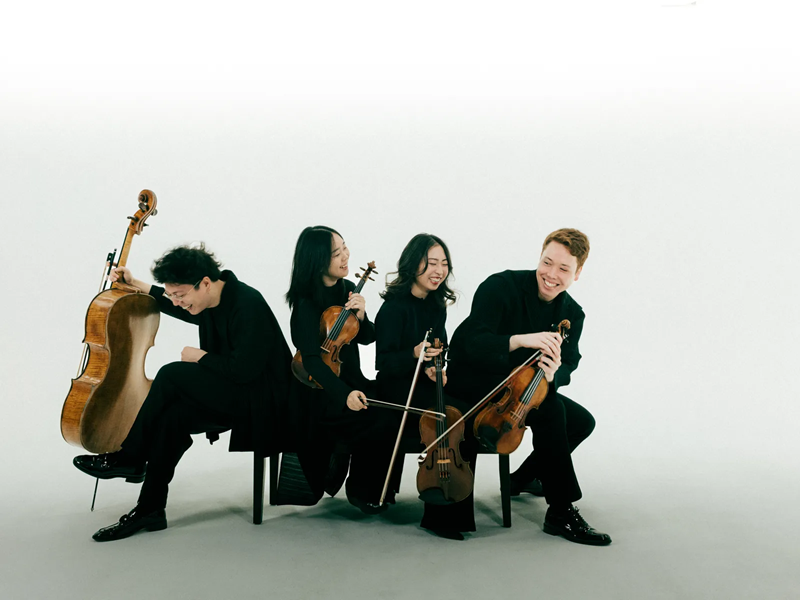
“I consciously didn’t do things like brass and wind, because they’ve been done through the season, and so I focussed on strings, piano and voice”, says Gilhooly. I wanted to make a coherent statement, and invite some top-notch singers and pianists. The capacity was there to have Lise Davidsen, Yunchan Lim, and the Leonkoro Quartet (above) who are just astonishing, with Igor Levit. We also have the soprano Asmik Griogorian and the young pianist Lukas Geniušas, who will play the Schubert B flat sonata in a separate concert. We have an evening with the Belcea Quartet and Tabea Zimmermann, then a whole evening of Johann Sebastian Bach with Christian Tetzlaff, which ties in with his 60th birthday. That was very conscious, and then to bring in Stockhausen with mentions of gods and goddesses. Our stage has been watched over by Apollo since 1901, so I wanted to make that point – and replicate the first evening with judicious editing.”
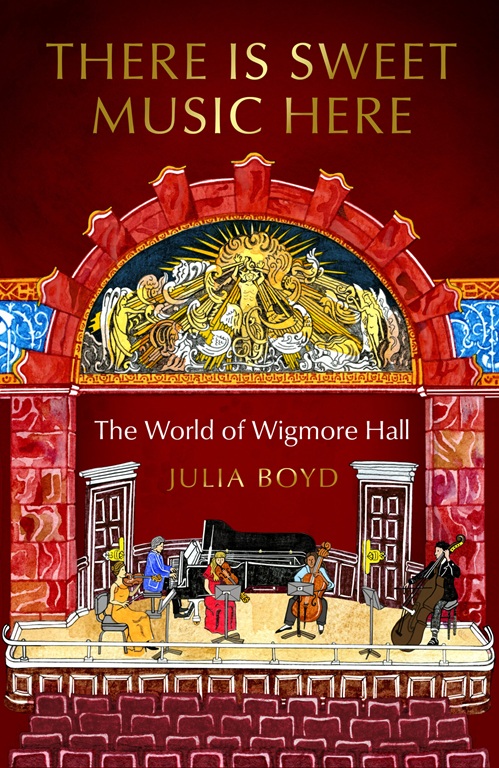
That night will coincide with the launch of a new book on the hall by Julia Boyd, There Is Sweet Music Here. “It’s an astonishing read”, says Gilhooly, “I devoured it in the last 48 hours after it went to print, because I purposely didn’t want to see it before then. She’s a compelling writer, and the early chapters – and the things people didn’t realise – are fascinating. There was no social media of course, just word of mouth between the musicians. There are dips in the history – the First World War, then trouble in the 1960s. I think a defining moment was 1976, the 75th anniversary where Artur Rubenstein played here, and stood up to declare it was his last ever appearance. This was quite something, as he had been attending concerts here since around 1914. He heard Busoni here, and the fact that Fauré was here – drawn by word of mouth – was amazing. The change 50 years later, is interesting to see”.
Clearly understating, he reflects further. “Even 25 years ago, the turnover was £2 million, and now it has been raised to £11-12 million with extra fundraising. The attendance has never dipped, and the audience is very different. I looked at a message from Prince Charles in the anniversary programme for 31 May 2001, and the list of donors then has only five or six that are still alive. The current brochure has a much bigger list, so the notion that the audience is dying is wrong. So where’s the crisis?”
The hall holds a strong appeal to tourists, too. “We had a tube campaign in recent weeks, and the returns for András Schiff mainly went to tourists – a lot of whom came twice. They got Beethoven’s Tempest sonata – and so much more! Some of our visitors plan their London trips around our programme, and while the Monday lunchtime audience is by definition an older one, the evening audiences are very young, very diverse.”
At this point I share my own experience, where I can happily credit Wigmore Hall with introducing me to the idea of a song recital, and – what’s more – enjoying it. “The ear has to adjust, as it is refined listening”, he says, “but not impossible. We are quietly trying surtitles, which will be rolled out quietly in the autumn.”
Gilhooly turns to the announcement of the Associate Artists. “We have five-year partnerships with composer-pianist Thomas Adès, soprano Louise Alder, jazz trumpeter and composer, Ambrose Akinmusire, the Gesualdo Six ensemble, pianist Boris Giltburg, multi-instrumentalist Rhiannon Giddens, cellist Anastasia Kobekina, the Leonkoro Quartet, the baritone and composer, Will Liverman, jazz pianist, Harold López‑Nussa, mezzo-soprano Anja Mittermüller, violinist Daniel Pioro, violist Timothy Ridout, cellist Abel Selaocoe, and composer-conductor, Jack Sheen. Finally we have the conductor Peter Whelan, who was here last night with the Irish Baroque Orchestra. We’ve doubled the number of associated artists and it’s exciting.”
Within the hall there is an interesting change in the timeline – where photos of legendary artists appear downstairs and in the green room, but while out front there is a much more recent set of portraits with current and future artists. “That is courtesy of Christopher Jones, who was photographing towards the end of the pandemic, with masks and socially distanced audiences – so it was a very emotional time, and quite bleak in many ways.”
A standout moment of the pandemic was the return of music to the Wigmore Hall, with a solo recital from Sir Stephen Hough with just two audience members – John himself and the BBC Radio 3 presenter Andrew McGregor. “Can you imagine, at that time the government almost said no, but they were having parties right at that time?! We were still locked down a year later, and I remember a St. Patrick’s night lockdown recycle in 2021, and it really struck me that I hadn’t been home for over a year. It went on for so long, but it was a collective trauma, and we’ve all kind of parked it.”
Another key aspect of the Wigmore Hall’s development is its role in developing young artists, such as the YCAT and BBC New Generation Artists. “We collaborate with them, and people who aren’t part of any scheme who we help along as well, for instance the winners of our string quartet and song competitions. We cross fertilise, which is wonderful, and these partnerships will help.”
Image by Amanda Tipton Photography
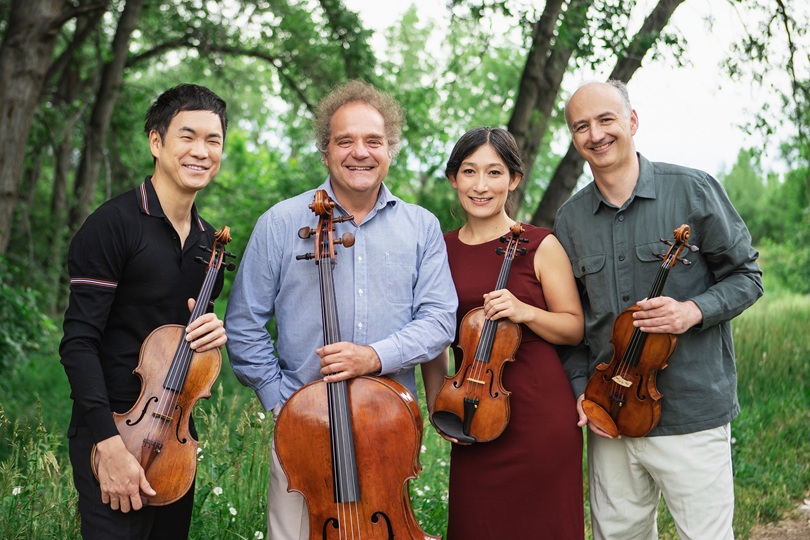
Also appearing in the new season are the Takács Quartet (above) – themselves celebrating 50 years as an ensemble, with cellist and founder member András Fejér still in the group. “He’s the one who remembers me from Ireland”, says Gilhooly. “They’re playing brilliantly and are teaching in Colorado. There will be a celebration around Gábor Takács-Nagy at some point…they won the first string quartet competition at the Wigmore Hall in 1979, so there’s a continuity there.”
One obvious change around the Wigmore Hall in the last 25 years is its neighbourhood, for as any visitor to central London knows there are building sites and new constructions at every turn. Has that presented a challenge? “We had problems next door, with banging during concerts. We try to get on with the builders, and thankfully there’s no noise from the street. That’s fine – but the area has come on so much, which is wonderful. Marylebone High Street is fantastic, and there is a Marylebone belt – we work in the community here. The concerts at Spanish Place have been a bonus, with things we can’t fit on the stage. There will be more there in the next few years, and I’m talking about a mass for Schubert on the day of his death in 2028.”
On the day we speak, the Duke of Kent visited – to take in a highly emotive concert profiling Irish composer Ina Boyle, through her songs – the sort of cause the Wigmore Hall furthers without ceremony but in a way that is not signposted. “It has to be of a certain quality”, says John. “I’d rather not have a concert than have a bad concert. They lived that today; you need that commitment. I am a patron of the Ina Boyle society, so I have seen the evolution of how the rediscovery has happened, and obviously was convinced quite a while ago.”
What is the immediate and long-term future for the hall? “We’ve gotten so far, and we’ve achieved so much – and the ambition is to keep it there. Sometimes stability, when something moves so much, is important. To have 600 concerts is a risk, financially, but to keep the standards up and to keep introducing fresh things every season is also important. This anniversary looks like a huge peak, but you always find a way of moving it on.”
The concert platform is also surprisingly versatile, fitting a solo pianist one night and the Irish Baroque Orchestra the next. “Last night the stage was packed, and while those concerts cost a bit more to put on, they are special. Hugh Cutting (above) sang brilliantly, it was a very moving concert – with Che faro senza Euridice, but also Caro mio ben, which I haven’t heard in years. People were telling me they haven’t had so much joy from a concert in years. One woman came up to me and said she’s been coming to concerts since she was 16, and is now 89, and she said it was one of the best concerts she’s ever seen. That is what it’s all about!”
Classical music still matters, clearly – though that is not so evident from the media. “There was a time when Sir Michael Tippett was interviewed by Sir Terry Wogan, and what we did was so central. If you look at the great Viennese conductors of the past who used to sell loads of CDs, the glory years of EMI with Maria Callas – and Dame Janet Baker was a household name. How the world has changed, for the worse.”
Talking of recorded media, while the Wigmore Hall still stream concerts, are there plans to revive the record label? “Streaming effectively is the label”, he says, “but it might be directed in a different way. There are some special festival announcements”, he says, intriguingly.
Does the hall still have a transformative effect on John the audience member? “Yes. As I get older, I find I’m able to park the distractions. Sometimes I go in with a problem in the back of my mind, and the concert will fix it for me. The only time I used to have that peace was doing transatlantic flights, when nobody could get to you. I did some of my best programming when travelling, it was important to get out and meet colleagues internationally in Berlin, Paris. It’s very important to see what’s going on in other halls, and it’s a very supportive network – and I hear orchestral concerts to clean out my ears!”
I close by asking Gilhooly to choose an achievement of which he is most proud. “We’ve had refurbishments, and the Covid thing – but independence from public funding, I think, getting 600 concerts. But the greatest achievement is seeing young artists succeed, which is their achievement, but to know we have created the conditions so that that can happen. That’s the most satisfying thing.”