
In Concert – Chiara Skerath & The Mozartists / Ian Page @ Wigmore Hall: Sturm und Drang

Chiara Skerath (soprano), The Mozartists / Ian Page

Kraus Symphony in C minor VB142
Gluck Dieux puissants que j’atteste…Jupiter, lance la foundre (from Iphigénie en Aulide)
Jammelli Ombre che tacite qui sede (from Fetante)
Mozart Vorrei punirti, indegno (from La finta giardiniera K196)
Traetta Ombra cara, amorosa…li resti sempre a piangere (from Antigona)
Haydn Amore nel moi petto (from Lo Speziale)
Haydn Symphony no.45 in F# minor ‘Farewell’

Wigmore Hall, London
Thursday 24 September 7:30pm

Reviewed by Ben Hogwood Pictures (c) Bertille Cascio

Ian Page and The Mozartists continued their remarkable and revealing turning over of scores from the 18th century at the Wigmore Hall. Their exploration of Sturm and Drang marked 250 years’ use of the phrase, since title of a play by the German Friedrich Maximilian von Klinger – and also the Mozartists’ fourth album exploring music written in this feverish mood.

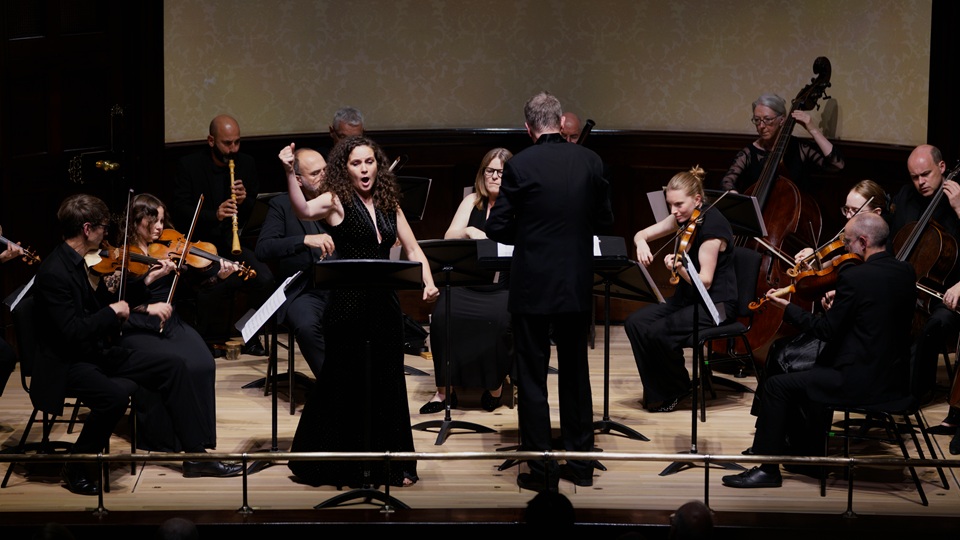
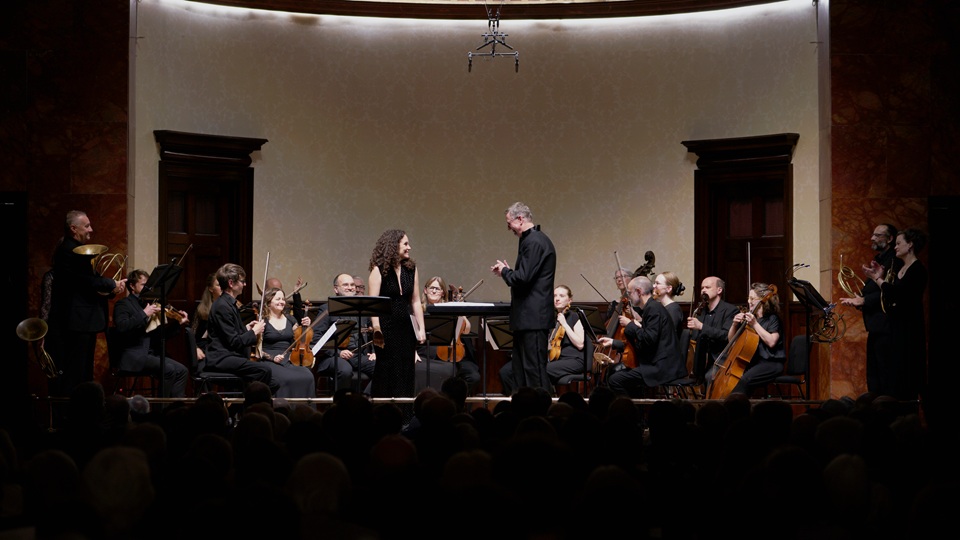
Three of the composers here are virtually unknown today, while Haydn – whose Farewell symphony closed the program – is the one most associated with the phrase. More of him later, for the early part of the concert belonged to Joseph Martin Kraus. The Frankfurt-born composer, who relocated to Sweden in 1778, wrote a Symphony in C minor of some stature five years later, its power sufficient for me to check there were only 20 players on the Wigmore Hall platform. Page marshalled a performance with poise and drama, the lean tones of the Mozartists’ strings complemented by wonderfully grainy woodwind and a fulsome horn quartet who stood to play, two either side of the stage. The solemn counterpoint of the introduction harked back unexpectedly towards the slow movements of Bach’s Brandenburg Concertos, before the urgent Allegro raced ahead in dramatic fashion. The striking Adagio was initially pared-back but blossomed in the wind section, before the sharply defined third movement returned to the cut and thrust of the first. With lively dialogue and fierce energy, this was a performance to savour.

So, too, was the Haydn with which the concert ended, though at times Page appeared to be pressing too hard on the accelerator, with some phrases in the first movement of the Farewell needing more time to breathe. There was considerable tension here though, as there was in the second movement, albeit expressed through austere colours and stretched phrases. The Minuet was lightly defined but offered little relief, while the finale, surely one of the first examples of instrumental protest music, was brilliantly done. The players left the stage incrementally as Haydn requested of his Esterházy musicians, so at the end we were left with just violinists Matthew Truscott and Daniel Edgar. Typically Haydn’s humour was retained, but this time with a darker edge.
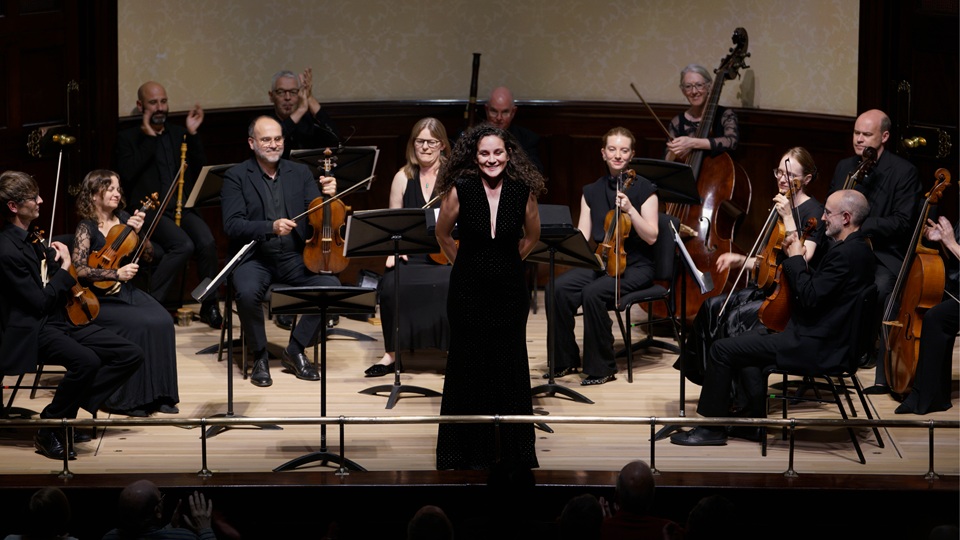
Between the symphonies lay five well-chosen arias, themselves a history lesson – in excellent performances from soprano Chiara Skerath (above), standing in for the indisposed Alexandra Lowe. She immediately seized the audience’s attention with Clytemnestre’s aria from Gluck‘s Iphigenie et Aulide, her horrific realisation that her husband Agamemnon was thinking of sacrificing his own daughter. This was a dramatic a, a dramatic affair, with appropriately sharp interjections from the orchestra. The aria Ombre che tacite qui sede, from Niccolò Jammelli’s Fetante, breathed much cooler air, the soprano low in her range at times, before the concert’s only fleeting reference to Mozart himself. Here we returned to the minor key for an aria from composer’s first mature opera, La finta giardiniera. Skerath’s communication with both orchestra and audience was captivating, revealing the extent of Arminda’s anger at the arrival of her fiancée’s former lover.

The next composer to prove his worth as a dramatic scene setter was Gluck’s Italian contemporary Tomasso Traetta, the cold introduction to Ombra cara balanced by beautiful control from Skerath. We then had a rare outing for the stage music of Haydn himself, keeping the theme of G minor tonality. The humour on show in Amore nel moi petto may not have been as immediate as his wit in the symphonies, but Skerath’s expression gave it the best chance.

As ever, Ian Page deserves enormous credit for an imaginative and entertaining program, balancing education and entertainment. By bringing fresh insight to the familiar repertoire and a chance to shine for the lesser-known names, he has made the ensemble’s Wigmore Hall series an unmissable date in the calendar. The players clearly enjoy it, too, as their encore – a palette cleansing major key slow movement from English composer Carl Friedrich Abel – was wreathed in smiles.
Published post no.3,029 – Saturday 26 September 2026
In concert – Hugh Cutting, Irish Baroque Orchestra / Peter Whelan @ Wigmore Hall

Hugh Cutting (countertenor), Irish Baroque Orchestra (Peter Whelan, director)

Programme including pieces by Mozart, Gluck, Johann Christian Bach, Johann Christian Fischer, Tommaso Giordani and Thomas Arne. Full repertoire list at the bottom of this review

Wigmore Hall, London, 9 March 2026

by John Earls. Photo credits John Earls

Giusto Ferdinando Tenducci (c. 1735-90) may not be a name on many people’s lips but he was something of a superstar in his day (his portrait was painted by Gainsborough twice). The Siena-born soprano castrato (who were the pop stars of their time) was not just a successful singer but his celebrity also featured a colourful life that included spells in a debtors’ prison and a scandal involving him marrying his teenage singing pupil Dorothea (Dora) Maunsell – the couple met in Dublin in Ireland but eloped to Cork, where he was also jailed for a time (the marriage was later annulled).

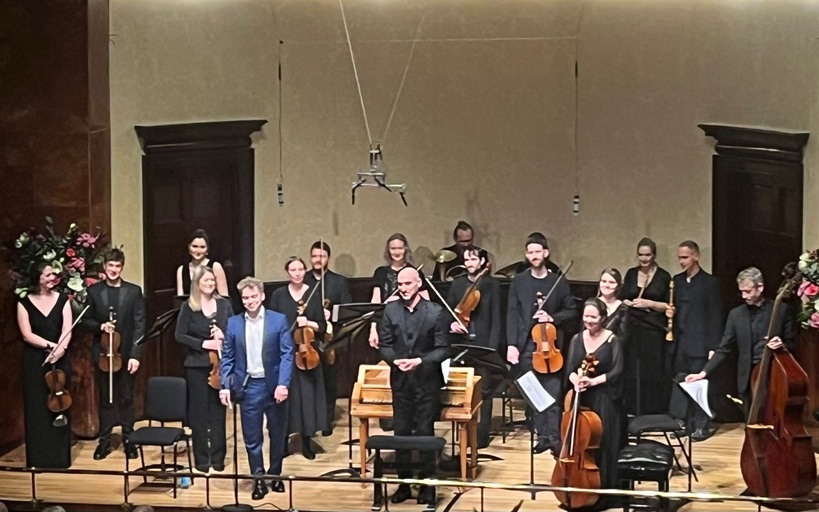
This concert explored the world and music of Tenducci and his time in Ireland (he spent the early part of his career touring Italian and German cities and came to prominence in London and Ireland in the late 1750s and early 1760s). The Irish Baroque Orchestra released the album The Trials of Tenducci: A Castrato in Ireland (Linn Records) in 2021 and a number of its pieces featured tonight, although there were some compositions too. On the album the singer is Irish mezzo-soprano Tara Erraught. Tonight’s singer was British countertenor Hugh Cutting, a BBC New Generation Artist (2022–24) and the first countertenor to win the Kathleen Ferrier Award. Cutting impressed me as Arsace in English National Opera’s recent surrealist production of Handel’s Partenope, and he made a very strong impact in this performance.

In a nice scene setter, the concert began with Mozart’s Symphony no. 1 which the composer wrote when he was just eight years old, about the time when Tenducci met him in England in 1764. The first set also included two arias from Mozart’s third opera Mitridate: re di Ponto: Già dagli occhi and Venga pur Minacci (which closed the first half) seeing Cutting give rein to his strong stage presence and in the latter, an, at times, literally pointed delivery.

The rest of the first set featured Thomas Arne’s Vengeance, O come inspire me! from Alfred (a forceful opener from Cutting with lively, bright accompaniment from the orchestra) and Water parted from the sea from Artaxerxes (which ran for some 33 performances in Dublin in 1765-66), delivered with clarity by Cutting (not so much the audience member who coughed loudly at the end).

Another first set highlight was the orchestra’s performance of Johann Christian Fischer’s Gramachree Molly with variations from the Oboe Concerto No. 7 which spotlighted some gorgeously expressive and fluent oboe playing by Emma Black.

The young Mozart’s Symphony no. 4 opened the second half followed by three pieces from Gluck’s opera Orfeo ed Euridice. Here the orchestra was in full command for Dance of the Furies with the two horn players holding their instrument’s bells upright for maximum impact. Cutting’s singing on Ahimè! dove trascorsi! and Che farò senza Euridice? was clear and passionate.

There then followed a piece where the orchestra absolutely shined. Tommaso Giordani’s The Celebrated Overture and Irish Medley to The Island of Saints saw Emma Black working oboe magic again, beautifully accompanied by plucked strings, for Shepherds I Have Lost My Love. The Irish Medley was given a joyous performance of its selection of Irish folk melodies featuring some fantastic fiddle playing. It was rewarded with rapturous applause – a perfect early Saint Patrick’s Day celebration. There was more Giordani of a different sort next with Caro mio ben, with Cutting’s vocals hanging confidently and elegantly.

Johann Christian Bach’s Vo solcando un mar crudele from Artaserse W.G 1 was a crisp, rousing finale giving full expression to Cutting’s virtuosity. A repeat of Caro mio ben served as an encore and was even more glorious than the first time round.

This was a mesmerising evening with a wonderful programme that highlighted that baroque music in Ireland goes further than the celebrated premiere of Handel’s Messiah in Dublin in 1742. Hugh Cutting and the Irish Baroque Orchestra are an outstanding combination. I hope there is more to come.

Hugh Cutting and the Irish Baroque Orchestra performed the following repertoire:

Mozart Symphony No. 1 in E flat major K16
Arne Vengeance, O come inspire me! from Alfred
Mozart Già dagli occhi from Mitridate, re di Ponto
Johann Christian Fischer Gramachree Molly with variations from Oboe Concerto No. 7
Arne Water parted from the sea from Artaxerxes
Mozart Venga pur Minacci from Mitridate, re di Ponto; Symphony No. 4 in D major K19
Gluck Dance of the Furies; Ahimè! dove trascorsi!; Che farò senza Euridice? from Orfeo ed Euridice
Giordani The Celebrated Overture and Irish Medley to The Island of Saints; Caro mio ben;
Johann Christian Bach Vo solcando un mar crudele from Artaserse W.G 1

John Earls is Director of Research at Unite the Union and posts at @johnearls.bsky.social on Bluesky and @john_earls on X. You can subscribe (free) to his Hanging Out a Window Substack column here: https://johnearls.substack.com/

Published post no.2,825 – Tuesday 10 March 2026

Routes to Beethoven – 1770: Music in the year of Beethoven’s birth

by Ben Hogwood

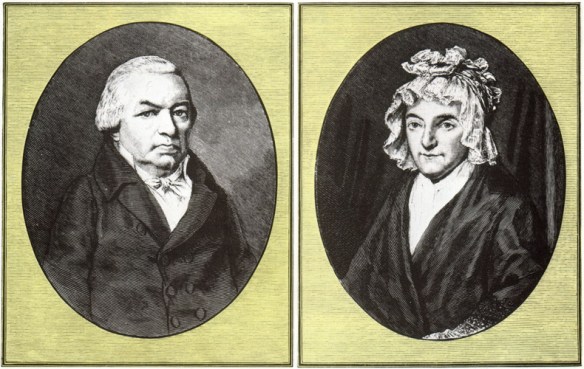
Picture: Beethoven’s parents, Johann van Beethoven and Maria Magdalena Keverich

The last listening exercise before diving into the music of Beethoven is to explore the music being made in the year of his birth, to try and get an idea of the temperature in Western classical music.

For Mozart, opera was key – even at the age of 14. His year began with a trip to Italy, organised by father Leopold with the aim of securing a big stage commission. That was duly achieved in Milan, at the flagship Teatro Regio Ducal (below). In December this prestigious venue became the setting for the premiere of Mozart’s first opera, Mitridate, re di Ponto. An ambitious three-act work, it has some eyecatching arias for the leading cast, virtuoso writing that established Mozart as a composer of real intent and secured a number of standing ovations at the premiere.

With the commission for Mitridate secured in January the Mozarts toured Italy for much of 1770, where Wolfgang found the time to take his symphonic canon into double figures. Don’t forget, he was still barely a teenager!

Haydn, meanwhile, an established composer in his late thirties, was beginning to flex his symphonic muscles. His Sturm und Drang period was just under way, and the innovations he would make in nearly every musical genre were beginning to take shape. 1770 was a relatively quiet year for his output, however. The symphony he completed, no.43 in E flat major, is known as the Mercure for no obvious reason. It is perhaps a more ‘polite’ piece than the minor key examples around it, but that should not be seen as a derogatory observation – it has the typical Haydn poise, guile and wit.

In London, Johann Christian Bach (Bach’s eleventh and youngest son) was impressing with his symphonies and piano concertos, and Hummel published a set of six as Op.6 in 1770. Daniel Heartz writes of how no.5 was a favourite with the public, to judge by the number of reprinting, but that the sixth in the series is impressive, with a ‘fiery middle movement’.

Meanwhile the fifth Bach son, Carl Philipp Emanuel, was adding to his enormous output too. Exact dates are harder to find for his works, though the first version of the Passion According to St Mark can definitely be said to have been completed in 1770.

Meanwhile Gluck, one of the most prominent operatic composers of the day, was occupied with the Viennese premiere of Paride ed Elena. When compared with his stage successes Orfeo ed Euridice or Iphigenie en Tauride, it has not performed well historically. Little is written about its premiere or reception, save for the relative lack of a convincing plot in the opera itself, but listening to it reveals some beautiful writing for soprano and castrato, and a Chaconne that becomes increasingly daring as it proceeds. It has been cited in a number of articles such as this one that Paride ed Elena marks a change in opera from singing to storytelling.

Elsewhere Boccherini was making a name as a prolific composer of works for strings, the most since Vivaldi – and secured for himself a prestigious role as cellist and composer to the royal court in Madrid. He would write more than 15 cello concertos and much chamber music besides.

What of the music of Bonn, where Beethoven was born in 1770? Well not much is known – or at least, not within easy reach in books or on the internet! It would be intriguing to know what was played at his baptism in St. Remigius on 17 December. Listen to the playlist below though and you will get an idea of the music circulating in what appears to have been a transitional year in European music. In many ways it was the calm before the storm.

Listen

The music of 1770 is collected in a Spotify playlist below: