In Concert – Marianne Crebassa, The Mozartists / Ian Page @ Wigmore Hall: Mozart & Haydn

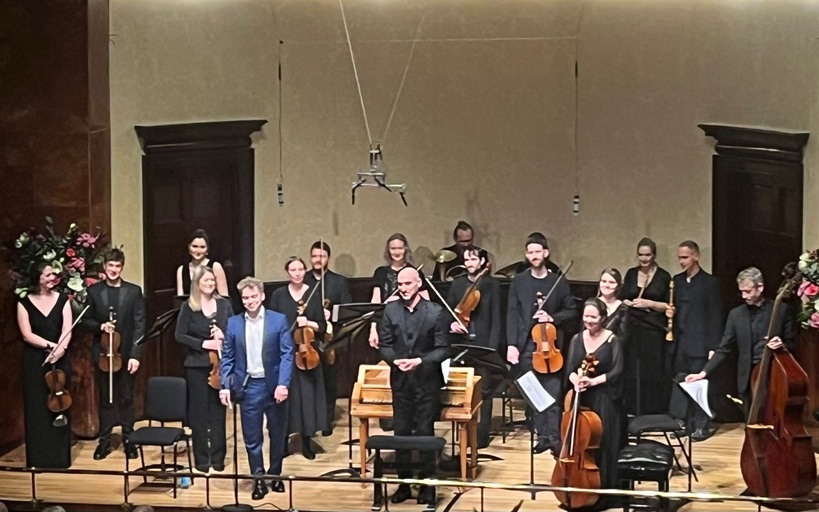
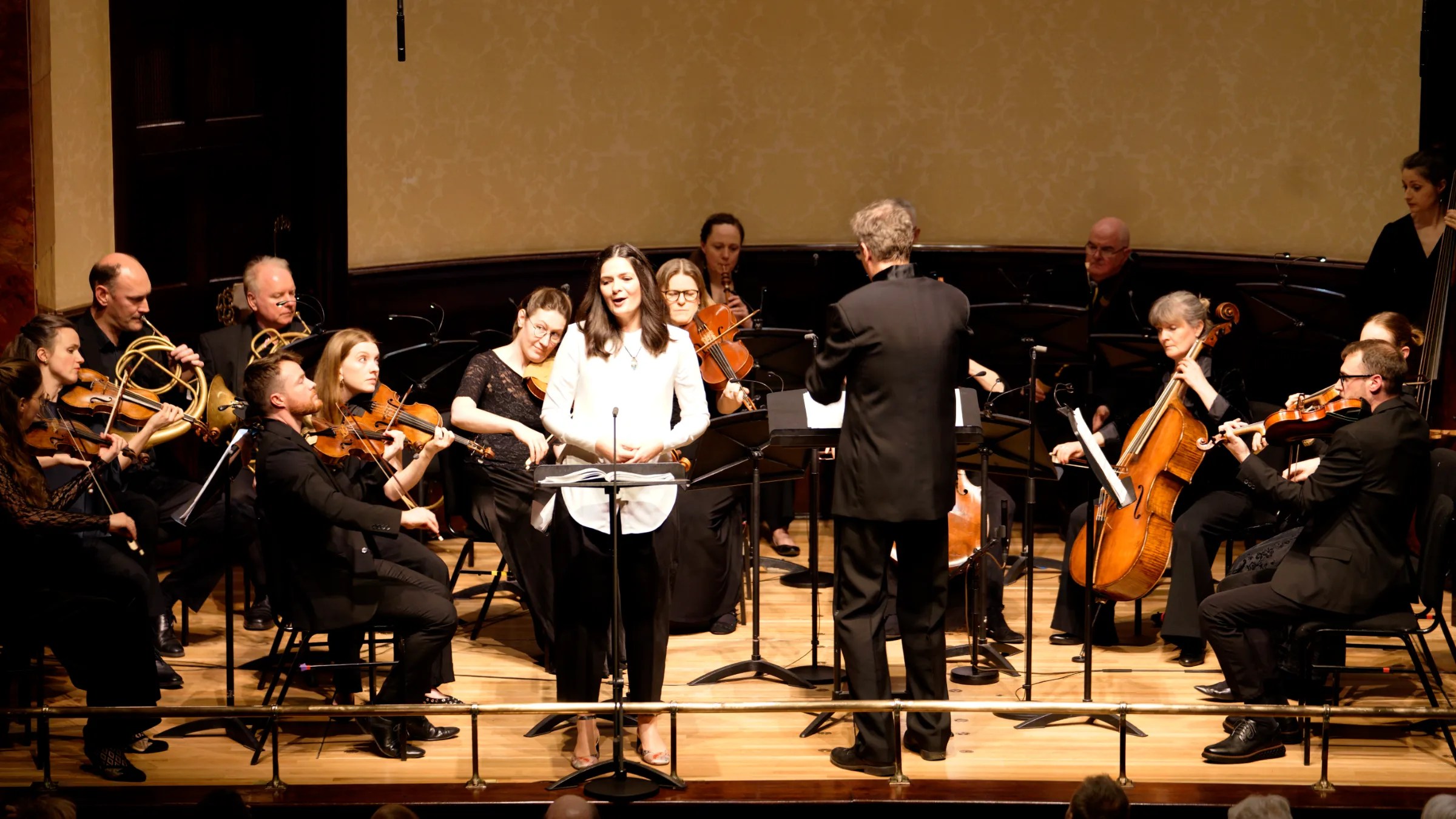
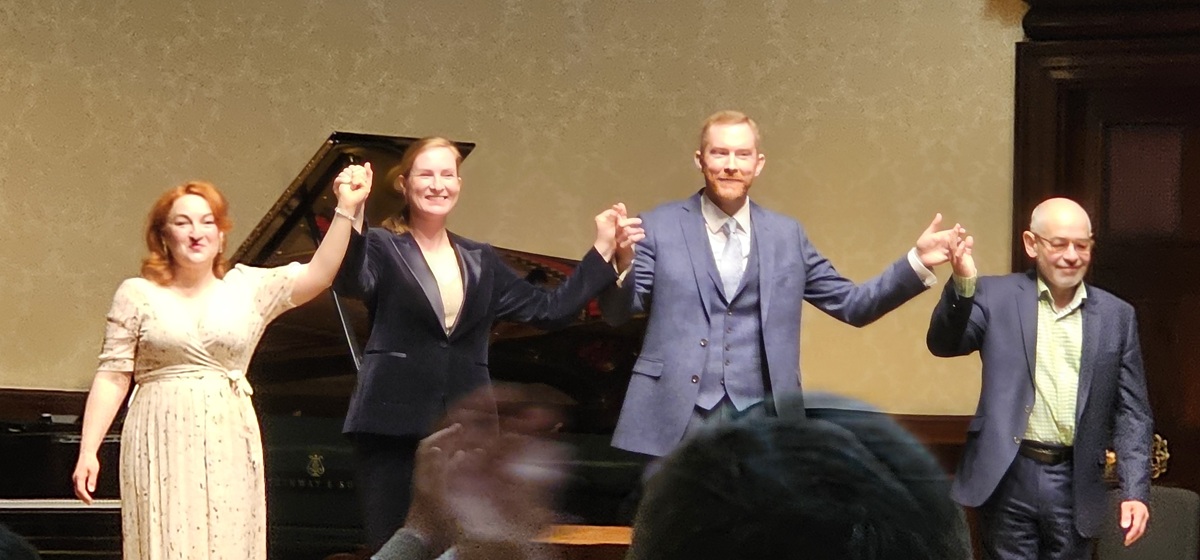
Marianna Crebassa (mezzo-soprano), The Mozartists / Ian Page

Mozart Lucio Silla K135 (1772): Dunque sperar poss’io…Il tenero momento
Haydn Symphony no.34 in D minor Hob.I:34 (1765)
Mozart Idomeneo K366 (1781): Ah! qual gelido orror; La clemenza di Tito K621 (1791): Parto, parto; Lucio Silla K135: Ah! se morir mi chiama; Le nozze di Figaro K492 (1786): Voi che sapete che cosa e amor
Haydn Symphony no.26 in D minor ‘Lamentatione’ (1768)
Mozart La clemenza di Tito K621: Deh, per questo istante solo

Wigmore Hall, London
Thursday 26 February

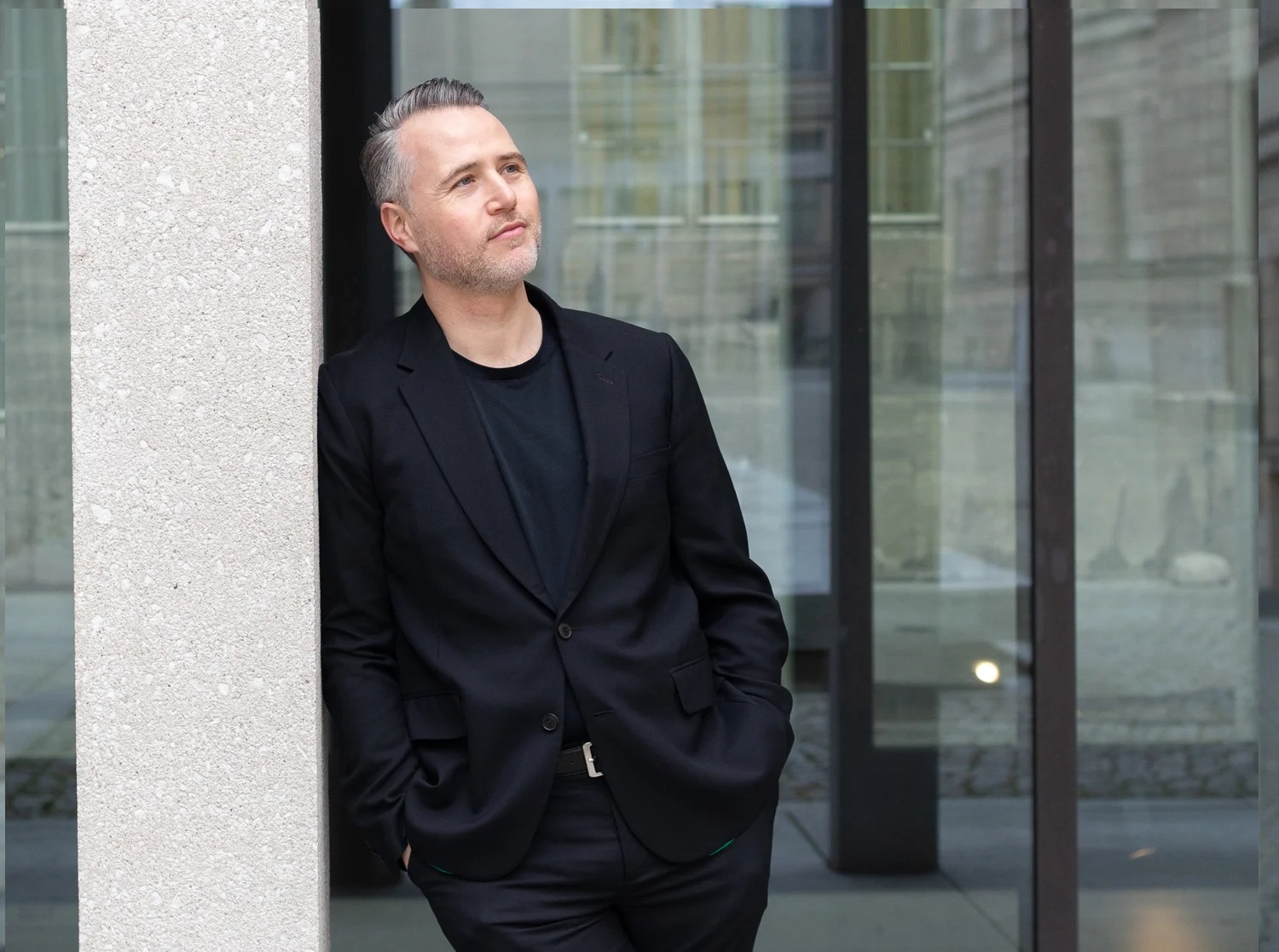
Reviewed by Ben Hogwood Photo (c) The Mozartists

It was a matter of time before Marianne Crebassa and Ian Page appeared together on the same stage. Indeed, as Page confided in the pre-concert talk, the French mezzo-soprano was top of his ‘wanted’ list for performing with his band, The Mozartists. With dates aligned, the pair constructed a typically stimulating programme.

Page’s eye for historical and orchestral detail proved the ideal foil for Crebassa’s characterisation of four operatic characters from early, middle and late in Mozart’s career, with each role written for castrato singers. Supporting these operatic excerpts were two symphonic examples from Haydn’s ‘Sturm und Drang’ period.

Diving straight in at the deep end, Crebassa embraced the many twists and turns of the 10-minute epic Dunque sperar poss’io…Il tenero momento, from Mozart’s teenage opera Lucio Silla. Her lower range notes were sumptuously delivered with impeccable poise, while Crebassa’s upper range was thrilling in the exposed virtuoso passages, delivered with a flash of the eye and a smile.

‘Enjoyment’ was a key word for this concert, as players, conductor and singer alike shared musical asides with obvious pleasure – not always the case in the concert hall! Some of the biggest smiles were reserved for Crebassa’s coy account of Voi che sapete, from Le Nozze di Figaro, subtle but winsome. Meanwhile the tragic Ah! qual gelido orror, from Idomeneo, had the appropriate gravitas and a weighty orchestral tone to match. A second aria from Lucio Silla, Ah! se morir mi chiama, was given with exceptional voice control and attention to detail from Page, including tasteful harpsichord continuo from Steven Devine.

Crebassa also triumphed in two arias from Mozart’s final opera La clemenza di Tito, hailed by Page as a long-underrated masterpiece. In Parto, parto her accomplice was basset clarinettist Emily Worthington, taking the part of Mozart’s friend (and Clarinet Quintet dedicatee) Anton Stadler. Player and singer engaged in a compelling sequence of musical cat and mouse, Worthington projecting well from the back of the stage. Meanwhile Deh, per questo istante solo found Crebassa drawing the audience in with its dynamic contrasts, high on drama. As a considerable bonus she gave a serene account of Qui d’amor from Handel’s Ariodante as an encore.

Complementing the Mozart selection were two examples of Haydn’s invention from early on in his tenure as Director of Music at Esterházy. Both D minor works share a weighty tone, and the earlier work, Symphony no.34, began with a heavy heart. The sparse tone of the orchestra was a stark contrast to the Mozart, only briefly relenting as the first movement developed its ideas. Even when D major appeared as the key of the resulting Allegro the music still bristled with anxiety, expressed through the violin tremolos. The Minuet and Trio – with lovely tone from oboists James Eastaway and Rachel Chaplin – eased the strain with brighter tones, as did the finale, in spite of its brief minor key recollections.

One of few Haydn symphonies to receive a nickname from the composer himself, Symphony no.26, the ‘Lamentatione’, took us to church in an interpretation reaching profound emotional depths. Page and the Mozartists moved from the brio of the lean first movement to rapt concentration in the second, where the music has a similar gait to the chorale of J.S. Bach’s famous cantata Wachet auf, ruft uns die Stimme. Page gave the phrasing appropriate room for contemplation. Haydn’s wit and invention made a welcome reappearance beneath the surface tension of the Minuet and was expressly felt in the syncopated trio, where oboes and horns excelled.

This was a memorable evening of music making, captured by microphones – presumably for broadcast on BBC Radio 3 or recording. Either way, a memento is well worth seeking out!

You can listen to the music from this concert in a Tidal playlist, including some of Marianne Crebassa’s own Mozart recordings made for the Erato label.

Published post no.2,811 – Friday 27 February 2026

In Concert – Simon Wallfisch & Joseph Middleton @ Wigmore Hall: Voices of Terezin

Simon Wallfisch (baritone, above), Joseph Middleton (below)

Ullmann Beryozkele from 3 jiddische Lieder Op. 53 (1944); Lieder der Tröstung (1943): Tote wollen nicht verweilen, Erwachen zu Weihnachten; From Drei chinesische Lieder (1943): Wanderer erwacht in der Herberge; Der Müde Soldat
Taube Ein jüdisches Kind (1944)
Haas 4 Songs on Chinese Poetry (1944)
Leo Strauss arr. Iain Farrington Als Ob! (c.1942-4)
Brahms 4 Serious Songs Op.121 (1896): Ich wandte mich und sahe an alle
Ullmann From Der Mensch und sein Tag Op. 47 (1943): Heimat, Der Liebsten, Verdämmern, Nacht
Brahms 4 Serious Songs Op.121 (1896): Wenn ich mit Menschen und mit Engelszungen redete
Ullmann Stille from Der Mensch und sein Tag Op. 47 (1943)
Ilse Weber Wiegala (1944)
Ravel Kaddisch from 2 mélodies hebraiques (1914)

Wigmore Hall, London
Tuesday 27 January 2026, 1pm

Reviewed by Ben Hogwood

This remarkable concert, given on International Holocaust Remembrance Day, took the form of a wholly appropriate tribute to the musicians, writers and academics assembled by the Nazis in the Ghetto Theresienstadt. This was based at Terezin, the small town near Prague, and used as a propaganda tool to present Jewish prisoners as thriving artists, in spite of them being held prior to being sent to the Auschwitz or Treblinka concentration camps.

German-English Baritone Simon Wallfisch is a member of a deeply musical family, with his grandmother, Anita Lasker-Wallfisch, a survivor from the Women’s Orchestra of Auschwitz. Together with pianist Joseph Middleton he presented music from four composers held in the ghetto, part of a sequence intertwined with diaries, poems, essays, pictures and musical excerpts. They gave the Wigmore Hall a deeply moving period of contemplation, their consummate artistry and control ensuring that a celebration of the creative spirit ultimately won through.

Wallfisch and Middleton (above) used the music of Viktor Ullmann as reference points. A principal focus was the composer’s settings of German haiku equivalents by the Czech poet Hans Günther Adler, a Holocaust survivor whose son Jeremy addressed the audience before the concert began. Ullmann’s music found a blend of touching simplicity and harmonic daring, pulling against tonal confines to give increased tension but in a way bringing the music closer to Berg than Schoenberg.

His word settings were particularly vivid in the first song, Beryozkele (Little birch tree), especially the line Jedes Bletele ihr’s Scheptshet schtil a t’rile (Each little leaf whispers quietly its own prayer), a parallel for each of the souls held captive in the town.

Meanwhile the crumpled harmonies of Tote wollen nicht verweilen (The dead do not want to linger) contrasted with the eerie purity of the fragment Erwachen zu Weihnachten (Awakening at Christmas), while in the Adler settings we heard the concentrated Heimat (Home) and the shafts of hopeful light offered by Der Liebsten (The loved one). The cold bell of Verdämmern (Twilight) rendered by Middleton offered beauty but also fear, before the pair achieved a remarkable stasis during Stille (Stillness).

The music of Carlo Sigmund Taube was similarly moving, through the innocence of Ein jüdisches Kind (A Jewish child), but was a wild contrast to the approach of Leo Strauss, whose cabaret scene Als Ob! (As If!) was deadpan, its humour brilliantly done but cold in the extreme.

The music of Czech composer Pavel Haas continues to make a striking impact, and his 4 Songs on Chinese Poetry were prefaced by a video clip (above) of the tensile Study for Strings from Theresienstadt itself. The songs were dramatic, particularly The moon is far from home, where the bare bones of Middleton’s left-hand line supported the powerful vocal. The discomfort and distorted imagery of A sleepless night were similarly vivid.

Finally Ilse Weber, the nurse who opted to travel with her young children to Auschwitz, was represented by Wiegala (Cradle Song), a touching sweetness lent to the upper piano part and a moving simplicity to Wallfisch’s reading.

Complementing the four Terezin composers was the music of Brahms, whose last work for voice, the 4 Serious Songs Op.121, were heard in a concert in the ghetto. Their gravitas here was only enhanced by the composer’s sense of mortality, Wallfisch singing with poise and power. The final word, however, was left to Ravel, whose Kaddisch was a potent memorial, Wallfisch commanding through his intonation and ornamentation.

A prolonged silence followed; the only appropriate response to a deeply moving concert. Here, in spite of the horrors suffered by the composers and the subjects of the readings, it was possible to appreciate their resolve and enduring talent, their lights somehow undimmed. Here they were remembered with the utmost respect and appreciation, and I for one shall never forget it.

Published post no.2,781 – Tuesday 27 January 2026

In Concert – Cuarteto Casals @ Wigmore Hall: Bach, Shostakovich & Turina

Cuarteto Casals [Abel Tomàs, Vera Martínez-Mehner (violins), Cristina Cordero Beltrán (viola), Arnau Tomàs (cello)]

J.S. Bach Art of Fugue BWV1080: Contrapunctus 1, 4, 6 & 9 (1742, rev.1748-9)
Turina La oración del torero Op.34 (1925)
Shostakovich String Quartet no.3 in F major Op.73 (1946)

Wigmore Hall, London
Monday 12 January 2026, 1pm

Reviewed by Ben Hogwood

Cuarteto Casals began this BBC Radio 3 Lunchtime Concert with a quartet of movements from The Art of Fugue, Johann Sebastian Bach’s four-part masterpiece of musical counterpoint. The collection has that rare quality of being able to combine technical prowess and emotional substance, and these were evident right from the outset. Initially plaintive, Contrapunctus 1 grew in scope and stature, though while three of the quartet opted against vibrato cellist Arnau Tomàs did not, meaning his instrument was more rounded in tone. A convincing Contrapunctus 4 featured lively exchanges, while Contrapunctus 6 enjoyed the dotted rhythms redolent of a French ‘ouverture’. Finally Contrapunctus 9 was a light-footed dance, its slower theme commendably clear towards the end.

Vera Martínez-Mehner then swapped with Abel Tomàs to assume first violin duties for Joaquin Turina’s chamber tone poem La oración del torero. This vivid account of bullfighters praying for their lives before a fiesta was written in the wake of a scene witnessed by the composer, observng the toreadors ‘backstage’ in the chapel. Martínez-Mehner and Cristina Cordero Beltrán, perhaps unwittingly, were ironically clad in red for a performance that turned up the temperature a good 20 degrees inside the Wigmore Hall. Their highly descriptive account featured castanet evocations that were on point and searching solos that led to a radiant concluding section. Turina’s chamber music is rarely heard in the concert hall, and while this performance revealed a healthy debt to Debussy’s string quartet in particular, it showed off an attractive melodic style. On this evidence it would be rewarding to hear the composer’s string quartets and piano-based chamber music much more frequently.

The temperature cooled notably for the Shostakovich, though here again the quartet were able to use the extremes of their dynamic range. With the String Quartet no.3 closely attuned to the end of the Second World War, it was difficult not to think of telling parallels with the current situation in Russia and Ukraine, evident on every page. The songful melody of Martínez-Mehner’s opening tune cast initial warmth, but this soon dissipated, the quartet’s confidential asides drawing a notably hushed response from the Wigmore Hall audience.

Parallels with Shostakovich’s Eighth Symphony, completed just three years earlier, were revealed – the heavy-set viola tread of the second movement recalling its scherzo, while the solemn fourth movement Passacaglia, placed as in the symphony, found an equivalent emptiness, nowhere more so than in the stricken unison from viola and cello towards the end.

Yet there was hope, as the questioning finale struck a more positive tone in spite of heavy irony, and a cold dread as the Passacaglia music reappeared. The music hung in a still suspension through the coda, in only the way Shostakovich can, revealing answers that were hard to come by while peace and dread co-existed in equal measure. Silence followed, and there was understandably no encore.

Listen

You can listen to this concert on BBC Sounds, until 11 February. Meanwhile click here to listen to a playlist of the works in this concert on Tidal, with the J.S. Bach and Shostakovich recorded by the Cuarteto Casals themselves.

Published post no.2,766 – Tuesday 13 January 2026

News – Bertrand Chamayou residence @ Wigmore Hall, including Ravel’s complete piano music on Sunday 7 December

published by Ben Hogwood from the original press release

This December, Wigmore Hall focus in on a pianist famed for winning the prestigious Victoires de la Musique Classique award on five separate occasions, most recently in 2022. Described by the Guardian as ‘a remarkable musician, no question’, Chamayou caps off his short residency with an unmissable evening of the complete Ravel pianos works. Before that, the pianist joins forces with the thrilling Belcea Quartet and accompanies soprano Barbara Hannigan for her Wigmore Hall debut.

The programme with the Belcea Quartet on Thursday 4 December is of extra interest, for in addition to Chamayou’s appearance in the rarely-heard Piano Quintet in E major of Erich Korngold, the quartet will mark the 80th anniversary of the world première of Britten’s Second String Quartet at Wigmore Hall.

Chamayou’s programme with soprano Barbara Hannigan is typically adventurous, the pair reaffirming their Messiaen credentials with a performance of the Chants de terre et de ciel, before Chamayou looks at late Scriabin in the form of the Poème-nocturne Op. 61 and Vers la flamme Op. 72, before the two take on John Zorn’s song cycle Jumalattaret, written for Hannigan herself.

Chamayou’s third appearance will see him perform the complete works for solo piano by Maurice Ravel, whose birth in 1875 is being marked with 150th anniversary celebrations this year. The concert begins at 7pm, with the programme as follows:

1875-1937
Prélude
Miroirs
Menuet in C sharp minor
Sonatine
A la manière de Borodine
Gaspard de la nuit

Interval

A la manière de Chabrier
Valses nobles et sentimentales
Menuet sur le nom d’Haydn
Sérénade grotesque
Jeux d’eau
Menuet antique
Pavane pour une infante défunte
Le tombeau de Couperin

For more information on all the Wigmore Hall concerts, click on the links highlighted above.

Published post no.2,730 – Wednesday 26 November 2025

In concert – Kleio Quartet @ Wigmore Hall: Elgar, Webern & Haydn

Kleio Quartet [Juliette Roos, Katherine Yoon (violins), Yume Fujise (viola), Eliza Millett (cello)]

Elgar String Quartet in E minor Op.83 (1918)
Webern 5 Movements for String Quartet Op.5 (1909)
Haydn String Quartet in D major Op.50/6 ‘Frog’ (1787)

Wigmore Hall, London
Monday 6 October 2025 (1pm)

On the evidence of this BBC Radio 3 Lunchtime Concert, the Kleio Quartet – members of the station’s New Generation Artists scheme – are ones to watch. Not least for their programming, for it was refreshing to see a Haydn string quartet given top billing at a concert rather than making up the numbers.

The concert began with an account of Sir Edward Elgar’s sole String Quartet notable for its poise, elegance and understated emotion. Elgar’s ‘late’ works are best experienced in concert at this autumnal time of year, though the dappled sunlight evoked here was compromised by a subtle yet lasting foreboding. For the youthful Kleio Quartet to capture the thoughts of a man in his early 60s with such clarity was impressive indeed. They did so through a first movement taking the ‘moderato’ of Elgar’s tempo marking to hand – deliberate but never plodding. The dense, Brahmsian counterpoint was deftly unpicked, while the nostalgic elements of the second movement gave the feeling of an ensemble performing in an adjacent room, the listener asked to imagine an elegant salon setting. The purposeful finale snapped us out of this reverie with vigorous exchanges, though there was time for affection in its second theme. Ultimately the music revelled in the Sussex outdoors enjoyed by Elgar and wife Alice, though the Autumnal chill remained present.

Memories of a very different kind coursed through Webern’s 5 Movements for String Quartet, written in the wake of his mother’s death. These remarkable compositions illustrate an unparalleled gift for intense, compressed expression. None of the movements last longer than two minutes, yet so much concentrated feeling is loaded into their short phrases, pushing against tonality with oblique melodies and rich yet desolate harmonies.

The Kleio Quartet found those qualities and more in a deeply impressive account, with the alternate moods of the first movement, argumentative and then delicate, and the forthright third. Countering these moods were the soul searching second and the sparse, eerie fourth, where the ticking motif of Yume Fujise’s viola suggested a period of insomnia. The bare bones of Webern’s anguish were made clear in the final movement, in the high, inconsolable violin of Juliette Roos and the empty closing chords.

Following this with one of Haydn’s most amiable quartets was an inspired move, the Wigmore Hall audience smiling feely as the composer’s humour was repeatedly revealed. The so-called ‘Frog’ quartet, named for the croaking repeated notes of the finale’s main theme, shows Haydn completing his Op.50 set of six quartets with a panache that would surely have delighted their beneficiary, Frederick William II of Prussia.

The Kleio had fun with the unpredictable first movement, spirited yet restless, and the harmonic twists and turns of the Poco adagio, led by expressive flourishes from Roos. The quirky Menuetto revelled in melodic inflections and cheeky asides, with the pregnant pauses of the trio section adding to the irregular rhythms within the triple time meter. All of which set up the fun and frolics of the finale, where the occasional slip of ensemble tuning could be easily forgiven in the spirit of the Kleio’s performance, Haydn charming his audience to the very end.

Listen

You can listen to this concert as the first hour of BBC Radio 3’s Classical Live, which can be found on BBC Sounds until Tuesday 4 November.

Published post no.2,680 – Tuesday 7 October 2025