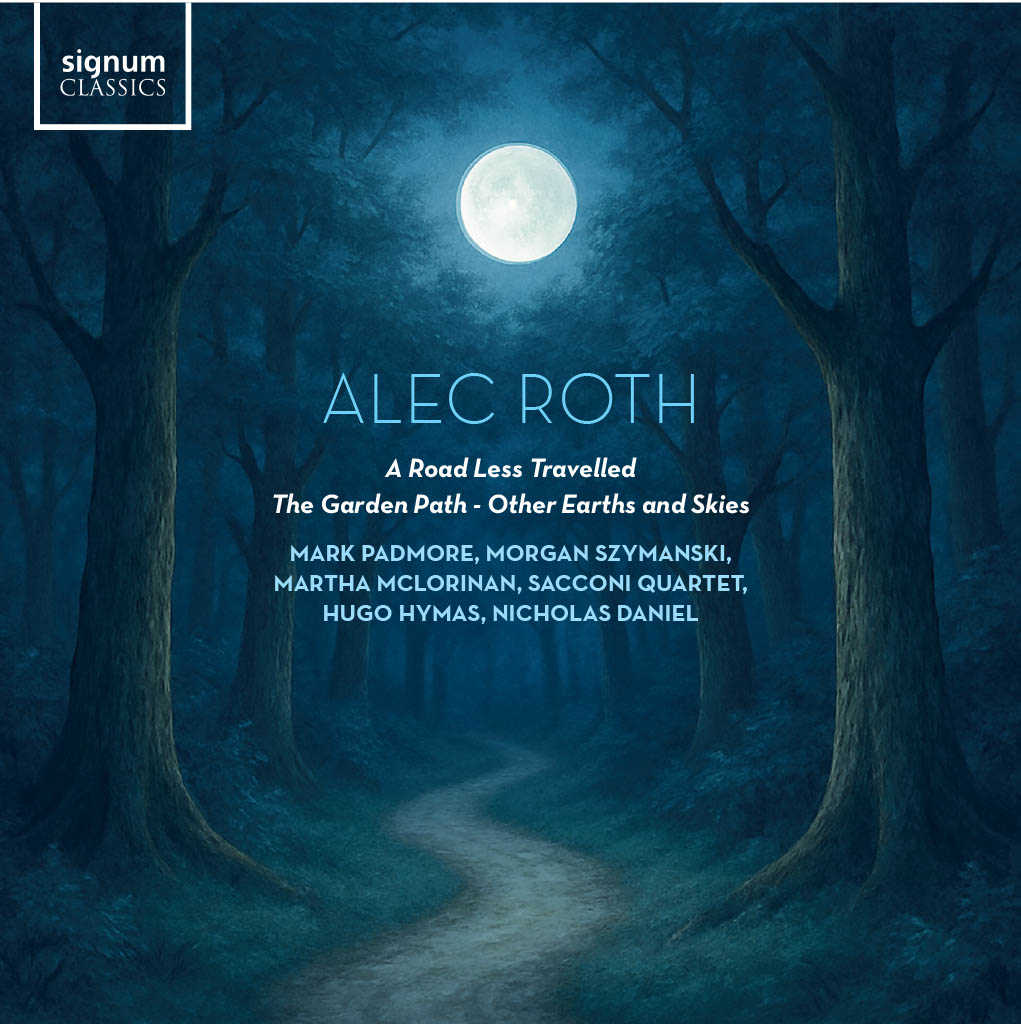
On Record – Mark Padmore, Martha McLorinan, Hugo Hynas, Morgan Szymanski, Nicholas Daniel, Sacconi Quartet: Alec Roth: Chamber Music with Voice (Signum Classics)

Mark Padmore (tenor), Morgan Szymanski (guitar) (A Road Less Travelled); Martha McLorinan (mezzo-soprano), Sacconi Quartet [Ben Hancox and Hannah Dawson (violins), Robin Ashwell (viola), Cara Berridge (cello)] (The Garden Path), Hugo Hymas (tenor) with Nicholas Daniel (oboe) (Other Earths and Skies)

Alec Roth
A Road Less Travelled (2017)
The Garden Path (2013, rev. 2022)
Other Earths and Skies (2010, rev. 2022)

Signum Classics SIGCD971 [61’12”] English texts included
Producer Adrian Peacock Engineer David Hinnitt

Recorded 6,8 & 10 October 2025 at Church of St Anne and St Agnes, Gresham Street, City of London

Reviewed by Richard Whitehouse

What’s the story?

Signum Classics resumes its coverage of Alec Roth (b.1948) with this album of song-cycles, their scoring with guitar, string quartet or oboe confirming the versatility of the composer’s idiom and enabling each to be enjoyed on its own terms or as part of the overall programme.

What’s the music like?

Best known for larger-scale choral works (though his string quartets – recorded by the Allegri Quartet on RTF Classical NI6321 – are well worth anyone’s investigation), Roth has produced a number of song-cycles whose accompaniment can be as crucial as the words in determining the overall expressive trajectory. Each of these works has notable British precedents – Britten or Walton with guitar, Gurney or Vaughan Williams with string quartet, then VW again with oboe – though, in terms of his fashioning a personal response, Roth is definitely his own man.

Performable with guitar and/or string quartet (the former chosen here), A Road Less Travelled sets (whole or in part) 12 poems by Edward Thomas – though the title is actually the title of a poem by Robert Frost, the American poet who had encouraged Thomas to develop his poetic muse. Pivoting around an instrumental Interlude, the settings in this ‘solo cantata’ are mainly brief while strongly evocative of a mood shared by all these texts; namely, the journey itself as more lastingly significant than the destination indicated, or at least implied, over its course.

The ‘song-cycle’ that is The Garden Path utilizes four poems by Amy Lowell and started out with piano accompaniment before being revised with string quartet. Here it is those parallels between her garden, which the poet describes in its myriad states and variety, and the human condition which come to the fore in these four relatively lengthy settings; alongside a feeling of what may lie beyond such luxuriance and abundance for the protagonist, as for the reader. That such ambiguity emerges so candidly yet obliquely is integral to this cycle’s fascination.

Finally to Other Earth and Skies – these ‘five miniatures’ after eighth-century Chinese poet Li Bai (once known as Li Tai-po) having been translated by Vikram Seeth, an author with whom Roth has collaborated on numerous occasions. It is the haiku-like brevity and concentration of the texts as sets the tone for this sequence, with its interplay between all-too-human emotions and metaphysical longing in which any vestige of ego has been subsumed into the numinous. Quite likely the deepest such cycle featured on this album, and certainly the most intriguing.

Does it all work?

Pretty much throughout. As an adherent of the ‘less is more’ ethos, Roth’s settings are almost consistently spare in texture and restrained in manner; their meaning arising out of the actual words as much as from any poetic gloss. Demonstrably yet never stereotypically tonal, while often teasing as to their emotional remit, this is song-writing of a high order and as pleasurable for the listeners as they are manifestly are for the singers and instrumentalists featured herein. All the texts are included, though there is never any problem with hearing what is being sung.

Is it recommended?

Indeed it is. The church acoustic is evidently an ideal ambience for recording such music, and those who respond to it should investigate earlier releases of Roth on this label – most notably the vocal miscellanies Songs in Time of War (SIGCD124) or Sometime I Sing (SIGCD332).

Listen / Buy

You can listen to excerpts and explore purchase options at the Signum Records website. Click on the names to read more about composer Alec Roth, and the performers Mark Padmore, Martha McLorinan, Hugo Hymas, Morgan Szymanski, Nicholas Daniel and the Sacconi Quartet

Published post no.2,893 – Wednesday 20 May 2026
In concert – The Gesualdo Six & Matilda Lloyd @ Wigmore Hall

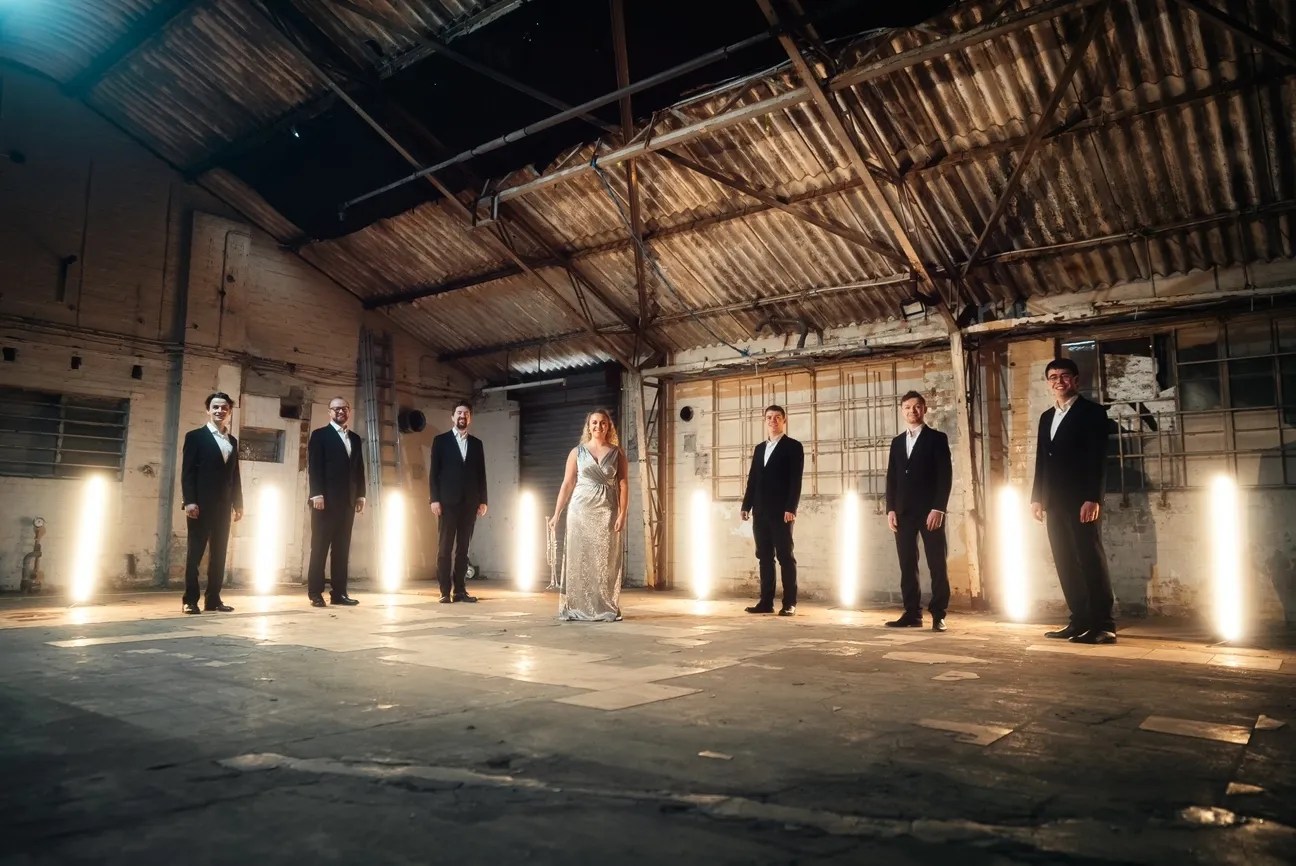
The Gesualdo Six [Guy James (countertenor), Alasdair Austin (countertenor), Joseph Wicks (tenor), Josh Cooter (tenor), Simon Grant (baritone) and director Owain Park (bass)]

Roth Night Prayer (2017)
Tallis O nata lux de lumine (pub. 1575)
Pritchard The Light Thereof (2020)
MacMillan O Radiant Dawn from The Strathclyde Motets (2005)
Tallis Dum transisset Sabbatum (1575)
Hildegard of Bingen O gloriosissimi (с.1163-1175)
Bingham Enter Ghost (2002)
Owain Park Sommernacht (2022)
Rheinberger Abendlied from 3 Geistliche Gesänge Op. 69 (pub.1873)
Barnard Aura (2020)
Roxanna Panufnik O Hearken (2015)
Burgon Nunc dimittis (1979)

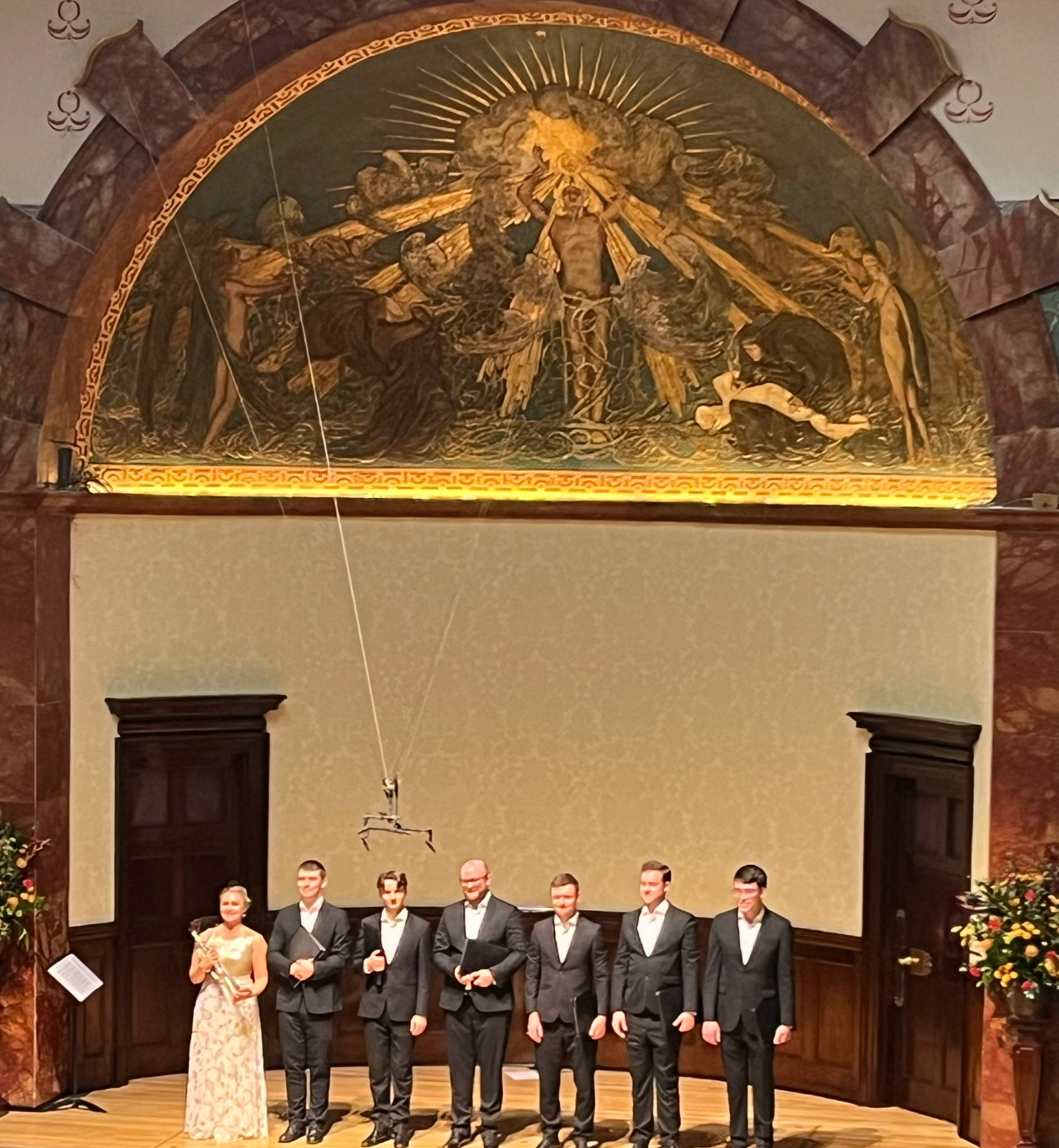
Wigmore Hall, London, 2 October 2025

by John Earls. Photo credits unknown (above), John Earls (below)

The Gesualdo Six have recently released their tenth album (for Hyperion) Radiant Dawn. It finds them combining consistently high standards of choral music with imaginative programming featuring classic and contemporary compositions spanning over 800 years of music. It also sees them introducing a new element to the mix, namely the inclusion of the trumpet for a number of pieces superbly played by Matilda Lloyd.

The new album was the focus for this hour-long lunchtime concert at a packed Wigmore Hall with all pieces performed coming from it (and a few omitted). The theme of the album, as explained by The Gesualdo Six’s director and bass (and recently named new chief conductor of the BBC Singers) Owain Park, is “musical responses to light” in a whole variety of contexts.

First up in the set (and on the album) was Alec Roth’s Night Prayer, an almost dreamy reflection of the Compline hymn Te lucis ante terminum that introduces Lloyd’s trumpet and the remarkable effect it has when married with these magnificent voices.

Next was Thomas Tallis’s O nata lux de lumine, one of two shorter pieces (both just over 2 minutes) along with Roxanna Panufnik’s O Hearken, but their duration made them no less impactful. Both featured just voices, and I loved finding out from the programme that O Hearken started life as a raffle ticket prize. Another Tallis piece Dum transisset Sabbatum saw Matilda Lloyd’s trumpet taking the soprano voice to powerful effect.

There are two of James MacMillan’s Strathclyde Motets on the album. Only one of them, O Radiant Dawn, from which the album gets its title, gets performed here. It’s harmonically inspired by Tallis’s O nata lux de lumine and has a yearning to it befitting of the Advent season it relates to.

Richard Barnard’s Aura (commissioned for the album) sets music to the text of Emily Barry’s poem about the loss of her mother. Credit to the programme editors for faithfully reproducing the poem’s arresting layout – two parallel columns reflecting the emotional fracture involved (Owain Park’s programme notes were also excellent). This fracturing dissipates musically as the piece progresses with the trumpet acting as a bridge between two groups of singers. It was one of the most affecting pieces of the concert with the composer in the audience to hear it.

Another composer in the audience was Deborah Pritchard whose The Light Thereof (also commissioned for the album) sets words from the Book of Revelation and demonstrated deftly the ability of the trumpet (muted at times) to evoke different shades of light.

Matilda Lloyd’s virtuosity on the trumpet was to the fore in Judith Bingham’s Enter Ghost, an interpretation of a passage from Shakespeare’s Hamlet mixing music with spoken word, the drama enhanced by her walking off stage (and returning) whilst playing.

Other pieces sung a cappella included Hildegard of Bingen’s O gloriosissimi (from the back of the hall) and beautiful performances of Owain Park’s own Sommernacht and Joseph Rheinberger’s Abendlied.

The programme ended (as does the album) with Geoffrey Burgon’s Nunc dimittis which some may remember as the closing music from the BBC’s television adaptation of John le Carré’s Tinker Tailor Soldier Spy. It was yet another example of how effective this glorious combination of voices and trumpet is and proved a fitting conclusion to a most illuminating concert.  

John Earls is Director of Research at Unite the Union and posts at @johnearls.bsky.social on Bluesky and @john_earls on X. You can subscribe (free) to his Hanging Out a Window Substack column here: https://johnearls.substack.com/

Published post no.2,677 – Saturday 4 October 2025