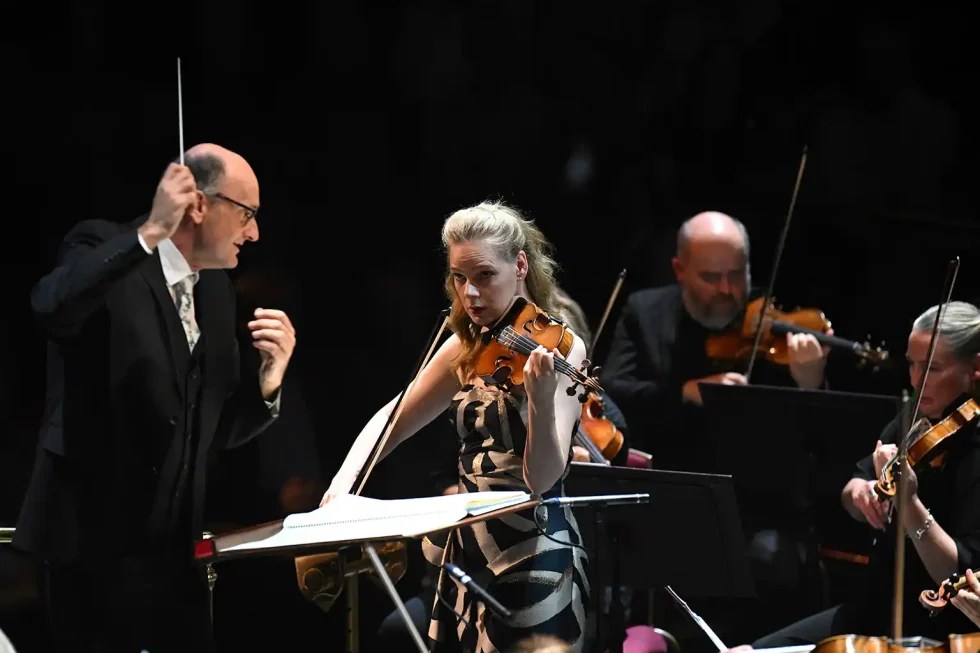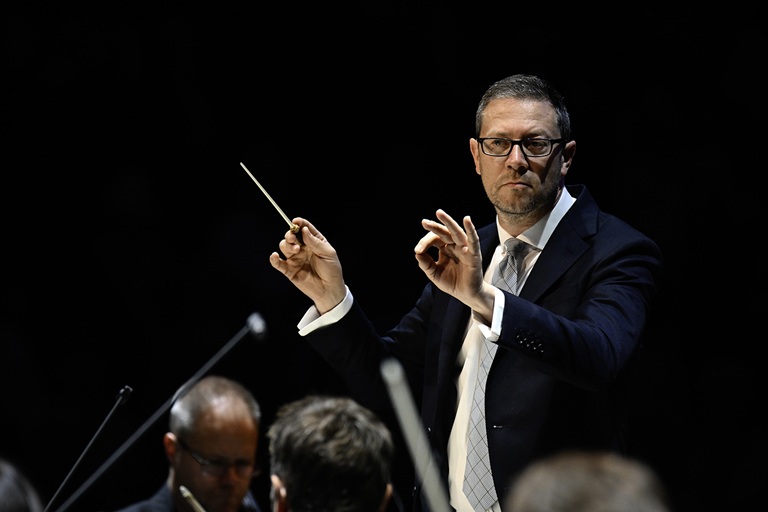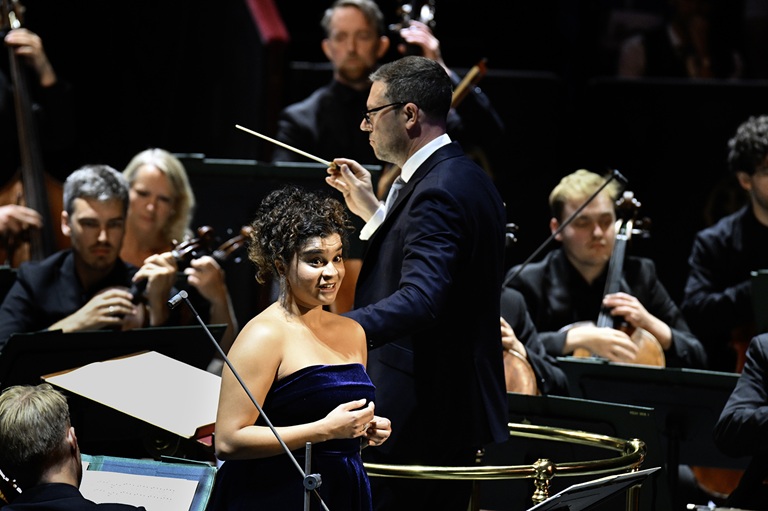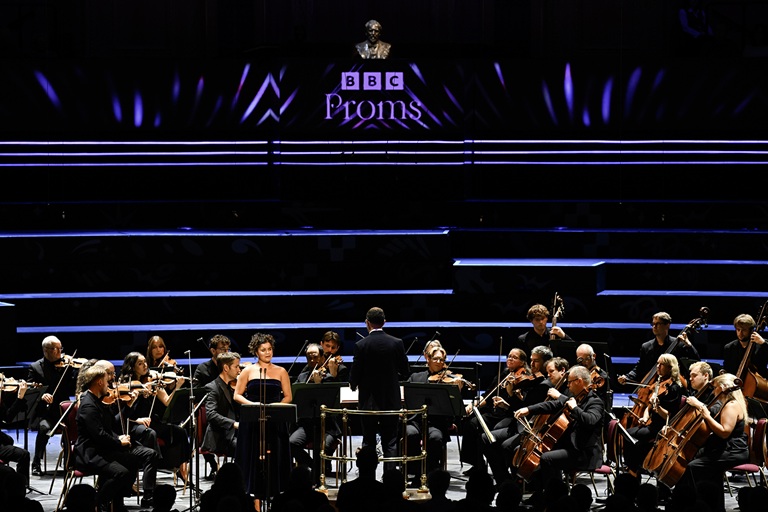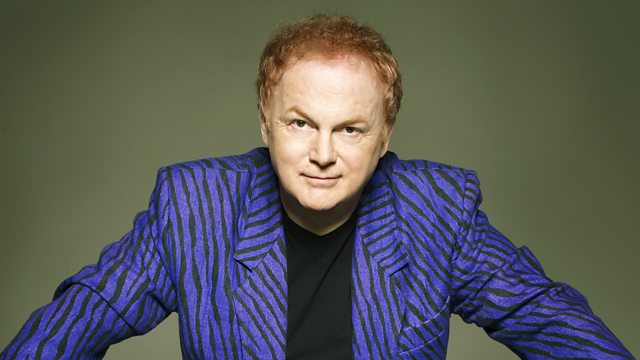
The multi-disciplined composer and songwriter talks to Ben Hogwood about his first foray into symphonic form – with a distillation of some of his most successful orchestral and pop writing.
Now in his sixth decade of composing, Mike Batt is exploring new horizons. Having mastered the art of the catchy pop song (most notably with The Wombles), writing with great success for other artists (Katie Melua and many more) and producing evocative soundtracks such as Watership Down, Caravans and The Dreamstone, he has now made his first foray into the world of the symphony.
This new departure occupies our chat, for Batt has written a symphony specifically for and about the troubles in Ukraine. It is a powerful and deeply heartfelt work, an impressive achievement – words Batt is grateful to hear. “I think there’s emotion in most music”, he says, “even if it is negative or aggressive. It happens that in this symphony, because it’s about war, it’s not just about Ukraine. But I even get people saying to me there’s a kind of melancholy in a lot of the Wombles songs. I’m about to use one of the expressions I hate hearing people say, but it’s in my DNA! There is a kind of melancholy in whatever I do, whether it’s a pop song for kids – which is never just for kids, it’s always for adults and myself. But the emotion in my symphony is from music being a powerful way of expressing oneself, and if you’re feeling simpatico towards the people being attacked in a war, and a certain amount of anger on their behalf, and a certain amount of defiance, it’s bound to happen, that emotion will be detected in the music.”
As a form, the symphony carries a certain amount of academic baggage. “You’ve touched a nerve there”, he says. “When I sat down to write this, I thought the “classical” scene is seemingly split two ways – observing, rather than attacking anybody. It seems to be minimalistic on the one side, which generally speaking I find quite boring. Not to say there aren’t geniuses doing good stuff…but on the other side is what I call modern classical music, which has academic elements that to me alienates a lot of people, and prioritises cleverness over feeling. For me, music is for invoking feeling in people.”
Has his work in film soundtracks helped form the backbone of what he has achieved here? “I think it goes back further than that. I’m a sensitive sort of guy, and my emotional sensors are always attuned. I would love to have done more film soundtracks than I have done, though the work for The Dreamstone deserved a symphonic soundtrack, and I managed to persuade them to do it with the London Philharmonic Orchestra. I then wrote an orchestral suite, which I needed to develop into a format you would describe as classical music, but there’s a sort of ‘conservatoire doctrine’ baked into modern classical thinking, and you don’t get into that club. I’ve always tried to make the best art, with a small a, but a film is an opportunity to form an artistic partnership with the director, the actors and everyone involved in the film, but it doesn’t stop you from making it as artistically good as you can. It develops your skills as a descriptive writer. Film music went through a time when all they wanted was bangs and crashes, and I survived by not being invited to do films.”
He pinpoints this to around 10-20 years ago. “People would say if you can hear a theme, then you’ve failed because people shouldn’t be concentrating on that. You’ve distracted people. That’s like saying you can’t talk about Meryl Streep’s acting! If you notice a thing is well directed, nobody complains – so why should they for the music? I did a classical choice for Radio 3 yesterday, and I chose Lawrence of Arabia, the subtly chromatic, almost Borodin-sounding theme. That tune comes in almost exactly the same way as Tchaikovsky uses the love theme in his Romeo and Juliet Fantasy Overture. How can you artistically complain about that? Suddenly the music becomes the star! To come back to the point, music is to express something!”
The symphony being a case in point. “There was a certain amount of angst before I started writing this. I find it so hard to do what in film terms is director speak, where you say all the right things to sound artistically deep. When you know you’re going to deliver something which you hope will have some artistic depth, you allow yourself to be yourself as you’re talking, not putting on that pretentious speak, which I’m afraid I do notice in a lot of modern composers. When I was beginning the symphony, I was thinking, “Am I really gonna have to write that kind of stuff in order to be accepted?” And the answer of course is no, because that would be a sad result. I’m not going to imitate the modern academic trend in order to please the people who are currently alive today and criticising in one way or the other. It’s a bit like when punk rock came along, and I was doing pop music and films. I never, ever thought I had better start writing punk!”
The influence did seep in subtly, however. “When I wrote Six Days In Berlin, I did allow my Bartókian, Stravinsky-esque influences to spill out and mix with my quite oddball rock ideas, and mix it up and be me, in a free way. Lo and behold, that was my least selling album! But it was freedom, my version of punk. I allowed the trend to free me rather than ensnare me, and I’d like to think I’ve done that with this Symphony.”
He applies this realistically. “A friend of mine said he really liked it, and said, “I noticed notes of Shostakovich!” To be honest with you, I’ve had such a whirlwind musical life, that I hadn’t really got into Shostakovich. I didn’t really know much about him. I love all kinds of music, and started on Schubert’s Ninth Symphony, which is what first ensnared me. It got me, and yet I don’t know all his symphonies. I love Stravinsky, especially Petrushka, I love the way the textures are mangled together like flying feathers, and it still has accessible melodies – yet it’s still modern! Very often I think people look back, and that’s why people like Mahler got discovered properly after he died. When the critics are not the contemporary of the composer, you find they are more critical of that composer but not adhering to the style of the moment. I think I might get a bit of that backlash on this symphony, because they might say, he’s not doing the modern thing that we all do, he’s trying to do Shostakovich. Well, I’m not! I’m trying to shy away from being pretentious!”, he says laughing.
Certainly the moods within Batt’s symphony align with those of Shostakovich, and in the moody disposition of the bass strings in particular. “Basses are a wonderful resource”, he enthuses, “they can be so dramatically dark but can be the opposite, mischievous and ‘stabby’. They are such an underappreciated resource. If anyone asks me to write for string quartet, I always advise other composers to use a bass as well, and make it a quintet. That frees up the cello to be melodic, and vice versa – they can swap over.”
Batt’s composition within the symphony feels extremely instinctive, as though he found a rich stream of musical consciousness. “That’s nice to hear”, he says. “What I didn’t do with this symphony was to make a plan first, other than the night before. I sat at the kitchen table and scribbled a four-movement plan, with what the movements would be called. I thought they would be about ten minutes each. It ended up being about 38 minutes altogether. It’s like a painter, with the discipline to keep within the canvas. Yet having decided that, it all went away when I was writing. The ideas did flow freely, but there were times when they didn’t, when I couldn’t get anything. The reason was the particular sort of truck I was driving…sorry, it must be weird talking to me with these analogies!…I was going from left to right across the page, in full orchestration. I wasn’t sketching a first or second subject, I was in an open key, it goes wherever it wants. I didn’t preconceive any tunes, as you would with a film.”
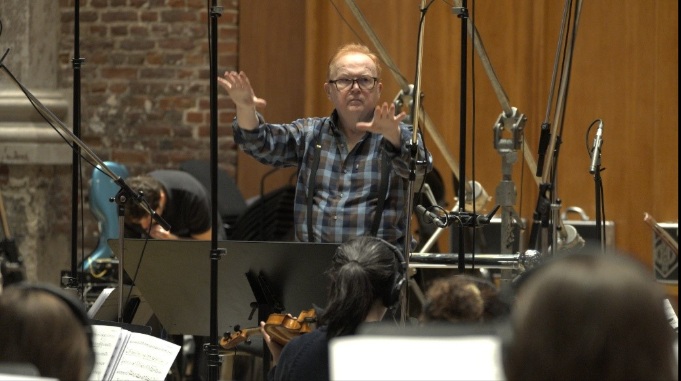
Following the courage of his convictions, Batt moved on. “I just knew the first movement was going to be a certain mood, and the second, and I knew what they would be. I wrote the opening in full score, and moved onto the next, and gradually, I knew a musical theme would have to emerge, a musical theme – not a subject, like in a sonata form. When it did, I wanted a little tune of a kid skipping along happily. I used an oboe, orchestrating before writing the tune – as I would when I need a brass moment. I got this melody and realised later that if I used a cor anglais, and used muted strings, that made a very romantic, sad tune, full of pathos – and born out of the moment where I was just trying to describe a little kid skipping along quite happily. It was rewarding to know the tunes and themes were flowing, but from the ongoing textural orchestral thought. Having just told you I’m trying not to be pretentious, I’ve just been through a whole realm of composer speak!”
He finds a suitable comparison from earlier in his output. “When I did The Hunting of the Snark, it’s more light-hearted – with the ridiculousness of Lewis Carroll and his brilliance of nonsense. It’s got a full classical orchestra and rock instruments. In that particular score I booked the orchestra three months ahead, six sessions with the London Symphony Orchestra in 1984, and that gave me three months to write the piece – a real incentive, to avoid an anxiety-ridden nightmare, turning up to Abbey Road studios with no music written!” Returning to the symphony, he says, “Anyone who knows my music doesn’t seem to know all of it…but I know it all, and it covers a lot of different genres while coming from the same place. My solo albums were actually pretty successful outside of the UK because they hadn’t heard of The Wombles. I could be a rock star in Germany! I got listened to more seriously in other countries because they hadn’t heard of The Wombles.”
His work in that area had lasting benefits, however. “Some people have said to me, “It was listening to The Wombles that got me interested in classical music in the first place. I love to hear that, because I was just using my own musical passions, and I had to teach myself orchestration and conducting as well, learning as I went along. I sometimes felt that if I had gone into higher education in music, I would have come out slightly different. I was floundering about to start with, and had to sink or swim, and that’s how I came out of the way I did.”
His stature in Germany and other countries also had advantages. “I did some serious solo albums, Schizophonia in 1977 and then Tarot Suite in 1979. Tarot Suite is about the major arcana cards of the tarot pack, and the songs are all based on the themes of the major arcana. That’s where I get into the mixture of instruments, because one of the rules I had was not to use a rhythm section – which is exactly what a lot of the academics these days are deciding to use, because they want to seem modern! Twenty years ago I had a band called The Planets, and they were number one in classical charts for three months solid, but Classic FM said we love the album but we can’t play electric guitars on the radio!”
That problem was negotiated through judicious use of acoustic guitars, enabling the re-record of several tracks to fulfil the station’s ‘album of the week’ criteria – but Batt finds resonance between that incident and the new album. “For this symphony, I want to be seen as the person I’ve always been, and the music to be genuine – I’m not flitting like a butterfly from one thing to another. This is just me! I just happened to be writing a symphony and not a bubblegum commercial. But when I wrote the album Tarot Suite, there’s a lot of what I’d call Bartókian, Stravinsky-esque moments in there, with heavy guitars and a little bit of heavy metal at the same time. While I didn’t steal anything from him melodically for my Tarot Suite, what I might have stolen is some of Bartók’s attitude, the freedom of thought within harmony.”
“It’s extremely clever”, says Batt about Bartók’s writing. “I did something for Classic FM with the Hallé in Bradford, 30 years ago, and I programmed a piece from the Concerto for Orchestra but it was so bloody hard to conduct I dropped it from the program! I’d be able to make a better fist of it these days but it’s not easy stuff, and neither should it be. Bartók to me is modern, and Stravinsky too.”
The reaction to Tarot Suite was intriguing, to say the least. “The rock people were great with it, but to people in classical music it was prog rock – and that’s not what I do. So before I began, I decided not to use a rhythm section, as it would indicate to the ‘classical community’ that this was a symphonic piece. In order for this piece to be clearly seen as a symphony, I’ve stripped myself of the ability to what might be considered orchestrally progressive sounds, like drums. I wrote straight for what I would call a traditional, double woodwind, classical orchestra. This is my symphony rather than another rock-based symphonic solo album.”
Would Batt be inclined to repeat the composing experience? “I’d be very much inclined to. I’m getting into what I call the teatime of my life now, but I would love to write a Cello Concerto or a Clarinet Concerto! I’d also love to write a concerto for orchestra. One of my favourite pieces ever is Bartók’s Concerto for Orchestra!”
Mike Batt’s Symphony no.1 ‘Ukraine’ is out now on Dramatico…and you can explore purchase options on the Presto Music website
Published post no.3,017 – Monday 14 September 2026