
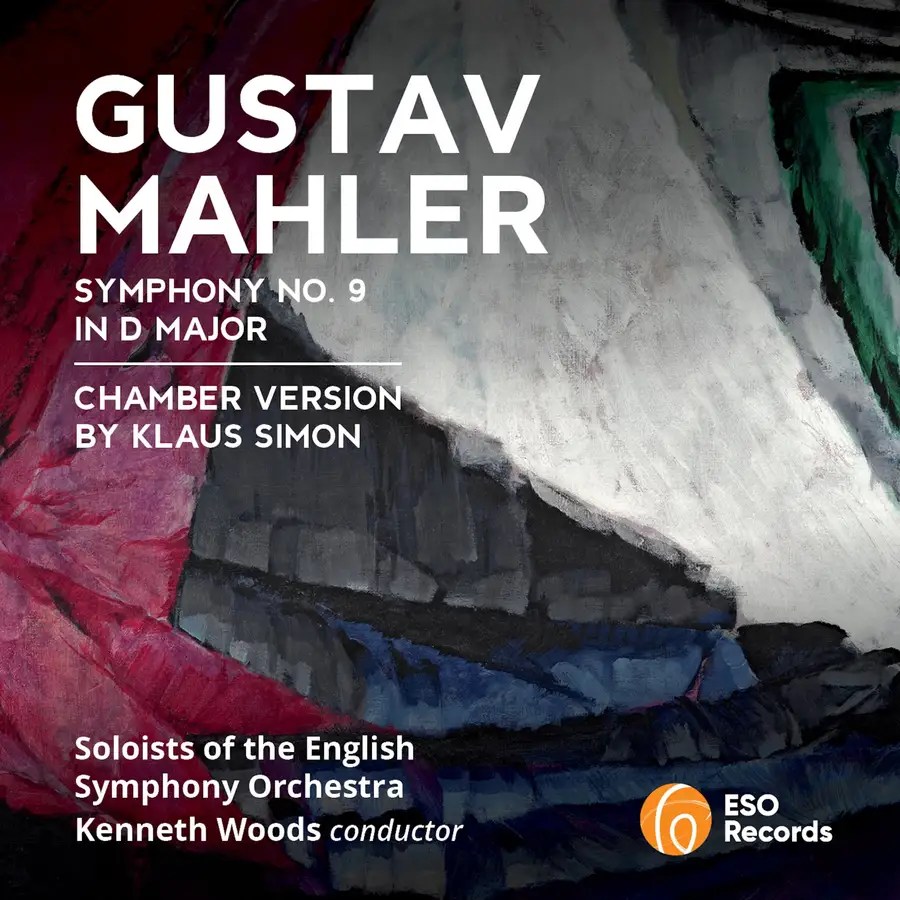
On Record – Soloists of the English Symphony Orchestra / Kenneth Woods: Mahler arr. Simon: Symphony no.9 (ESO Records)

Soloists of the English Symphony Orchestra / Kenneth Woods

Mahler arr. Simon Symphony no.9 in D major (1908-09, arr. 2007)

ESO Records ESO2602 [76’52”]
Producer Phil Rowlands Engineer Tim Burton

Recorded 23-25 March 2021 at Wyastone Concert Hall, Wyastone Leys, Monmouth

Reviewed by Richard Whitehouse

What’s the story?

The English Symphony Orchestra continues releases for its ESO Records label with Mahler’s Ninth Symphony, arranged by Klaus Simon and thereby continuing a lineage pioneered by the Society for Private Musical Performances established by Schoenberg after the First World War.

What’s the music like?

Schoenberg tackled Mahler’s Das Lied von der Erde and Erwin Stein his Fourth Symphony, but neither is as ambitious as that of the Ninth arranged here for single strings and woodwind (these latter with doublings), two horns, trumpet, one percussionist, piano and harmonium.

Whatever the logistical disparity between original and arrangement, the music’s textural and motivic content remain intact. This is evident from the opening Andante comodo, its formal trajectory of interlocking arcs made explicit so its long-term expressive intensification feels no less tangible. To this end, piano or harmonium contribute much more than merely filling-out the texture; articulating and reinforcing its harmonic profile through to a coda clinching the overall tonal journey with a serenity more poignant for its remaining, as yet, unfulfilled.

The ensuing Ländler emerges no less lucidly overall, with Kenneth Woods (rightly) resisting any temptation to point up emotional contrast across a movement whose deceptive blitheness of spirit is only gradually undermined. Equally notable is the way that Simon has emphasized contrasts in timbre and texture, with the music ultimately fragmenting into a bemused parody of how it began. More questionable is the Rondo-Burleske where Woods’s underlying tempo in its outer sections, while enabling the music’s contrapuntal intricacy to emerge unimpeded, is a little too dogged to convey the assaultive quality Mahler surely intended. This is less of an issue in the central trio whose aching regret is potently captured; the stealthy regaining of tension no less evident before the final section propels this movement to its anguished close.

No such issues affect the final Adagio – its equivocation only relative now that the complete Tenth Symphony has been accepted into the Mahler canon, yet remaining a test of all-round cohesion such as this account renders with unwavering conviction. Having finely gauged the balance between its starkly contrasted episodes, Woods assuredly controls the winding down of tension towards a coda of inward rapture despite its sparseness of gesture, while affording that speculative closing interplay of solo strings the necessary temporal and emotional space.

Does it all work?

Yes it does, not least through persuading the listener that such a reduction is worthwhile not merely out of contingency alone. It should hardly need to be added the playing from this 19-strong ensemble, drawn from the ranks of the English Symphony Orchestra, is consistently attuned to the essence of this music, while also making the strongest case possible for what is a methodical while empathetic arrangement. No-one having heard it is likely to feel short-changed as to the relevance of Mahler Nine on its own terms or to the symphonic literature.

Is it recommended?

Yes it is, an impressively conceived and executed reading which demonstrates the efficacy of this arrangement to moving effect. Note too that Woods’ performance of the Ninth Symphony at this year’s Colorado MahlerFest will be available from its own in-house label in due course.

Listen / Buy

You can listen to excerpts and explore purchase options at the Presto Music website. Click on the names to read more about the English Symphony Orchestra, conductor Kenneth Woods and arranger / composer Klaus Simon

Published post no.2,891 – Monday 18 May 2026
Live review – English Symphony Orchestra / Kenneth Woods: Mahler Symphony no.9

mahler-9-woods

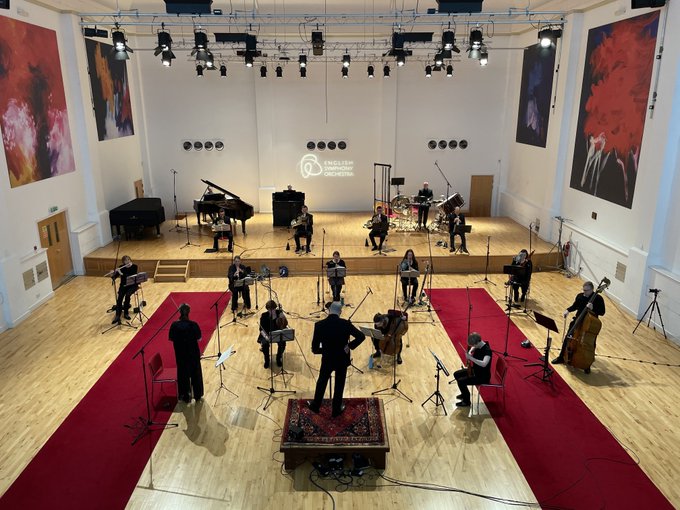
Members of the English Symphony Orchestra / Kenneth Woods

Mahler arr. Simon Symphony no.9 in D major (1908-10, arr. 2011)

Wyastone Concert Hall, Monmouth
Recorded March 23-25 2021 for online broadcast, premieres 7 July 2021

Written by Richard Whitehouse

The chamber reductions of orchestral works, as pioneered by the Society for Private Musical Performances founded by Schoenberg after the First World War, has gained renewed impetus these past 15 months given the unfeasibility of full-scale performances. Few can have been as ambitious as Mahler’s Ninth Symphony – arranged by pianist and conductor Klaus Simon for an ensemble of single strings and woodwind (with doublings), two horns, trumpet, percussion (one player), piano and harmonium; its textural and motivic content thereby remaining intact.

This is evident in the opening Andante, arguably Mahler’s most perfectly realized symphonic movement, whose formal trajectory of interlocking arcs is made explicit so that its long-term expressive intensification and release become no less tangible. To this end, the roles of piano and harmonium are much more than the mere filling-out of texture – respectively articulating and reinforcing the harmonic profile through to a coda which more than usually clinches the overall tonal journey with a serenity the more poignant for its remaining, as yet, unfulfilled.

The ensuing Ländler was no less lucid in terms of its unfolding, Kenneth Woods resisting any temptation to play up the emotional contrasts across a movement whose deceptive blitheness of spirit is only gradually undermined (and a quality this music shares, doubtless unbeknown to the younger composer, with Ravel’s La valse). Equally significant is the way that Simon’s arrangement discreetly emphasizes disparities of timbre and texture, on the way to a closing section where the music only too audibly fragments into a bemused parody of how it began.

More questionable is the Rondo-Burleske – Woods’s underlying tempo for the outer sections, while enabling the music’s contrapuntal intricacy to emerge unimpeded, feeling too dogged to convey its frequently assaultive manner to the degree that the composer surely intended. This is less of an issue in a trio section whose aching regret was potently conveyed, with the stealthy regaining of tension no less in evidence. Animated and accurate, this final section again lacked that seething energy which propels the movement towards its anguished close.

No such questions affect the final Adagio – only equivocally conclusive now that the Tenth Symphony has all but been accepted into the Mahler canon, yet remaining a test of all-round cohesion such as this account rendered with unwavering conviction. Having thus gauged the balance between its alternate paragraphs, Woods assuredly controlled the winding down of tension towards a coda of inward rapture despite its sparseness of gesture – while affording the speculative dialogue between solo strings the necessary temporal and emotional space.

It hardly needs to be said that the playing of this 15-strong ensemble drawn from the English Symphony Orchestra was consistently attuned to the spirit of this music – as, too, is Simon’s methodical and apposite arrangement. Whether such reductions can continue to be relevant in the (presumed) aftermath of the pandemic, it would be a pity were these not to enjoy revival in their own right: revival, moreover, out of aesthetic rather than just didactic considerations, as this impressively conceived and executed rendition demonstrated to often moving effect.

You can watch the concert on the English Symphony Orchestra website here

Further information on Klaus Simon is here, while for further information on the Music from Wyastone series, you can click here. ‘Fiddles, Forests and Fowl Fables’ is now available from the English Symphony Orchestra Website.