On Record – Soloists of the English Symphony Orchestra / Kenneth Woods: Mahler arr. Simon: Symphony no.9 (ESO Records)

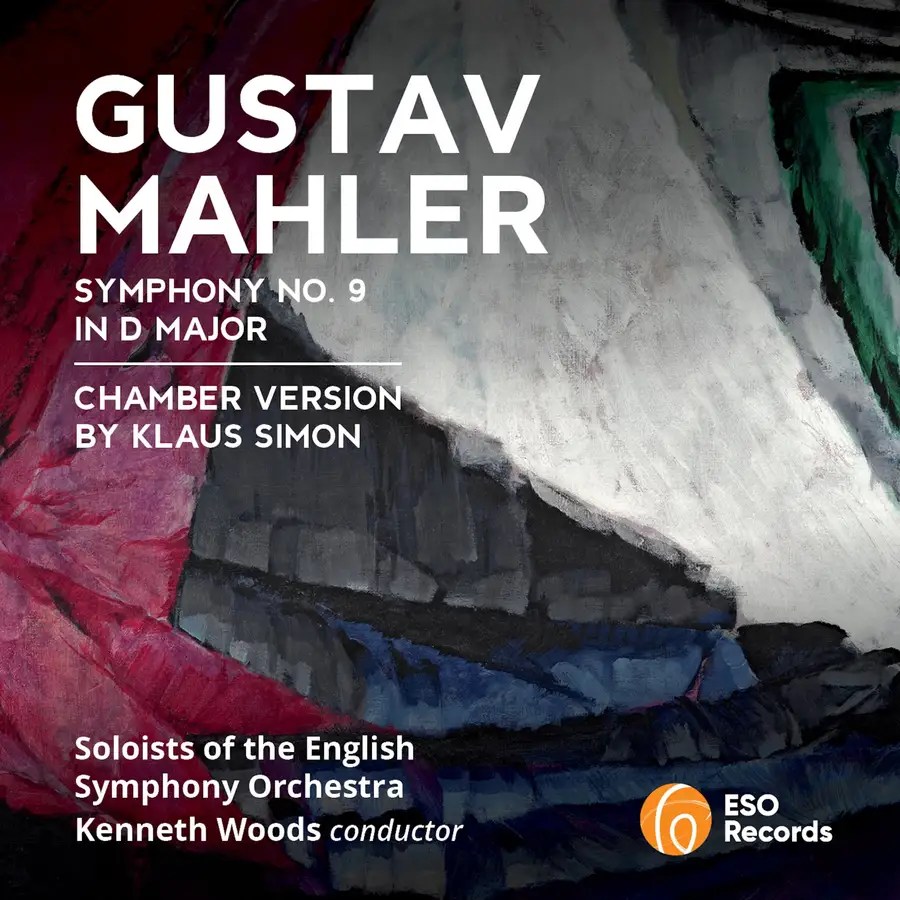
Soloists of the English Symphony Orchestra / Kenneth Woods

Mahler arr. Simon Symphony no.9 in D major (1908-09, arr. 2007)

ESO Records ESO2602 [76’52”]
Producer Phil Rowlands Engineer Tim Burton

Recorded 23-25 March 2021 at Wyastone Concert Hall, Wyastone Leys, Monmouth

Reviewed by Richard Whitehouse

What’s the story?

The English Symphony Orchestra continues releases for its ESO Records label with Mahler’s Ninth Symphony, arranged by Klaus Simon and thereby continuing a lineage pioneered by the Society for Private Musical Performances established by Schoenberg after the First World War.

What’s the music like?

Schoenberg tackled Mahler’s Das Lied von der Erde and Erwin Stein his Fourth Symphony, but neither is as ambitious as that of the Ninth arranged here for single strings and woodwind (these latter with doublings), two horns, trumpet, one percussionist, piano and harmonium.

Whatever the logistical disparity between original and arrangement, the music’s textural and motivic content remain intact. This is evident from the opening Andante comodo, its formal trajectory of interlocking arcs made explicit so its long-term expressive intensification feels no less tangible. To this end, piano or harmonium contribute much more than merely filling-out the texture; articulating and reinforcing its harmonic profile through to a coda clinching the overall tonal journey with a serenity more poignant for its remaining, as yet, unfulfilled.

The ensuing Ländler emerges no less lucidly overall, with Kenneth Woods (rightly) resisting any temptation to point up emotional contrast across a movement whose deceptive blitheness of spirit is only gradually undermined. Equally notable is the way that Simon has emphasized contrasts in timbre and texture, with the music ultimately fragmenting into a bemused parody of how it began. More questionable is the Rondo-Burleske where Woods’s underlying tempo in its outer sections, while enabling the music’s contrapuntal intricacy to emerge unimpeded, is a little too dogged to convey the assaultive quality Mahler surely intended. This is less of an issue in the central trio whose aching regret is potently captured; the stealthy regaining of tension no less evident before the final section propels this movement to its anguished close.

No such issues affect the final Adagio – its equivocation only relative now that the complete Tenth Symphony has been accepted into the Mahler canon, yet remaining a test of all-round cohesion such as this account renders with unwavering conviction. Having finely gauged the balance between its starkly contrasted episodes, Woods assuredly controls the winding down of tension towards a coda of inward rapture despite its sparseness of gesture, while affording that speculative closing interplay of solo strings the necessary temporal and emotional space.

Does it all work?

Yes it does, not least through persuading the listener that such a reduction is worthwhile not merely out of contingency alone. It should hardly need to be added the playing from this 19-strong ensemble, drawn from the ranks of the English Symphony Orchestra, is consistently attuned to the essence of this music, while also making the strongest case possible for what is a methodical while empathetic arrangement. No-one having heard it is likely to feel short-changed as to the relevance of Mahler Nine on its own terms or to the symphonic literature.

Is it recommended?

Yes it is, an impressively conceived and executed reading which demonstrates the efficacy of this arrangement to moving effect. Note too that Woods’ performance of the Ninth Symphony at this year’s Colorado MahlerFest will be available from its own in-house label in due course.

Listen / Buy

You can listen to excerpts and explore purchase options at the Presto Music website. Click on the names to read more about the English Symphony Orchestra, conductor Kenneth Woods and arranger / composer Klaus Simon

Published post no.2,891 – Monday 18 May 2026
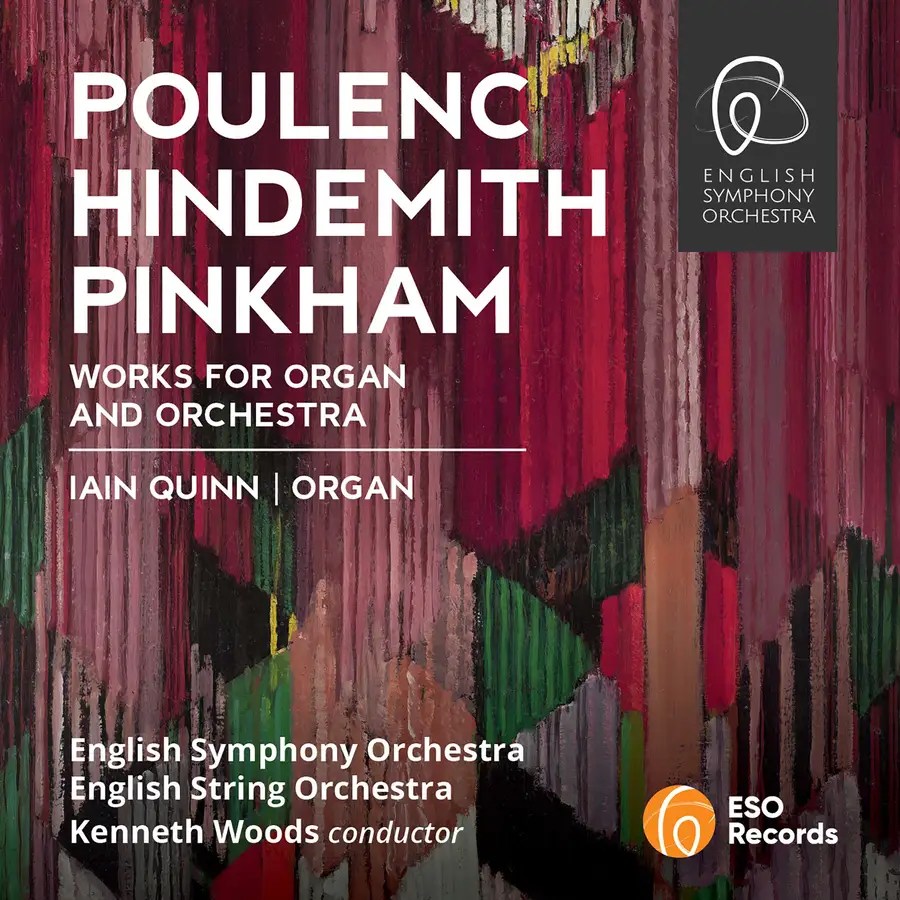
On Record – Iain Quinn, English Symphony & String Orchestras / Kenneth Woods: Works for Organ and Orchestra (ESO Records)

Iain Quinn (organ), English Symphony Orchestra (Hindemith), English String Orchestra / Kenneth Woods

Hindemith Kammermusik no.7 Op.46/2 (1927)
Pinkham Sonatas for Organ and Strings: no.1 (1966); no.2 (1966); no.3 (1987)
Poulenc Concerto in G minor for Organ, Strings and Timpani FP93 (1934-8)

ESO Records ESO2601 [62’44”]
Producer Phil Rowlands Engineer James Walsh

Recorded 1-3 April 2025 at Merton College Chapel, Oxford

Reviewed by Richard Whitehouse

What’s the story?

The English Symphony Orchestra (and its ‘String Orchestra’ incarnation) continues releases on its ESO Records label with a collection of works for organ and orchestra featuring the industrious Iain Quinn, and which includes the first recordings of two organ sonatas by Daniel Pinkham.

What’s the music like?

Much the most often heard organ concerto (as opposed to organ symphony), that by Poulenc never fails to entertain and provoke: a judicious synthesis of musical past and present, high- and low-art, the serious and skittish – all given focus by its composer’s tendentious sense of style. It certainly sounds cohesive on this persuasive recording, Quinn alive to those reckless expressive contrasts and Kenneth Woods shaping its seven continuous sections into a logical yet purposeful whole. The relatively lengthy third section emerges as a ‘slow movement’ of encroaching pathos, and only the sixth disappoints with its ‘music-hall’ aspect rather muted. What is never in doubt is the seriousness of Poulenc’s response to tragic circumstances and his aspiring towards a transcendence that is cursorily denied by those fateful final gestures.

Interestingly, the seventh and final of Hindemith’s Kammermusik itself finds its composer at something of an aesthetic crossroads as regards that trenchant objectivity of the music from his early maturity then the greater emotional range of what followed. Certainly, its opening movement has a vigour but also self-containment duly leavened in the slow movement with its eloquent enfolding of the soloist into the orchestral texture; the finale fusing elements of the preceding on route to a peroration whose expressive force is a sure marker for the future.

Interest naturally alights on music by Daniel Pinkham (1923-2006), the American composer and organist who, based largely in Boston, wrote extensively in most genres while being best known for his choral and organ music. The three works heard here are ‘Church Sonatas’ akin to those from the Baroque and Classical eras, notably the 17 such pieces Mozart wrote in the 1770s. While the First Sonata is an appealing Andante, the Second Sonata contrasts its more inward Andante with a capering Allegro; the Third Sonata duly extended to four movements with its ingratiating Allegro and animated final Vivace framing a quizzical Allegretto and an Andante whose wistful poignancy makes it the highlight from among these pieces. Music for which Quinn evidently feels real affinity, rendered here with the necessary poise and finesse.

Does it all work?

Almost always. Among the most inclusive of present-day organists in terms of his repertoire, Quinn is an assured exponent throughout while receiving steadfast support from Woods and the ESO. Sound does full justice to the Dobson Organ of Merton College Chapel, even if the reverberant acoustic is not ideally suited to the Hindemith as this affects the music’s textural pungency or its overall assertiveness. Even so, both this and the Poulenc can hold their own with earlier recordings, while that of the Pinkham should prove difficult to surpass in future.

Is it recommended?

Indeed so. The booklet features detailed notes about each work by Guy Rickards, along with pertinent observations about this organ in the context of those ‘Neoclassic Instruments’ built in quantity, most notably North America, following the Second World War. Fascinating stuff!

Listen / Buy

You can listen to excerpts and explore purchase options at the Presto Music website. Click on the names to read more about organist Iain Quinn, conductor Kenneth Woods, the English String / Symphony Orchestra and composer Daniel Pinkham

Published post no.2,890 – Sunday 17 May 2026

Talking Heads: Doing It Their Way – Kenneth Woods, ESO Records and the Future

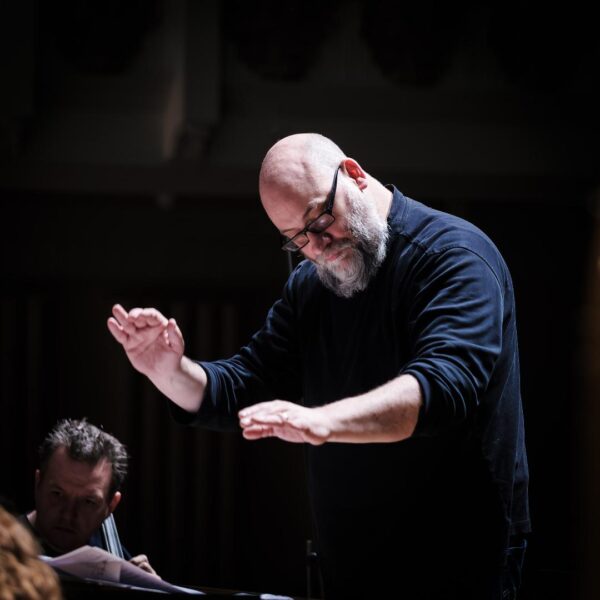
interview by Richard Whitehouse Picture (c) Julie Andrews

You do not move forward by standing still. That is evidently the maxim of the English Symphony Orchestra, whose first release on its new in-house label has just been issued. Apropos of this and other matters, Arcana spoke recently to Kenneth Woods, the principal conductor and artistic director of the ESO, about his plans for this audacious undertaking.

It made sense to begin with the motivation behind the establishing of ESO Records. ‘‘It’s something I’ve wanted to do for a long time. Being able to release whatever we want, and whenever we want, to is hugely empowering for us as an orchestra. It gives us a chance to align our concert work with our online presence and recording programme more strategically’’.

As to whether these releases will be mainly studio or live recordings, ‘‘It’ll be a combination of both. I think that over the course of the next couple of years, listeners will start to discern a number of threads within the ESO Records portfolio. Our first release is an Elgar Festival disc with Elgar’s First Symphony and his concert overture In the South. This is a great way for us to spread the word about the festival internationally and also to share the exceptional quality of Elgar Festival events. And, with the festival doing so many new or lesser-known works, we can share that music with a world-wide audience.

‘‘As a result of the COVID pandemic, we’ve an enormous amount of material ‘in the can’ that we recorded for ESO Digital (our online video portal). ESO Records gives us a chance to share that body of work, also to highlight and complement our future concerts. For instance, we’ll be releasing our one-per-part version of Mahler’s Ninth Symphony to coincide with a run of performances in December. And there are studio projects such as the Sibelius cycle which have continued as we tie-in the recording of its future instalments to public concerts’’.

Woods is keen to point out that ESO Digital release will complement the orchestra’s ongoing schedule of releases for other labels. ‘‘Since we released the first disc of my tenure in 2015, we’ve worked with Nimbus, Lyrita, Signum, Avie, Toccata and Somm among others. While I hope that many of those partnerships will continue, the economic climate for labels is very difficult. They’ve a lot of fixed costs and declining revenue streams which means that, for a group like us, finding release slots and agreeing repertoire or projects has become more complicated. Something like the Sibelius cycle which, while it is very important to us as an orchestra, is not the kind of repertoire many labels do anymore.

‘‘One can also be hampered through labels having other versions of the same repertoire in the pipeline or in their back catalogue. That said, I’d contend the world does need recordings of pieces which emerge out of shared sympathy and enthusiasm for the music among players, conductor and production team. There’s always more to be said about the greatest music, and if we feel we’ve something meaningful to contribute, then we’re going to say it’’.

Given the varying economic and logistical factors, ESO Records might not always be issued both as CDs and Downloads. ‘‘This will vary according to the release. It makes to put the Elgar Festival Live stuff makes out on CD because they make a great souvenir for attendees. But with most projects today, physical sales are so small it isn’t worth the cost or complexity of maintaining an inventory and shipping it all over the world. Moreover, the argument used to be that CDs sounded better, but the quality now at 24-bit and 96-kHz sampling contains between three and ten times as much detail and information. We want our listeners to hear our work in the best possible quality, and these days that means streaming or hi-res downloads’’.

With this in mind, listeners can look forward to no mean diversity in terms of future issues. ‘‘I mentioned we were looking to create coherent and ongoing threads among our releases. Elgar Festival Live has several more releases ready and we’ll be recording our performances at this year’s and all future festivals. The orchestra’s long-term commitment to contemporary music will be a big part of our future work, and I expect this to feature many of the amazing composers that listeners have come to associate with ESO such as Philip Sawyers, Adrian Williams, Emily Doolittle, David Matthews and Steve Elcock. We’re also keen to draw on the ESO’s extensive archive of performances by composers such as Ireland, McCabe, Maw, Simpson and Arnold, along with performances conducted by the likes of Michael Tippett and Yehudi Menuhin, with a wider public.”

‘‘The Sibelius and Mahler projects are indicative of our desire to put our stamp on so-called standard repertoire or, as I prefer to call it, the greatest music ever written. One of the best things about streaming is that not every release needs to be a 70-minute album. Archival recordings might well come out as singles or EPs to align with composer anniversaries or birthdays, historic occasions and upcoming concerts – so there’ll be releases of Beethoven, Mozart, Brahms, Strauss, Bartók and Shostakovich. I’m also very proud of our track record of championing historically suppressed music, so listeners can expect further issues of Gál, Schulhoff, Kapralova, Krenek and Weinberg.”

‘‘Finally, ESO Records will give us greater freedom to develop collaborative projects with artistic partners including composers, soloists and directors. We’ve just recorded a fantastic disc of organ concertos by Poulenc, Hindemith and Daniel Pinkham with organist Iain Quinn for release next year, and I’m hopeful there’ll be many opportunities in the future to work collaboratively so as to bring worthwhile music to the public’s attention’’.

Much to look forward to, then, from a label whose artists have never shied away in pushing the envelope when it comes to imaginative programming and innovative presentation. Qualities, indeed, that will no doubt prove synonymous with whatever releases emerge from the ever-enterprising English Symphony Orchestra.

You can read Richard’s review of the first instalment in the English Symphony Orchestra’s Sibelius cycle on Arcana, with the Sixth and Seventh Symphonies and Tapiola

Published post no.2,623 – Monday 10 August 2025

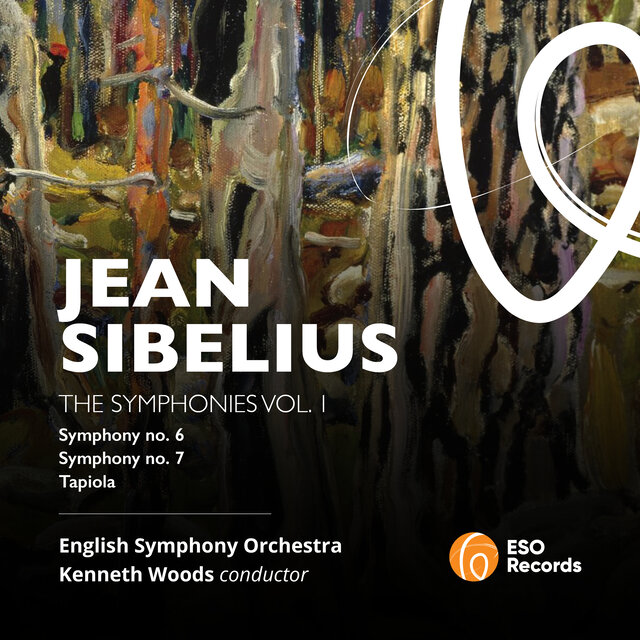
On Record – English Symphony Orchestra / Kenneth Woods – Sibelius: Symphonies 6 & 7, Tapiola (ESO Records)

Jean Sibelius
Symphony no.6 in D minor Op. 104 (1918-23)
Symphony no.7 in C major Op. 105 (1923-4)
Tapiola, Op, 112 (1926)

English Symphony Orchestra / Kenneth Woods

ESO Records ESO2502 [67’16”]
Producers Phil Rowlands, Michael Young Engineer Tim Burton

Recorded 1-2 March 2022 (Symphony no.6 & Tapiola); 2 May 2023 (Symphony no.7) at Wyastone Concert Hall, Monmouth

Reviewed by Richard Whitehouse

What’s the story?

Good to find the English Symphony Orchestra issuing the follow-up release on its own label (after Elgar’s First Symphony and In the South), launching an ambitious project to record all seven symphonies and Tapiola by Sibelius prior to the 70th anniversary of his death in 2027.

What are the performances like?

Only if the Sixth Symphony is considered neo-classical does it feel elusive, rather than a deft reformulation of Classical precepts as here. Hence the first movement unfolds as a seamless evolution whose emotional contrasts are incidental – Kenneth Woods ensuring its purposeful course complements the circling repetitions of the following intermezzo, with its speculative variations on those almost casual opening gestures. Ideally paced, the scherzo projects a more incisive tone which the finale then pursues in a refracted sonata design that gains intensity up to its climactic mid-point. Tension drops momentarily here, quickly restored for a disarming reprise of its opening and coda whose evanescence is well conveyed; a reminder that Sibelius Six is as much about the eschewal of beginnings and endings in its seeking a new coherence.

A decisive factor in the Seventh Symphony is how its overall trajectory is sensed – the ending implicit within the beginning, as Sibelius fuses form and content with an inevitability always evident here. After an expectant if not unduly tense introduction, Woods builds the first main section with unforced eloquence to a first statement of the trombone chorale that provides the formal backbone. His transition into the ‘scherzo’ is less abrupt than many, picking up energy as the chorale’s re-emergence generates requisite momentum to sustain a relatively extended ‘intermezzo’. If his approach to the chorale’s last appearance is a little restrained, the latter’s intensity carries over into a searing string threnody that subsides into pensive uncertainty; the music gathering itself for a magisterial crescendo which does not so much end as cease to be.

Tapiola was Sibelius’s last completed major work, and one whose prefatory quatrain implies an elemental aspect rendered here through the almost total absence of transition in this music of incessant evolution. A quality to the fore in a perceptive reading where Woods secures just the right balance between formal unity and expressive diversity across its underlying course. Occasionally there seems a marginal lack of that ‘otherness’ such as endows this music with its uniquely disquieting aura, but steadily accumulating momentum is rarely in doubt on the approach to the seething climax, or a string threnody whose anguish bestows only the most tenuous of benedictions. A reminder, also, that not the least reason Sibelius may have failed to realize an ‘Eighth Symphony’ was because he had already done so with the present work.

Does it all work?

Pretty much throughout. Whether or not the cycle unfolds consistently in reverse order (with a coupling of the Fourth and Fifth Symphonies having already been announced), this opening instalment is the more pertinent for focussing on Sibelius’s last years of sustained creativity.

Is it recommended?

Indeed. The ESO is heard to advantage in the spacious ambience of Wyastone Hall, and there are detailed booklet notes by Guy Rickards. Make no mistake, these are deeply thoughtful and superbly realized performances which launch the ESO’s Sibelius cycle in impressive fashion.

Listen / Buy

You can read more about this release and explore purchase options at the Ulysees Arts website. Click on the names to read more about the English Symphony Orchestra and conductor Kenneth Woods, and for the Ernest Bloch Society

Published post no.2,622 – Sunday 10 August 2025

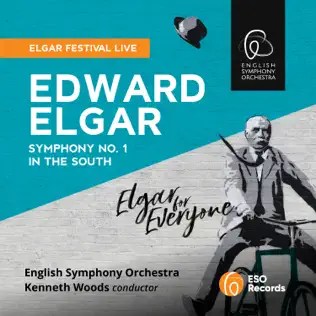
On Record – English Symphony Orchestra / Kenneth Woods: Elgar Festival Live – Symphony no.1 & In The South (ESO Records)

Elgar
Symphony no.1 in A flat major Op.55 (1907-08)
In the South (Alassio) Op.50 (1903-04)

English Symphony Orchestra / Kenneth Woods

ESO Records ESO2501 (80’10″]
Producer and Engineer Tim Burton

Live performances at Worcester Cathedral on 4 June 2022 (In The South) and 3 June 2023 (Symphony)

Reviewed by Richard Whitehouse

What’s the story?

There could hardly been a more fitting release to launch the English Symphony Orchestra’s own label than these performances drawn from past editions of the Elgar Festival, with both of them a reminder of the ESO’s formidable prowess over the range of symphonic writing.

What are the performances like?

The First Symphony may not have the usual number of strings to complement its triple wind, but due to the resonance of Worcester Cathedral this is not evident as regards internal balance. Not least in an opening movement whose motto-theme is never indulgent, setting the tone for an Allegro where expressive variety goes hand in hand with formal focus. Especially fine is a hushed transition into the reprise, then a coda that distils the equivocal mood as this subsides into ruminative calm. Woods is mindful to invest scherzo and trio with consistency of pulse, so if the former feels reined in on return, the latter has an ideal poise and wistfulness. Nor is the transition other than indicative of the Adagio’s profundity, Woods negotiating its soulful main theme and wistful episodes with unerring rightness through to the ineffable closing bars.

If the finale has any marginal falling-off of inspiration, it is not apparent here. Sombre if shot through with expectancy, its introduction launches an Allegro whose alternating incisiveness and suavity holds good over an impulsive development, then a transformation of the codetta whose pathos intensifies for an apotheosis where the motto-theme carries all before it. Not that the closing pages are bombastic or grandiloquent in import – rather, they set the seal on a work whose affirmation is made the greater for its having been so purposefully attained.

As for In the South, the main issue is in setting a tempo flexible enough to accommodate this concert overture’s extended sonata design without it becoming episodic. Here a surging main theme, its speculative transition and suave second theme emerge seamlessly – the underlying tension carried into a development whose impulsiveness is maintained across the intervening first episode. Amply evoking the grandeur of ‘empires past’, this is astutely handled such that its implacability eschews bathos. If the second ‘canto populare’ episode is just a little reticent, its expressive raptness – and Carl Hill’s eloquent playing of its indelible viola melody – more than compensates. Nor is there any loss of continuity during the reprise, Woods’s building of momentum near the start of the coda ensuring an irresistible yet never overbearing peroration.

Does it all work?

Almost always. ESO concerts at the Elgar Festival have yielded numerous performances of note, with In the South among the finest yet in vindicating a work that can all too easily fall victim to its seeming indulgencies. Nor is that of the First Symphony far behind in revealing the formal intricacy and expressive variety of music as personal as is any of this composer’s major works. Anyone who may have harboured doubts about either piece is likely to be won over, confirming an empathy as augers well for the Second Symphony at this year’s festival.

Is it recommended?

Absolutely. These readings are far more than mementos of their concerts, this being ‘Volume 1’ suggests that further performances from the Elgar Festival will be made available. Note too the first instalment of a Sibelius cycle is downloadable as the second release on ESO Records.

Listen / Buy

You can read more about this release and explore purchase options at the ESO website Click to read more about the English Symphony Orchestra, conductor Kenneth Woods and the Elgar Festival 2025

Published post no.2,536 – Sunday 18 May 2025