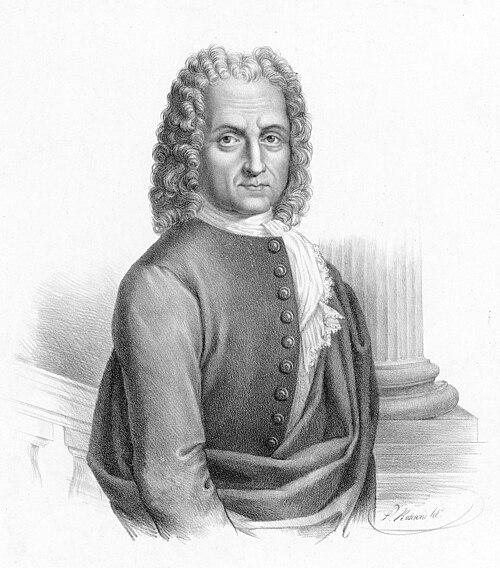
by Ben Hogwood. By Vincenzo Roscioni, from Gallica Digital Library courtesy of Wikipedia
On this day in 1680, the composer Benedetto Marcello was born. While not the best known composer of the Marcello family – Alessandro is in wide circulation for his Oboe Concerto in particular – Benedetto is more than notable for some of the earliest published cello sonatas. You can enjoy these below, in a recording made for Brilliant Classics by cellist Renato Criscuolo and harpsicordist Aldo Criscuolo:
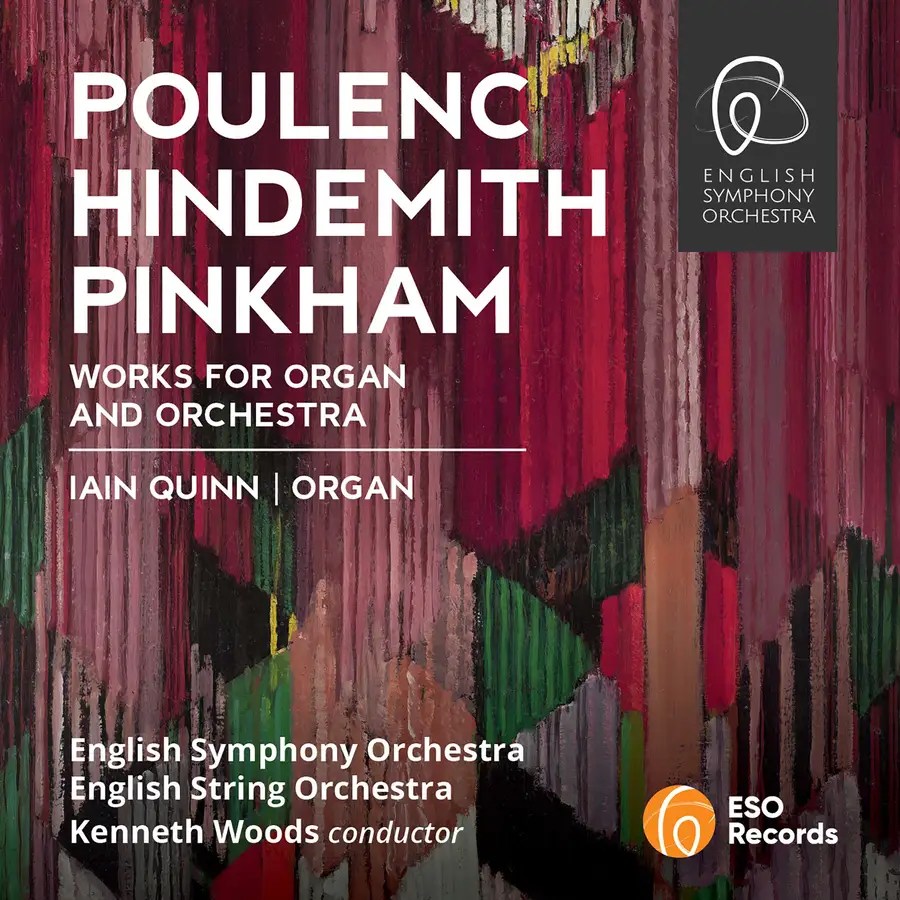
Iain Quinn (organ), English Symphony Orchestra (Hindemith), English String Orchestra / Kenneth Woods
Hindemith Kammermusik no.7 Op.46/2 (1927) Pinkham Sonatas for Organ and Strings: no.1 (1966); no.2 (1966); no.3 (1987) Poulenc Concerto in G minor for Organ, Strings and Timpani FP93 (1934-8)
ESO Records ESO2601 [62’44”] Producer Phil Rowlands Engineer James Walsh
Recorded 1-3 April 2025 at Merton College Chapel, Oxford
Reviewed by Richard Whitehouse
What’s the story?
The English Symphony Orchestra (and its ‘String Orchestra’ incarnation) continues releases on its ESO Records label with a collection of works for organ and orchestra featuring the industrious Iain Quinn, and which includes the first recordings of two organ sonatas by Daniel Pinkham.
What’s the music like?
Much the most often heard organ concerto (as opposed to organ symphony), that by Poulenc never fails to entertain and provoke: a judicious synthesis of musical past and present, high- and low-art, the serious and skittish – all given focus by its composer’s tendentious sense of style. It certainly sounds cohesive on this persuasive recording, Quinn alive to those reckless expressive contrasts and Kenneth Woods shaping its seven continuous sections into a logical yet purposeful whole. The relatively lengthy third section emerges as a ‘slow movement’ of encroaching pathos, and only the sixth disappoints with its ‘music-hall’ aspect rather muted. What is never in doubt is the seriousness of Poulenc’s response to tragic circumstances and his aspiring towards a transcendence that is cursorily denied by those fateful final gestures.
Interestingly, the seventh and final of Hindemith’s Kammermusik itself finds its composer at something of an aesthetic crossroads as regards that trenchant objectivity of the music from his early maturity then the greater emotional range of what followed. Certainly, its opening movement has a vigour but also self-containment duly leavened in the slow movement with its eloquent enfolding of the soloist into the orchestral texture; the finale fusing elements of the preceding on route to a peroration whose expressive force is a sure marker for the future.
Interest naturally alights on music by Daniel Pinkham (1923-2006), the American composer and organist who, based largely in Boston, wrote extensively in most genres while being best known for his choral and organ music. The three works heard here are ‘Church Sonatas’ akin to those from the Baroque and Classical eras, notably the 17 such pieces Mozart wrote in the 1770s. While the First Sonata is an appealing Andante, the Second Sonata contrasts its more inward Andante with a capering Allegro; the Third Sonata duly extended to four movements with its ingratiating Allegro and animated final Vivace framing a quizzical Allegretto and an Andante whose wistful poignancy makes it the highlight from among these pieces. Music for which Quinn evidently feels real affinity, rendered here with the necessary poise and finesse.
Does it all work?
Almost always. Among the most inclusive of present-day organists in terms of his repertoire, Quinn is an assured exponent throughout while receiving steadfast support from Woods and the ESO. Sound does full justice to the Dobson Organ of Merton College Chapel, even if the reverberant acoustic is not ideally suited to the Hindemith as this affects the music’s textural pungency or its overall assertiveness. Even so, both this and the Poulenc can hold their own with earlier recordings, while that of the Pinkham should prove difficult to surpass in future.
Is it recommended?
Indeed so. The booklet features detailed notes about each work by Guy Rickards, along with pertinent observations about this organ in the context of those ‘Neoclassic Instruments’ built in quantity, most notably North America, following the Second World War. Fascinating stuff!
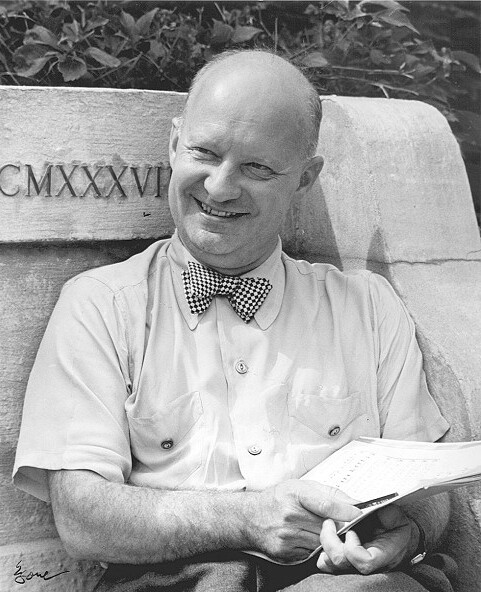
by Ben Hogwood. Image of the composer in 1945 by Foto von der Fondation Hindemith, Blonay, courtesy of Wikipedia
On this day, 80 years ago, the premiere of a substantial work by Paul Hindemith took place in the New York City Center. When Lilacs Last in the Dooryard Bloom’d: A Requiem for those we love (An American Requiem) is a setting of a large poem by Walt Whitman, and was commissioned by the conductor Robert Shaw and the Robert Shaw Chorale cin the wake of the death of Franklin D. Roosevelt in 1945.
Hindemith responded with a setting for alto, baritone, choir and orchestra, and Shaw conducted the premiere. Here is a more recent recording that he made for the Telarc label in 1987, which helped promote the cause of a seldom-heard work that is in fact amongst Hindemith’s finest works:
Benjamin Grosvenor (piano), City of Birmingham Symphony Orchestra / Jac van Steen
Hindemith Concert Music for Strings and Brass Op.50 (1930) Ravel Piano Concerto in G major (1929-31) Honegger Pacific 231 (1923) Stravinsky Petruska (1911, rev. 1947)
Symphony Hall, Birmingham Wednesday 5 May 2026
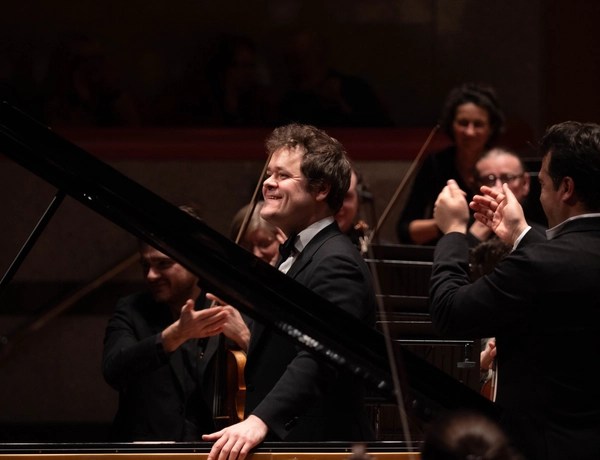
Reviewed by Richard Whitehouse Picture (c) Jonathan Ferro
Tonight’s concert by the City of Birmingham Symphony Orchestra saw the welcome return of Jac van Steen in a programme centred on several of the composers who contributed works to the Boston’s Symphony’s 50th season and what was an auspicious time for Western music.
Concert Music for strings and brass found Hindemith at an early peak of success abroad, as is evident from the ease with which he variously juxtaposes and combines these distinct groups. Formally the work is no less innovative – its initial part eliding first and slow movements as it pivots between densely orchestral or translucently chamber textures on the way towards a cumulatively sustained threnody; whereas its successor elides scherzo and finale as it veers between incisively fugal or plaintively homophonic textures prior to its resolute apotheosis. Music which has a notable advocate in Steen, ensuring this music never sounded congested or rhythmically inflexible while securing an impressive response from the CBSO musicians.
Although the Hindemith has latterly regained prominence, Ravel’s Piano Concerto has only gained further hearings across time. No mean exponent, Benjamin Grosvenor was not at his best in this account – the initial Allegramente finding rapport between soloist and orchestra less than unanimous, with its elements of jazz sounding a touch forced. The central Adagio opened with its solo passage lacking subtlety, though the build-up towards its close brought a frisson of anticipation, while the final Presto had a fluency and energy even more evident in that from Prokofiev’s Seventh Piano Sonata – Grosvenor on something like his best form.
A pity that no-one ever revives the [First] Symphony which Honegger wrote for that Boston anniversary, but his Pacific 231 has retained something of its early notoriety and Steen made the most of its implacable build-up from stasis, via a remorselessly accruing velocity then on to its merciless apotheosis. Certain members of the audience might first have encountered it in Louis Frémaux’s recording with this orchestra from 1973; the present performance being no less attentive to the music’s essentially human rendering of a technological phenomenon.
The scene was duly set for Stravinsky’s Petrushka, heard in its 1947 orchestration but with no lack of finesse on Steen’s part such as opened-out the music’s textures yet without diluting its emotional immediacy. There was no lack of evocation in the opening tableau’s depiction of St. Petersburg’s Shrove-Tide Fair, nor with that tantalizing passage when the anti-hero comes to life before a spirited Russian Dance. The central tableaux, focussing on Petrushka then the Moor in their respective cells, found an unerring balance between the music’s whimsical and its all-too-human emotions; heading into the Shrove-Tide Fair at Evening with its set-pieces vividly characterized. Just why Steen dispensed with the final minutes, depicting Petrushka’s death then his ‘resurrection’, is anyone’s guess: the CBSO trumpets were doubtless up for it.
An impressive concert, even so, not least as means for launching the CBSO’s 2026/27 season – details of which can be found elsewhere on Arcana.fm as well as on the orchestra’s website. Given the fitful funding at local and national levels, such ambition can only be commended.
Nelsen Goerner (piano) City of Birmingham Symphony Orchestra / Kazuki Yamada
Hindemith Symphonic Metamorphosis of Themes by Carl Maria von Weber (1943) Rachmaninoff Rhapsody on a Theme of Paganini Op.43 (1934) Bartók Concerto for Orchestra BB123 (1943)
Symphony Hall, Birmingham Thursday 9 April 2026
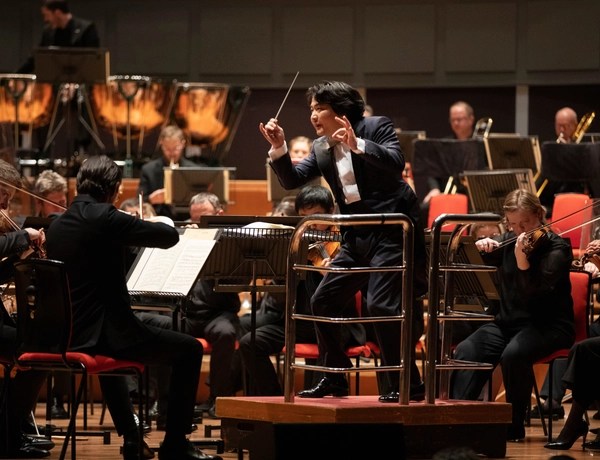
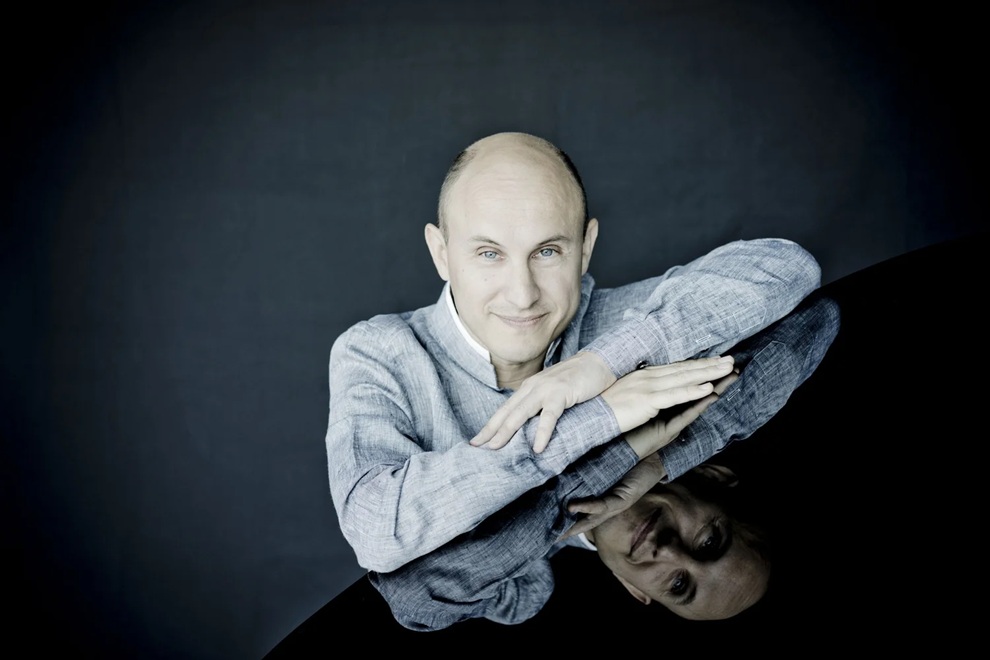
Reviewed by Richard Whitehouse Pictures (c) Andrew Fox (above) and Marco Borggreve (below)
There was a pleasing overall balance to this evening’s concert from the City of Birmingham Symphony Orchestra and its music director Kazuki Yamada: the three works, written within a decade of each other, drawing extensively on earlier composers or, indeed, traditional music.
If not as familiar as it once was (and not least in Birmingham), Symphonic Metamorphosis of Themes by Carl Maria von Weber is always worth revival – not least for finding Hindemith at his most approachable and uninhibited. It was this latter aspect which came over most vividly here – Yamada securing a forceful though never blowzy response in the opening Allegro, then making the most of its ‘Turandot’ Scherzo’s freewheeling play on Weber’s already recalcitrant overture to which the CBSO responded in like fashion. Easily to underestimate, the Andantino emerged as music of no mean pathos as well as a foil to the final March’s breezy treatment of incisive then jocular melodies, with a close of real panache. Did a smile on the face of certain older punters indicate the latter tune’s audible resemblance to a once popular wartime song?
Rhapsody on a Theme of Paganini has become increasingly familiar in recent decades, as has Rachmaninoff’s music as a whole, and tonight’s performance amply underlined why. He may not have partnered the CBSO for several years, but Nelson Goerner secured a rapport from the outset – the initial 15 variations pivoting between impetuosity and inwardness with dextrous assurance, then those three which constitute a ‘slow movement’ rendered with a soulfulness and, in the evergreen Variation XVIII, a deftness such as banished any hint of sentimentality. The closing six variations duly unfolded as a ‘finale’ capricious and scintillating, Goerner at one with the orchestra in rounding off this work with a deathless payoff. Impeccably played if emotionally aloof, Brahms’ Intermezzo in A major (Op. 118/2) was the less than apposite encore.
The CBSO has an association with Bartók’s Concerto for Orchestra itself going back decades with the present account notable, above all, for its sheer virtuosity of playing. Interpretatively things was not quite this consistent – the expressive contrasts in its Introduzione just a little inflexibly drawn so that the movement felt no more than the sum of its admittedly impressive parts, with the succession of duets in Presentando le coppie a little too detached from each other for this to become the genial though equally vulnerable scherzando it ideally should be.
Conversely, the Elegia had an ideal balance between wrenching anguish and that unworldly ‘night music’ from which it emerges and into which it ultimately withdraws, while the quirky interplay of styles and parodies – whether Léhar or Shostakovich seems beside the point – in the Intermezzo interrotto never sounded at all contrived. Neither did the Finale disappoint as it navigated between pulsating energy and brazen high jinx, on route to a coda of hushed anticipation capped by a peroration which set the seal on this work in an exhilarating QED.
Overall, a fine showing for the CBSO and Yamada in the wake of their latest European tour. The orchestra returns next week in an enterprising programme of Respighi and Puccini, the latter represented by syntheses from two of his operas devised by the conductor Carlo Rizzi.
To read more about the CBSO’s 2025/26 season, visit the CBSO website. Click on the names for more on their principal conductor Kazuki Yamada and pianist Nelson Goerner