On Record – Jeremy Huw Williams & Paul Fan: The Blessed Damozel: Songs of Arnold Bax (EM Records)

Jeremy Huw Williams (baritone); Paula Fan (piano) with Theodore Buchholz (cello, Folk Tale)

Sir Arnold Bax
The Blessed Damozel (1906); A Milking Sian; The White Peace (both 1907); Shieling Song (1908); To Eire (1910); Roundel (1914); Parting (1916); Far in a Western Brookland; Folk-Tale; Jack and Jone; When I was One-and-Twenty (all 1918); The Market Girl; Rann of Exile; Rann of Wandering (all 1922); I Heard a Soldier (1924); In the Morning; On the Bridge (both 1926); Watching the Needleboats at San Sabba (1931)

EM Records EMRCD086 [84’55”] English texts included
Producer Jeremy Huw Williams Engineer Wiley Ross

Recorded 11-13 April, 6 May 2022 at Jeffrey Haskell Recording Studio, University of Arizona

Reviewed by Richard Whitehouse

What’s the story?

EM Records continues its coverage of songs by Sir Arnold Bax with a further volume (see also Arcana’s review of the previous volume, From The Hills of Dream by Jeremy Huw Williams and Paula Fan.

What’s the music like?

As is relatively well known, the writing of songs was a preoccupation of Bax earlier on in his composing which had all but ceased by the mid-1920s. Unlike their earlier release, Williams and Fan here focus on songs previously recorded (some of them several times) though it does include a major first recording along with Folk-Tale from the last year of the First World War. Theodore Buchholz does justice to the dramatic climax which emerges out of this latter piece’s sombre rumination, thus making the subtitle ‘Conte populaire’ more than a little tendentious.

That first recording is The Blessed Damozel – not a song or even a scena, but a melodrama or, as Bax described it, ‘‘musical illustration’’ for reciter and piano of the famous poem by Dante Gabriel Rossetti. Melodramas were a frequent occurrence during those early years of the 20th century, though this is its composer’s single example and even that was likely intended as the blueprint for a work with orchestra that failed to materialize. As it stands, the combination of measured yet rarely uneventful speech and piano writing as responds to the text as if ‘caught on the wing’ results in a curiosity well worth hearing. The present account holds the attention and, given the absence of any orchestration, there seems little need for any further recording. Those who are partial to Rossetti should find Debussy’s earlier cantata to be more substantial.

A glance at the listing above confirms the 16 items featured here range widely across the two decades when Bax’s song-writing was in fullest flow. It is not over-much of a generalization to suggest those written up to and including the ‘Great War’ are art-songs in a direct lineage from the composer’s French or German forbears, and those that came afterward are ‘popular’ songs or – as in with Jack and Jone – arrangements of traditional songs written at the behest of specific performers. The (surprisingly?) skittish setting of Thomas Hardy’s On the Bridge was followed with just two songs – Watching the Needleboats at San Sabba forming part of   a James Joyce anthology, masterminded by Arthur Bliss, which failed to benefit this author financially. Orchestral and chamber works were predominant in Bax’s catalogue henceforth.

Does it all work?

It should have done. Those having heard his previous Bax release will know of Jeremy Huw Williams as a devoted Baxian whose occasional misjudgement of expressive nuance is more than compensated for with thoughtfulness and insight. Unfortunately, the highly reverberant sound is inappropriate – to the extent those songs (tracks 5, 13 and 14) whose texts could not be reprinted for copyright reasons are frequently inaudible as recorded. Neither Paula Fan’s forthright pianism nor Theodore Buchholz’s burnished cello playing come through unscathed.

Is it recommended?

It should have been. The booklet is well up to EMR’s customary standards, with its detailed biographical overview by Graham Parlett and notes on each of the songs by Lewis Foreman. Paula Fan’s untimely death, in 2023, should have made this release a more fitting memorial.

Listen / Buy

You can listen to clips from the release at the EM Records website, and purchase options at the Presto Music site. Click on the names to read more about the artists Jeremy Huw Williams, Paula Fan and Theodore Buchholz, and the Sir Arnold Bax Society

Published post no.2,895 – Saturday 21 May 2026
On Record – Berkeley Ensemble: Beauty Veil’d (EM Records)

Berkeley Ensemble [Sophie McQueen, Francesca Barritt (violins), Dan Shilladay (viola), Gemma Wareham (cello)] with Tom Wraith (cello, Dare), Simon Callaghan (piano – Dare, Howell Adagio and Caprice, Matthay)

Dare Phantasy Quintet (1933-4)
Howell Adagio and Caprice (1955); String Quartet in D minor (1933)
Matthay Piano Quartet in C major Op.20 (1882, rev.1905)
McEwan Nugae (1912)

EM Records EMRCD091 [58’13”]
Producer Matthew Bennett Engineer Dave Rowell

Recorded 28-30 August 2024 at St John the Evangelist, Oxford

Reviewed by Richard Whitehouse

What’s the story?

EM Records continues its in-depth exploration of neglected music with these first recordings by proceeding generations of British composers, superbly realized by the Berkeley Ensemble which has made it its mission to revive such works for the enjoyment of present-day listeners.

What’s the music like?

Remembered mainly for miniatures still featuring on Associated Board examinations, Marie Dare (1902-76) wrote several larger chamber works. The (not quite) symmetrical form of her Phantasy Quintet is adeptly handled, and if this piece does not quite maintain the expressive intensity of its initial section, the elaboration of its themes ensures a satisfying overall design. The presence of two cellos yields a burnished eloquence to the musical textures, and interest is sufficiently aroused to make a hearing of her String Quartet in G minor worth considering.

More striking are the two works by Dorothy Howell (1898-1982), the revival of whose music has centred on her orchestral output. Deftly scored for violin and piano, Adagio and Caprice moves between reticence and impulsiveness with a seamless cohesion. If the String Quartet is slightly less well integrated, it is also more questing harmonically with its opening section distilling a keen atmosphere that persists right through to a lively close. A pity Howell never wrote a full-length quartet, but the present pieces deserves their place on recital programmes.

His not uncontroversial reputation as piano pedagogue having overshadowed his legacy as a composer, Tobias Matthay (1958-1945) left a handful of chamber works of which the Piano Quartet prefigures the ‘phantasy’ concept in its single movement of interrelated sections that, between them, outline a formal design whose thematic elements are evolving right up to the resolute close. Worth hearing, but a complete recording of 31 Variations and Derivations on an Original Theme for piano is needed for a fuller reassessment of Matthay’s creative worth.

Ironic that Matthay’s Piano Quartet should have been dedicated to John Blackwood McEwan, whose subsequent condemnation of his teaching led to the former’s departure from the Royal Academy. Subtitled Seven Bagatelles and actually the fifth of his 17 string quartets, Nugae evokes various aspects of that Scottish landscape central to his thinking (notably the Solway Symphony) – its characterful alternation between brooding and animated vignettes making a cohesive sequence whose components would be equally worth hearing as separate encores.

Does it all work?

Pretty much always. There are no overlooked masterpieces here, though the works by Howell and McEwan certainly warrant regular hearings. That these are all premiere recordings makes this release a mandatory purchase for anyone interested in British music of the period and the Berkeley Ensemble, alongside Tom Wraith and Simon Callaghan, do them proud. The sound could hardly be improved on for clarity and definition, while Dan Shilladay’s annotations are informative and not unduly partisan in their making a case for the dissemination of this music.

Is it recommended?

It is indeed. Those who have the Chilingirian Quartet’s three volumes of McEwan’s quartets (Chandos) will welcome acquiring the present piece as a supplement, and one looks forward to further recordings of chamber works by Dare and Howell from these inquiring musicians.

Listen / Buy

You can hear excerpts from the album at the EM Records website, and explore purchase options at the Presto website. Click on the names to read more about the Berkeley Ensemble, Simon Callaghan and Tim Wraith, and composers Marie Dare, Dorothy Howell, Tobias Matthay and John Blackwood McEwan

Published post no.2,801 – Tuesday 17 February 2026

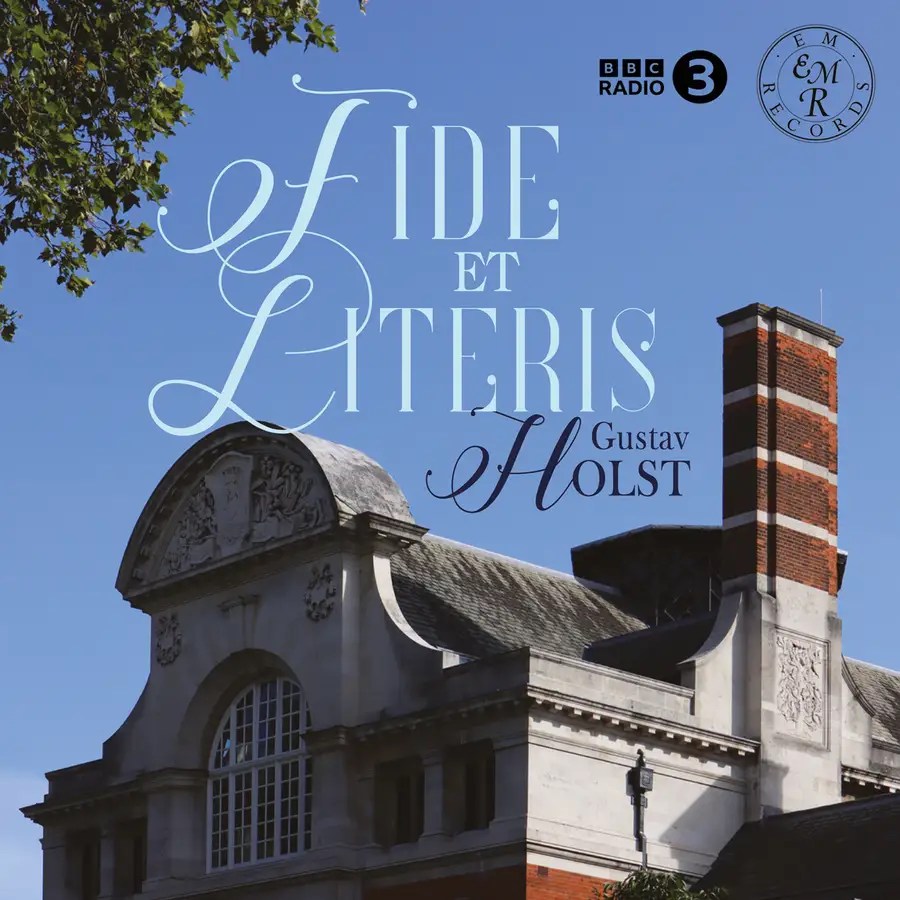
On Record – Em Marshall-Luck, Paulina Voices, BBC Concert Orchestra / Leigh O’Hara: Fide et Literis – Gustav Holst

Holst
St Paul’s Suite H118 (1912-13)
Brook Green Suite H190 (1933)
Gavotte H190a (1933)
Seven Choruses from the Alcestis of Euripides, H146 (1920)
Playground Song H118a (1911)
The Vision of Dame Christian, H101 (1909)

Em Marshall-Luck (reciter), Paulina Voices / Heidi Pegler, BBC Concert Orchestra / Leigh O’Hara

EM Records EMRCD090 [69’48”]
Producer Neil Varley Engineer Christopher Rouse

Recorded 4-5 November 2023 in the Great Hall, St. Paul’s Girls’ School, Brook Green, London

Reviewed by Richard Whitehouse

What’s the story?

EM Records further extends the Holst discography in the 150th anniversary year of his birth (and 90th anniversary year of his death) with this collection of works written at and intended for pupils of St Paul’s Girls’ School, where the composer taught for 29 years until his death.

What’s the music like?

For all his interest in matters spiritual and arcane, Gustav Holst was an eminently practical musician whose educational pieces were tailored to the situation at hand. Not least his Seven Choruses from the Alcestis of Euripides, written for a production of this drama at St Paul’s. Its scoring for unison female voices, three flutes and harp recalls those diaphanous settings in the Third Group of Choral Hymns from the Rig Veda – not least its sixth chorus ‘I have sojourned in the Muse’s Land’ that, in its fusion of yearning with sensuousness, is ideal for such a text as this.

Most substantial here is The Vision of Dame Christian – aka The Masque – written for the play by Frances Gray, who was the first headmistress (then High Mistress) at St Paul’s. The ‘Dame Christian’ in question is Christian Colet, mother of John Colet who had founded the original St Paul’s School 400 years before. Set in 1523, the sequence comprises three choruses with a prelude, interlude and finale – the scoring, for female voices with small orchestra, conveying a pathos devoid of sentimentality which is typical of Holst’s music for this school. Revived at decade-long intervals until 1958, it was heard again in 1973 (and issued privately on LP) then given a full production in 2013, but this first professional recording captures its deftness and eloquence in ample measure. Perhaps future performances would be feasible in other venues?

The two suites for strings long ago took their place within a lineage of compositions for this medium to which British artists have contributed so extensively throughout some 150 years. Certainly, the St Paul’s Suite is a classic of its genre – what with its rumbustious initial Jig, its animated Ostinato, its alternately soulful then playful Intermezzo, or a Finale which revisits Holst’s Second Suite for Military Band by combining traditional tunes The Dargason and Greensleeves in a fantasia ingenious and affecting. The Brook Green Suite is simpler in design – which is not to deny the appeal of its homely Prelude, its wistful Air or its lively Dance. Recorded for the first time is the Gavotte which Holst omitted at the premiere, its brusque charm enhancing the whole when heard in its original context as second movement.

Does it all work?

It does. This project was evidently a labour of love for St Paul’s Girls’ School, whose Paulina Voices duly rise to the challenge of continuing their venerable tradition under the admirable direction of Heidi Pegler, not least in the Playground Song with its ‘Henry Newbolt meets St Trinian’s’ text. The passages of recitation are rendered with clarity and elegance by Em Marshall-Luck (herself a Paulinian), while Leigh O’Hara secures a spirited response from the BBC Concert Orchestra in music whose sheer directness and accessibility are never for a moment naïve or simplistic.

Is it recommended?

It is. The presentation is well up to EMR’s customary standards, with detailed annotations by Em Marshall-Luck and school archivist Howard Bailes. Clearly the Great Hall of St Pauls’ Girls’ School is as ideal for recording as ‘Mr Holst’s Room’ in the Music Wing proved to be for his composing.

Listen & Buy

For further information visit the EM Records website, and for purchase information visit the Presto website. Click on the names for more on conductor Leigh O’Hara, Paulina Voices, the BBC Concert Orchestra and for more on The Holst Society

Published post no.2,382 – Wednesday 4 December 2024

On Record – Roderick Williams, Rupert Marshall-Luck, BBC Concert Orchestra / John Andrews – La Belle Dame (EM Records)

Roderick Williams (baritone) (Holst, O’Neil, Quilter & Scott), Rupert Marshall-Luck (violin, Brian), BBC Concert Orchestra / John Andrews

Brian orch. Marshall-Luck Legend B144 (c1919)
Delius Petite Suite d’Orchestre no.1 RTVI/6 (1889-90)
Holst Ornulf’s Drapa H34 (1898, rev. 1900)
Mackenzie Colomba Op.28 – Prelude (1883)
O’Neill La Belle Dame sans Merci Op.31 (1908)
Quilter orch. anonymous The Faithless Shepherdess Op.12/4 (1908)
Scott The Ballad of Fair Helen of Kirkconnel Op.8 (1900)

EM Records EMRCD085 [61’21’’] English texts included
Producer Neil Varley Engineers Andrew Rushton, Robbie Hayward
Recorded 5-7 January 2023 at Battersea Arts Centre, London

Reviewed by Richard Whitehouse

What’s the story?

EM Records continues its enterprising schedule with this collection of mainly vocal settings from the early twentieth century – heard alongside early orchestral pieces by Mackenzie and Delius, plus a recent orchestration of what is Havergal Brian’s only surviving chamber work.

What’s the music like?

This album’s title is also that of the 1819 poem by John Keats, its tale of ecstasy recollected in despair tangibly conveyed by Norman O’Neill in a setting which surely ranks among his finest concert works before music for theatre productions became his focus. Only marginally less compelling, Cyril Scott’s take on a typically over-elaborate ballad by Walter Scott has a keen sense of atmosphere – not least as rendered by Roderick Williams with an appropriate Lowland burr. Less involving emotionally, Holst’s setting of verse from an early Ibsen play is rather forced in its rhetoric – though the passages of emotional impulsiveness, allied to an acute feeling for orchestral textures, does presage those masterpieces of his maturity. Roger Quilter’s setting of a favourite Elizabethan lyric launches the collection with brusque charm.

Of the orchestral pieces, Delius’s early Première Petite Suite is here heard in full for the first time. Influences are easy to discern – Bizet in its whimsical Marche, Grieg in its winsome Berceuse, Massenet in its vivacious Scherzo then Fauré in its plaintive Duo – but never to the detriment of this music’s appeal, while the final variations on a sternly unison theme with ecclesiastical overtones will keep even seasoned Delians guessing as to its provenance. The likelihood of Alexander Mackenzie’s lyrical drama Colomba being revived is slim, but the Prelude to its first act has an evocative ardency which concludes this album in fine style.

John Andrews has the measure of these contrasting idioms and gets committed playing from the BBC Concert Orchestra. Roderick Williams is on fine form, as is Rupert Marshall-Luck in the Legend by Havergal Brian he himself has orchestrated. Ranging widely in expressive profile, while building considerable fervour during its relatively brief span prior to a calmly eloquent close, it is a stylish adaptation of the violin-and-piano original which has enjoyed increasing exposure this past decade. Marshall-Luck speculates whether Brian intended his own orchestral realization yet, given the composer had evidently written an orchestral piece with this title around 1915, it seems not impossible that the duo version is itself a reduction.

Does it all work?

Yes, in that the whole proves greater than the sum of its parts. Certainly, the works by Scott and O’Neill find these contemporaneous while otherwise very different figures at something near their best, while the Delius makes for an attractive sequence which deserves more than occasional revival. As, too, does the Brian given that comparable shorter concertante pieces by figures such as Saint-Saëns are being taken up by a younger generation of violinists. The spacious sound and extensive annotations are both up to EMR’s customary high standards.

Is it recommended?

Indeed. Hearing the Holst prompts the thought that, with the 150th and 90th anniversaries of his respective birth and death falling this year, now would be the ideal time for revival of his orchestral suite Phantastes – which has seemingly remained unheard since its 1912 premiere.

Listen & Buy

La Belle Dame is due for release on 19 April, but you can hear excerpts and look at purchase options on the EM Records website. For more information on the artists click on the names of conductor John Andrews, baritone Roderick Williams, violinist Rupert Marshall-Luck and the BBC Concert Orchestra

Published post no.2,126 – Saturday 23 March 2024

On Record – Enchanted Places: The Complete Fraser-Simson Settings of A. A. Milne (EM Records)

Grant Doyle (baritone) and John Kember (piano) with Brian Sibley (narrator)

EM Records EMRCD082 [two discs, 2h29m17s]
Producers Grant Doyle, John Kember Engineer Nick Taylor
Recorded 2019 and 2020 at Porcupine Studios, Mottingham, London

Reviewed by Richard Whitehouse

What’s the story?

EM Records continues its coverage of lesser-known and neglected English music with this complete traversal of A. A. Milne settings by Harold Fraser-Simson, more than appropriate when this year coincides with the centenary of Milne’s first collection of poems for children.

What’s the music like?

One among a notable generation of ‘light music’ composers, Fraser-Simson (1872-1944) had a brief if successful career with his songs and musicals; his musical comedy The Maid of the Mountains enjoyed one of the biggest West End successes during the latter years of the First World War and is still occasionally revived (the complete score was recorded by Hyperion in 2006). Although Simson’s star waned after the mid-1920s, his settings of Milne’s poems from the collections When Were Very Young (1924) and Now We Are Six (1927) have kept his name alive. Along with Milne’s books of short stories, these centre upon his son Christopher Robin and the latter’s nursery toys – above all, his bear Winnie-the-Pooh. They have held their own, moreover, throughout an era when the Disney franchise has continued to grow exponentially.

The songs themselves were published in six books between 1924 and 1929, alongside Milne’s poems with illustrations by Ernest Shepard which had graced the original collections. Private recordings were made at this time by Cicely Fraser-Simson with her husband as pianist, while Christopher Robin recorded several for HMV in 1927, and they have continued to attract the attention of singers both amateur and professional. Nor have the poems lost their appeal for subsequent generations of composers (Oliver Knussen drawing on a selection of them in his 1970 opus Hums and Songs of Winnie-the-Pooh), but Fraser-Simson’s settings have retained their charm along with a pathos accrued over the intervening decades. The present recording features 10 songs recorded for the first time to make this collection complete in all respects.

Does it all work?

Yes, not least given the quality of these performances. A seasoned exponent of opera, Grant Doyle gets to the heart of these settings – his singing of a warmth and precision that offsets any risk of sentimentality. Nor can his diction be faulted – no potential purchaser is likely to be without Milne’s original books but having them to hand is hardly necessary – while John Kember accompanies with subtlety and discretion. Devotee of all things Pooh, Brian Sibley narrates his handful of texts with due feeling for their unforced and often ingenious scansion.

This might not be the only way to realize these settings (a comparably extensive collection by Volante Opera Productions (Prima Facie) features seven singers), but the consistent and characterful nature of Doyle’s approach is its own justification. Those wishing to sample this release should go to The King’s Breakfast (CD2, tracks 26-29), essentially a cantata in which singer, narrator and pianist are joined by four other musicians to deftly imaginative effect, or evergreens Vespers (1, 39) and Buckingham Palace (2, 3) which emerge newly minted here.

Is it recommended?

Yes. The sound has an ideal combination of clarity and definition, while Sibley’s booklet notes on composer, author and project could hardly be bettered as an informed introduction. Put the Disney treatment aside and enjoy these settings for the winsome humour as initially intended.

Listen

Buy

You can explore purchase options for this album at the EM Records website. For more information on the artists click on the names of Grant Doyle, John Kember and Brian Sibley

Published post no.2,091 – Sunday 18 February 2024