
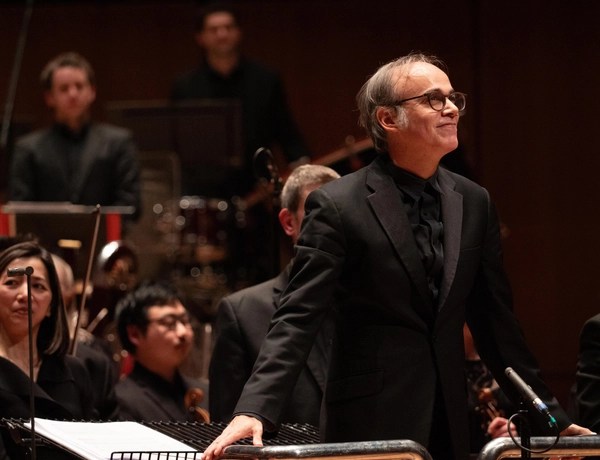
Ilya Gringolts (violin), City of Birmingham Symphony Orchestra / Ilan Volkov (above)
Prokofiev Violin Concerto no.1 in D major Op.19 (1915-17)
Bruckner Symphony no.7 in E major (1881-83)
Symphony Hall, Birmingham
Tuesday 3 November 2026
Reviewed by Richard Whitehouse Photos Ilan Volkov (c) Hannah Blake-Fathers, Ilya Gringolts (c) Kaupo Kikkas
This first concert in November by the City of Birmingham Symphony Orchestra was also its first with newly appointed principal guest conductor Ilan Volkov – continuing an association which has brought much innovative programming and music-making these past two decades.
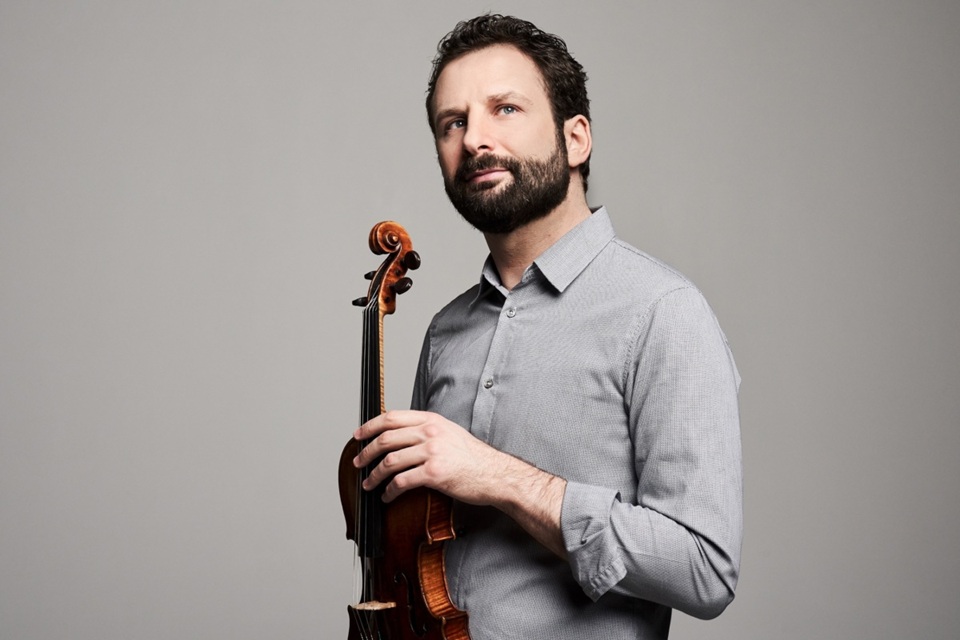
A comparable amount of time, indeed, since Ilya Gringolts (above) recorded Prokofiev’s First Violin Concerto which, on the basis of this performance, remains a work for which he feels no little empathy. Almost coaxed into existence, the initial Andantino exuded a rapt calm that was by no means effaced as this movement arrived at its livelier second theme then accrued impetus prior to an ethereal revisiting of its main melody. Lithe and incisive, the brief central Scherzo provided the necessary contrast; during which, Gringolts’s passagework was a joy to behold.
Much the most difficult movement to realize, the final Moderato was ideally paced through its brief if stirring orchestral climaxes then the gradual reappearance of earlier ideas before a transformed restatement of the work’s opening music. Throughout, the integration of soloist and orchestra was abetted by the latter’s fastidious response under Volkov’s astute direction. ‘Old fashioned’ this piece may have seemed in the context of Prokofiev’s music during this period, but its unforced lyricism and formal poise make it a highpoint of his output overall.
Prokofiev and Bruckner rarely share the same programme, but the coupling worked ideally on this occasion. At just under 63 minutes, this was a taut yet never inflexible account of the latter’s Seventh Symphony as recalled that by Hans Rosbaud (remembered primarily for his advocacy of contemporary music but a fine exponent of Bruckner and Sibelius) in its innate Classicism and tensile rhetoric. Not least an opening Allegro moderato that proceeded as an unbroken span – the expressive character of its themes underlined with no real modifying of pulse; prior to a development whose disjunct contrasts made its ultimate cohesion the more tangible, then a coda whose surging grandeur brought this movement fervently full circle. A reminder, too, that broad(er) tempos are an option though never a prerequisite for Bruckner.
This was reinforced by the Adagio, if not its composer’s most profound such movement then certainly his most endearing. Its threnodic main melody duly gained in eloquence with each reappearance but it was Volkov’s easeful handling of its songful secondary theme and, most especially, the gravitas of its coda which lingered longest in the memory. A fine showing for the CBSO brass, with a quartet of Wagner Tubas effortlessly integrated tonally and texturally into the ensemble. Bracingly exuberant in its outer sections yet warmly ingratiating in its trio, the Scherzo struck a more worldly tone enhanced by the Finale’s moving from anticipation, via solemnity, to ominousness in Bruckner’s shortest while most ingenious such movement. Its coda linked hands with that from the first movement for what was a majestic peroration.
A commanding end to an impressive performance and one that bodes well for Volkov’s future concerts with this orchestra. These focus on Mendelssohn then Messiaen, and hopefully there will be a contemporary element introduced as the partnership continues over ensuing seasons.
To read more about the CBSO’s 2026/27 season, visit the CBSO website. Click on the names to read more on violinist Ilya Gringolts and conductor Ilan Volkov
Published post no.3,069 – Thursday 5 November 2026

