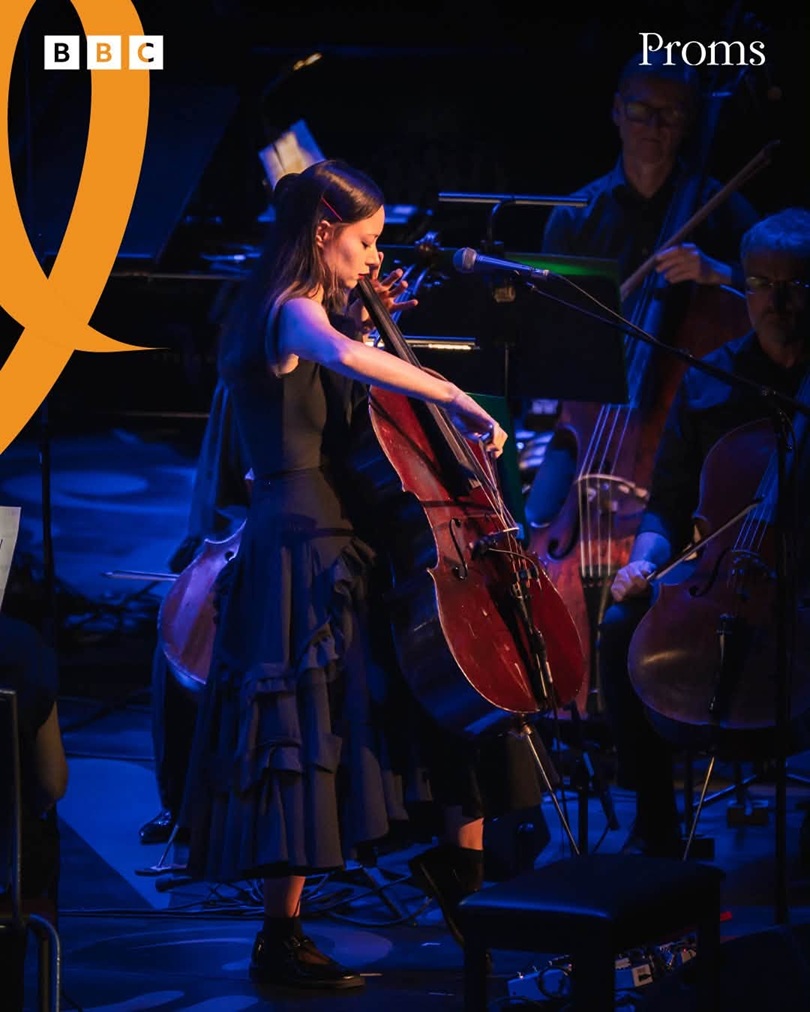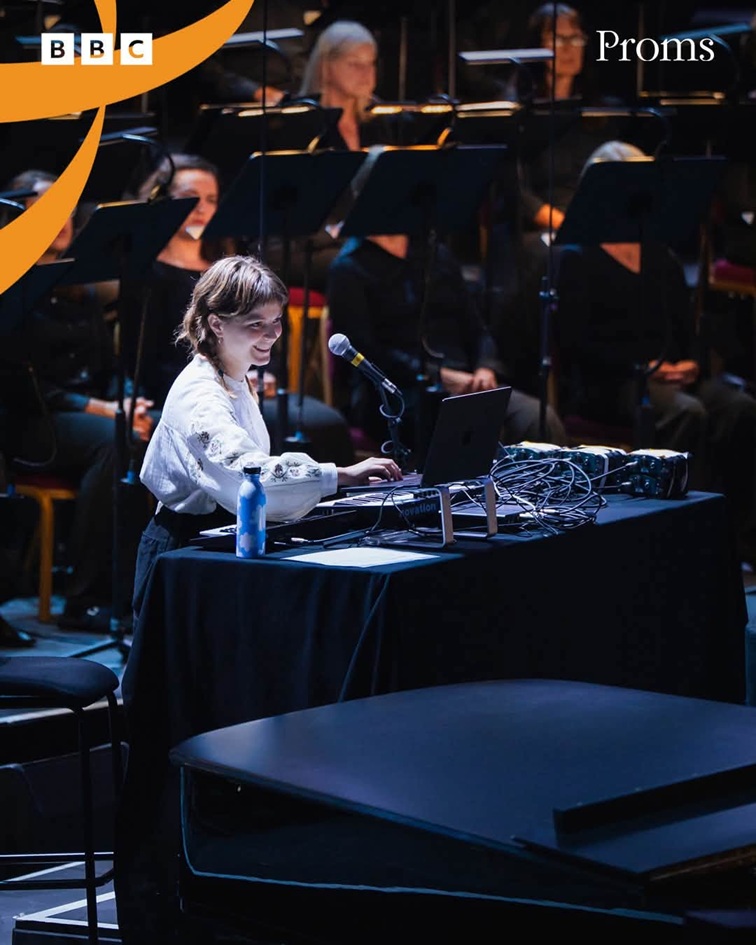
Arcana at the BBC Proms – Soloists, Epiphoni Consort, BBC Symphony Chorus & Orchestra / Nil Venditti: Respighi & Rossini

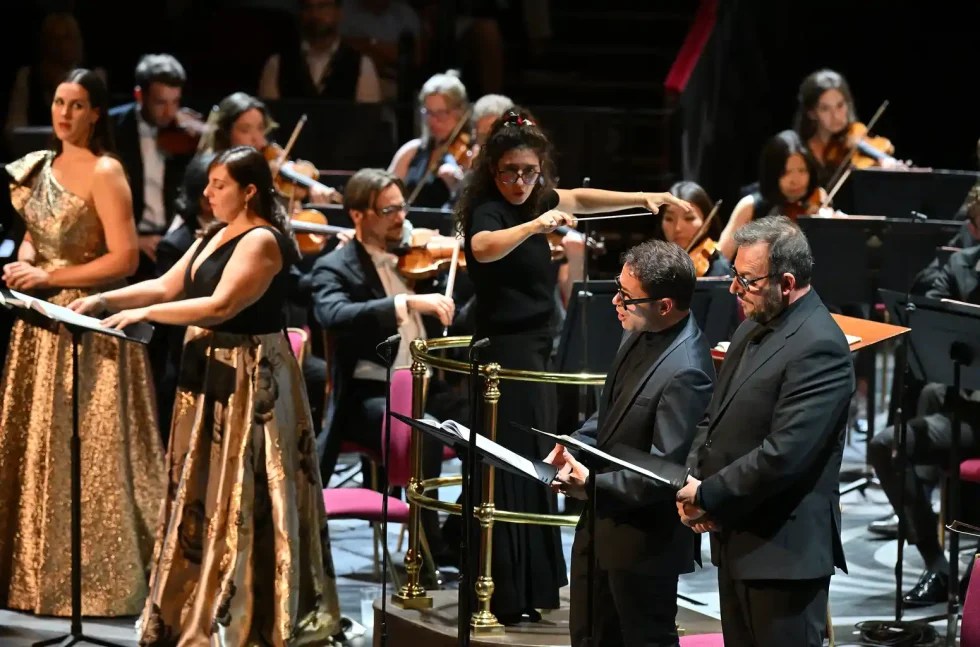
Federica Lombardi (soprano), Chiara Amarù (mezzo-soprano), Dave Monaco (tenor), Nicola Ulivieri (bass), Epiphoni Consort, BBC Symphony Chorus and Orchestra / Nil Venditti

Respighi Church Windows (Vetrate di chiesa) (1925-26)
Rossini Stabat Mater (1831-1841)

Royal Albert Hall, London
Friday 7 August 2026

Reviewed by Ben Hogwood Photos (c) BBC / Mark Allan

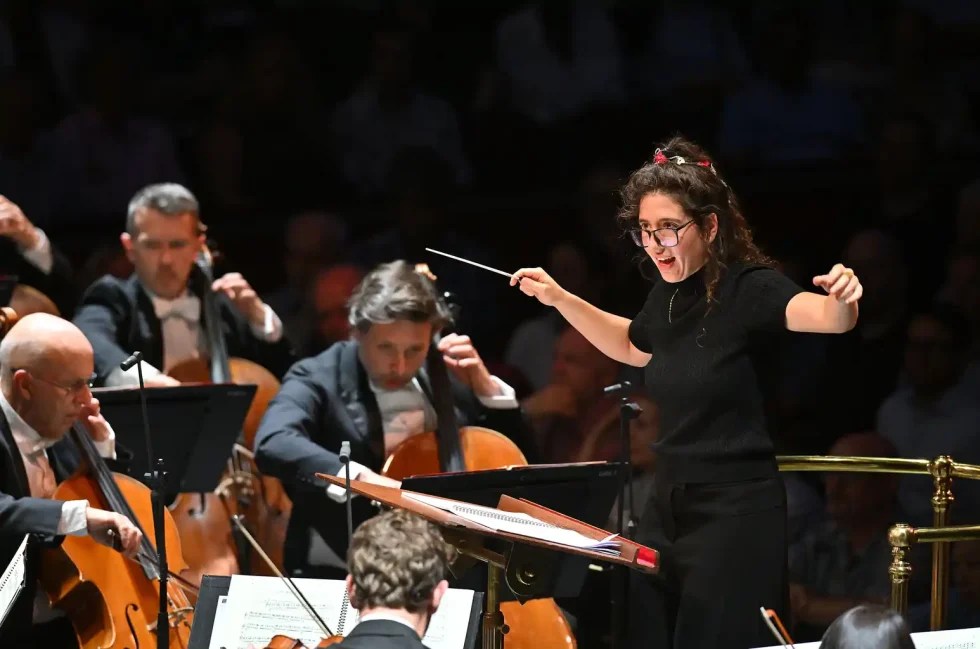
Friday night is Italian night at the BBC Proms, it would seem. Two weeks after John Wilson’s blistering account of Respighi’s Roman Trilogy, we had a sequel of sorts headed by Italian-Turkish conductor Nil Venditti, marshalling a double bill from Respighi and Rossini, a composer he much admired.

As we heard two weeks back, Respighi was no shrinking violet when writing for orchestra, a point reemphasised by this first Proms performance of Church Windows. This is the sort of orchestral music on which the Royal Albert Hall thrives – descriptive, colourful, bold, brash in places but beautifully controlled in others. One of these moments was Adam Lee’s clarinet solo, exquisitely spun.

Less obviously demonstrative than the Roman poems, Church Windows nonetheless softened the heart with its invocations of Gregorian chants and chorales, woven into Respighi’s writing. Not all were successful in performance, the horn theme of San Michele Arcangelo taking a while to align with Venditti’s tempo, but this movement grew into a tumultuous finish, the tam-tam describing Satan’s fall from heaven. A tender account of Il mattutino di Santa Chiara (The Matins of St Clare) found the BBC SO woodwind on fine form, but the finale, San Gregorio Magno (St Gregory the Great) carried all before it, Richard Pearce’s barnstorming organ solo briefly smothering the orchestra before a brilliantly manoeuvred climax. Once again, the ears were ringing, and while this may not have registered so highly on the Richter scale, it was nonetheless a qualified triumph.

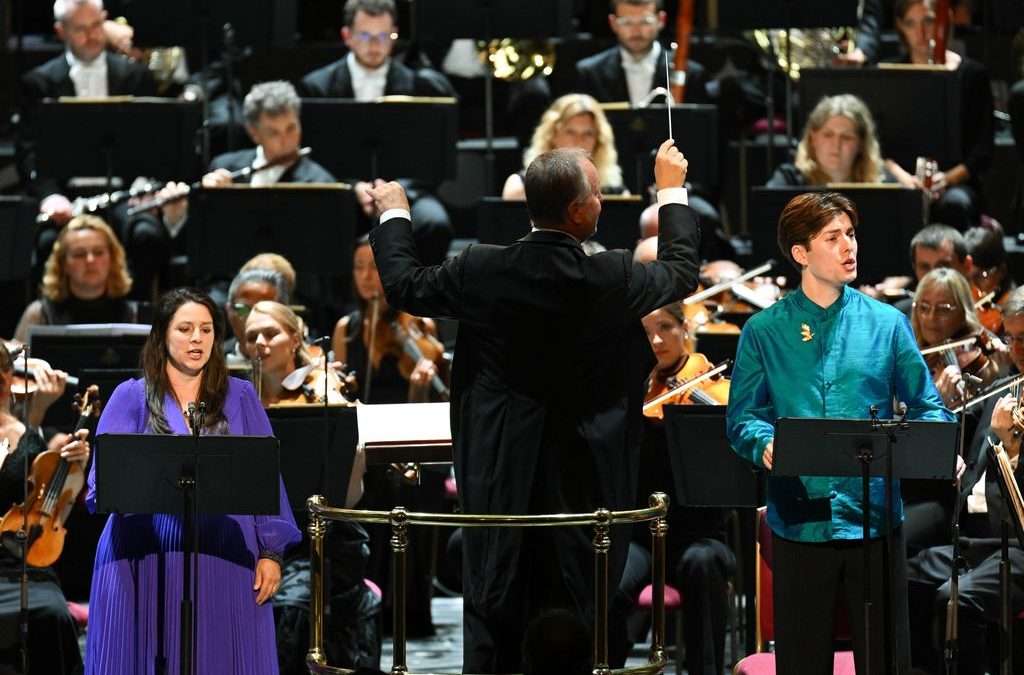
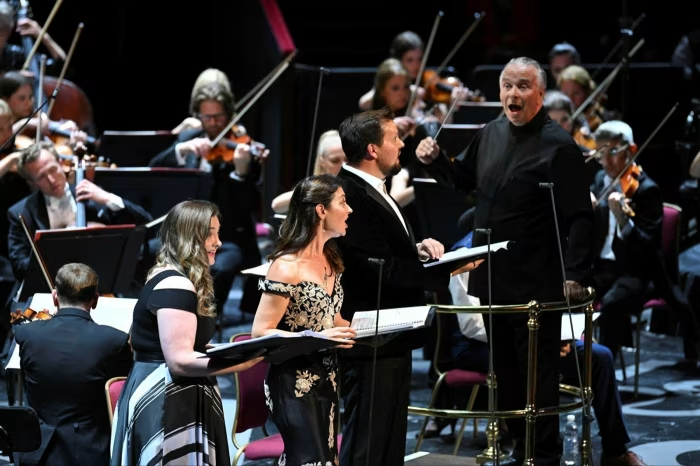
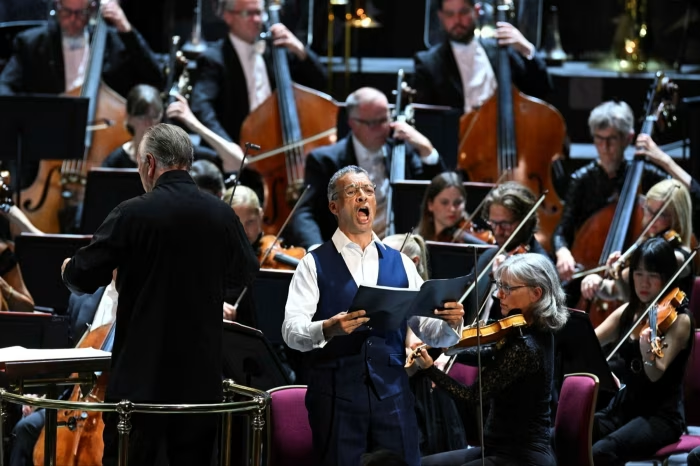
Rossini’s Stabat Mater is similarly unconventional. Its long gestation period would suggest a creative block, but the final composition, finished after a decade, is a profound utterance. Venditti kept things moving here, and with an evident love for the piece, from the solemn choral intoning of the Stabat mater dolorosa itself, through the sequence of arias which found the soloists taking a little while to adjust to the acoustic of the hall. A healthy balance was found, though bass Nicola Ulivieri, a commanding presence, was appreciably louder than his three colleagues – each of whom were dramatic in their responses to the text. Tenor Dave Monaco nailed his top notes with impressive precision in the Cujus animam gementem, soprano Federica Lombardi was bright and commendably unforced with the chorus throughout Inflammatus et accensus, while mezzo-soprano Chiara Amarù shone in the Fac, ut portem Christi mortem.

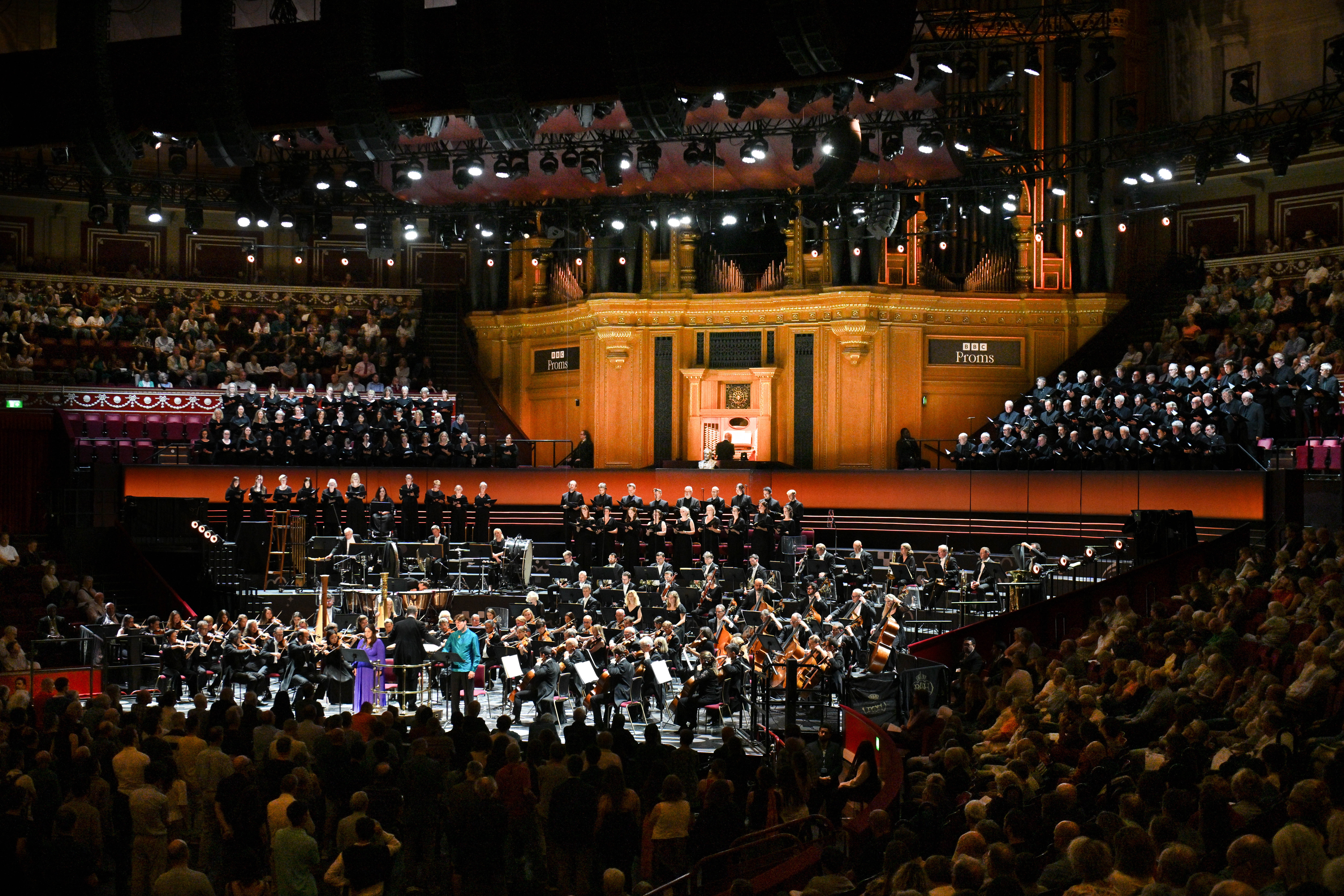
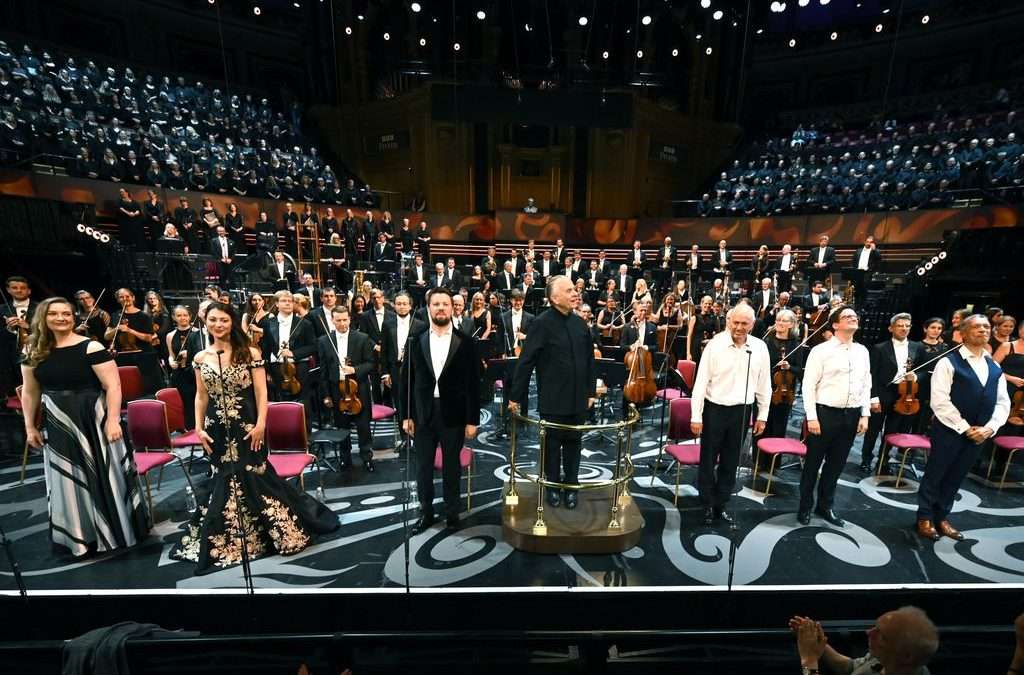
Yet the real stars of this performance were the London-based Epiphoni Consort, making their Proms debut, and the BBC Symphony Chorus, both extremely well drilled and of one voice. The antiphonal exchanges of ‘Paradisi gloria’ in the Quando corpus morietur section were memorable, but the crowning glory was the ‘Amen’ finale, where Rossini – and the charismatic Venditti – let loose in the thrilling tour de force of powerful counterpoint. A special mention for timpanist Antoine Bedewi, too, whose role throughout was critical. This was the choir’s to bring home, however, and they delivered with style and panache, convincing audience and listeners of Rossini’s original inspiration and dramatic instinct. A refreshingly different Prom, and how good to hear two less familiar but deserving works in performances that made them shine.

You can listen to this Proms concert on BBC Sounds until the end of September 2026.

Published post no.2,977 – Saturday 8 August 2026

BBC Proms 2026 – The First Night

by Ben Hogwood Photo (c) Chris Christodoulou

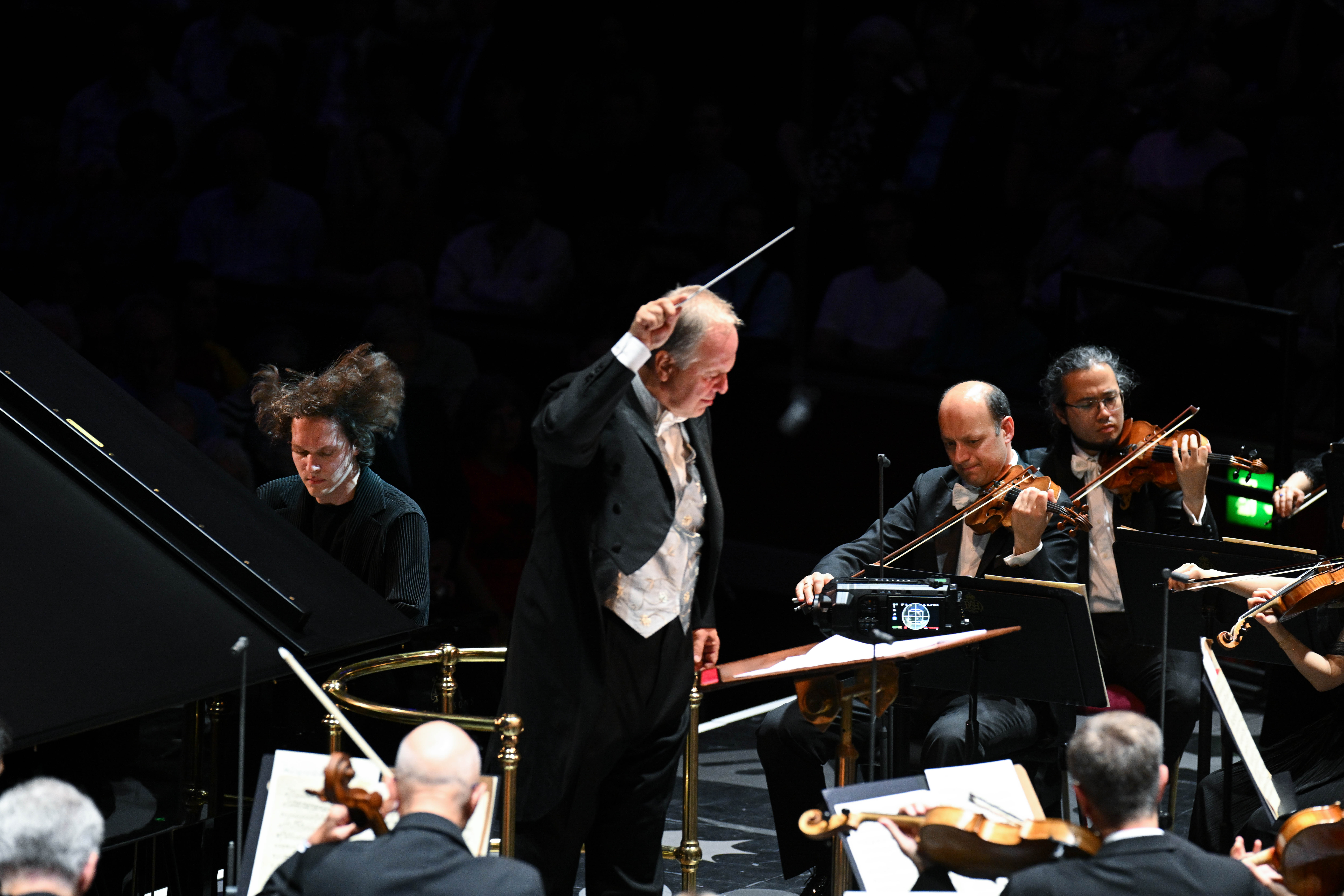
The 2026 edition of the BBC Proms is underway! With a Transatlantic first night, the BBC Symphony Chorus and BBC Symphony Orchestra under Dalia Stasevska were joined by pianist Yunchan Lim for a special performance of Ravel‘s Piano Concerto.

Flanking this were two pieces celebrating America’s 250th ‘birthday’, Copland‘s Fanfare for the Common Man and Gershwin‘s An American in Paris, while French-British composer Josephine Stephenson was the ideal choice to write a first night premiere, That the sunrise not leave us unmoved.

Wrapping up the night was a rare performance of Finzi‘s For St Cecilia, a choral work of typical mystery and elegance but one that deserved its rare moment in the sun. Choral and orchestral forces then gave an encore of the Oasis song Wonderwall, acknowledging the England team’s prowess in the World Cup. A red card for its choice, I’m afraid – and a shame to have Finzi’s contribution immediately overshadowed in this way. Wonderwall is a great song, but felt miscast here.

Enough of my griping, though – as we should acknowledge many people enjoyed the inclusion, and the night as a whole was a celebratory indication of what we can expect to indulge in over the next eight weeks. Truly something for everyone.

You can watch the First Night of the Proms on the BBC iPlayer

In concert – Lukas Sternath, BBC Singers, Symphony Chorus & Orchestra / Sakari Oramo @ BBC Proms: Bliss ‘The Beatitudes’, Grieg & Gipps

Lukas Sternath (piano), Elizabeth Watts (soprano), Laurence Kilsby (tenor), BBC Singers, BBC Symphony Chorus, BBC Symphony Orchestra / Sakari Oramo

Gipps Death on the Pale Horse Op.25 (1943) [Proms premiere]
Grieg Piano Concerto in A minor Op.16 (1868 rev.1907)
Bliss The Beatitudes F28 (1961)

Royal Albert Hall, London
Sunday 7 September 2025

Reviewed by Richard Whitehouse Photos (c) BBC / Chris Christodoulou

This evening’s Prom – launching the final week of the present season – was billed as ‘Grieg’s Piano Concerto’, no doubt the reason why many in the audience were attending while hardly being the most interesting aspect of a typically adventurous programme from Sakari Oramo.

In the event the Grieg received a responsive reading from Lukas Sternath (below, with Oramo), the Viennese pianist who, still in his mid-20s, was most at home in more inward passages. The second theme of the initial Allegro was enticingly taken up after a heartfelt rendering by cellos, as was the Adagio’s eloquent melody and that first emerging in the finale on flute, where it was soulfully rendered by Daniel Pailthorpe. Nor were the more demonstrative aspects underplayed – Sternath having the measure of a cadenza whose mounting rhetoric was pointedly reined-in, while the finale’s outer sections were incisively inflected prior to an apotheosis which felt the more exhilarating through its absence of bathos. A melting take on Richard Strauss’ early song Morgen!, transcribed with enviable poise by Max Reger, served to reinforce Sternath’s formidable pianistic credentials.

The 50th anniversary year of Sir Arthur Bliss’s death has seen a gratifying number of revivals, few more significant than that of The Beatitudes. The misfortune of its premiere having been moved from Coventry’s new Cathedral to its Belgrade Theatre, thus freeing up rehearsal time for Britten’s War Requiem, rather condemned it as an also-ran from the outset. Yet Bliss had created a piece unerringly suited for the consecration in what, in itself, remains an impressive conception. Unfolding as 14 short sections which can be grouped into six larger movements, this is less a cantata than a choral symphony. Setting all nine Beatitudes, Bliss none the less merged several of these and interspersed them with settings from three 17th-century and one 20th-century ‘metaphysical’ poets to commemorate the past from the vantage of the present.

The texts, drawn from Henry Vaughan, George Herbert and Jeremy Taylor, anticipate a future redemption – as, more ambivalently, does Dylan Thomas in And death shall have dominion which builds implacably to the climactic Ninth Beatitude and Voices of the Mob prior to the hard-won serenity of the Epilogue. That The Beatitudes has enjoyed relatively few revivals is less to do with its intrinsic quality than the demands of its choral writing, to which the BBC Symphony Chorus and BBC Singers did notable justice. Elizabeth Watts responded with real sensitivity and perception to some radiant soprano writing and while Laurence Kilsby was a little effortful in the more demonstrative passages, he brought conviction to a tenor role both fervent and compassionate. Nor did Richard Pearce disappoint with his extensive organ part.

Oramo paced the 50-minute entity superbly as to make one hope he will tackle more works by Bliss – not least the masterly Meditations on a Theme by John Blow, which has inexplicably fallen through the net this year. He had started tonight’s concert with a most welcome revival for Death on the Pale Horse – the succinctly eventful tone poem by Ruth Gipps which, while it might not capture the visceral drama of Blake’s eponymous engraving, distils an evocative atmosphere from pithy initial ideas that audibly reflects the circumstances of its composition.

Click on the artist names to read more about soloists Elizabeth Watts, Laurence Kilsby and Lukas Sternath, the BBC Singers, BBC Symphony Chorus and BBC Symphony Orchestra, and their conductor Sakari Oramo. You can also click to read more about composers Arthur Bliss, Ruth Gipps and the BBC Proms

Published post no.2,652 – Tuesday 9 September 2025

In concert – Soloists, London Philharmonic Choir, BBC Symphony Chorus & Orchestra / Sir Mark Elder @ BBC Proms: Delius: A Mass of Life

Jennifer Davis (soprano), Claudia Huckle (mezzo-soprano), David Butt Philip (tenor), Roderick Williams (baritone), BBC Symphony Chorus, London Philharmonic Choir, BBC Symphony Orchestra / Sir Mark Elder

Delius Eine Messe des Lebens (A Mass of Life) (1898; 1904-05)

Royal Albert Hall, London
Monday 18 August 2025

Reviewed by Richard Whitehouse Photos (c) BBC / Chris Christodoulou

There could be few venues better suited to Delius’s A Mass of Life, in its conceptual ambition and emotional opulence, than the Royal Albert Hall and this evening’s performance, only the third at these concerts and the first in 37 years, undoubtedly made the most of these qualities.

Despite the tragedy of his ultimate breakdown and ensuing incapacitation, Friedrich Nietzsche was considered a liberator in terms of a guiding philosophy with its emphasis on free will and rejection of conventional mores. Such appeal could hardly have been greater than on Frederick Delius, his largest concert work setting substantial extracts from Also sprach Zarathustra in a way that feels never judgemental and is only rarely overreaching. Much of the time its music has a detached and meditative aura whose inward intensity needs to be sustained accordingly.

That this account did so was owing to Sir Mark Elder, his advocacy already manifest in the finest modern recording (LAWO) as came across just as strongly and often more so here. Certainly, the longest sections were effortlessly paced – whether that beguiling interplay of longing and anticipation in In dein Auge which becomes the still (while never static) centre of Part One, or that extended sequence of Part Two taking in the scenic evocation as is Lasst vom Tanzen ab then the pantheist contemplation of Heisser Mittag schläft which is surely the expressive highpoint. Not that the dramatic openings of each part were under-characterized – the driving energy of O du mein Wille! setting the course for one as vividly as did the rousing Herauf! Nun herauf, with its orchestral prelude Auf den Bergen meltingly rendered, for the other.

This may be regarded mainly as a choral work, but the importance of its vocal parts is never to be gainsaid. Above all, that of the baritone who assumes the role of Zarathustra in his gradual incline to enlightenment and in which Roderick Williams (above) was consistently at his best – hence the infectious Erhebt eure Herzen and assertive Wehe mir! then, subsequently, the alluring eloquence of Süsse Leier! and will to action of Gottes Weh ist tiefer. If this is the solo role as brings focus or unity to the whole, the others afford textural and expressive enhancements aplenty – Jennifer Davis as capricious and Claudia Huckle as confiding as David Butt Philip was assertive in their respective contributions. All three singers brought out the youthfulness or naivety which are crucial to this work’s underlying journey from innocence to experience.

Any doubt a relative disparity in numbers of female and male singers would be detrimental to choral balance was groundless – Elder drawing a vividness but also delicacy of response from those combined BBC Symphony and London Philharmonic forces, while the BBC Symphony Orchestra was rarely less than galvanized whether in complex tuttis or the artless writing for solo woodwind that informs the latter stages. Delius’s orchestration rarely ‘plays itself’ but it conveys a lustre and translucency which could not be mistaken for that of another composer.

A near-capacity audience seemed as attentive to this as it was affected by the final Kommt! Lasst uns jetzt wandeln!, with its build-up to an ecstatic apotheosis then swift dispersal into silence: setting the seal on a memorable interpretation of this all-encompassing masterpiece.

You can listen back to this Prom concert on BBC Sounds until Sunday 12 October – or listen to the recent recording from Sir Mark Elder, with soloists, the Collegium Musicum Choir, Edvard Grieg Kor, Bergen Philharmonic Choir and Orchestra on Tidal below:

Click on the artist names to read more about soloists Jennifer Davis, Claude Huckle, David Butt Philip and Roderick Williams, the London Philharmonic Choir, BBC Symphony Chorus and BBC Symphony Orchestra, and conductor Sir Mark Elder. Click also for more on the Delius Society and the BBC Proms

Published post no.2,632 – Wednesday 20 August 2025

In concert – Soloists, BBC Symphony Chorus & Orchestra / Hannu Lintu @ BBC Proms: Mahler Das klagende Lied & Boulez Rituel in memoriam Bruno Maderna

Natalya Romaniw (soprano), Jennifer Johnston (mezzo-soprano), Russell Thomas (tenor), James Newby (baritone) Carlos González Nápoles (treble), Malakai Bayoh (alto), Constanza Chorus, BBC Symphony Chorus, BBC Symphony Orchestra / Hannu Lintu

Boulez Rituel in memoriam Bruno Maderna (1974-75)
Mahler Das klagende Lied (1878-80)

Royal Albert Hall, London
Tuesday 4 August 2025

Reviewed by Richard Whitehouse Photos (c) BBC Proms (from the festival’s uncredited Facebook upload)

Boulez and Mahler may not seem an obvious coupling, until one recalls the would have-been centenarian regularly conducted all the latter’s major works including that heard tonight – as well having made the first recording of its original three-part version more than 55 years ago.

When it appeared in 1975, Rituel in memoriam Bruno Maderna was thought something of an anomaly in Boulez’s output – its hieratic aura and structural (if never literal) use of repetition a homage more to his teacher Messiaen than his late colleague who, revealingly perhaps, had grown disenchanted in the avant-garde project of the post-war era. To which this work might seem an envoi – one eschewing any trace of nostalgia as it pursues its inevitable course from the response of the individual to that of the collective then (almost) returning to the singular.

Outwardly Rituel unfolds a series of litanies from one to seven players and refrains for a 14-piece brass ensemble, but such distinctions increasingly merge towards its mid-point so that its latter half is an intricate mesh of overlaid textures, moving around those groups arrayed on stage. Maintaining audible balance is crucial – in which respect, Hannu Lintu succeeded admirably, as in pacing the overall sequence (memory recalls Boulez as opting for a discreet acceleration across the later stages) so its ending conveyed arrival though hardly fulfilment.

What marked a crucial juncture for Boulez was no less evident, almost a century before, for Mahler. The virtual absence of any previous music only makes Das klagende Lied the more remarkable for conveying the essence of what its composer, barely out of his teens, went on to achieve. At this time, he aspired to opera and though this cantata was never envisaged for staging, its scenic evocation and its dramatic immediacy suggest that, had he been awarded the 1881 Beethoven Prize for his entry, his creative priorities could have been very different.

The work has fared well at the Proms, this being its seventh hearing and the third to use the edition of the original version that restores the first of its three parts and enables the latter to be heard as conceived, thereby making musical as well as dramatic sense. A leisurely course through Waldmärchen enabled Lintu to highlight the motivic richness of its prelude, and if the alternation of solo verses with choral refrains felt a little stolid, the latter stages with the discovery of the flower, the fratricide and a desolate postlude were consummately rendered.

With its anticipations of later Mahler (via Wagner and Bruckner), Der Spielmann is the most characteristic part as it pivots deftly yet pointedly between genial whimsy and ominous dread. That this latter gains the upper hand with discovery of the ‘singing bone’ is offset by the blaze of glory with which Hochzeitstück begins; the offstage orchestra – head to advantage in the gallery – underpinning an increasingly desperate course of events as the fratricide is revealed and the wedding descends into mayhem, with deathly stillness pervading those final minutes.

There was some persuasive solo singing, notably Jennifer Johnston who carries the primary narrative thread; Russell Thomas was fervent if slightly strained and James Newby warmly eloquent, with Natalya Romaniw conveying real dramatic acuity. Treble and alto roles were poignantly taken, while Lintu drew an assured response from sizable choral and orchestral forces – the latter’s quartet of harps assuming a concertante role in an orchestration whose encompassing of dramatic impetus and intimate reflection is already that of Mahler alone.

Playing for around 70 minutes, Das klagende Lied seems as rich in incident as any Mahler symphony; not all of which, whatever their greater stylistic assurance or maturity, feature a conclusion as spine-tingling as this – and one which certainly drove its point across tonight.

You can listen back to this Prom concert on BBC Sounds until Sunday 12 October – or listen to recordings of the two works conducted by Pierre Boulez on Tidal here

Click on the artist names to read more about the Constanza Chorus, BBC Symphony Chorus and BBC Symphony Orchestra, conductor Hannu Lintu and soloists Natalya Romaniw, Jennifer Johnston, Russell Thomas and James Newby. Click also for more on the BBC Proms

Published post no.2,617 – Tuesday 5 August 2025