This Sunday Arcana’s look at the serenade alights, perhaps unexpectedly, on Beethoven. While he didn’t write in the form anywhere near as comprehensively as Mozart, Beethoven did nonetheless complete a multi-movement serenade for an unusual trio of instruments.
When Arcana visited the Serenade as part of our ongoing Beethoven series, we found that “the air of Spring, so prevalent in the sonata for piano and violin of the same name, is here in abundance too. The bright sound of the flute is one of the reasons for this, but so are the busy parts Beethoven assigns to violin and viola. There are few if any breaks for the instruments, and because of the almost complete lack of a bass instrument the piece has the lightest of textures.”
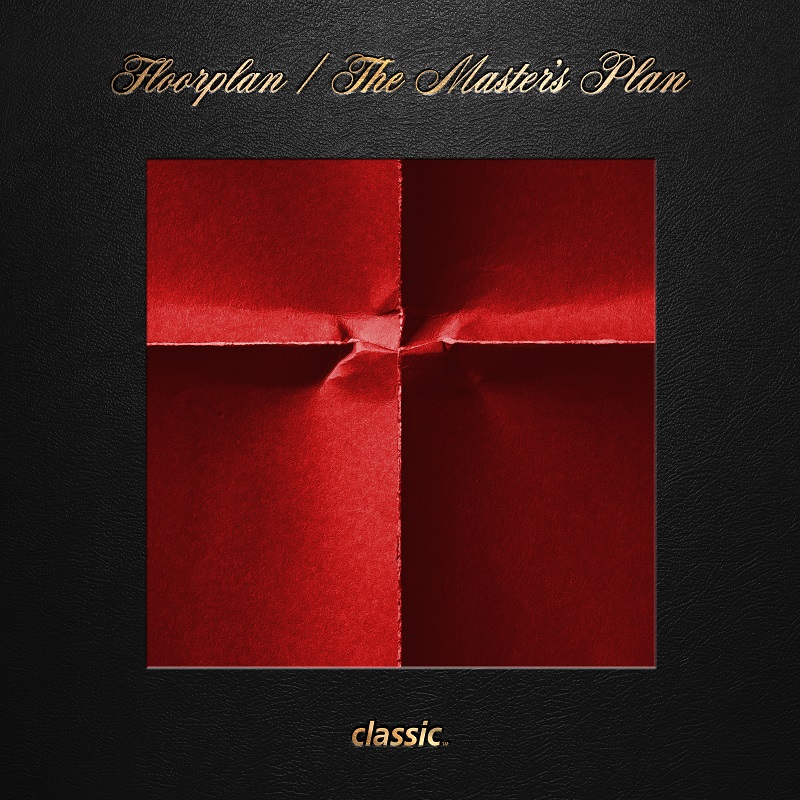
Robert and Lyric Hood release their fourth album as Floorplan, building on their reputation as purveyors of spiritually infused house and techno. The Master’s Plan is a big conception, with 18 tracks, and includes guest slots for Earthtone, Honey Dijon, Lowell Pye and Dames Brown.
What’s the music like?
Floorplan traverse an impressive variety of styles on this piece of work, moving between chest thumping gospel hitters and darker slabs of techno with effortless ease. Whenever the piano comes into play the killer riffs are brilliantly executed, the tough beats and bold bass lines delivered with pace and power.
Into the former camp go We Give Thee Honour, Feel It and The Curse Breaker, whose extended vocal monologue is so powerful the preacher fair pins you up against a wall. Flashe No Deux is a big hitter, while the prize of catchiest riff goes to the rollicking No Ones Ready.
The collaborations are all a resounding success, especially the Honey Dijon-fronted Fake & Unholy – a great look at the other side of the coin – while The Plan is a powerful pick-me-up thanks to Earthtone.
Does it all work?
Yes, impressively so. Not many house / techno long players sustain their quality as this one.
Is it recommended?
It is. Floorplan know how to raise the spirits, and do so throughout this excellent album. Their refreshingly direct lyrics and message go with the big, piano-powered riffs to make a slab of spiritual house and techno that works a treat.
For fans of… Moodymann, Charles Webster, Carl Craig, Juan Atkins
published by Ben Hogwood, with text appropriated from the press release
Matthew Bourne has been a busy man of late. Hot on the heels of his Nightports collaboration Dulcitone 1804 he has returned to the piano on record for the first time since 2017’s Isotach.
As the press release says, “for such a restless and forward-thinking artist, perhaps we shouldn’t be surprised that Bourne can be a little reluctant to return to the instrument on which he made his name. At least in public. That would be too easy.”
It continues. “These days Bourne tends to find himself seated at his first instrument when working on collaborations or commissions for film and television projects. It’s often in these moments that inspiration strikes and the pieces are committed to tape. With outside deadlines, those sparks can often be left. Forgotten about. Recorded over.
This Is Not For You. was born from an off-hand comment by one of Matthew Bourne’s confidants. His instruction, “Do not delete,” provided Bourne with a commission of sorts, an ideal restriction to work within. Everything on the album was given a chance to shine in the studio, to be worked on amongst the freedom of that no deletion diktat – new inspirations now lie beside deep-mined remembrances. Cello and Dulcitone have been added sparingly for colour, but this is Bourne playing for his own enjoyment. Intimate. Reserved even. The real Matthew Bourne?”
‘Emotional rave’ is the slogan Ólafur Arnalds and Janus Rasmussen have applied to their second outing as Kiasmos. Due no doubt to intensive work schedules and popularity, it arrives ten years after their self-titled first long player together.
It is more of a widescreen affair than the self-titled debut, and included a trip to Ólafur’s studio in Bali in 2021. There the duo stayed for a month, writing and recording several tracks.
What’s the music like?
An absolute state of bliss is achieved as the first track arrives on the breeze, Grown becoming a beautiful blend of atmospherics and a stately chord progression. Sailed presents a relaxing middle ground, a languid melody, but offset by a busy drum track that keeps everything moving.
From there the songs follow a relatively familiar pattern, whereby a swell of cinematic, quasi-orchestral music is followed by a dip, where the drum track retreats and mottled piano takes centre stage, before the build up begins again and the drums return in a busier state. This happens to rich effect with the strings in Laced and Bound, and powerfully so on Squared.
Flown has a really nice piano / harp motif, while Dazed is a beauty, infused with Balinese percussion and the echoes of a sunrise, together with upright piano.
Does it all work?
It does – though at times the music sticks too rigidly to a familiar format and structure. That is potentially good for fans, though for this particular listener it led to a wish for more experimentation, knowing what the two artists are capable of.
Is it recommended?
It is – especially if you have the first Kiasmos album and are familiar with the solo works of the two artists. This is ideal music for taking the emotional weight off a day, or providing valuable time out – and the feeling persists that any sequel collaboration could really take off with a more instinctive approach.
For fans of… Nils Frahm, Max Richter, Rival Consoles
published by Ben Hogwood – text is reproduced from the press release
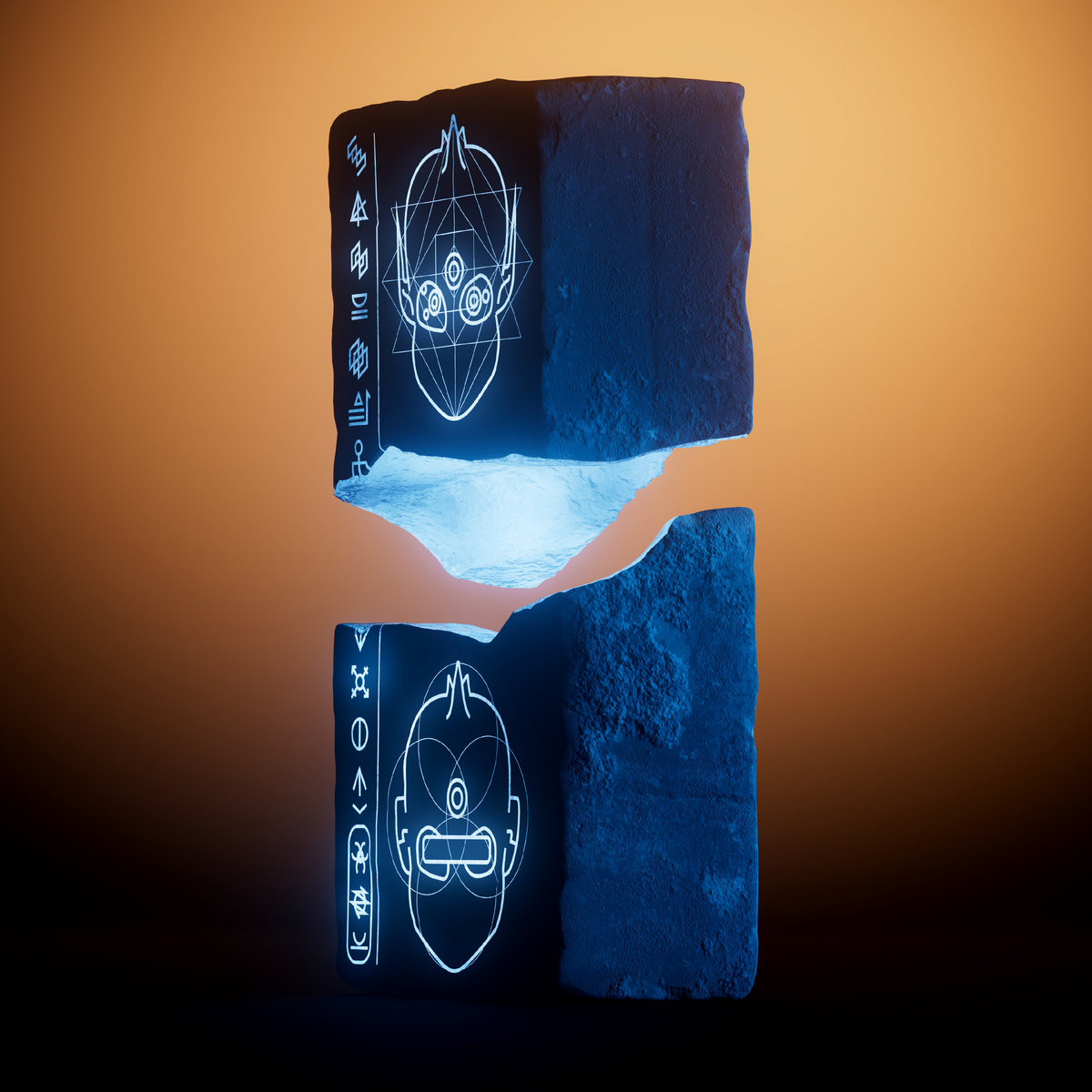
Seth Troxler and Phil Moffa’s multi-hyphenate, multi-dimensional Lost Souls Of Saturn have always been an extended and evolving tribe of co-conspirators, and for their new digital remix album Reality Hacked (which is preceded by two vinyl remix EPs), the pair have called upon some of electronic music’s finest. The result is a set of reworks of tracks from their second album Reality, which takes the originals and scatters them even deeper across the galaxy. Out today, Om Unit’s take on This Foo delivers a masterclass in post dubstep drum work, which you can listen to below:
Elsewhere Pangaea presents some of his best material, turning Click into a pacey neon rave pumper, whist Danny Daze and his D33 alter-ego beams Lilac Chaser into bloopy-minimal-space-race headspace – you can listen below:
UNKLE aka James Lavelle turns Click into a grandiose, Ibiza-friendy pop prog anthem, whilst Matthew Dear goes in the opposite direction on his version of Mirage, delving into deep-beat cosmic fractals. For her take on Mirage Perel goes big on the oompty-boom-tish-euro-fist-pump, whilst Jonny Rock reassembles the same track into an unclassifiable avant space chugger. Brendon Moeller delivers not one, not two but three versions of Scram City; a ‘House Dub’, which does what it says on the tin, a pulsatile submarine throbber under his Echologist moniker, and a Reshape, which combines the dub techno for which he’s renowned with 90-style breakbeat science and 70s Krautrock.
Earlier this year, whilst on various capers across the farthest reaches of space, Lost Souls Of Saturn metamorphosed into sci-fi AR comic characters John and Frank. They returned back to earth with their perception-melting new LP Reality, which was described as “the kind of record you make at the top of your game” by Resident Advisor.
‘Reality’ was accompanied by a cutting-edge augmented reality graphic novel, which tells the origin story of John and Frank. It’s a genuinely new type of total artwork, with comic, augmented reality and musical soundtrack working together to create a type of synesthesia. Every spread, page and panel, when viewed through a tablet screen or AR headset/glasses, comes to life in animated 3D. Moreover, the LSOS soundtrack is synched perfectly, with the music fully integrated, looping and layering as the reader follows the panels of the comic itself. A soundtrack that evolves as the graphic novel is read is the first of its kind. This is music, animation and illustration in sync like never before.
Coinciding with the album and comic release, Lost Souls Of Saturn held a month-long multimedia exhibition at London’s cutting-edge public art platform W1 Curates. Described by Evening Standard as “one particular corner of central London transformed into a giant, interactive comic book”, it bought LSOS’ conceptual word-building to vivid three-dimensional life. A first in the comic book world, augmented reality visions from the comic were shown on giant super high-definition floor-to-ceiling LED screens not only inside the gallery, but on Oxford Street itself.
The AR comic and W1 Curates London event continued Lost Souls Of Saturn’s previous experiments in the augmented reality sphere; their AR billboards in London and Ibiza, their exploratory work in the field of 3D printing and AR markers, and their creation of Mixmag magazine’s first AR triggered front cover.
Challenging the convention of ‘format’ in every sense, LSOS transmit and engage via the mediums, to date, of vinyl record, digital, art installation, artefact, augmented reality, 360 video and live performance.
Through LSOS, Troxler, Moffa and cohorts explore new ways to open doors of perception and challenge the ways we see our world, whilst marrying the prescient visions, political aspirations and psychedelic energy of science fiction and early rave culture, with postmodern philosophy and contemporary art.
Their collaborations to date include Fondation Beyeler, Olafur Eliasson, The Metropolitan Museum of Art (New York) Saatchi Gallery (London), Museum Of Contemporary Art Detroit, the Centre D’Art Contemporain Geneva, Wolfgang Tillmans, Ernest Neto, W1 Curates, Carl Craig and Pepe Braddock.
They have performed live at Fabric, Field Day, Glastonbury and Kappa Futur.





 Arcana.fm