New music – Masayoshi Fujita: Forest of Tranquility (Erased Tapes)

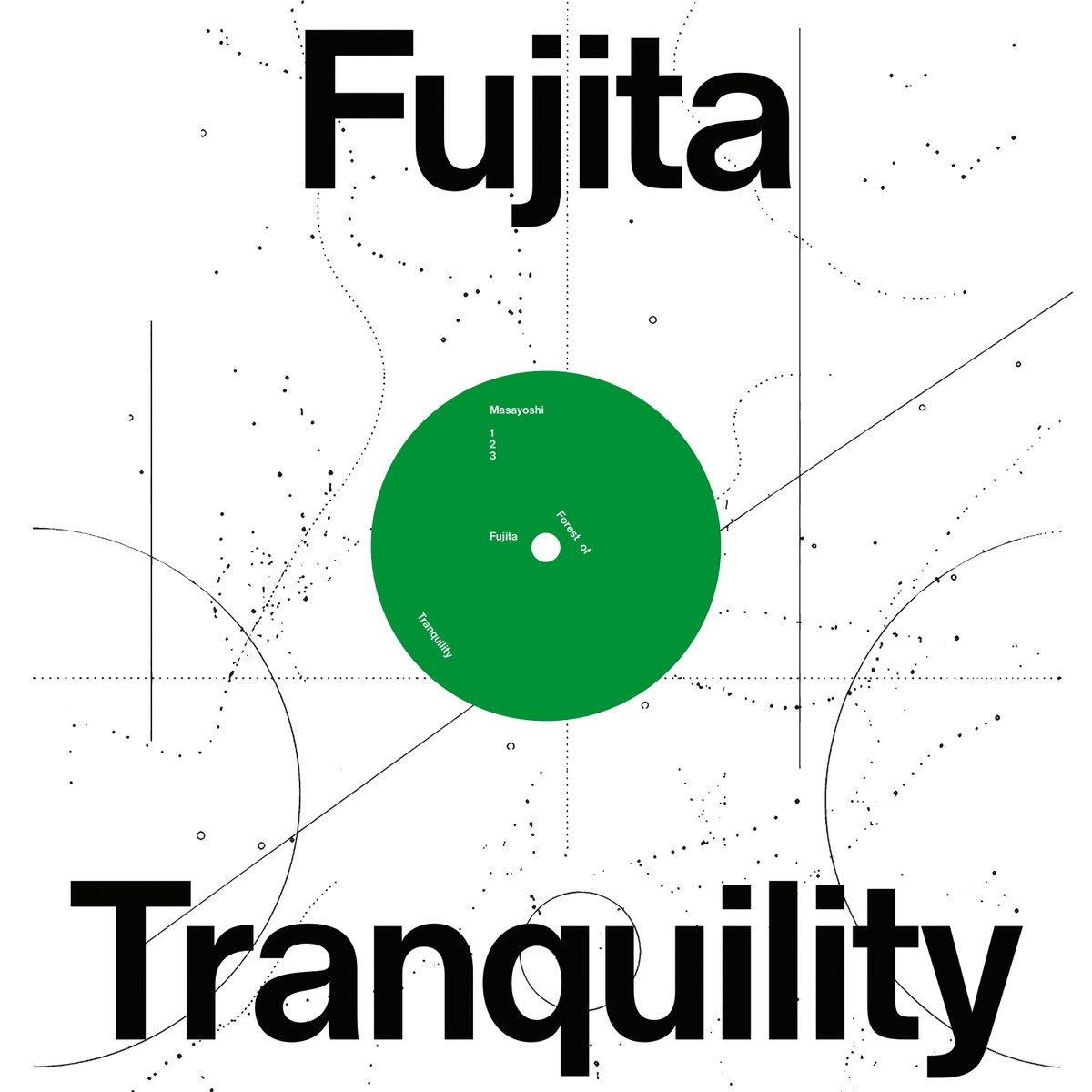
posted by Ben Hogwood, incorporating text from the publicity material written by April Clare Welsh. Cover artwork by Bernd Kuchenbeiser

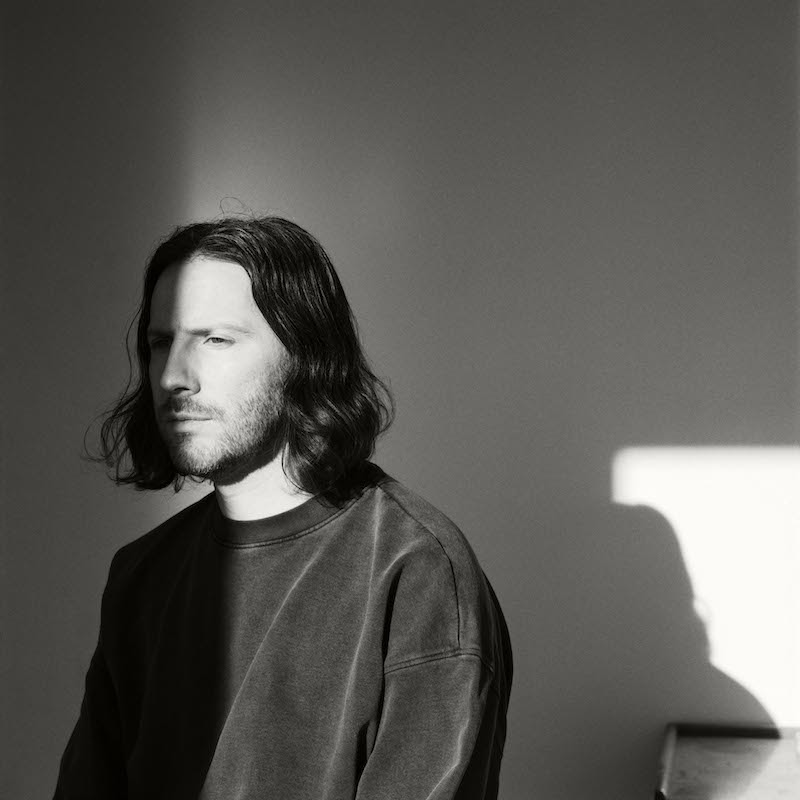
Japanese artist Masayoshi Fujita will release new album Forest of Tranquility on November 13th via Erased Tapes and is today sharing the first single from the record Portal To The Universe.

When Masayoshi Fujita was invited to create the soundtrack for Expo 2025’s vast living nature installation, he immediately envisioned a relaxing public space in which visitors could tune out the noise and restore their energies. Inside this green open-air sanctuary – visited by millions of people during the landmark Osaka event, which ran for six months – stood a central pond and 1,500 real trees, all rescued and repurposed from Expo’s former ‘70 site and other parks in Osaka. Fujita set about deepening the listener’s connection to the complementary ebbs and flows of the natural world using dynamic shifts and gentle arcs to shift the mood. The result was a living tapestry that mirrored the surrounding forest, with nonlinear patterns and textural twists and turns — creating a portal into the unexpected.

It’s from this honourable commission that Fujita’s new album for Erased Tapes, Forest of Tranquility, grew. Like the Japanese kankyō ongaku (environmental music) pioneers Hiroshi Yoshimura, Midori Takada and Haruomi Hosono before him, Fujita makes gentle, mind-massaging music intended to blend harmoniously with its environment. For Expo ‘25 visitors, this synchronicity – the forest setting intertwined with its associated sounds – would have bettered their experience of being outdoors; for at-home listeners, this synergy now takes the form of a serene transportive pod, capable of taking you anywhere you wish.

On first single Portal To The Universe Fujita said, “This song was made as the last song of a day. It feels like you are slowly drifting in the vast universe and the sea of memory.”

On the follow-up to 2024’s Migratory LP, the organic resonance of Fujita’s acoustic instruments – marimba, vibraphone, and percussion, with Armenian duduk from Hayk Karoyi and Japanese shō from Mattias Hållsten – acts as a showcase of nature’s design. Field recordings of birds and frogs make a hidden home among its branches and broad leaves, and bring the album’s biomimicry and ecological quality into even sharper focus. As do the atmospheric drones and burrs of white noise that evoke the wind whipping through the mountains. But, mainly, the objective was to carve out a roomy soundworld for reflective thought. “I wanted to have a lot of space in between the sounds,” says Fujita.

Having lived in Berlin for 13 years, Fujita moved to rural Japan in 2020, aiming to make music in nature. Now he is as close as one can be, living with his family high up in a mountain village along the coast of Kami-cho, Hyōgo, three hours west of Kyoto – surrounded by water and the occasional bear – and working out of a former kindergarten. For that reason, coursing through the leafy veins of Forest of Tranquility is the distinct feeling that you, too, might wander off into the wilderness someday and never return to the city.

Forest of Tranquility blooms across seven long-form trails; each shifting subtly in tone according to the time of day. “They had a biorhythm – in the morning you start a little bit slowly and with a little bit more space, and then around noon you get a little bit more active. Then in the afternoon you get more settled and calm, and around 6 o’clock you are more active, before revisiting calm,” explains Fujita of the concept behind the original commission.

Early morning reveries, characterised by brighter mallet percussion, and afternoon pick-me-ups sit alongside quieter nocturnes, while every hour on the clock is guided by the hand of something bigger than ourselves. “I had this image of nature being a portal to the universe,” says Fujita. “The idea I have lately about nature is that it makes us aware of the universe that exists beyond it.”

Themed around this idea, Portal to the Universe is an immersive listen, building its own sound journey from a toolkit of cicadas, chimes, and woodwinds – strewn with the distant chatter of children – all while coaxing the brain into thinking relaxation is attainable. The track was intended to work as the very last song of the day. “I had the image of a very dark night sky in my head for that one… It feels like you are slowly drifting in the vast universe and the sea of memory”, says Fujita. Iterations of this emerge throughout the record, which is where you can hear the artist’s bucolic dream come to life over and over: on the title track – true to its namesake in its embrace of stillness, rooted in “a feeling of birth, the soft beginning of a day in the forest”, according to Fujita – on the duduk-steeped Light, Wind, and Water – a paean to the elemental forces, gently dappled with marimba and flute – and on All Creatures Bow to Evening – a track leavened with hand percussion, unfurling itself as languidly as a cat stretching out in the golden-hour sun: comfortable tiredness, if you like.

Fujita paints other points of the record with bolder strokes of the marimba, pairing its subtle sustain with blankets of starry synths or sparkling idiophone on ‘Departure’ and ‘Komorebi Dance’, the latter referencing a Japanese word that loosely translates to “sunlight filtering through the leaves of trees.” For the original commission, Fujita was tasked with making compositions that react to the weather using a sensor system installed at the exhibit. This meant creating three versions of each two-hour piece – sunny, cloudy and rainy – with the textures modified depending on the climate, and with frog calls representing the rain.

But whatever the weather, whatever the time of day, or wherever you are in the world, Forest of Tranquility places value on silence, offering a break from the noise and a blank canvas for filling with your own thoughts – or for simply gazing into the cosmos.

Published post no.3,017 – Tuesday 15 September 2026
Switched On – Daniel Brandt – Without Us Reworks / Remixes (Erased Tapes)

by Ben Hogwood

What’s the story?

Back in March, Daniel Brandt released his third solo album Without Us, described as “a multimedia project that clashes head on with the spiralling chaos of our times”. In our review earlier this year, Arcana noted its “almost irresistible urgency”. Now it returns in remixed form, with Daniel – one third of celebrated German beatmakers Brandt Brauer Frick – taking up the story:

“I invited close collaborators, friends and artists I have been a fan of for a long time to create new versions of the music, including several artists who helped shape the original record. Akusmi, who played many of the guitars and is part of the live band, and Rashad Becker, who mixed the album, both created new versions. Adam Freeland – whom I met in the desert while working on the album, and later worked in his studio in Joshua Tree—also contributed a remix. The live premiere at the Barbican ended in a rave, and some of the remixes, like the ones by Camea, Adam and Hiro reflect that energy. I’m also thrilled to have inspirations such as Tangerine Dream and C. Diab to have contributed with their versions.”

What’s the music like?

Compelling. The range of musical styles on this collection is wide, showing the versatility of Brandt’s originals, and the scope with which he works when writing an album.

C. Diab begins with a full-bodied cello statement in a rework of Persistence, which breaks out into a kind of motoric drone / krautrock interface. Perhaps not surprisingly, the space around the music is pretty vast on the Tangerine Dream rework of Nothing To Undo. PNK goes through the wringer with Akusmi’s pinpricks of minimalist melody, a thrilling and energetic approach, while Rashad Becker is more maximalist in an eventful take on Without Us. Activity is also the name of the game in Bi Disc’s excellent, up-tempo remix of Steady, and then it’s great to see the name Adam Freeland pop up again on a driven yet ethereal take on Paradise O.D. The same track gets some oblique, funky turns from Hiro Ama, after we’ve heard from Camea (a super-deep account techno account of Resistance) and Brandt himself, with the clattering beats and piercing tones of Lucid.

Does it all work?

It does. The vision of Brandt’s original is retained, but the responses here cover a wide emotional response, and a satisfying cross-section of electronically driven genres.

Is it recommended?

It is indeed. Without Us is worth listening to as a double album – Brandt’s powerful original and this set of enjoyable and boundary-pushing remixes. Excellent stuff once again.

Listen / Buy

Published post no.2,740 – Tuesday 9 December 2025

Switched On – Rival Consoles: Landscape From Memory (Erased Tapes)

by Ben Hogwood

What’s the story?

After an extended time out, Ryan Lee West – the man behind Rival Consoles – returns with his ninth album.

Having fallen out of favour with the creative process, West retreated and started composition by way of an audio scrapbook, where past clippings and musical sketches were transformed into fully fledged tracks.

What’s the music like?

There is a fresh, revitalized feel to Rival Consoles on this album. In fact West seems to be falling over an abundance of ideas, but has found the best way to get them all together and make an album that is consistently rewarding, colourful and durable.

There are many highlights, such as Coda and Drum Song, where percussive work and melodic craft work well hand in hand. Yet at times the music is at its most effective without a drum track, as on the start of Nocturne, or the reverie Tape Loop. 2 Forms brings both together intriguingly, starting in an ambient mood but with a sudden burst of acidic, quasi-industrial noise.

Gaivotas, meanwhile, is a great illustration of the colour West brings through from the studio, a rich and dazzling array of textures.

Does it all work?

It does – and the album only gets better and more rewarding with repeated listening.

Is it recommended?

Yes. If you’re a Rival Consoles fan then you will need no persuasion, but if you are new to his music then Landscape From Memory is a great place to start.

Listen / Buy

Published post no.2,599 – Thursday 18 July 2025

New music – Rival Consoles: Known Shape (Erased Tapes)

Rival Consoles, aka Ryan Lee West, will release his ninth studio album, Landscape from Memory on July 4 via Erased Tapes. The label have released a new single, Known Shape, ahead of a pre-album tour across Europe.

Talking about the track, West said “I’ve always been obsessed by controls on machines because they produce beautiful sounds and they have their own rhythms. The drums are made from rotating switches and the synths are set in motion by invisible mechanical rhythms. Machines have a special connection to the human spirit, which is both good and bad but above all restless. There is a constant searching in Known Shape for some kind of answer or emotion.”

Known Shape is a relatively understated piece of music, but compelling too – the beats describing the mechanical processes flit across the stereo picture, while snippets of melody drift in, as though the listener is hearing a piece of music on the other side of a door.

The piece is accompanied by a graphical score West created, shown below:

Published post no.2,514 – Thursday 14 April 2025

Switched On – Daniel Brandt: Without Us (Erased Tapes)

by Ben Hogwood

What’s the story?

“If we’re dancing on the brink then we might as well make sure that the music is great.”

So reads the alarming and rather compelling sentence emphasising the point of Daniel Brandt’s Without Us album. Brandt began the record as an impassioned response to what he terms “the helplessness of the individual in the climate crisis and the apparent need to take radical global action to change the trajectory of the current threat of a climate disaster.”

What’s the music like?

Given the theme, it is not a surprise to report that Daniel Brandt’s music on Without Us is far from comfortable. He often veers between extremes, looking for comfort on one side while on the other realising that there is so little time left, it needs to be filled with music of the utmost urgency.

Paradise O.D. recognises this, taking shape quickly with a primal base to its bare rhythm and stripped back texture. Resistance follows the same outline, though under an ominous, synthesized cloud. Lucid does not stay true to its name, forms twisted beyond recognition as though wilting in a hot desert of inflamed temperatures. The fact Brandt wrote a good deal of this album in the Joshua Tree in California only adds to the atmosphere. PNK is a disquieting experience, with a lot of industrial activity taking place at a quick pace but with no apparent end goal other than to make people move quickly:

Yet there are moments of pure beauty to be found, too. Steady is an airy kickback, with some lovely open air textures given a freewheeling beat for company, while Soft Rains offers a comforting heat haze.

Does it all work?

Yes – on a brave and undeniably powerful album, Daniel Brandt hits the spot far more often than not.

Is it recommended?

It is. This is recognisably the work of a player from Brandt Brauer Frick, but Daniel Brandt has turned his beat making to serious means on this powerful piece of work. The importance of the dance is still there, but with the clock ticking there is an almost irresistible urgency to this music.

For fans of… Brandt Brauer Frick, Philip Glass, The Field, Pantha du Prince

Listen / Buy

For streaming and purchase details, Erased Tapes have a set of useful links

Published post no.2,487 – Friday 28 March 2025