Whitelands are a breath of fresh air. With shoegaze an area of music populated mostly by white males, it is refreshing to report the ascendancy of a black quartet who have been supporting Slowdive on a recent UK tour.
Although they have been a going concern since 2018 this is the debut album for the current line-up, with singer and guitarist Etienne joined by Michael (guitar), Vanessa (bass) and Jagun (drums and backing vocals).
It was Slowdive themselves that inspired the band’s current musical direction, though their diverse backgrounds from rock, techno and R&B inform their music too.
What’s the music like?
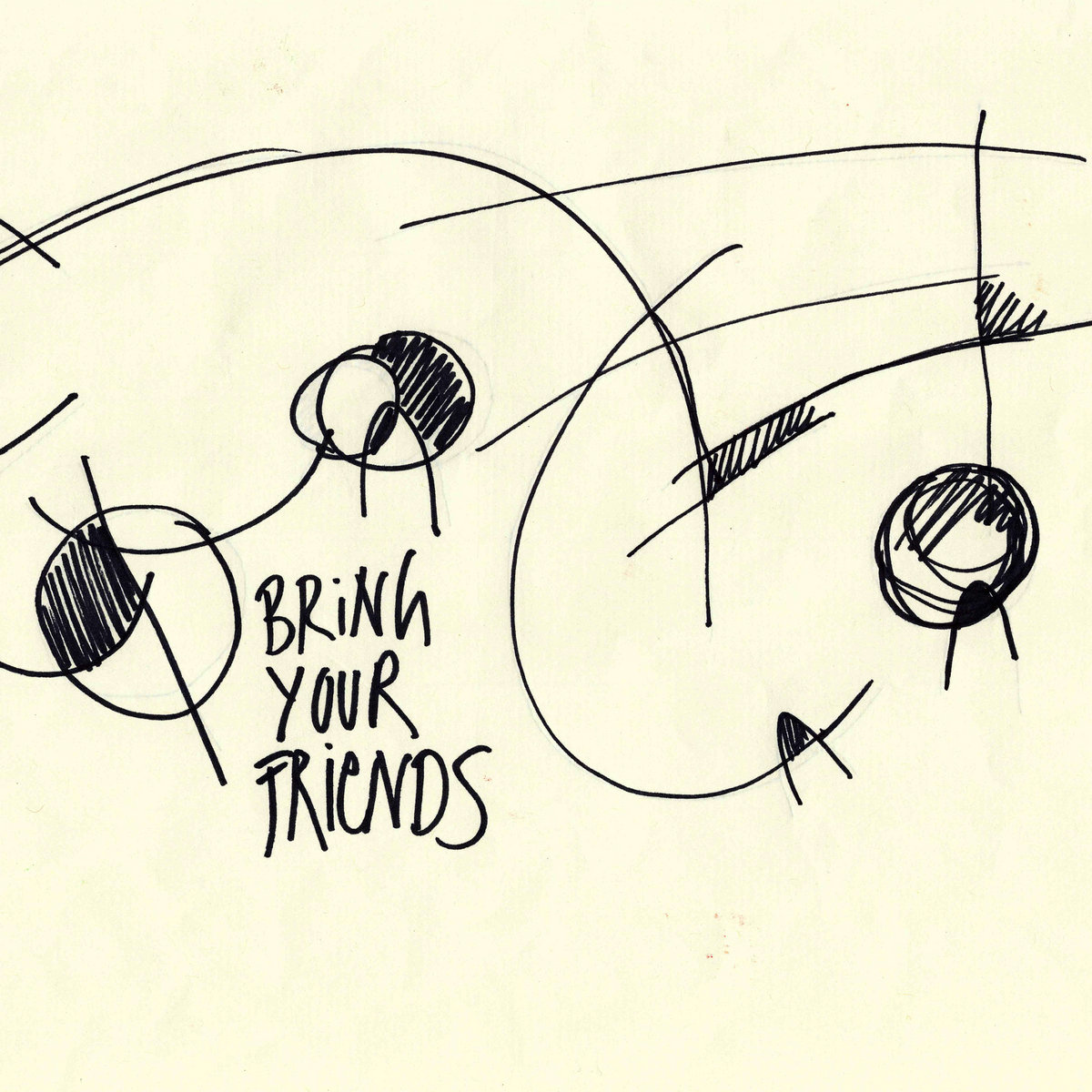
As refreshing as the band themselves – and the cover art, too. The blast of sound that welcomes Setting Sun is like a jet of fresh water full in the voice, all the levels going to up red with an invigorating wall of guitar sound, one that is soon revealed to contain plenty of melodies.
The band’s diverse influences reveal themselves subtly as the album progresses. While ‘shoegaze’ is the main style – a wall of guitars and softly spoken vocals to complement – there is a funky undercarriage to the beat of The Prophet & I, which typifies the excellent drumming throughout, and the excellent Tell Me About, where Etienne is joined by the softly-sung Dottie for some gorgeous harmonizing.
Sometimes the guitars form the same effect of a wordless choir, on the evocative Setting Sun, other times there are subtly curved melodies, as on Cheer. The slow burning Born In Understanding is a stately mover. Overall though there is an impressive momentum coursing through the album, with one of the best examples being Chosen Light – a combination of guitar sounds you can dive in to, a propulsive rhythm and subtle, warm-hearted vocals.
Does it all work?
It does – and the more you listen the more the melodies stick.
Is it recommended?
Yes. This is a record to bathe in, a sonic spectacular that has at its core some heartfelt songs. More please!
Yesterday lunchtime I listened on BBC Radio 3 to a very fine recital from London’s Wigmore Hall by pianist Elisabeth Brauss. It was a typically inventive hour including music by Beethoven, Albéniz and Prokofiev (above) that you can listen to by clicking on BBC Sounds
The Prokofiev chosen was an early work, a selection of eight pieces from the ten the composer published as Op.12 in 1913. It put me in mind of a huge amount of piano music by the composer that goes under the radar, left in the shadow of the nine piano sonatas and the famous transcriptions from ballets Romeo & Juliet and Cinderella.
Here, then, is a celebration of those pieces – performed by Frederic Chiu. They show the composer getting into his stride, with plenty of wit, but a soft centre too:
Inspired by this discovery, I have gone on to purchase some of the composer’s other collections of pieces, including the Music for Children. I will report back at a later date on those, I expect!
One of the great things about music is its community spirit; the possibilities it offers for making art with friends. Such is the case with Alev Lenz and Jas Shaw, who have been friends for a decade or thereabouts, and have put that friendship on record with a quintet of songs.
Alev Lenz is a talented singer-songwriter whose credits include songs for the screen (Black Mirror and Dark) and also production work with Anoushka Shankar and Roomful of Teeth. Jas Shaw has a good deal of previous with the band Simian, who then morphed into Simian Mobile Disco. He may not have undertaken as much production work as his bandmate James Ford, but his work with Gold Panda as Selling yielded the fine album On Reflection.
This five-track mini-album is described as ‘dreamy lullabies that confirm the pair’s perfect match’, with Lenz saying the album ‘is about friends talking about the state of the world and their souls.’
What’s the music like?
This is light music – but not necessarily in a pop sense, more in its economical use of texture in music and the endearing vocal that floats up top.
The five tracks are very subtly dressed with starry textures, lighting A World Beyond with pinpricks of melody in response to Lenz’s dreamy vocal. Between Two Breaths is even more effective, the voice mulitracked in very close harmony, with comfortable dissonances that pan out beautifully against a spacious backdrop.
Overstrung but Underdamped is a beauty, a meditative track that becomes a calming mantra, Lenz’s voice used to its maximum effect by Shaw who allows only the minimum counterpoint.
Does it all work?
Yes – if only there was more of it! This is definitely a case of quality rather than quantity, with the five songs over in 25 minutes – but they do leave a very positive impression.
Is it recommended?
It is – a brief encounter this may be, but there is a special musical chemistry between these two friends.
Today is Mothering Sunday in the UK – and here is a playlist celebrating mothers.
We begin with a touching suite for piano by Josef Suk. About Mother is dedicated not to his own mother but for his children about their mother, his wife Otilie Dvořák. Then we continue with a famous song from Suk’s father-in-law, Antonin Dvořák, Songs My Mother Taught Me.
Taking the theme a little loosely we move on to Ravel, and his delectable ballet Ma mère l’oye (Mother Goose) – evidence of the French composer’s beautiful writing for orchestra.
Finally something of an English rarity, Cecilia McDowall setting the Magnificat (the song of Mary, Mother of God) for chorus and orchestra. It is a striking piece with which to end.
I hope you enjoy!
This playlist is dedicated to the memory of my aunt, Angela – who passed away on Thursday. It is also posted in mind of her sister – my own mother Coralie (above), whose musical influence on my own life I celebrated on Arcana here.
Frank Dupree (piano, above), Philharmonia Orchestra / Santtu-Matias Rouvali (below)
Glinka Capriccio brillante (Spanish Overture no.1 ‘Jota Aragonese’) (1845) Kapustin Piano Concerto no.5 Op.72 (1993) Borodin Symphony no.2 in B minor (1869 – 1876) Rimsky-Korsakov Capriccio Espagnol Op.34 (1887)
Royal Festival Hall, London Thursday 7 March 2024 (7.30pm)
Reviewed by Ben Hogwood Pictures (c) Raphael Steckelbach (Frank Dupree), Sisi Burn (Santtu-Matias Rouvali)
After this orchestral spectacular, I can confidently say that the Royal Festival Hall is free of cobwebs!
This most appealing program from the Philharmonia Orchestra was a cosmopolitan collection of works with roots in Russia, in the symphonic tradition (Borodin), delivering postcards from Spain (Glinka and Rimsky-Korsakov) or bringing in music from even further across the Atlantic (Kapustin).
The work with the farthest reach took top billing, thanks to the advocacy and breathtaking pianism of Frank Dupree. Making his debut with the Philharmonia, the soloist seized the opportunity to share his love of the music of Nikolai Kapustin, a composer he has championed on record in the past three years.
To call Kapustin ‘eclectic’ would be an understatement, but the label fits his unusual gift for looking outwards from classical music to jazz, boogie-woogie, Latin and even rock. To his credit none of those stylistic references sound hackneyed, and although the single-movement Piano Concerto no.5 is written out on paper it has a fresh, improvisatory quality that Dupree and the Philharmonia fair lifted off the page.
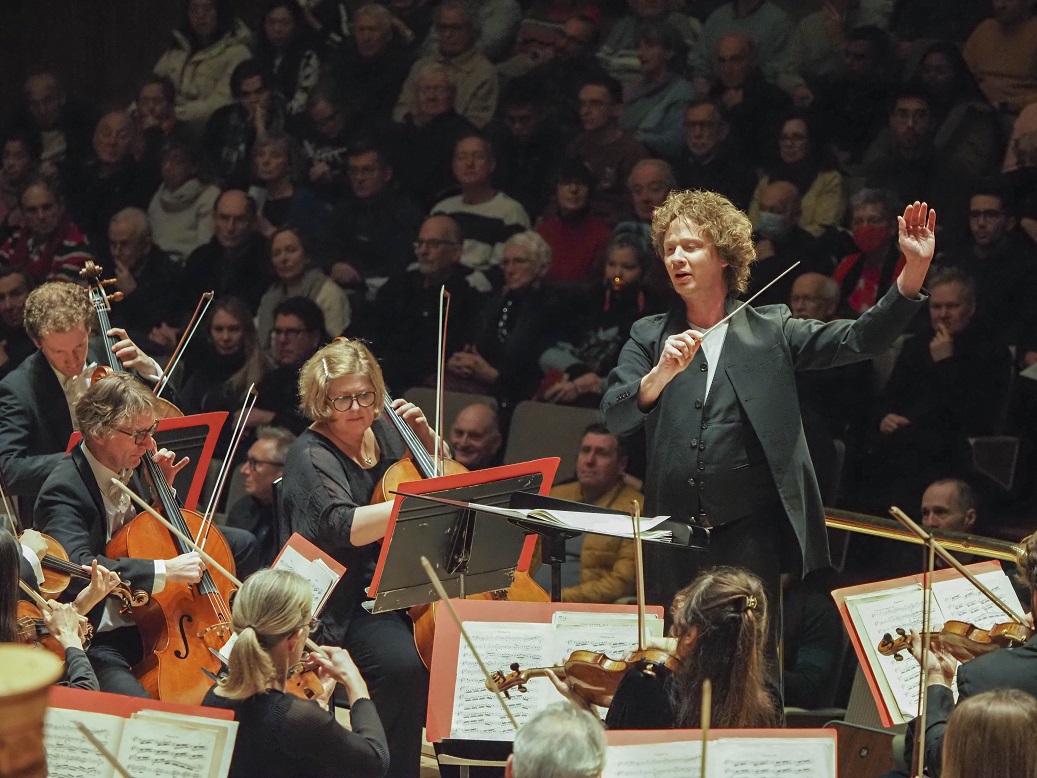
There were fun and games in this performance, harnessing elements of Gershwin, Milhaud and Shostakovich’s jazz writing, but ultimately channelling a style all of Kapustin’s own. Dupree shared the many musical jokes with the audience, while the Philharmonia percussion section – drum kit, bongos, castanets, everything but the kitchen sink! – was on hot form, Santtu-Matias Rouvali conducting with relish. The slow music explored more tender asides, evoking Harlem nights or even poolside in a hotter climate, while the fast music found Dupree exhibiting deceptive virtuosity as he navigated riffs and syncopations aplenty.
Even this wasn’t quite the highpoint, for there followed a high-spirited encore, Dupree leaning into the piano to thrum the strings in an atmospheric introduction to rhythmic high jinks, the percussion section – including Rouvali – out front to joust playfully with the soloist. It brought the house down.
With such a crowd-pleasing concerto, it was to the Philharmonia and Rouvali’s enormous credit that the rest of the program did not suffer, thanks to sparkling performances of music by three of the ‘mighty handful’ from late 19th century Russia.
Glinka’s clever interpolation of Spanish themes into his own Romantic language was brilliantly conveyed, a colourful account where Rouvali’s tempo had just the right ebb and flow. It is easy to forget this music is as old as 1845, and while the influences of Berlioz and Mendelssohn were still relatively fresh there was plenty of swagger in the dancing rhythms, the percussion again enhancing the brassy swagger of the closing pages.
Rimsky-Korsakov’s Capriccio Espagnol was even more successful, a treasure chest of melodies opened with evident enthusiasm by Rouvali, whose rapid tempo changes did occasionally leave the string section needing to make up ground. Cadenzas for violin (orchestra leader Zsolt-Tihamér Visontay), flute (Samuel Coles), clarinet (Mark van de Wiel) and harp (Heidi Krutzen) were superbly executed, Rimsky’s mini ‘concerto for orchestra’ revealed in glorious technicolour.
Rimsky wrote the Capriccio while orchestrating his friend Borodin’s opera Prince Igor – and it was his own Symphony no.2 that was in theory the most ‘sober’ of the night’s four works. We reckoned without a powerful performance from Rouvali and his charges, however, making the most of a work bursting with melodic ideas that should be heard much more often in the concert hall. The first of these ideas sets the tone for the symphony, a stern utterance with strings digging in and brass solemnly intoning their thoughts. Once heard the melody sticks in the listener’s mind, dominating the first movement where symphonic arguments were tautly exchanged.
There was room for lightness, however, in the quickfire scherzo and jubilant finale. These movements were bisected by an emotive third movement of deeper Russian origin, its theme lovingly delivered by cellos but finding plangent brass (the wonderful horn section led by Ben Hulme) and superb woodwind solos to complement. Rouvali relished the chance to dust off this relative symphonic outcast as part of a thrilling, memorable concert. The smiles on the faces of the Royal Festival Hall concertgoers as they filed into the open air said it all.





 Arcana.fm