Unknown's avatar

About Arcana

My name is Ben Hogwood, editor of the Arcana music site (arcana.fm)

Listening to Beethoven #226 – 6 Ecossaises WoO83

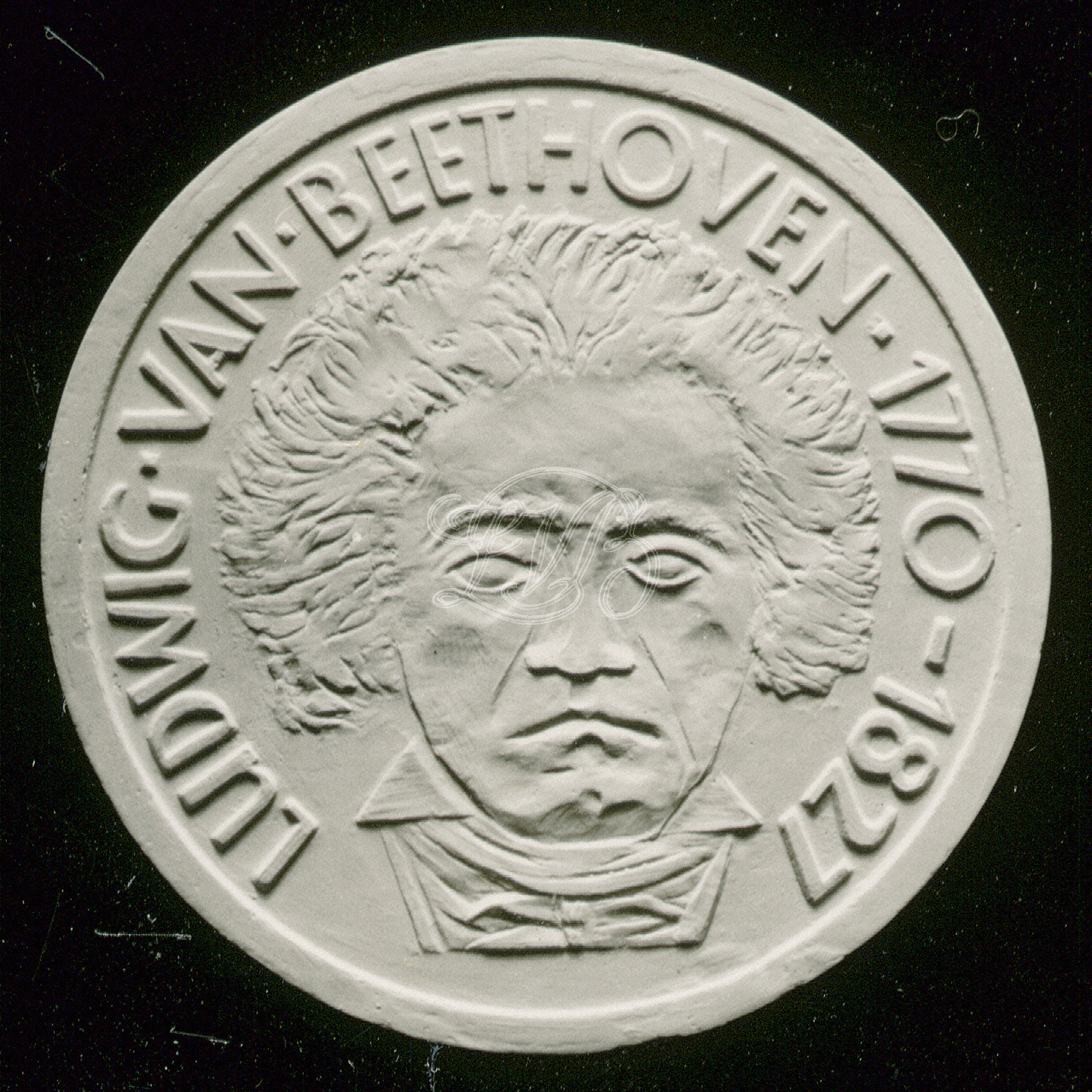
Design for a Beethoven commemorative coin for 5 German marks, 1969 – photograph of an unmarked model

6 Ecossaises WoO83 for piano (c1806, Beethoven aged 35)

Dedication unknown
Duration 2″

Listen

by Ben Hogwood

Background and Critical Reception

The general Wikipedia definition for an Ecossaise is ‘an energetic country dance in duple time in which couples form lines facing each other’. Keith Anderson, writing notes for Naxos, states that ‘the so-called Scottish dance was, in fact, a form of contredanse, a product of French imagination’.

Beethoven wrote a small number of these dances for piano, and according to the brief notes for the DG Beethoven Edition, ‘some of these were intended to be used in ballrooms to accompany actual dancing, as seems to have been the case with the ecossaises and waltzes WoO83-86.’

These examples were published in 1807, though there is some doubt over their authenticity.

Thoughts

These lively dances are a lot of fun – and Beethoven shows that even in supposedly minor works like this, he is still capable of writing a tune that will stay in the head. It is the refrain that ends the first dance, and then comes back for a repeat after each of the six little variant dances.

Anyone who had ventured on to the dance floor at the sound of the first dance will surely have stayed for the duration, and hoped for more of the same in successive works!

Recordings used and Spotify playlist

Ronald Brautigam (BIS)
Jenó Jandó (Naxos)
Olli Mustonen (Decca)
Alfred Brendel (Vox)
Wilhelm Kempff (DG)
Martino Tirimo (Hänssler)

Some lively recordings here, and some notably different approaches. Martino Tirimo is curiously stilted, while Brendel, Kempff and Jenó Jandó are typically elegant. Ronald Brautigam is brisk and lively, his dancers whirling around in circles.

Also written in 1806 Hummel 12 Minuets

Next up String Quartet no.7 in F major Op.59/1

On Record – Manu Delago: Snow From Yesterday (One Little Independent)

by Ben Hogwood

What’s the story?

For his new album, percussionist and multi-instrumentalist Manu Delago has teamed up with the vocal ensemble Mad About Lemon and a group of other players to present a concept album.

Snow From Yesterday forms a direct connection with the environment, examining the life cycle in all its stages, in close-up intimacy or panning out for widescreen views of the global climate.

What’s the music like?

This is a thoughtful and thought-provoking album, one that often proceeds like a conversation between composer and listener.

Mad About Lemon help greatly with this, their direct lyrics simply delivered but leaving a mark with unanswered questions and observations. Modern People pits the three part close harmony of the three ensemble members Heidi Erler, Mimi Schmid and Anna Widauer together with handpans, its lyrics already considering the stages of life from when ‘the first chicken laid an egg’. Polar Bear notes of how ‘once upon a time, Greenland was white’. Stay Afloat has a darker global overtone, the vocalists intoning the names of big cities with industrial sounds circling ominously.

Musically it is Delago’s widest ranging record yet. As well as the vocals there are colourful contributions from brass ensemble, where Dominik Fuss (flugelhorn), Alois Eberl (trombone and bass trumpet), Christina Lachberger (trombone) and Simon Teurezbacher (tuba) add rich colours. These are often successful, with intricate part writing on Ode To Earth, and a softly voiced coda to Paintings On The Wall beautifully realised. Just occasionally, however, the lines can meander, as they do on Oxygen.

Clarinettist Christoph Pepe Auer adds soft tones to Little Heritage, where he is complemented by the sounds of a baby, while double bassist Clemens Rofner adds greater depth to the sound. Yet perhaps the most affecting track is the simplest, Immersion pitting the handpan against electronics to lasting effect.

Does it all work?

Mostly. On occasion – and especially if the listener is not in the mood – the sentiments can sound a little precious. But this is a very carefully thought-out album, and one where Delago’s feelings about the earth and its direction are realised with a great deal of emotion. The performances are on point, too – Mad About Lemon sing beautifully, and the instrumentalists show a rare sensitivity in their playing.

Is it recommended?

It is. This is Manu Delago’s bravest artistic statement to date, an ambitious work that leaves a powerful impact. A record to grow with and to return to, that’s for sure.

For fans of… Anoushka Shankar, Ólafur Arnalds, Portico Quartet

Listen

Buy

Published post no.2,085 – Monday 12 February 2024

Listening to Beethoven #225 – 32 Variations in C minor WoO80

Oil painting of Beethoven by Isidor Neugass in the collection of Prince Lichnowsky, 1806

32 Variations in C minor WoO80 for piano (1806, Beethoven aged 35)

Dedication unknown
Duration 11’30”

Listen

by Ben Hogwood

Background and Critical Reception

1806 was proving to be an extremely productive year for Beethoven. So much so that Jan Swafford, in his biography of the composer, talks of it as a ‘minor work’, which Beethoven ‘dashed off and forgot about’. He failed even to recognise them in public when the daughter of the piano maker Streicher played them.

For Lewis Lockwood, the variations ‘belong to a group of ‘heroic’ works written in 1806’. He describes the ‘standard Baroque passacaglia theme’, and how ’every variation except the last is equally brief, making the work a parade of short, brilliant pianistic transformations in the same rigorously maintained length and form.’ Beethoven’s contemporary, Carl Czerny, was impressed, who recommended that ‘since the theme is short, this work is best performed in public for a thinking public’.

32 variations was an inordinately high number of variations, almost certainly the most any composer had used in a single piece at that time. Lockwood notes that this may have acted as a spur when Beethoven outdid himself by one more variations when writing his great Diabelli opus later in life.

Thoughts

This certainly doesn’t sound like a minor work, at any point!

Beethoven casts an imposing theme, in spite of its brevity, sharply dotted like the beginning of a baroque overture. Stabbed, repeated notes means we fly through the first variations (1-3), and Beethoven almost gestures for the listener to keep up as he proceeds on his way with incredibly fluent composition, the variations easily but indelibly linked.

The massive seven-note chords to Variation 6 show the scale on which he was thinking for the pianist, though after a flurry of notes there is a rare note of calm as C major arrives for Variation 12. The next four variations proceed in the major key, as the compelling arguments continue – before we return to the minor key and some remarkable outbursts and figurations, straining at the link with almost unbridled fury.

The whirlwind of inspiration includes passages reminiscent of the Pathétique and Waldstein sonatas, before the variations finish almost as quickly as they arrived, signing off with a cheeky pianissimo for the last two chords.

Recordings used and Spotify playlist

Cécile Ousset (Eloquence)
Rudolf Buchbinder (Teldec)
Ronald Brautigam (BIS)
Emil Gilels (EMI)
Olli Mustonen (Decca)
Angela Hewitt (Hyperion)

There are some very fine recordings of these variations, from Angela Hewitt, Mitsuko Uchida and Rudolf Buchbinder. Two, however, stand proud – the magisterial Emil Gilels, typically masterful in performance and execution, and Cécile Ousset, a performance of great character and flair as part of her wonderful collection of Beethoven variations. The work is much-loved and a great concert piece, too.

Also written in 1806 Hummel 7 Hungarian Dances

Next up 6 Ecossaises WoO83

On Record – Belle Chen: Ravel in the Forest (Platoon)

by Ben Hogwood

What’s the story?

Pianist-composer Belle Chen draws on the music of Maurice Ravel for this new album, using the French composer’s melodies and piano textures as a starting point for her own response to the place in our lives that forests hold.

For Chen a single experience led her towards this album, a sunset in Australia where she watched a particular tree at sunset in a tropical rainforest. As the sun dipped in the sky the forest came to life, with birds, frogs and other beings becoming animated by the light – an experience that gave her renewed awareness of her place in the ecosystem.

To Ravel’s music Chen adds electronic effects and various techniques to bring extra colour to the upright piano she uses throughout – while some of the pieces are purely original, using the clarity of Ravel’s style for inspiration.

What’s the music like?

This is a classy chill out album – with all the qualities you get from music that you might expect to hear on a peaceful piano playlist, but with added detail that really rewards repeated listening or immersive playbacks on a surround sound system.

Belle Chen has put together some clever arrangements, and when Ravel’s music is in play she is careful not to crowd the melodies in any way. That heart-shifting melody from the slow movement of the Piano Concerto is well-treated on Adagio, San, while the theme from the skittish scherzo in his String Quartet is brilliantly realised in its new guise on Kingdom Animalia.

Adding animal noises to evoke the forest could have been a dangerous move, but again the effects are subtly done – as is also the case with the strings of the Budapest Art Orchestra when used on Moonrise and Closer.

At times the listener is transported far beyond the listening environment to stand in the forest itself, and on tracks like And It Rains the vivid evocation of droplets is enhanced by adding felt to the piano. Three Birds is brilliantly done, too, as is Chen’s evocation of The Dragonfly, realised with rapid passagework on the dampened keys.

Does it all work?

It does, impressively so. Often it can be said that piano chill-out albums become one-dimensional as they progress, but this is different, as Chen keeps subtly varying the textures, the melodies and the emotions to keep the attention of the listener.

Is it recommended?

It is, enthusiastically. Belle Chen has a really appealing and respectful way of interacting with Ravel, using the bones of his material to create an album buzzing with incident and inspiration. Her own original compositions are both original and captivating. As a result, Ravel’s music is successfully reimagined for a 21st century audience.

For fans of… Ravel, Philip Glass, Nils Frahm, Michael Nyman

Listen & Buy

Ravel in the Forest is released on Friday 16 February. You can listen to clips from each track and purchase at the Presto Music website

Published post no.2,083 – Saturday 10 February 2024

In appreciation – Seiji Ozawa

by Ben Hogwood

Today we learned the sad news of the death of much-loved Japanese conductor Seiji Ozawa at the age of 88.

Among many other achievements Ozawa was the longest serving music director in the history of the Boston Symphony Orchestra, who he led from 1973 until 1992.

There is a comprehensive biography of Ozawa on the Decca Classics website, nearest to the label he called ‘home’ – which was Philips Classics from the Universal family. Ozawa made some very fine recordings in his career, and Arcana have picked a cross-section of personal favourites in the playlist below. Perhaps appropriately, the music selection begins with the Requiem for String Orchestra by Ozawa’s compatriot and contemporary, Toru Takemitsu, and includes an instalment from his pioneering Mahler cycle with the Boston Symphony Orchestra.