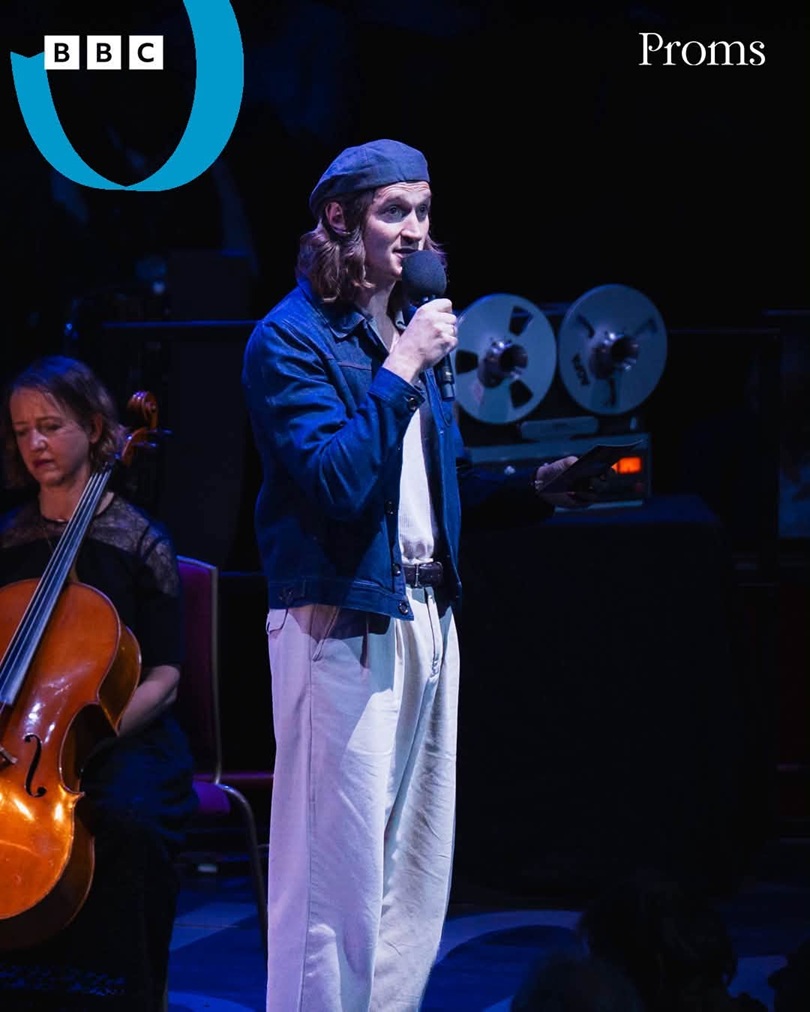
Alice Boyd (soundscapes, synthesizers, vocals), Belle Chen (piano, synthesizers), Lucinda Chua (cello, vocals), Erland Cooper (electronics, piano, presenter, tape machines), Katherine Tinker (piano, synthesizers), Isobel Waller-Bridge (piano), BBC Symphony Chorus, City of London Sinfonia / Alexandra Wood (violin)
Royal Albert Hall, London
Thursday 20 August 2026
Reviewed by Ben Hogwood Photos (c) BBC /
The role of classical music in modern society is changing. With the need to ‘unwind’ greater than ever before, thanks to an age of conflict, hardship and technology – constant visual and audio bombardment from our devices, among many other things – there is a space where calm and undemanding music can make its understated mark.
This can of course happen in operas and substantial Prom concerts, but that Radio 3 should introduce Unwind, their digital counterpart to the main station, says a lot about the mental health of our generation and our short attention span, constantly fraying at the edges as we deal with anxieties, the media and too much attention to social media (I’m speaking for myself here!)
Ultimate Calm is a programme residing on the new channel, beginning on Radio 3 itself under the guidance of the well-qualified Olafur Arnalds before finding its new spiritual home. So how do the BBC Proms achieve ultimate calm, and is it better in person or experienced at home?
The first sounds on arriving in the arena at the Royal Albert Hall were those of blackbirds, surely the idea of Orcadian composer and multi-instrumentalist Erland Cooper – who, as a regular Unwind contributor, curated this Prom. The music was in the most part enhanced by the birdsong and other field recordings, reminding us of the importance and appreciation of natural beauty.
The published programme proved helpful to a point, listing the pieces but not in the order they were performed. Cooper’s music secured a sonorous and comforting start, his Music for Growing Flowers (Nocturne) presented in a new arrangement blossoming like its subject. The yearning tones of the BBC Symphony Chorus were supplemented by cleverly wrought percussion with the hands imitating rain and wind and complemented by the soft bed of City of London Sinfonia strings.
This curtain raiser / light dimmer was the first work of what became a streaming playlist in live form, with little between the tracks save for field recordings, allowing the listener to picture a natural space. The musical language was largely simple – not a criticism – as it allowed the mind to wander, and – ultimately – to unwind.
Pianist Belle Chen chose well with her pieces, two excerpts from the excellent Ravel In The Forest album that included evocative forest noises from a synthesizer positioned on top of the piano. Moonrise, the first excerpt, leant on Barber’s Adagio for Strings for its inspiration and proved effective in this context.
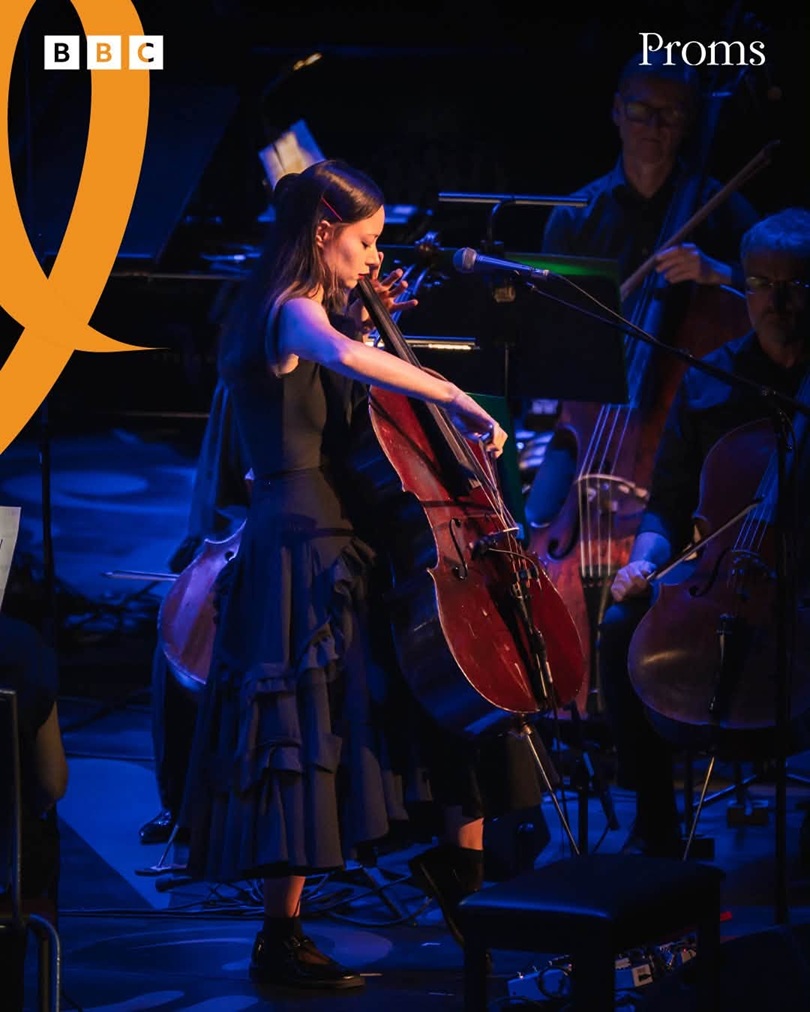
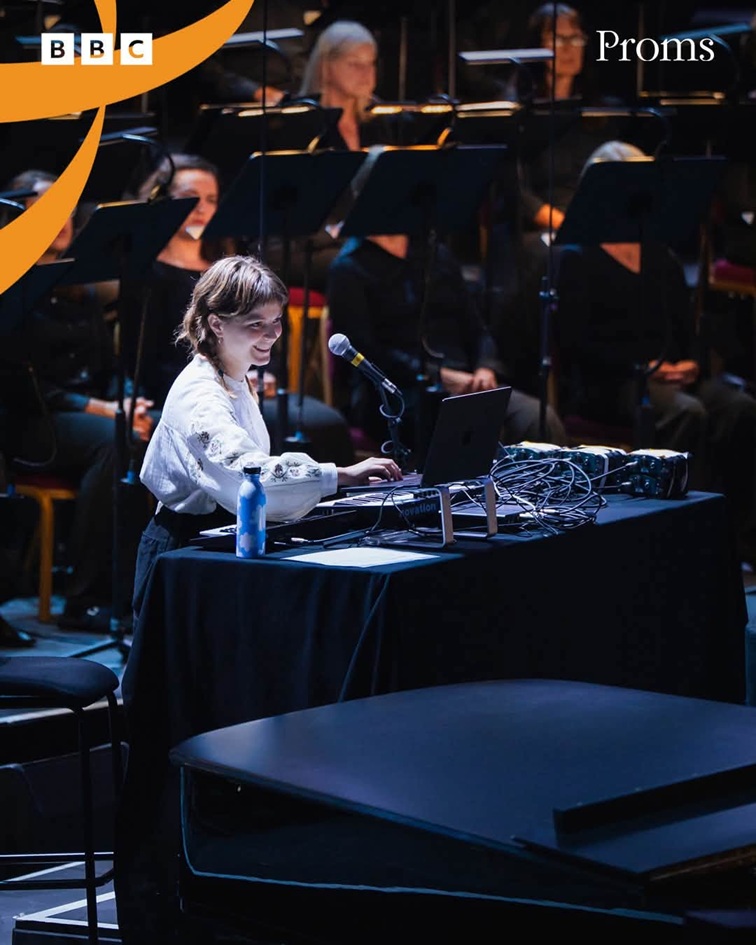
Lucinda Chua’s cello (above) then explored rich, multitracked sonorities on I Left the Earth, while a vocal number, Something Other Than Years, provided a musical affirmation with its catchphrase, “show me how to live this life”. At this point, even allowing for the plaintive Symbiosis from Alice Boyd (below) and the deep resonance of Jóhann Jóhannsson’s A Pile of Dust, we were walking a fine line between background and foreground music, the audience a mixture of calm and fidgeting, as though in the half hour before sleep. Oddly, the unwinding music also drew vivid parallels with coffee shop culture rather than the Royal Albert Hall.
Standing out in the foreground was the craftsmanship of Finzi, Sibelius and Debussy. Finzi’s gorgeous Romance stole the show in a passionate performance from the string orchestra, who also captured the warmth of Sibelius’s Andante Festivo along with its elusive emotions. Meanwhile a sensitive arrangement by Erland Cooper of Debussy’s Clair de Lune also hit the spot, with a special solo from cellist Will Schofield. The City of London Sinfonia strings played dreamily under the direction of Alexandra Wood, the 55-year-old ensemble infrequent Proms visitors but extremely welcome here. The BBC Symphony Chorus, used more sparingly, contributed a brief but moving Abendlied from Josef Rheinberger.
The principal problem with experiencing such a Prom in the flesh was the approach of the midnight hour, and with it the anxiety that the last form of transport home was imminent, making it impossible to unwind completely. With this in mind your correspondent took his leave just as a world premiere was beginning, a new arrangement of Isobel Waller-Bridge’s Solitudes (after Satie) for two pianos, wordless choir and string orchestra. Listening back on BBC Sounds, it proved an affecting piece whose ripples spread out far beyond the hall with waves of wordless singing from the chorus.
As an advert for Radio 3 Unwind, this concert was a strong promotion and will hopefully propel the right audience to its channel. As a way into classical music it is persuasive and low maintenance, especially with the natural link. Yet it is to be hoped such an audience can blossom in the way of Erland Cooper’s flowers, encouraged to explore more substantial works by the composers whose relaxing sounds they have heard. Debussy, Ravel and Sibelius in particular have all written music with great kinetic energy! Yet that is for another day…for this Prom, sensitively staged if somewhat out of place for the live visitor, will leave a lasting legacy online.
Repertoire:
Cooper Music for Growing Flowers (Nocturne)
Belle Chen Ravel In The Forest: Moonrise; Three Birds
Finzi Romance for string orchestra
Lucinda Chua I Left the Earth; Something Other Than Years
Jóhannsson A Pile of Dust
Sibelius Andante festive
Rheinberger Abendlied
Alice Boyd Symbiosis
Debussy arr Cooper Clair de Lune (Suite bergamasque)
Isobel Waller-Bridge Solitudes (after Satie)
You can listen to this Proms concert on BBC Sounds until the end of September 2026.
Published post no.2,998 – Friday 28 August 2026