Arcana at the BBC Proms – Ultimate Calm

Alice Boyd (soundscapes, synthesizers, vocals), Belle Chen (piano, synthesizers), Lucinda Chua (cello, vocals), Erland Cooper (electronics, piano, presenter, tape machines), Katherine Tinker (piano, synthesizers), Isobel Waller-Bridge (piano), BBC Symphony Chorus, City of London Sinfonia / Alexandra Wood (violin)

Royal Albert Hall, London
Thursday 20 August 2026

Reviewed by Ben Hogwood Photos (c) BBC /

The role of classical music in modern society is changing. With the need to ‘unwind’ greater than ever before, thanks to an age of conflict, hardship and technology –  constant visual and audio bombardment from our devices, among many other things – there is a space where calm and undemanding music can make its understated mark.

This can of course happen in operas and substantial Prom concerts, but that Radio 3 should introduce Unwind, their digital counterpart to the main station, says a lot about the mental health of our generation and our short attention span, constantly fraying at the edges as we deal with anxieties, the media and too much attention to social media (I’m speaking for myself here!)

Ultimate Calm is a programme residing on the new channel, beginning on Radio 3 itself under the guidance of the well-qualified Olafur Arnalds before finding its new spiritual home. So how do the BBC Proms achieve ultimate calm, and is it better in person or experienced at home?

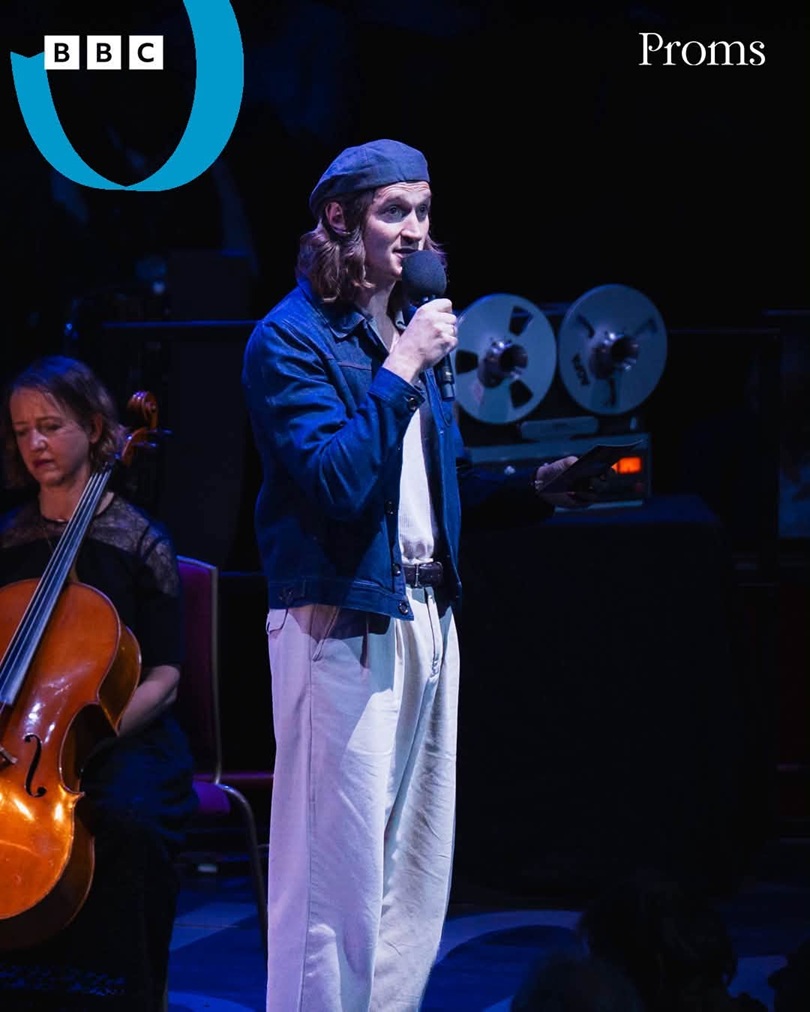
The first sounds on arriving in the arena at the Royal Albert Hall were those of blackbirds, surely the idea of Orcadian composer and multi-instrumentalist Erland Cooper – who, as a regular Unwind contributor, curated this Prom. The music was in the most part enhanced by the birdsong and other field recordings, reminding us of the importance and appreciation of natural beauty.

The published programme proved helpful to a point, listing the pieces but not in the order they were performed. Cooper’s music secured a sonorous and comforting start, his Music for Growing Flowers (Nocturne) presented in a new arrangement blossoming like its subject. The yearning tones of the BBC Symphony Chorus were supplemented by cleverly wrought percussion with the hands imitating rain and wind and complemented by the soft bed of City of London Sinfonia strings.

This curtain raiser / light dimmer was the first work of what became a streaming playlist in live form, with little between the tracks save for field recordings, allowing the listener to picture a natural space. The musical language was largely simple – not a criticism – as it allowed the mind to wander, and – ultimately – to unwind.

Pianist Belle Chen chose well with her pieces, two excerpts from the excellent Ravel In The Forest album that included evocative forest noises from a synthesizer positioned on top of the piano. Moonrise, the first excerpt, leant on Barber’s Adagio for Strings for its inspiration and proved effective in this context.
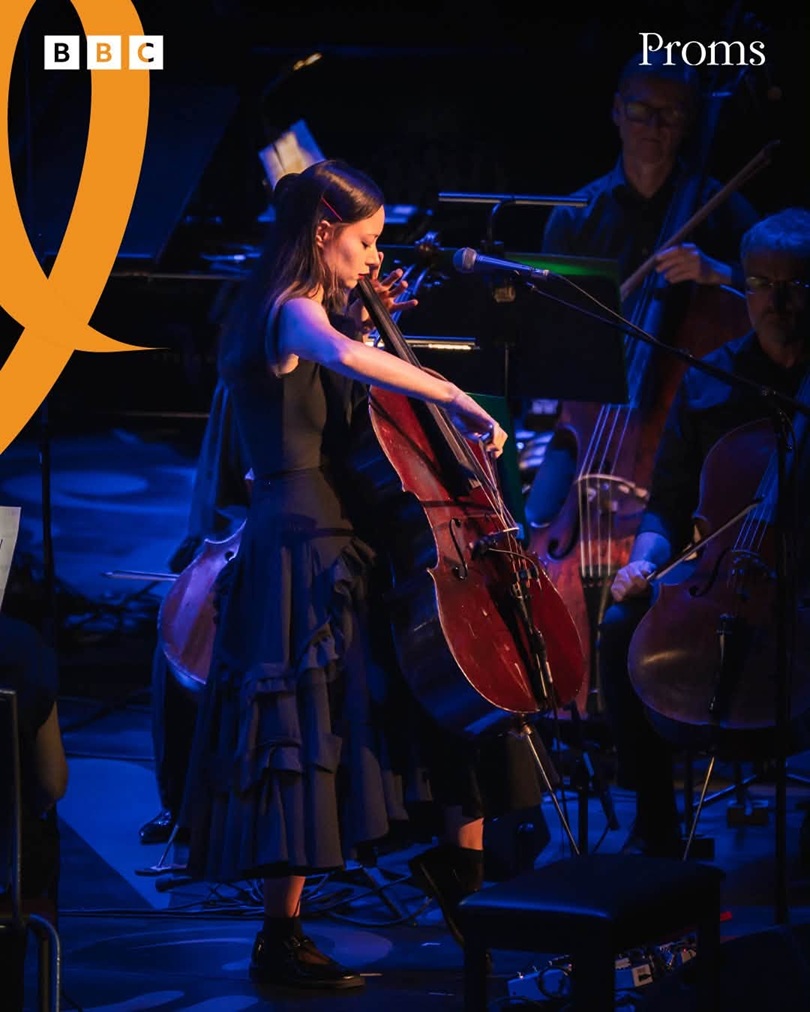
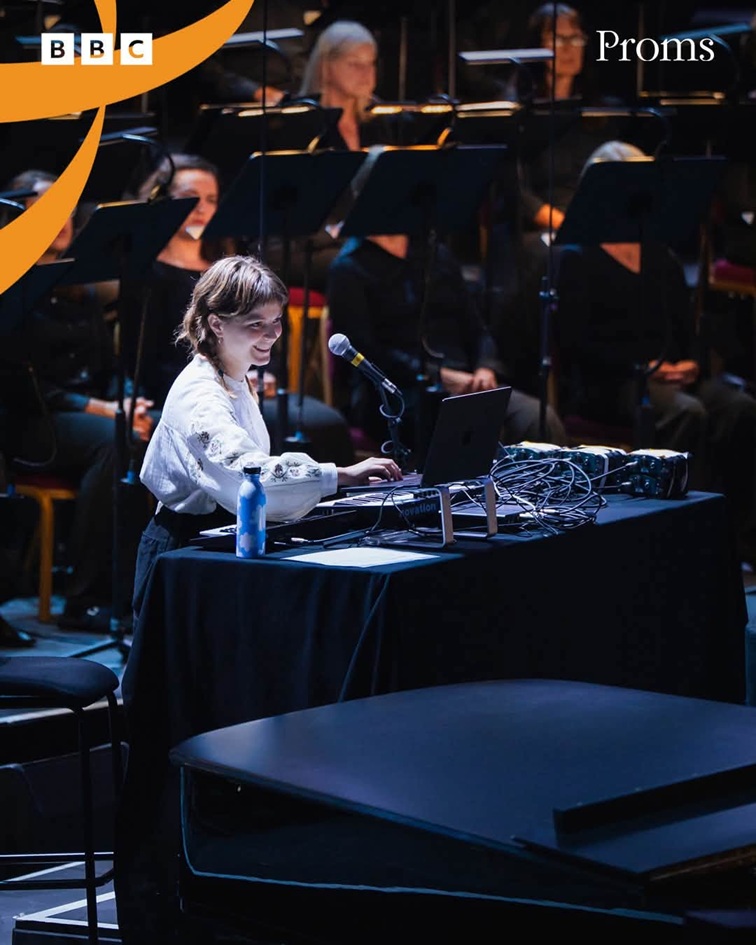
Lucinda Chua’s cello (above) then explored rich, multitracked sonorities on I Left the Earth, while a vocal number, Something Other Than Years, provided a musical affirmation with its catchphrase, “show me how to live this life”. At this point, even allowing for the plaintive Symbiosis from Alice Boyd (below) and the deep resonance of Jóhann Jóhannsson’s A Pile of Dust, we were walking a fine line between background and foreground music, the audience a mixture of calm and fidgeting, as though in the half hour before sleep. Oddly, the unwinding music also drew vivid parallels with coffee shop culture rather than the Royal Albert Hall.
Standing out in the foreground was the craftsmanship of Finzi, Sibelius and Debussy. Finzi’s gorgeous Romance stole the show in a passionate performance from the string orchestra, who also captured the warmth of Sibelius’s Andante Festivo along with its elusive emotions. Meanwhile a sensitive arrangement by Erland Cooper of Debussy’s Clair de Lune also hit the spot, with a special solo from cellist Will Schofield. The City of London Sinfonia strings played dreamily under the direction of Alexandra Wood, the 55-year-old ensemble infrequent Proms visitors but extremely welcome here. The BBC Symphony Chorus, used more sparingly, contributed a brief but moving Abendlied from Josef Rheinberger.

The principal problem with experiencing such a Prom in the flesh was the approach of the midnight hour, and with it the anxiety that the last form of transport home was imminent, making it impossible to unwind completely. With this in mind your correspondent took his leave just as a world premiere was beginning, a new arrangement of Isobel Waller-Bridge’s Solitudes (after Satie) for two pianos, wordless choir and string orchestra. Listening back on BBC Sounds, it proved an affecting piece whose ripples spread out far beyond the hall with waves of wordless singing from the chorus.

As an advert for Radio 3 Unwind, this concert was a strong promotion and will hopefully propel the right audience to its channel. As a way into classical music it is persuasive and low maintenance, especially with the natural link. Yet it is to be hoped such an audience can blossom in the way of Erland Cooper’s flowers, encouraged to explore more substantial works by the composers whose relaxing sounds they have heard. Debussy, Ravel and Sibelius in particular have all written music with great kinetic energy! Yet that is for another day…for this Prom, sensitively staged if somewhat out of place for the live visitor, will leave a lasting legacy online.

Repertoire:
Cooper Music for Growing Flowers (Nocturne)
Belle Chen Ravel In The Forest: Moonrise; Three Birds
Finzi Romance for string orchestra
Lucinda Chua I Left the Earth; Something Other Than Years
Jóhannsson A Pile of Dust
Sibelius Andante festive
Rheinberger Abendlied
Alice Boyd Symbiosis
Debussy arr Cooper Clair de Lune (Suite bergamasque)
Isobel Waller-Bridge Solitudes (after Satie)

You can listen to this Proms concert on BBC Sounds until the end of September 2026.

Published post no.2,998 – Friday 28 August 2026

Arcana at the opera: Margot la Rouge & Le Villi @ Opera Holland Park

Margot la Rouge (1902)
Lyric Drama in One Act – music by Frederick Delius; Libretto by Rosenval
Sung in French with English surtitles

Margot – Anne Sophie Duprels (soprano), Sergeant Thibaud – Samuel Sakker (tenor), L’Artiste – Paul Carey Jones (bass-baritone), Lili Béguin – Sarah Minns (soprano), Nini – Laura Lolita Perešivana (soprano), La Patronne – Laura Woods (mezzo-soprano), Totor – David Woloszko (bass)

Le Villi (1883)
Opera-Ballet in Two Acts – music by Giacomo Puccini, Libretto by Ferdinando Fontana
Sung in Italian with English surtitles

Anna – Anne Sophie Duprels (soprano), Roberto – Peter Auty (tenor), Guglielmo – Stephen Gadd (baritone)

Martin Lloyd-Evans (director), takis (designer), Jake Wiltshire (lighting), Jami Read-Quarrel (movement)
Opera Holland Park Chorus, City of London Sinfonia / Francesco Cilluffo

Opera Holland Park, London
Thursday 21st July 2022 [7.30pm]

review by Richard Whitehouse Photos (c) Ali Wright

Delius and Puccini are unlikely operatic bedfellows (as anyone who recalls a near-disastrous ENO staging of Fennimore and Gerda with Gianni Schicchi three decades back will surely concur), but this double-bill by Opera Holland Park has an undeniable logic given both works started out as entries in the competition for one-act operas held on four occasions by Edoardo Sonzogno to encourage young talent (so gaining the upper hand against his established rival Ricordi). That neither proved successful at the time need not detract from the merits of either and if the concept of the one is, with hindsight, as uncharacteristic as that of the other appears immature, both contain more than enough worthwhile music along with arresting stagecraft to vindicate their revival in an imaginative production such as they receive on this occasion.

At the time he finished Margot la Rouge, Delius already had four operas behind him so was hardly unequipped for the task at hand. The challenge lay rather in adapting his increasingly personal, even metaphysical approach to the hard-hitting realism – not abetted by a libretto (written pseudonymously by Berthe Gaston-Danville) which reduces its characterization to stereotypes throughout. Yet the best of Delius’s music rises well above any one-dimensional sordidness – the plaintiveness of its prelude and mounting eloquence of its love scene (both refashioned as the Prelude and Idyll which was the composer’s final collaboration with Eric Fenby) equal to anything from his maturity. Had one or another of those earlier operas been acclaimed, the chances for Margot to reach the stage would have been appreciably greater.

The simple but effective revolving set favoured by Martin Lloyd-Evans presents this drama the more effectively for its unfussiness, enhanced by takis’s set designs and Jake Wiltshire’s resourceful lighting. Casting-wise the stage is dominated, as it needs to be, by Anne Sophie Duprels’s assumption of the title-role – emotionally guarded in its earlier sullenness, before ascending to heights of rapture once her identity becomes known. Samuel Sakker evinces the necessary ardency as Thibault and though Paul Carey Jones is a little too suave to convey the viciousness of The Artist, his commanding presence is never in doubt. Sarah Minns has just the right coquettishness as Lili, while there are telling cameos from Laura Lolita Perešvana, Laura Woods and, especially, David Woloszko among those (too?) numerous smaller roles.

Whereas Delius’s opera had to wait 82 years for its premiere, Puccini’s Le Villi hit the stage within a year of completion then was revived twice before the end of the decade – by which time, this ‘opera-ballet’ had expanded to two acts. Therein lies the problem, as Ferdinando Fontana’s modish libretto seems stretched beyond its effectiveness as drama, the threadbare nature in much of the latter scenario requiring a narrative element merely to hold it together. That said, there are various opportunities for characterizing the three protagonists of which Puccini made the most, with the central symphonic intermezzo L’abbandono e La tregenda (the latter still heard as an encore) confirming a new orchestral sophistication in Italian opera. Theatrically flawed as it may be, Le Villi is an auspicious and undeniable statement of intent.

Here, too, the Lloyd-Evans-takis-Wiltshire staging works to the advantage of this drama, yet without over-egging the supernatural shenanigans; credit, also, to Jami Reid-Quarrell for his utilizing the relatively restricted stage-space such that the dance element seems both alluring and more than compensates for the flailing narrative. Vocally, Anne Sophie Duprels has the measure of Anna as she traverses the gamut of emotions from diffidence, through heartbreak to revenge, with a continuity of expression not to be taken for granted. Peter Auty has made a speciality of high tenor roles, but his Roberto needs greater fervency and warmth to offset its shrillness. Not so Stephen Gadd, whose Guglielmo has a burnished humanity that commands attention on his (too few?) appearances and a clarity ideally suited to delivering the narrative.

The latter opera also gains from a typically lusty contribution by Opera Holland Park Chorus – and, in both works, the City of London Sinfonia responds with commitment to the dynamic direction of Francesco Cilluffo, who teases out the many dramatic nuances with alacrity. The orchestral reductions by Andreas Luca Beraldo have been judiciously gauged in both cases -that for Margot ironically closer to the orchestration undertaken by Eric Fenby in the absence of Delius’s score and which was soon mothballed once the original had been relocated. The relative unfamiliarity of these operas is a coup such as OHP has regularly delivered over the years, and one which is well worth the attention of more than just those drawn to rare opera.

Further performances take place on 29 July, 31 July [2pm], 2, 4 and 6 August. For more information visit the Opera Holland Park website

In concert – City of London Sinfonia @ Southwark Cathedral: Origin: This is CLS

cls

Monteverdi arr. Wick Toccata from ‘L’Orfeo’ (1607)
Vaughan Williams
Fantasia on a theme by Thomas Tallis (1910)
Tabakova
Frozen River Flows (2005)
Finnis
The Centre is Everywhere (2019)
Vasks
Music for the fleeting birds (1977)
Tabakova
Origin (2022) (world premiere)
Carter
A Fantasy about Purcell’s ‘Fantasia on one note’ (1975)
Tavener
The Hidden Face (1996)

Hugh Cutting (countertenor), Dan Bates (oboe), City of London Sinfonia / Alexandra Wood (violin)

Southwark Cathedral, London
Thursday 3 March 2022

Written by Ben Hogwood

When the young Richard Hickox assembled a performing group in 1971, his vision was an extended family of talented musicians coming together to project the enjoyment of their art onto their audience.

Just over 50 years on, Hickox may sadly no longer be with us but his vision, realised by the City of London Sinfonia, burns with an ever brighter flame. This celebration in Southwark Cathedral may have been a year late, due to the consequences of the pandemic, but it brought everything together in a programme blending the old with the new.

Great credit should go to the orchestra’s creative director and leader, Alexandra Wood, for choosing music that looked simultaneously forwards and backwards, while utilising the vast spaces offered by the cathedral in inspiring and imaginative ways.

The audience were free to roam around during the concert, which was a considerable plus, for acoustic hotspots could be found and exploited, while it was also possible to stand to one side in contemplation. The mood was relaxed but focused, with audience members chosing a mixture of both options. The only danger of this was unexpectedly finding yourself in front of a group of instrumentalists when they were about to play, meaning the focus would suddenly shift in your direction! This was a risk well worth taking, for the rewards were many.

Before the concert, the Dean of Southwark Cathedral, Andrew Nunn, spoke warmly of the power of music to soothe the fevered mind, giving the pertinent Biblical example of David’s harp curing Saul’s war-torn temper, illustrated vividly by a stained-glass window depiction at the back of the church. The parallels with Russia and Ukraine were unmistakeable, and before the programme started everyone stood for the Ukraine national anthem.

The programme itself began under that very window, with Stephen Wick’s excellent arrangement of the Toccata from Monteverdi’s L’Orfeo, the brass filling the cathedral from back to front with sonorous colours.

The baton then passed to the strings for an unforgettable account of Vaughan WilliamsFantasia on a Theme of Thomas Tallis. This work was written for performance in Gloucester Cathedral in 1910, utilising the space in imaginative ways – and the City of London Sinfonia responded in kind, with the work’s solo group in the round in the nave, and the main body of the strings in the centre of the church. This was a deeply emotive performance, finding the intersection between the old of Tallis and Vaughan Williams’ own sweeping melodies and added-note harmonies. In doing so a composition that is often overplayed gained fresh insight, and, for your reviewer standing at the back of the church, a magical experience.

British-Bulgarian composer Dobrinka Tabakova has a close association with the Sinfonia. Frozen River Flows, an earlier work from 2005, appeared here in an arrangement for clarinet and percussion which was played in the south transept. This brightly coloured piece found Katherine Spencer’s clarinet evoking graceful lines not dissimilar to Poulenc, complemented by the richness of the vibraphone and crotales (antique cymbals), expertly managed by Chris Blundell.

We also heard Tabakova’s music in the world premiere of Origin, written for this concert. It was a brief but meaningful celebration placing violin soloist Alexandra Wood in the nave, with the accompanying musicians under the tower. Wood’s role was that of virtuoso, but she managed it carefully so that slower contributions from the strings and vibraphone were ideally balanced. Tabakova has a talent for the immediate creation of an atmosphere, and this may have been a relatively minimal piece but it left a lasting impression.

Complementing this was another work in the round of the nave, as 12 string players assembled for Edmund Finnis’s The Centre is Everywhere. This was a wholly appropriate choice, the soloists creating unusual and original sounds. On occasion the music swelled like the bellows of an accordion, then subsided to a barely audible whisper, then appeared to be reaching beyond the cathedral for the skies above. Finnis has an unusual and remarkable habit of writing music that becomes an out of body experience, and The Centre is Everywhere shows there is still so much more to achieve when writing for stringed instruments.

The programme turned to wind instruments for a timely reference to the troubles in Ukraine. Latvian composer Pēteris Vasks wrote Fleeting Birds in 1977 as an expression of his need for freedom. Restricted from travelling by the Soviet authorities, he made his feelings known through music. The City of London Sinfonia winds walked the length of the cathedral as they played, turning from joyous expressions of freedom and release to statements soured by compression, reflecting the composer’s earthbound plight.

Freedom lay in Elliott Carter’s Purcell Fantasy, richly expressed by the brass around a persistent middle C, before cutting without a break to John Tavener’s Hidden Face for a final contemplation. The stillness of this work is deceptive, achieved through great virtuosity from solo oboe and a countertenor, singing text written by Mother Maria. Oboist Dan Bates and singer Hugh Cutting were superb throughout, the latter floating his words effortlessly above the prayerful strings, whose sonorous tones were the ideal match for Bates’s keening oboe, which also scaled unfathomable heights with impressive ease.

It was a fitting way to finish a deeply felt concert and celebration, that of a performing group who continue to do their founder proud. Like their musical choices, the City of London Sinfonia look to the future, embracing new advances as well as nurturing past achievements while they do so. They deserve to continue as a treasured feature of the capital’s music making.

To read more about the City of London Sinfonia, visit their website – and for more on composers Dobrinka Tabakova and Edmund Finnis, click on their names

Online music recommendations – Chamber Music Scotland, City of London Sinfonia & Sandy Burnett’s Listening Club

The online options for music lovers continue to grow – but here at Arcana we wanted to highlight three in particular.

First is a rolling recommendation, for the City of London Sinfonia and their Comfortable Classical at Home series (pictured above). This has been a really excellent series of discovery, catering for all levels of knowledge including beginners, the musically curious and those looking for fresh insight into familiar pieces.

Members of the orchestra are clearly at home in front of the camera, and the next instalments – from principal clarinet Katherine ‘Waffy’ Spencer (Thursday 21 May) and cellist Becky Knight (Tuesday 2 June) are set to be every bit as enjoyable as the series so far – which can be seen on the orchestra’s Facebook channel. It is well worth considering a donation to the orchestra through that page too, recognising the problems musicians are having finding work in lockdown.

Also well worth exploring is Chamber Music Scotland, who are offering a weekly series of streamed concerts and lectures. Future appearances are scheduled from guitarist Sasha Savaloni and a trio of flautist Georgia Browne, violinist Tuomo Suni and harpsichordist Tom Foster.

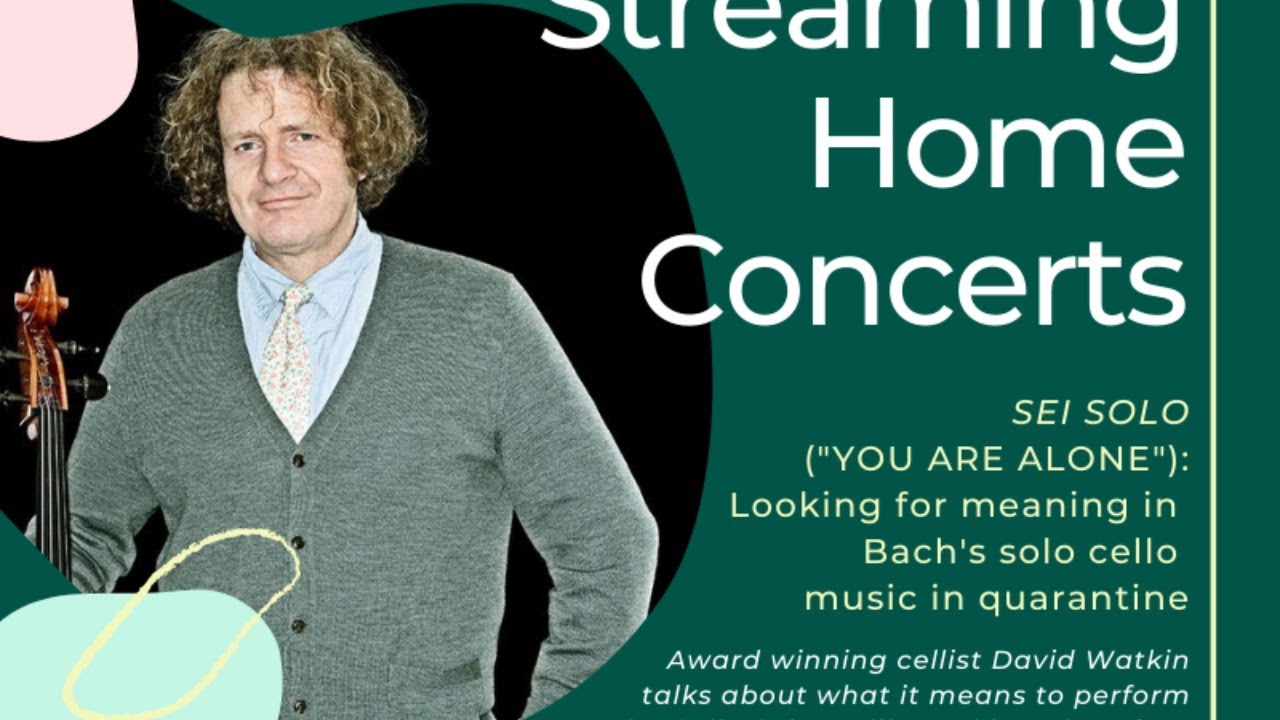
The next online event from Chamber Music of Scotland is tonight, Wednesday 20 May. It will be presented by cellist David Watkin, who will be looking for meaning from the solo cello works of J.S. Bach in quarantine. Bach’s music is proving particularly popular in lockdown, presumably due to its suitability for one performer, who can take on the rich part writing to sound like several people at once. You can watch this on the organisation’s YouTube channel, where you can also catch up on previous episodes:

Finally a nod in the direction of Sandy Burnett, who is running a summer-long online Listening Club. Every Tuesday at 11am Sandy, a highly respected broadcaster and musician, will offer his own insights into a chosen classical work in his typically engaging and informative style. The next, on Tuesday 26 May, will focus on Bach and his Sonata for Solo Violin in G minor – while future instalments will include works by Weill, Mozart, Monteverdi, Messiaen and Beethoven. You can join the Listening Club here

Listen at home – City of London Sinfonia: Comfortable Classical continues…

The City of London Sinfonia are continuing their half-hour sessions of Comfortable Classical at Home for all ages to enjoy while we are all stuck in isolation. The sessions offer a half-hour of musical freedom, as musicians from the orchestra educate and offer different ways of looking at the music they make. The environment is a relaxed one, with everyone welcome to get involved.

Past episodes include cellists Joely Koos and Becky Knight, clarinetist Katherine Spencer, orchestra leader Alexandra Wood, violinist Matthew Maguire and principal oboe Daniel Bates. Tomorrow – Thursday 23 April – Koos will return for a second session.

You can watch on the orchestra’s Facebook page from 11.30am – on every Tuesday and Thursday. You can also catch up on past episodes from the orchestra’s blog here.