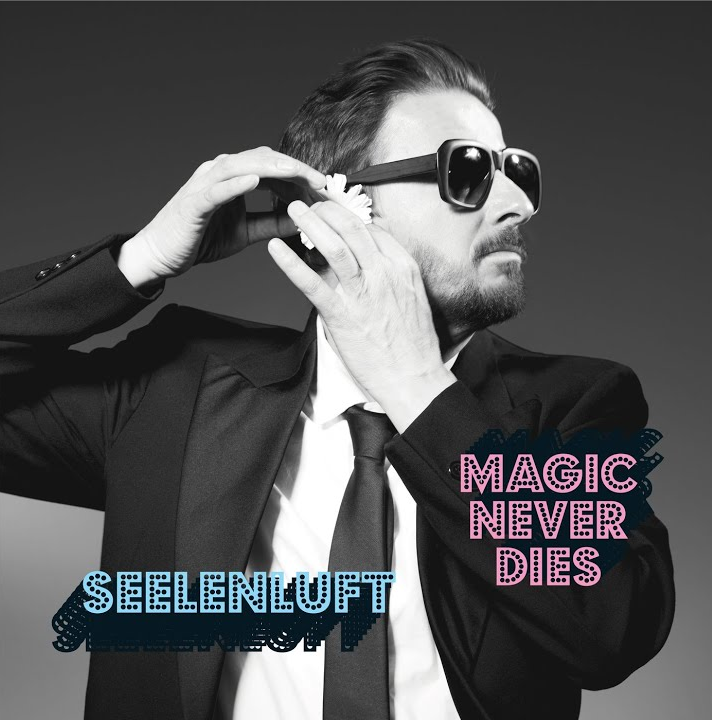
Seelenluft is the name by which the Swiss producer Beat Solèr is known to legions of electronic music listeners. The Zurich-born artist has a discography tracing back to the 1990s.
Solèr’s piano is the instrument taking centre stage for Magic Never Dies, though he is keen to surround it with a rich production of analogue instruments as well as electronics. With that in mind he has revisited his film music legacy and sourced string arrangements with the SIF309 Symphony Orchestra of Sofia.
What’sthemusiclike?
Warm and inviting. The opening strains of the title track beckon the listener in, the live arrangements giving extra life to the subtle grooves teased out by Solèr. There are persuasive piano lines, mellow flute textures and curvy string figures – all in accompaniment to Lou Vahou’s vocal.
Vahou shares vocals with Komi Togbonou, who brings sonorous layered harmonies to Come Holy Spirit, a smoky cut with its roots in the jazz club. Toys Toys Toys is another story entirely, Togbonou flexing his vocals over a springy piano riff. The instrumental tracks are if anything even more appealing. Why Is Everybody So Full Of Love is beautifully arranged, textures seemingly glinting in the late sunshine – but Ride The Pram and Nest suggest that Solèr has been listening to and enjoying the music of Debussy, but adding his own slant to things. Homecoming has a lovely, slightly nostalgic feel for signing off.
Does it all work?
Mostly. The vocals might be an acquired taste for some, but Solèr’s arrangements are consistently fresh and rewarding, and invite the mind to wander.
Is it recommended?
Yes – something different for a summer evening’s listening.
The Bartered Bride (Prodaná nevěsta) (1866) Comic opera in Three Acts – music by Bedřich Smetana; Libretto by Karel Sabina Sung in Czech with English surtitles.
Mařenka – Pumeza Matshikiza (soprano), Jeník – Oliver Johnston (tenor), Kecal – David Ireland (bass), Vašek – John Findon (tenor), Ludmila – Yvonne Howard (soprano), Krušina – William Dazeley (baritone), Mícha – John Savournin (bass), Háta – Louise Winter (mezzo-soprano), Ringmaster – Jeffrey Lloyd-Roberts (tenor), Esmeralda – Isabelle Peters (soprano)
Rosie Purdie (director), Kevin Knight (designer), Howard Hudson (lighting), Darren Royston (choreographer)
Circus Troupe, Garsington OperaChorus, Philharmonia Orchestra / Jac van Steen
Garsington Opera, Wormsley Friday 30 June 2023
review by Richard Whitehouse Photos by (c) Alice Pennefather
Smetana may have played down its status in the context of his output, but The Bartered Bride remains the foundation of Czech opera and is much the most performed work stemming from that tradition, making this revival of Garsington Opera’s 2019 production the more welcome.
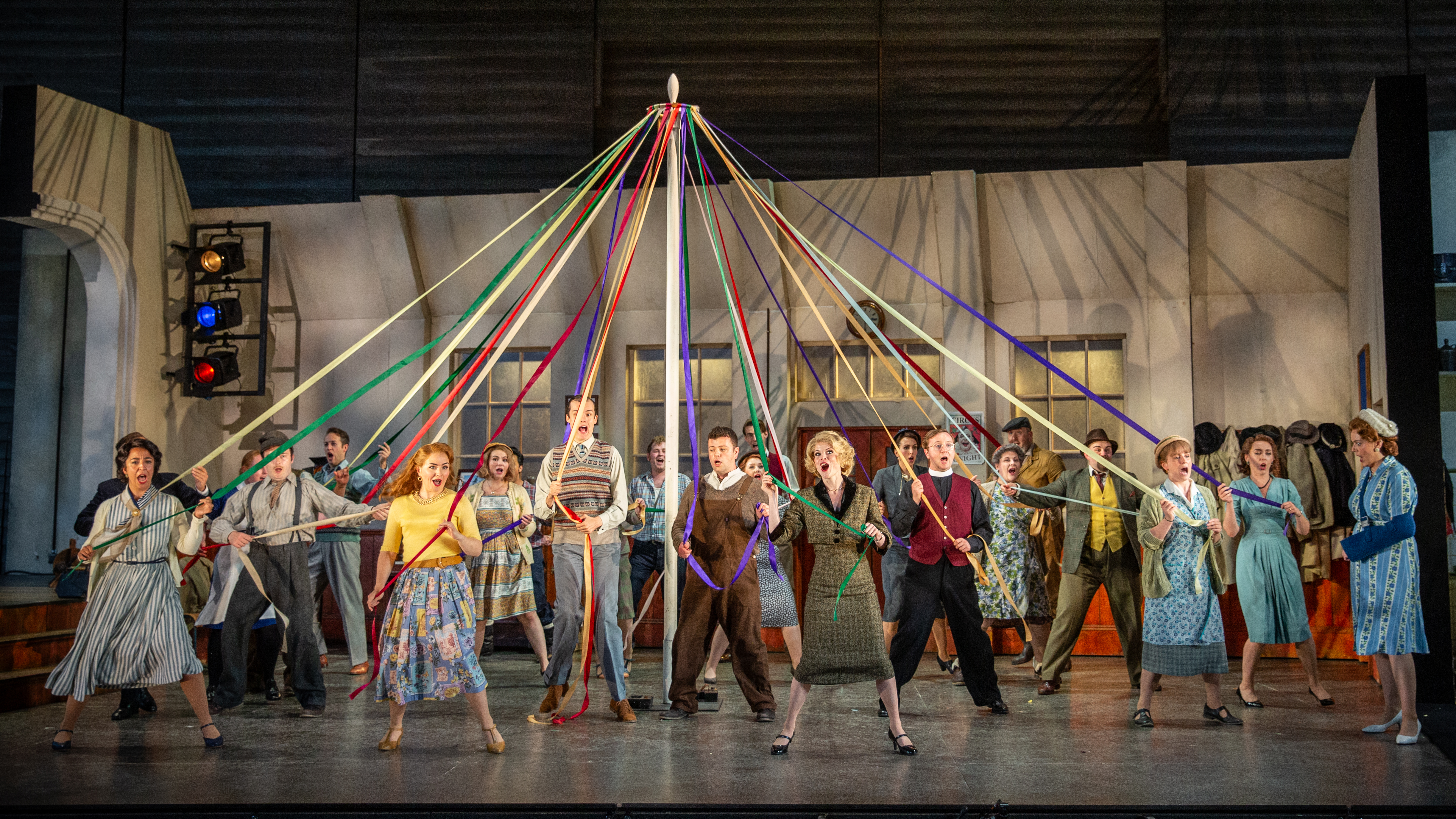
Rosie Purdie’s direction accorded wholly with Paul Curran’s original conception, transferring the scenario to a 1950s Britain where class restrictions and petty-mindedness were as much a given as in Bohemia a century before, yet the socio-political facet seemed as astutely handled as the cultural trappings of that first teenage generation were underlined without detriment to what was played out on stage. Kevin Knight’s designs clarified this setting most effectively, and Howard Hudson’s lighting was vivid without ever being garish. Most especially, Darren Royston’s choreography afforded communal togetherness during the crowd scenes while also ensuring that the circus troupe’s routines at the beginning of the third act came alive without any sense of their being a mere ‘add on’ to this production, and hence of the opera as a whole.
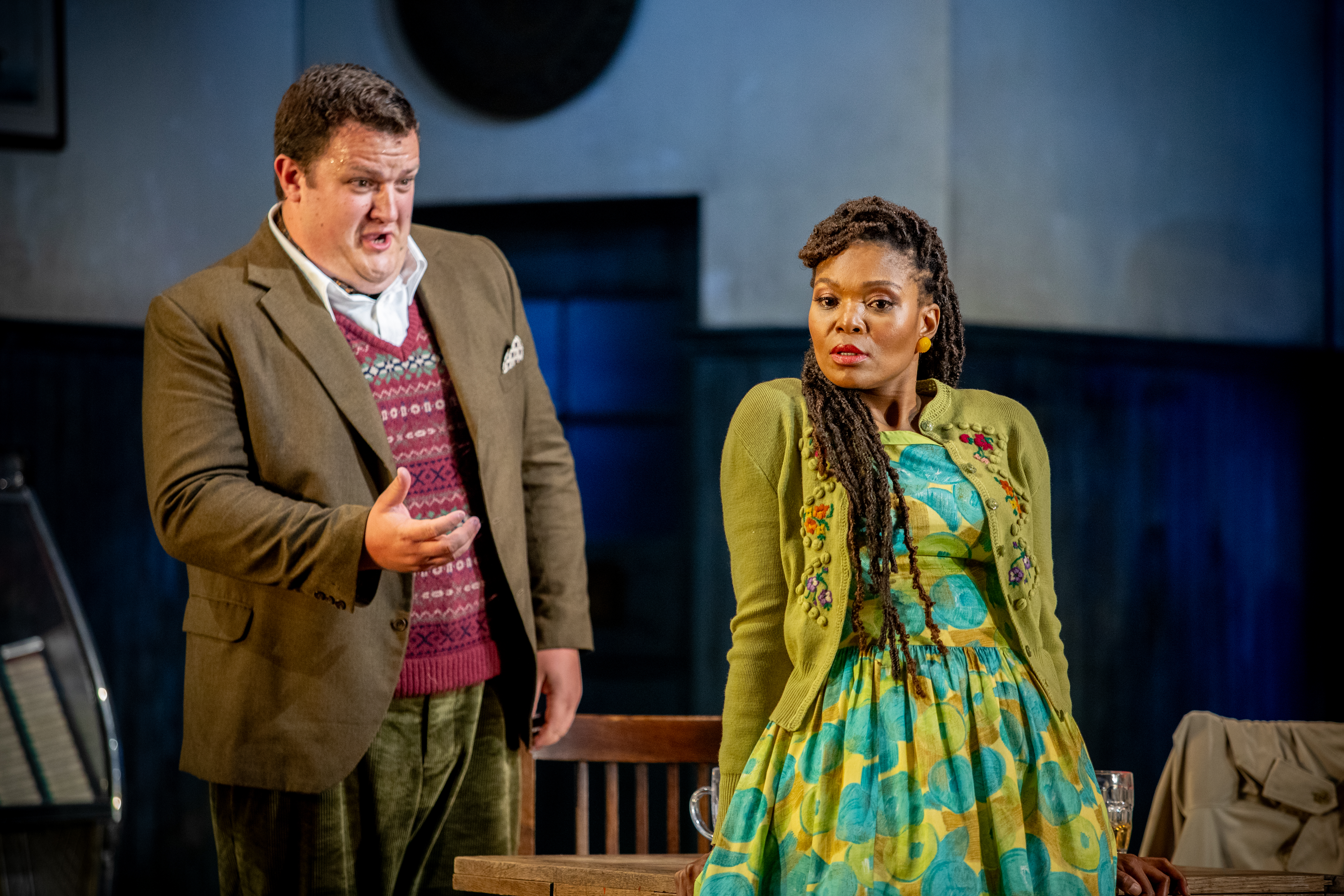
The casting could hardly have been bettered. Among the most wide-ranging role of any 19th-century opera, Mařenka was superbly taken by Pumeza Matshikiza (above) who conveyed pathos and real integrity of character to substantialize those comic capers unfolding on stage in what was an assumption to savour. Not comparable musically, that of Jeník is a notable role that Oliver Johnston rendered with verve and audible eloquence – such that his ostensibly hard-headed decisions could only be the outcome of an essentially sincere as well as selfless motivation.
Notwithstanding that the secondary roles provide relatively little in terms of characterization, John Findon drew a degree of sympathy for the hapless Vašek, William Dazeley and Yvonne Howard were well matched as the warmly uncomprehending Kružina and Lumilla, while the scheming couple of Mícha and Háta saw a suitable response from John Savournin and Louise Winter, abetted in this respect by David Ireland’s roguish Kecal. Jeffrey Lloyd-Roberts was magnetic as the Ringmaster, and Isabelle Peters provided an entrancing cameo as Esmerelda.
The latter characters are part of a Circus Troupe that, fronted by Jennifer Robinson, brought the stage to life just after the dinner interval. Elsewhere, the hard-working Garsington Opera Chorus offered a reminder this is an opera second to none in terms of its choral contribution, while the Philharmonia sounded in its collective element under the assured direction of Jac van Steen, familiar in the UK through his extensive work with the BBC National Orchestra of Wales and Ulster Orchestra. In particular, the overture and set-pieces in each act had the requisite vigour and effervescence as has made them at least as familiar in the concert hall, and it remains a testament both to Smetana’s immersion in and understanding of his native music that only the ‘Furiant’ at the start of the second act derives from a traditional source.
The Bartered Bride has enjoyed numerous UK productions during recent decades – among which, this Garsington revival can rank with the finest in terms of musical immediacy and visual allure. Those not able to see it four years ago should certainly do so this time around.
With the arrival of July 1st, here are two very different musical responses to the month. The first is an extract from Tchaikovsky’s popular cycle for piano, The Seasons – designating July to be The Song of the Reaper:
Then, with the weather here in the UK having been a little downcast this morning, a very different response from Bomb The Bass. Winter In July is a wonderfully moody song, with vocals from Loretta Haywood. It could only be from the early 1990s!
The second album from Creep Show follows five years after their debut – in which time a great deal has changed. The line-up remains the same, with John Grant the charismatic vocalist to beats and soundscapes fashioned by Wrangler – who are synth and electronics wizard Benge (Ben Edwards), Cabaret Voltaire frontman Stephen Mallinder and Phil Winter, creator of many weird and wonderful sounds for Tunng. Their 2018 debut, Mr Dynamite, is described by the four protagonists as ‘a fairground ride into the dark corners of a world that was on the brink of being blitzed in a blender’.
With so much source material for the follow-up, Yawning Abyss would seem to be all about the impending disasters seemingly awaiting the world, as well as the one big disaster – Covid – which has been with us during the period of composition.
And yet, the quartet make room for optimism. Mallinder and Grant headed to Iceland to make some unfiltered vocals, while Winter and Edwards were given the task of bringing it all together for the final cut.
What’sthemusiclike?
Creep Show make some incredibly varied music! At times this album feels like a reflection of the times in which we live, being wildly unpreditable and disfunctional, but then at other turns with an elegance and poise that shows the craft with which it was made.
The two immediate stand-out tracks are Moneyback, with a brilliant couplet from John Grant (“You want your money back? I don’t think so!”) and then the madcap Yahtzee!, which pretty much sums up the state of play in the media at the moment! Sitting on the more elegant side is Bungalow with a mellifluous and stately vocal, while Stephen Mallinder excels up front on Matinee.
Does it all work?
It does – assuming you have the bandwidth to accommodate the wide range of styles on offer!
Is it recommended?
Yes. While sometimes far from easy listening, Yawning Abyss is very much an album for our times.
Gordon Chapman-Fox moves onto his fourth album under the alias Warrington-Runcorn New Town Development Plan, which finds him in a conflicting position. “I’m nostalgic for an optimistic future”, he writes on his Bandcamp page, pining for the time when the future really did seem a boundless set of opportunities rather than a state in which to be fearful.
As before this is a wholly solo album, one man and his electronics – but painting vistas far beyond those means.
What’sthemusiclike?
Wonderfully moody. There are some dark thoughts here, shot through with a windswept beauty that gives them impressive grandeur.
The stern countenance of Just Off The M56 (J12) sets the slightly industrial scene, and though the initial impressions are stern, the way Chapman-Fox works his ideas together brings out the optimism in his thinking as the synth line cuts through the cloudy texture.
There is a winsome elegance here, very English in its restrained but telling emotion, coming through most obviously in the excellent Rocksavage, with its steadily oscillating figures, and then allowed more mechanical energy on Thelwall Viaduct.
Chapman-Fox secures a wonderful ebb and flow, and on brooding soundscapes such as London’s Moving Our Way there is a sinister undertow bringing John Carpenter to mind, not to mention a powerful sense of occasion.
Meanwhile Europa Boulevard presents a colder climate, the airiness and relative dead air of industry captured in music, though it soon warms up when extra layers are added.
Does it all work?
It does. These are vivid evocations of cityscapes that we would maybe rather not have but which are an intrinsic part of English life. Chapman-Fox treats them with respect but also highlights their unexpected angles of beauty. There is also, in the closing A Brighter And More Prosperous Future, a stern yet assured hope for better times ahead.
Is it recommended?
Very highly. This music has its roots in the 1980s, and the likes of Cabaret Voltaire or John Foxx, but Warrington-Runcorn Development Plan is a gateway to some accomplished and very meaningful electronic music.