
Unknown's avatar

About Arcana

My name is Ben Hogwood, editor of the Arcana music site (arcana.fm)

On Record: The Tippett Quartet – Steve Elcock: Chamber Music Volume Two: String Quartets

Steve Elcock
String Quartets – The Girl from Marseille, Op. 17 (2010); The Cage of Opprobrium, Op. 22 (2014); Night after Night, Op. 27 (2017); The Aftermath of Longing, Op. 36 (2021)

Tippett Quartet [John Mills & Jeremy Isaac (violins), Lydia Lowndes-Northcott (viola), Božidar Vukotić (cello)]

Toccata Classics TOCC0688 [80’31”]

Producer Michael Ponder Engineer Adaq Khan

Recorded 6-8 October 2022, Studio TQHQ, Ruislip, London

Reviewed by Richard Whitehouse

What’s the story?

Toccata Classics continues its survey of Steve Elcock (b1957) – arguably its most important ongoing project – with this collection of his four (to date) string quartets, performed by the enterprising Tippett Quartet and reaffirming his stature among composers of his generation.

What’s the music like?

Elcock is not the first composer to eschew numbering his quartets (Daniel Jones, for instance, differentiated his eight by date), with The Girl from Marseille preceded by at least four such works (one of these refashioned into his Eighth Symphony). Coming after weighty pieces as the Second and Third Symphonies (the latter on TOCC0400), these eight diverse variations in search of a theme – its identity in the title – find his music at its most playful and entertaining, though the fractious final variation pointedly invokes the brutal origins of its source material.

It was the location of this work’s first performance that provided ‘inspiration’ for The Cage of Opprobrium, namely a 16th-century metal pillory used to incarcerate women found walking unaccompanied after dark. Its five continuous sections graphically evoke the imagined victim through alternate slow and fast sections – building towards a violent culmination (its alluding to a famous quartet less striking than the way in which this music is transformed into Elcock’s own), before subsiding into a postlude where mourning is informed by emotional exhaustion.

Emerging in a relatively long gap between Elcock’s Fifth and Sixth Symphonies (TOCC0445 and TOCC0616), Night after Night takes its cue from the poem in Robert Louis Stevenson’s Songs of Travel. The first of its six continuous sections, entitled ‘Somniloquy’, evokes those unbidden thoughts of a chronic insomniac then returns between episodes of a more volatile nature. Its climax comes in the aggressive final ‘Incubus’ (later extended into an autonomous orchestral piece), which elides between sleep and wakefulness without hope of reconciliation.

Elcock’s most recent quartet, The Aftermath of Longing is likewise in six continuous sections but is very different in mood. It is also the most inherently abstract of these works, moving fitfully between varying degrees of emotional ambivalence to a penultimate episode whose releasing of the pent-up intensity results only in a desolate recollection of the initial music. Something of its character can be sensed in the composer’s subsequent symphonies, notably the Ninth that is his largest such work to date and may well prove to be his most impressive.

Does it all work?

Indeed, it does and not least because Elcock has put his formative years of playing the violin to profitable use with his idiomatic and resourceful writing for strings. For all their technical demands, nothing is left to chance in these quartets which are evidently building into a cycle scarcely less involving than that of the symphonies. Suffice to add the Tippett Quartet, which premiered Night after Night, proves an assured and persuasive exponent while the running order, of 2-1-4-3, makes for a programme well worth experiencing as a continuous sequence.

Is it recommended?

Very much so. Sound is vivid and detailed, if a little confined in more tumultuous passages, while the composer’s notes are informative without prejudicing the response of each listener. Hopefully these quartets will be taken up by other suitably equipped and inquiring ensembles.

Listen & Buy

For buying options, and to listen to clips from the album, visit the Toccata Classics website. Click on the names for more on composer Steve Elcock and the Tippett Quartet

Switched On – Craven Faults: Standers (The Leaf Label)

by Ben Hogwood

What’s the story?

This is a big year for the elusive minds behind Craven Faults. On the horizon is a debut live show in September, where their modular synthesisers, cables and organs will be extracted from the old textile mill where they work, and presented to the public.

Part of that presentation will surely include Standers, the outfit’s second album. A large scale piece, it moves towards a large scale approach that sees four of the six tracks clocking in at more than ten minutes each. Their approach is self-described as ‘a self-contained analogue electronic journey across northern Britain, viewed through the lens of a century in popular music.’ This time around the perspective around the landscapes they create in music is shifting, looking at how their outlines have been shaped by the elements and by human settlers. The interaction between the two provides plenty of raw material for composition.

What’s the music like?

Rather like the artwork. Craven Faults make music of the exquisitely shaded black and white variety, with a combination of panoramic drones and detailed foreground work that makes a lasting impression and keeps the listener coming back for more.

The longer form of composition definitely suits Craven Faults’ music, as it allows each scene to be set, subtly shaded and crafted.

First track Hurrocstanes – which appears to be a historical name for Haddock Stones, in North Yorkshire – makes a striking start. Over the course of a quarter of an hour it emits a regular, tolling chime that is equal parts foreboding and comforting, as the musical landscape beneath pulses with activity, subtly shifting from the root note and back again.

Even more impressive is Sun Vein Strings, a blast of light from its massed banks of keyboards but also with plenty going on elsewhere. The 18-minute epic becomes a series of twisted electronic moves, the lines expanding and contracting with hypnotic regularity, and with the syncopation throwing the listener off the beat.

The shorter tracks are equally concentrated. Severals rises impressively from the depths, its synthesizer lines gaining in stature, while Odda Delf gains a probing piano line.

Descriptive writing is at the heart of Craven Faults work, and the outdoors certainly beckons on a track like Meers & Hushes, describing nature’s efforts to cover the trails of human industry. Its regular pulse suggests past activity, while the drones are highly descriptive. The music rises to a higher pitch, slow riffs playing off each other.

Does it all work?

Yes. Craven Faults have the ability to make music indoors that very clearly portrays the landscapes around them, and the blend of natural and mechanical elements feels just right.

Is it recommended?

Yes. On this evidence the live material will be fascinating to chart – but taken as a standalone work, Standers represents a very fine achievement and a cornerstone of this year’s British electronica.

Listen

Buy

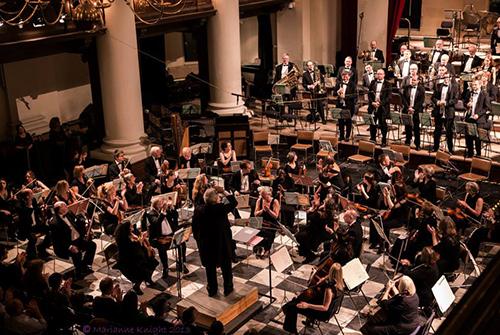
In concert – Josephine Lappin, Salomon Orchestra / Edmon Colomer – Gerhard’s Soirées de Barcelone, Falla & Turina

Josephine Lappin (piano), Salomon Orchestra / Edmon Colomer

Turina Ritmos Op.43 (1927)
De Falla Noches en los jardines de España G49 (1915)
Gerhard (ed. MacDonald) Soirées de Barcelone (1936-9, comp. 1995-6)

St. John’s, Smith Square, London
Sunday 21 May 2023

Reviewed by Richard Whitehouse

The Salomon Orchestra celebrates its 60th anniversary this season with three concerts of real ambition. The second saw a collaboration with Edmon Colomer, whose advocacy of Spanish music in general – and Roberto Gerhard especially – was evident throughout this programme.

His second ballet, Soirées de Barcelone was also Gerhard’s largest project before the collapse of Spain’s republican government forced him into exile. A piano suite from the 1950s was the only realized portion of a work otherwise known through an orchestral suite made soon after the composer’s death. At least until 1996, when musicologist Malcolm MacDonald finished the orchestration of the whole ballet and so enabled its broadcast during Gerhard’s centenary. MacDonald’s edition was duly receiving its first public performance in the UK this afternoon.

Set in the Pyrenees at the St John’s Eve festivities, with rituals of fire purification and fertility as its scenario, Soirées… falls into three substantial tableaux where the prevalence of Catalan folk songs and dances is imbued with a motivic density and orchestral virtuosity anticipating Gerhard’s maturity. The first of these, The Crowd, features three of the items from the suite and finds this score at its most immediate; the second, Eros contains the deepest and most imaginative music – notably the sombre initial Notturno and vividly evocative Apparition of Eros. Emotional intensity falters slightly in the third tableau, The Weddings, but there is no want of impetus as the work builds to its culmination in an eloquent Sardana that resolves scenic and musical issues, then a Coda which sees the piece through to its effervescent close.

At just over 50 minutes, Soirées… is a tough assignment for any orchestra, so all credit to the Salomon for rendering its many intricacies with unfailing commitment and no little panache. It helped to have Colomer at the helm, his understanding and empathy being evident through the care over phrasing and frequent textural finesse. Only on occasion were tempi marginally under-speed to accommodate the exacting rhythmic syncopation though, as he steered a fine reading to its close, there was little doubt as to the sheer power and imagination of this music.

A dependable pianist in the Gerhard, Josephine Lappin impressed as soloist with Manuel de Falla’s Nights in the Gardens of Spain, whose pervasive concertante writing often benefitted when heard from the rear of the platform. A steady yet flexible tempo for In the Generalife brought out some mysterious and even ominous undertones, while the alluring lilt of Distant Dance ensured this headed seamlessly into In the Gardens of the Sierra de Cordóba with its interplay of energy and eloquence before the performance ended in a mood of gentle rapture.

Few of Joaquín Turina’s orchestral works are revived these days, which seems more the pity as this composer was arguably the deftest Spanish orchestrator of his generation. Subtitled a ‘Choreographic Fantasy’, Ritmos made for a scintillating curtain-raiser – its six continuous sections demonstrating unforced musical logic as well as an appealing overall atmosphere. The Salomon players rendered it with infectious enjoyment, reminding one that such pieces – indeed, those in this concert as a whole – are all too infrequently heard in UK concert halls. Colomer provided an extensive spoken introduction to the Gerhard, hopefully a work he will yet record in its entirety. He rounded off this memorable concert with a breezy medley from the Zarazuela, notable for principal flautist Roy Bell taking the solo spot with his castanets.

You can read all about the 60th anniversary season and book tickets at the Salomon Orchestra website Click on the names for more on conductor Edmon Colomer and composer Roberto Gerhard – and for an article on this concert visit the composer’s publisher Boosey

On Record – James Ellis Ford: The Hum (Warp Records)

by Ben Hogwood

What’s the story?

James Ellis Ford has a most impressive musical CV, whether on the front line or behind the scenes. As an active member of Simian, Simian Mobile Disco and The Last Shadow Puppets, he has never been short of a burning riff or two. These two very different musical outfits enjoyed a more progressive form of rock and then a searing, acidic complement to The Chemical Brothers.

As a producer, Ford has lent production savvy to the likes of Arctic Monkeys, Foals, Klaxons and Jessie Ware among others, and most recently played a big part behind the scenes on Depeche Mode’s new album Memento Mori. He has also produced the upcoming Blur album, The Ballad Of Darren. With all that work in the bank, his first solo album proper – on which he plays all the instruments – could be seen as time off from the day job! Yet it is a meaningful achievement, and clearly good enough for a label as illustrious as Warp to sign him up.

What’s the music like?

Largely unscripted – in the best possible way. Ford’s musical diary to date has shown his ability to move between genres with no effort, and The Hum does this while sticking to a principle of pure musical enjoyment. On occasion the approach is reminiscent of his early days in Simian, when they used to support bands such as Emerson Lake & Palmer.

It is good to hear James singing as well as playing all the instruments, for his voice fits in well with either the psychedelic approach or the pastoral one. I Never Wanted Anything is quite sweetly harmonic in this regard, while The Yips is a brilliant contrast, its creeping riff leaning towards progressive rock.

Pink Floyd cast an attractive shadow – Us and Them especially – as Tape Loop #7 and Pillow Village establish the mood of the album, and on Golden Hour a rich multi-layered vocal comes forward. Squeaky Wheel glints with a touch of the industrial – with passing references that flit between pastoral contentment and the abrasion of Cabaret Voltaire.

A pair of instrumentals in the middle hit the spot. The woozy title track lulls the listener into a false sense of security before Ford goes all-out funk and prog in equal parts, a loping groove and chunky synthesizers giving Caterpillar rich slabs of colour.

Ford moves through the gears on Emptiness, another eventful number, before the soft, warm postlude Closing Time, with a melody that uncannily shadows the Neighbours theme tune.

Does it all work?

Yes. There is very little padding here, and Ford has plenty of interesting ideas – so the mind and ears are always stimulated.

Is it recommended?

Yes, with enthusiasm. Pretty much everything Ford has been involved with has musical vitality and progression, and this solo album is no exception. With any luck it is the start of a series, rather than a one-off.

Listen

Buy

In concert – CBSO / Robert Treviño – Mahler’s 10th symphony

City of Birmingham Symphony Orchestra / Robert Treviño

Mahler, ed. Cooke Symphony no.10 in F sharp major (1910)

Symphony Hall, Birmingham
Thursday 18 May 2023

Reviewed by Richard Whitehouse

The City of Birmingham Symphony Orchestra has a notable association with Mahler’s Tenth Symphony – realized by Deryck Cooke – having given memorable performances with Simon Rattle and more recently with Sakari Oramo. This evening’s account was to have been taken by Mirga Gražinytė-Tyla, but her indisposition brought American conductor Robert Treviño to the helm for what was a memorable performance that vindicated (if such were needed) this ‘performing edition’ and hinted at what might develop into a notable partnership in the future.

The quality of string playing these days means the initial viola melody no longer poses quite the risks it once did. Treviño went on to shape this opening Adagio with a sure sense of how its contrasting themes are drawn into an evolution whose unpredictability is informed by an emotional candour, heard at its most explicit in the climactic dissonance (evidently added at a late stage) such as makes the beatific coda the more affecting. Nor did he fail to tease out the underlying continuity of music shot through with the knowledge of its own dissolution.

Such an issue is more graphically present in the first Scherzo, its contrapuntal texture fitfully realized in the score but here achieved with a deftness making the trade-off between its polka- and ländler-like ideas the more potent. Not least during the later stages of a movement where these themes alternate with ever increasing frequency, as if in a stretto of activity, on the way to the most decisive and even affirmative conclusion found in Mahler’s late music. Treviño’s opting not to tone down those more unlikely percussive touches proved its own justification.

Almost Mahler’s shortest symphonic movement, the Purgatorio is yet crucial to the overall design – the ‘treadmill’ motion of its outer sections exuding acute irony, with the histrionics at its centre firmly held in check so their implications were made more than usually evident.

Performances of this work most often founder in the second Scherzo, but not here – Treviño launching it with anguished intent, while maintaining a persuasive balance between this and the more consoling element which informs its progress. The brief central interlude conveyed exquisite pathos, tension barely receding as the expression gradually and inevitably subsides into crepuscular activity with its fleeting intimations of what went before and what is still to come. Just one bass-drum stroke, surely, is needed to separate this movement from the finale.

That said, the unfolding of this latter left nothing to chance – whether in the sepulchral gloom of its initial bars, the poise of its indelible melody for flute, or a central phase of activity that here emerged as the natural consequence of what went before. Treviño (rightly) retained the additional percussion necessary to make the return of the first movement’s climax the more shattering – the sheer eloquence of what followed building to a rapturous culmination which, as with the closing emotional wrench, drew an unfaltering response from the CBSO strings.

A memorable performance, and one that met with an enthusiastic response. Treviño brought the soloists and sections to their feet, but might have started with trumpeter Jason Lewis and flautist Marie-Christine Zupancic – their contributions typifying the excellence of the whole.

You can read all about the 2022/23 season and book tickets at the CBSO website. For more on Robert Trevino, visit his website