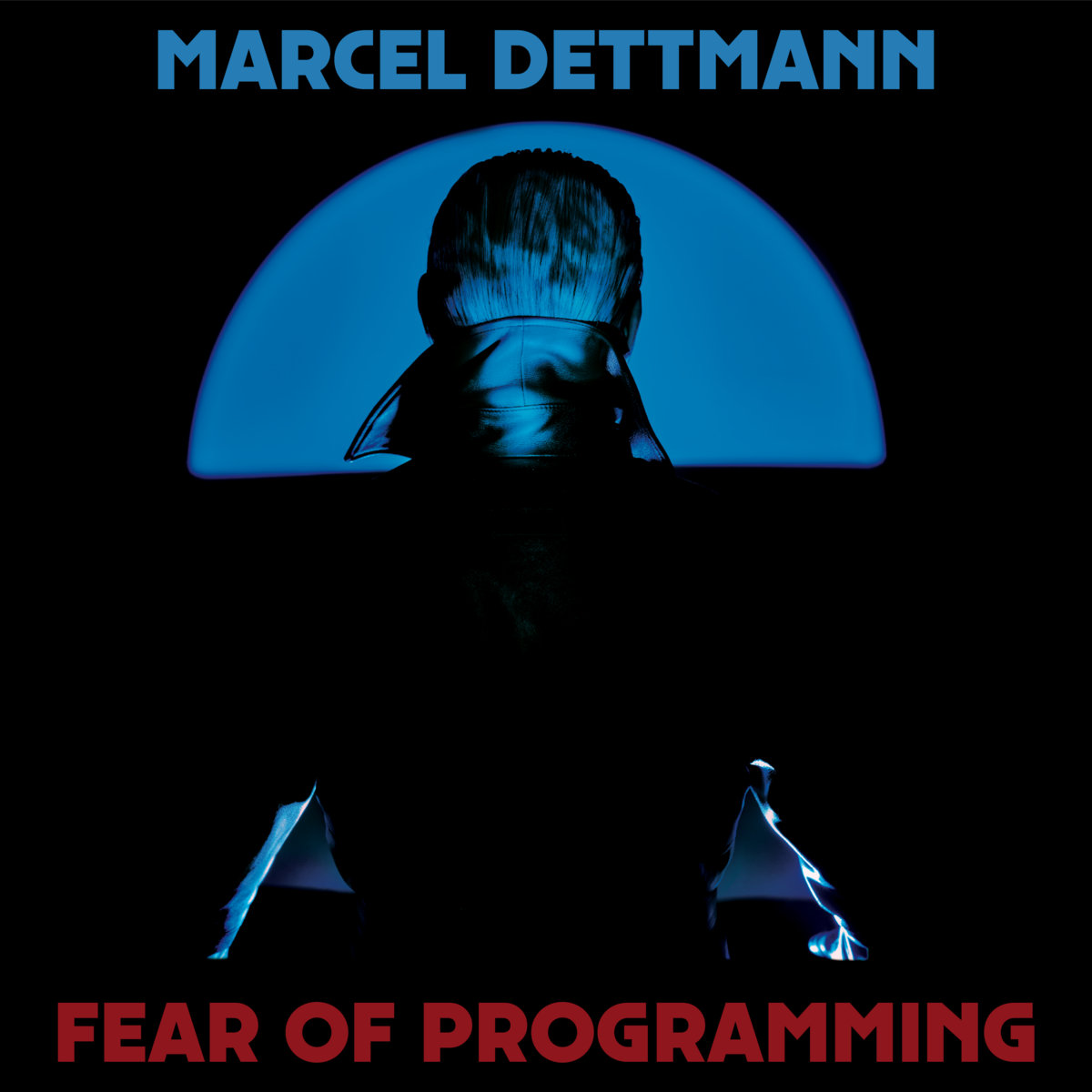
Fear of Programming sounds like a frank confessional – and certainly isn’t an affliction you would wish on an electronic musician!
Yet for Marcel Dettmann, the Berlin techno veteran, his first album in ten years has been assembled with what seems like the minimum of fuss.
What’s the music like?
After a floated introduction, Dettmann wastes no time in getting down to business. Suffice To Predict is spacey, and contrasts nicely with the volleys of percussion and displaced harmonies unleashed by Renewal Theory.
Dettmann sees little reason to change his previous winning formula, and it is a good decision given the conviction with which he goes about his writing. With its bumpy beat and booming vocals from Ryan Elliott, Water is an excellent track, while the brooding square waves of Reverse Dreams are also excellent, complemented by the percussion-heavy x12.
Much of the writing has a minimal approach which works really well, especially the bubbling (Batteries Not Included). Dettmann’s music for the head is good too – witness the swirly textures of Picture 2020, which work especially well on headphones.
Does it all work?
It does – Dettmann gets the right balance between getting the feet to move and getting the head to explore.
View of the Augarten Palace and Park, Vienna by Johann Ziegler
Triple Concerto in C major Op.56 for piano, violin, cello and orchestra (1803-4, Beethoven aged 33)
1 Allegro 2 Largo (attacca) 3 Rondo alla polacca
Dedication Joseph Franz von Lobkowitz Duration 38′
Listen
written by Ben Hogwood
Background and Critical Reception
It is fashionable in recent times to look down on Beethoven’s Triple Concerto, but despite its perceived critical failings it was an innovative work for its time. Lewis Lockwood notes how, “We can readily connect the Triple Concerto with the symphonie concertante that had prospered in France and in French-influenced centres such as Bonn and Mannheim in the later eighteenth century, and which stayed alive until about 1810.”
Beethoven had performers in mind when writing the piece, too – the violinist Georg August Seidler, cellist Anton Kraft (the senior figure in the cello-playing family) and almost certainly Beethoven himself, at the piano. Jan Swafford traces the origins of Beethoven’s thinking to the baroque concerto grosso, describing the work as ‘gorgeous but peculiar, expensive and impractical to perform’. Commentators are united in drawing a link to Beethoven’s intentions at the time of composition, where he was looking to move to Paris and impress the musical hierarchy there. The concerto would have been in his arsenal for sure, but while staying put it quickly lost its allure – with no public performance until 1808, at the summer concerts in Augarten (above)
The Triple Concerto has a substantial structure, with a first movement almost 20 minutes in length – then a relatively brief Largo in A flat major which leads directly to a Rondo alla Polacca finale. The key choice is instructive, A flat having been used for the slow movements of the Pathetique sonata and the Piano Concerto no.1. Commentators have noted how prominent the cello in this piece – and in their excellent book Beethoven’s Cello, Marc D. Moskovitz and R. Larry Todd spend time examining its role.
Along with Lewis Lockwood, they see the Triple Concerto as a forebear to techniques used by Beethoven soon after in his third Cello Sonata, Op.69, with Lockwood going further to bring in the two piano trios Op.70.
Thoughts
Listening to the Triple Concerto is a pleasant if undemanding experience – and if the listener is in the right mood an enjoyable concert experience is in store. It certainly is a long first movement, its 20 minutes an extraordinary length of time for a concerto even when there are three soloists involved. Although it can seem very drawn out at times there is a very appealing warmth, especially when the cello is to the fore. Its themes are invested with a great deal of warmth, complemented by the violin and then trumped by the piano.
The second movement feels like a flash in the pan, for it is only 5 minutes in length (roughly 15% of the work) but it has an appealing tenderness and lyricism. The Rondo alla Polacca is a ‘safe’ C major, though there is some dancing as the soloists have fun together.
The musical language of the Triple Concerto feels relatively basic – back in C major as we were in the Piano Concerto no.1 – but the interplay between the soloists is where the chief interest lies. The language feels quite basic – we are in C major as we were for the first piano Concerto – and the length of the piece is considerable. Yet, in the right combination of soloists and orchestra, the Triple Concerto can still be an appealing proposition.
Recordings used and Spotify links
David Oistrakh (violin), Mstislav Rostropovich (cello), Sviatoslav Richter (piano), Berliner Philharmoniker / Herbert von Karajan (EMI) Christian Tetzlaff, Tanja Tetzlaff, Royal Northern Sinfonia / Lars Vogt (Ondine) Wolfgang Schneiderhan, Pierre Fournier, Géza Anda, Deutsches Symphonie-Orchester Berlin / Ferenc Fricsay (Deutsche Grammophon) Beaux Arts Trio, London Philharmonic Orchestra / Bernard Haitink (Philips) Urban Svensson, Mats Rondin, Boris Berezovsky, Swedish Chamber Orchestra / Thomas Dausgaard (Simax)
The Triple Concerto discography is dripping with illustrious soloists, sometimes starry individuals in search of a winning trio showcase, or artists who have formed a genuine musical chemistry together. Of the versions listed above, there are some high voltage collisions that prove an intoxicating experience – none more so than the irresistible combination of Oistrakh, Rostropovich, Richter and Karajan.
You can chart the Arcana Beethoven playlist as it grows, with one recommended version of each piece we listen to. Catch up here!
Also written in 1804 SpohrViolin Concerto no.2 in D minor Op.2
Next upPiano Sonata no.23 in F minor Op.57 ‘Appassionata’
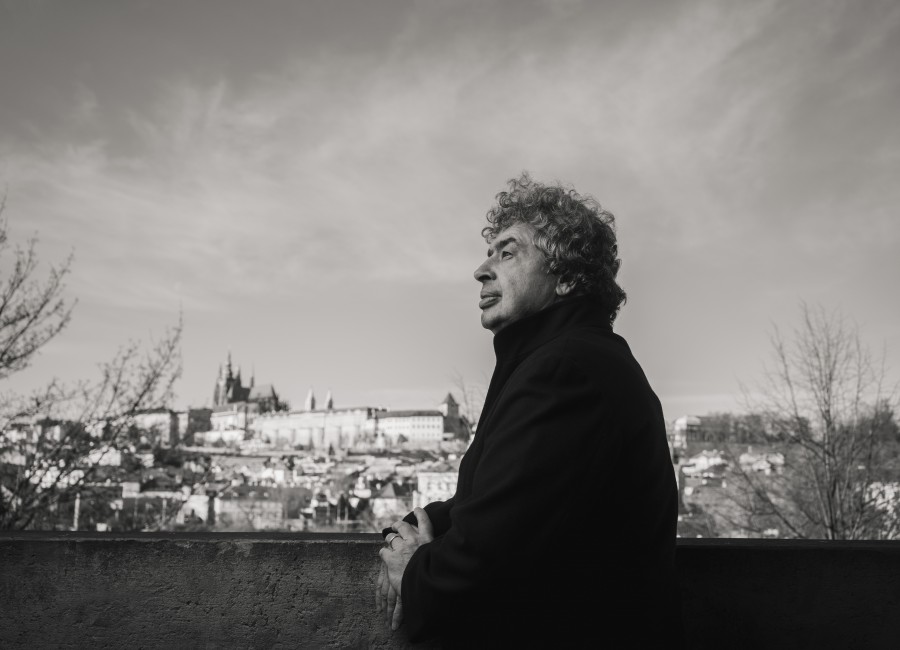
Semyon Bychkov turns 70 today…and in recognition of one of our finest living conductors, here is a link to watch this most erudite musician conducting the WDR-Sinfonieorchester Köln in William Walton’s First Symphony:
Here too is a playlist gathering together some of his finest recordings, from the early days with Philips to his most recent release, an account of Mahler’s Symphony no.5 with the Czech Philharmonic Orchestra for Pentatone. Along the way we hear excerpts or complete works by Tchaikovsky, Prokofiev, Mendelssohn, Dutilleux and Rachmaninoff. It is a wonderful listen, I’m sure you’ll agree!
s t a r g a z e is both an innovative ensemble crossing borders between classical and modern music, and a typist’s nightmare! The group was founded in Berlin and Amsterdam, and prides itself on a flexible and collaborative musical approach.
Collaboration was certainly the name of the game with ONE, whereby five different composers from around the world wrote a piece remotely in lockdown-imposed isolation. The music was then arranged for and with the help of the s t a r g a z e group, who recorded it online, part by part.
What’s the music like?
Engaging. Greg Saunier’s Metaphor begins in reserved fashion, with serious intonations that grow into more colourful statements, the wind section of the orchestra taking the lead. The orchestration has a timbre suggesting the 1920s, though as it progresses the music becomes more animated and a little playful, before an extended chorale led by the piano.
Arone Dyer’s Voicecream is much less conservative in its output, with sweeping statements suggesting an orchestra on the edge, with melodic movements that are much more difficult to predict or trace. A series of punchy block chords takes over half way through, stalling the momentum but adding impressive gravitas to the music.
Vacancy, written by Tyondai Braxton, is a compelling conversation between very different viewpoints – one, a series of swirling motifs, another a more relaxed but authoritative series of chords, yet another voice given out in flurries of woodwind. Nik Colk Void’s Recollection Pulse #3 is similarly convincing, though uses much more minimal material in its percussion. Just the one chord, repeated in syncopation, pushes this music forward over bass notes that effectively stand for the strokes of the oars on a boat. Gradually and inevitably the piece moves forwards before grinding into the dust somewhat, reaching an eerie and evocative conclusion.
Finally Descend, from Aart Strootman, evolves under a haze of orchestral light, some beautiful colours extracted from relatively coarse string and wind textures. A drone-like effect is cast, but with largely consonant harmonies that transport the listener into a comforting cloud, growing ever denser as they progress and then relaxing to softer, wind-based colours and a gently oscillating coda.
Does it all work?
Yes. It is tempting to say that a bit of spontaneity is lost in the recording method, but great credit should go to musicians and composers alike for ensuring that more often than not the musicians and instruments feel like they were recorded in the same room.
Is it recommended?
Yes. An intriguing suite for sure – with music that successfully sits at a junction between modern classical and improvisation, evading categorisation with grace, poise and a welcome dash of humour.
This package is a treat for all those with a misty-eyed persuasion towards a certain legendary nightclub in Manchester. Opened by Rob Gretton and Tony Wilson under the auspices of Factory Records, The Haçienda turns 40 this year, and the anniversary has been marked by Cherry Red with a handsome 4CD set and book documenting the occasion.
The prime objective is to document the club’s open music policy, and this happens across a rich array of 65 tracks, covering almost every style capable of making people dance in 1982.
What’s the music like?
Extremely varied, and in the best possible way. There really is something for everyone here, and not just from 1982, though most of the selections are from then.
The open door policy is best illustrated from the choices that run from Suicide‘s peerless Dream Baby Dream right through to Dexys Midnight Runners‘ Come On Eileen. The latter is one of several massive hits of the time we get to hear as the compilation unfolds, with biggies from Shalamar, Simple Minds, ABC, Blancmange and Tears For Fears – as well as legendary articles from Grandmaster Flash & The Furious Five (The Message), Sugarhill Gang (Apache) and Edwin Starr (War).
Slowing things down a bit, there is some wonderful downtempo stuff from Gregory Isaacs (Night Nurse) and the heart-melting Love Has Found Its Way from Dennis Brown. Moving slightly quicker are the funky asides of Chaz Jankel (Glad To Know You) and the excellent Fiat Lux (Feels Like Winter Again), not to mention 23 Skidoo‘s The Gospel Comes To New Guinea.
Meanwhile the darkness of the club is also in evidence, with some tunes destined for the shadowy corners to come alive. Falling into this category is much of the third disc, which begins with Iggy & The Stooges‘ I’m Sick Of You and develops with John Cooper Clarke‘s Night People, Stockholm Monsters and Josef K.
Does it all work?
It does – the wide range of music means that the broad canvas of music in Manchester at that time is fully represented. There is room for humour, too – the theme music for Thunderbirds making an appearance in its legendary original recording from The Barry Gray Orchestra!
Is it recommended?
Wholeheartedly – thoroughly enjoyable from start to finish, and a musical education to boot.