Celebrating the role of orchestral instruments in pop songs, our eyes turn to Al Stewart‘s Year of the Cat.
Completed in 1976, the song pairs Stewart’s winsome vocals with Andrew Powell’s striking string arrangements, the scurrying cellos adding to the storytelling. Listen and enjoy!
Inspired by a chance encounter on the radio this morning, I was reminded just how many classic pop and rock songs have been made with the use of a full orchestra.
Paul McCartney & Wings‘ three-part medley Band On The Run is one of those, and is all the more remarkable for the speed in which the orchestral parts were written. With the original material recorded in Lagos, Nigeria, McCartney gave Tony Visconti a tight turnaround for his orchestral arrangements, thought to be as little as three days.
What we have here, though, is a vibrant mix of instruments, Visconti using a 60-piece orchestra of top-notch session players, bolstered with extra percussion. Have a listen below and listen closely for the orchestra – it only heightens your appreciation of what is already a classic song!
Pavel Haas Quartet [Veronika Jarůšková, Marek Zwiebel (violins), Karel Untermüller (viola), Peter Jarůšek (cello)
Haydn String Quartet in G major Op.76/1 (1979) Prokofiev String Quartet no.2 in F major Op.92 (1941) Haas String Quartet no.2 Op.7 ‘From The Monkey Mountains’ (1925)
Wigmore Hall, London Thursday 24 November 2022
Reviewed by Ben Hogwood
The Pavel Haas Quartet often cause a stir on their visits to the Wigmore Hall, and this concert was no exception for the Czech ensemble.
Many of Haydn’s mature string quartets begin with a trio of chords effectively designed to hush the audience and guide their ears towards the performance getting underway. The first in his crowning set of six quartets published as Op.76 is no exception, though in this red blooded account the Pavel Haas Quartet pinned the audience back in their seats, such was the vigour with which this performance began.
There were some ragged edges to their interpretation, and less evidence of the genial Haydn that makes himself known with the conversational melody of the first movement. We did however get more exposure to his experimental side, through an interpretation pointing the music forward towards middle period Beethoven. The quickstep third movement, very much a scherzo rather than a minuet, pointed up Haydn’s daring harmonic excursions and dalliances, as did the finale, based mostly in the minor key and featuring a number of brisk about-turns. Stemming the tide was the second movement Adagio, a reverent account with a solemn air to its central section in particular.
There followed a superbly played account of Prokofiev’s String Quartet no.2. This attractive work is not often heard in concert, which is a shame for it has a good deal of spice and charm through its investment in folk tunes from the Northern Caucausian region, where the composer was evacuated in 1941. Encouraged by his new neighbours, Prokofiev achieved a very satisfying blend of the original tunes with spiky good humour and scrunched up harmonic dissonances, always in thrall to the highly melodic content.
The first movement revelled in the abundance of good tunes, bringing the Pavel Haas Quartet’s Slavonic instincts into play. The mood softened for a heartfelt cello solo from Peter Jarůšek, setting a thoughtful and delicately nostalgic tone for the Adagio. Here more time was taken for reflection, with a noticeable chill running through Prokofiev’s writing.
Within the folk references it is possible to discern the worrisome mood of the time, with World War Two underway. The third movement however felt like a show of resolution in the face of this threat, laced with humour that in this performance could have been exploited to greater effect. It was however a fine performance, with terrific ensemble playing.
The main event of the concert was undoubtedly a performance of music from the quartet’s namesake. Pavel Haas, born in Moravia, studied with Janáček between 1920 and 1922, completing his String Quartet no.2 three years later. Tragically in 1941 he was deported to the Theresienstadt concentration camp, and died in Auschwitz three years later. Much of his work lay in neglect but has in the last thirty years enjoyed an extremely welcome renaissance, led by a number of enterprising recordings made in the 1990s, not least that of this work for Decca’s Entartete Musik imprint in the 1990s by the Hawthorne String Quartet. Since then the second quartet has gone on to gain a welcome foothold in the concert hall.
It would be difficult to contemplate a better performance than this one from the Pavel Haas Quartet. Led assertively by Veronika Jarůšková, they showed what an assured and imaginative piece it is, a travelogue giving the listener a tour of the sights and sounds of the famous Monkey Mountain range in Moravia.
The musical language is a curious but highly engaging hybrid of influences, drawing on the music of Dvořák and Smetana but in compressed melodic pockets of heightened intensity. Janáček, too, is an influential voice, but Haas’s unusual phrasing and distinctive rhythms make for a unique and enjoyable style.
The Pavel Haas Quartet enjoyed it greatly, the first two movements (Landscape and Coach, Coachman and Horse) enjoying the rarefied outdoor air and some crisply secured dance rhythms. The third movement, subtitled The Moon and I, was much colder to the touch, the muted strings taking time for introspection and creating some striking colours along the way. Their beautifully poised playing set up a riotous Wild Night finale where they were joined by percussionist Owen Gunnell (above), whose battery of instruments were expertly marshalled to bring the sounds of 1920s jazz into the fray.
The riotous closing pages brought the swaying Moravian dances and jazz rhythms to the foundations of the Wigmore Hall, brilliantly played and ideally balanced. So good was this section that the five performers gave us a quick reprisal as an encore, reminding us in the process of the fiercely original writing from a composer whose resurgence is to be greatly welcomed.
Esthesis is the third album from cellist and composer Clarice Jensen. Initially it was to be a concert experience, comprising a series of long drones that would cycle sequentially through the ‘circle of fifths’, moving from the pitches of C to F.
Unfortunately the pandemic put paid to any plans for a live experience, and Jensen regrouped to realise the concept in solitary form. As she writes, “I expanded my usual palette of layered and treated cellos without the effect of a more grandiose or large-scale feeling of timbre; I wished to employ additional media in an effort to further portray the idea of isolation and containment.”
Jensen goes on to describe the album. “’Sadness is a setting of Purcell’s Dido’s Lament. Liking begins with tentative hope and then blossoms, using an additive compositional process, whereas Disliking is subtractive. Anger uses text taken from Simone de Beauvoir’s letters to Nelson Algren. Fear attempts to simply portray breathing and absence. The organs used on Love suggest hallowed spaces, employing only a short progression that always returns to the same but becomes layered, out-of-sync and lost, but simplest at its end.
What’s the music like?
Deeply intimate – but not in an intrusive way.
Liking sets the tone, using the ‘home’ key of the cello if you like, with the C string being its lowest uniform note, and it builds in layers before settling on a drone that gives an immensely ambient sonority. Sadness takes on an ethereal chill, bright but with soft and mournful tones while Anger really is a striking piece, the emotion portrayed first through disorientating voices but then through an increasingly bothersome treble drone, held above low rumblings in the bass.
Disliking assembles a pile of ambient textures, and while not as confrontational as its title suggests it definitely carries an undercurrent. Joy, on the other hand, is rich and colourful, the sun streaming through an imaginary window as its oscillations proceed, before a softly undulating piano takes hold.
Fear – an all too real emotion during the pandemic – lives up to its billing with discomforting textures and figurations, and the return of that high pitch. Thankfully this is not the final emotion, as Love puts everything back in its rightful place, with consonant harmonies and cushioned textures.
Does it all work?
It does – and as a whole, rather than split into the engaging sections.
Is it recommended?
Yes – a compelling cycle of emotions to which we can all relate, beautifully played and recorded.
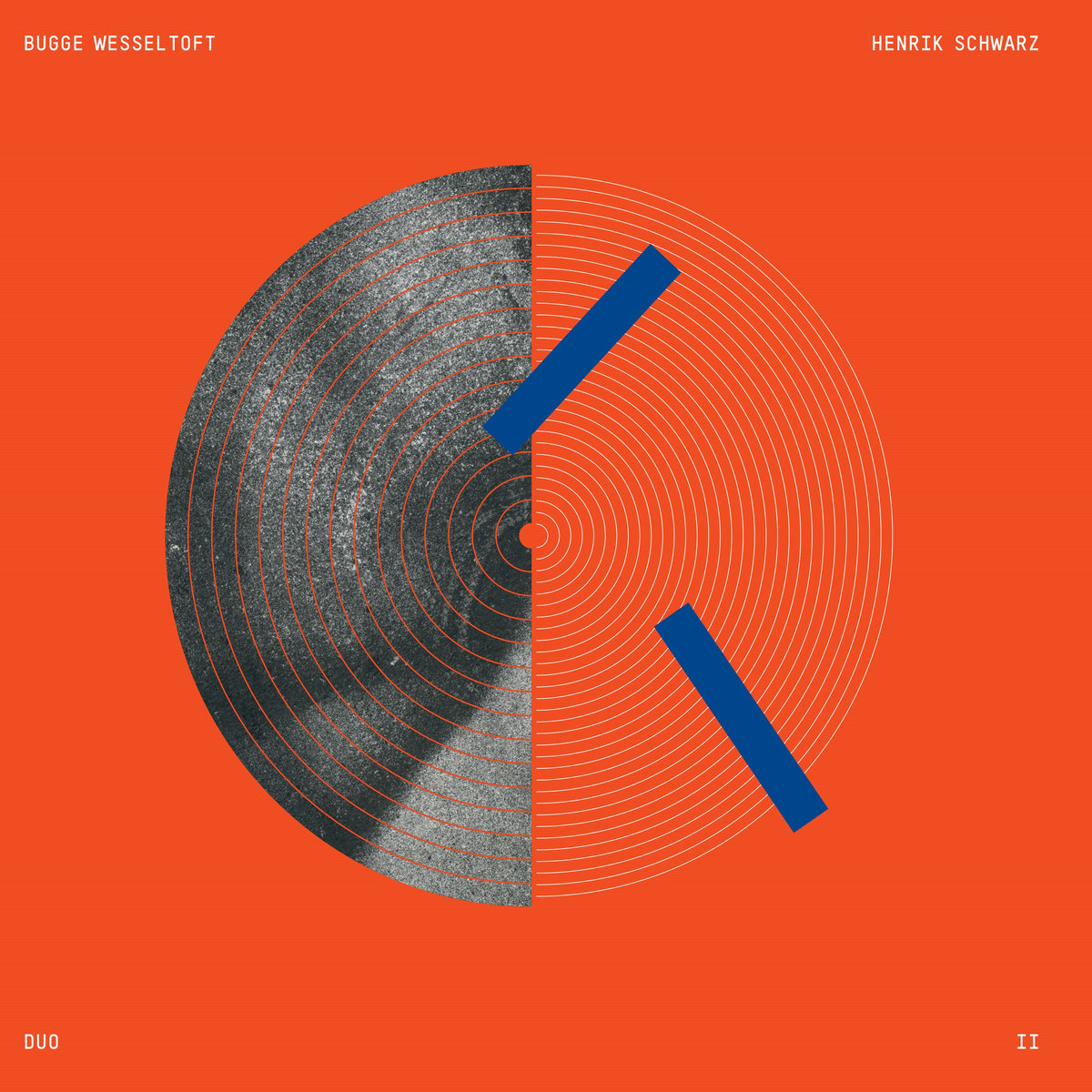
Norwegian composer and keyboard player Bugge Wesseltoft and German multi-instrumentalist Henrik Schwarz have long enjoyed a productive musical chemistry. This has been realised both in the live environment, where their targeted improvising brings richly creative results, and on record too.
This is their second official record as a duo, though this time they open the doors to accommodate a few guest performers.
What’s the music like?
Really engaging – and written in a way that plays to the strengths not just of the main protagonists but also the guests.
The album is well structured, mixing instrumental and vocal tracks, and ushering us in with a soft marimba of Woodened Stone, leading to a dreamy and fuzzy soundscape. My First Life then has more fidgety movements from the electronics, with signs of a more expansive piano with rippling figures from Wesseltoft.
The guests are well chosen. The most immediate is trumpeter Sebastian Studnitzky, who appears on Basstorious. He offers an impudent riff off which Wesseltoft and Schwarz feed, with more percussion added to their arguments. Meanwhile the breathy vocal of Kid Be Kid works well on My First Life, nicely structured as a verse and response before a lovely vocalise at the end.
Duolism sparkles, with good interaction between piano and strings, while Eye For An Eye plays to the vocal strengths of Jenniffer Kae, Jemma Endersby and Catharina Schorling, complemented by Wesseltoft’s purposeful piano.
Future Strings is beautifully scored, ripe for the big screen, while Now I Am Better provides a strongly voiced closing track, with piano, vibes and synthesizers all germinating ideas above a bouncy four to the floor beat.
Does it all work?
It does. Both instrumentalists bring a fresh approach to their music making, which gives the impression to the listener that the ink is still drying on the page.
Is it recommended?
Yes. If you’re familiar with either artist and their work, either in a solo capacity or as a duo, then you need not hesitate. If the names are new to you, then jump right in, for this is an album where the balance between improvisation and composition is beautifully judged. Bugge Wesseltoft and Henrik Schwarz clearly had a lot of fun making the album, and as a listener you will have the same experience!