Unknown's avatar

About Arcana

My name is Ben Hogwood, editor of the Arcana music site (arcana.fm)

Online concert – English Symphony Orchestra / Kenneth Woods: The music of Saxton & Sawyers

eso-saxton-sawyers

English Symphony Orchestra / Kenneth Woods

Sawyers Remembrance (2020); Octet (2007)
Saxton
The Resurrection of the Soldiers (2016)

Wyastone Concert Hall, Monmouth
7-8 April 2021

Written by Ben Hogwood

For the latest in their online series, the English Symphony Orchestra and their conductor Kenneth Woods presented a trio of works written in the last 20 years. The music of Philip Sawyers, their Composer Laureate, featured in two contrasting pieces.

A recent work, Remembrance for Strings, made an instant impact. This deeply emotive, thought provoking piece has a hint of Elgar in its profoundly elegiac tone and scoring, but unmistakably bears Sawyers’ fingerprints as the theme evolves, gradually creeping upwards. The strings of the ESO were perfectly paced by Woods, giving the theme plenty of room and bringing the important viola and cello lines through the texture. Sawyers finds effective contrasts between notable pain points of discord and an almost complete stillness as the strings collect their thoughts, holding their collective breath in ideally weighted phrasing. This deeply affecting piece deserves to be heard much further afield, its impact comparable (if notably different) to that of Barber’s Adagio for Strings. A note for Emily Davis, the ESO guest leader, who gave a touching final solo.

Sawyers’ Octet was next, a single movement work from 2007 written for the youthful ensemble Liquid Architecture. With a scoring for clarinet, horn, bassoon, string quartet and double bass, its colours provided the ideal contrast to Remembrance, as did its series of compact melodies and increasingly busy exchanges, carefully interwoven throughout the ensemble. Written in a single movement, the Octet is an involving work, treating the eight players as soloists but exploring and enjoying their properties in smaller group discussions. Perhaps inevitably the mind is briefly cast back to Stravinsky’s work for the same number of players, but also the harmonic language of Berg and Hindemith. When all the instruments play together the dense contrapuntal writing is at its most effective, while Sawyers ensures the component melodies can be appreciated in a solo capacity too. Kenneth Woods conducted a fine account here, the ESO soloists playing with flair and sensitivity, all the while gathering momentum towards an emphatic arrival in C major. The instrumentalists’ placing, and some sensitive camera work under the direction of videographer Tim Burton, allowed heightened insight into the speed of Sawyers’ rapidly evolving ideas.

As he approaches his 70th birthday, Robert Saxton is a British composer arguably yet to receive the full recognition of which his music is surely due. The Resurrection of The Soldiers is an illustration of his ability to respond to art from another form with remarkable perception. A 12-minute tone poem for string orchestra, written in 2016 and dedicated to George Vass, The Resurrection of The Soldiers is a powerfully concentrated work, responding as it does to the final panel of Stanley Spencer’s commission for Sandham Memorial Chapel. The set of paintings result from the artist’s experiences in the British army in World War One, depicting soldiers emerging from their graves on the last day.

Clearly this depiction struck a lasting emotional chord with the composer, his response speaking initially of searing pain but progressing to a much more hopeful outcome. The upper strings of the ESO spoke powerfully here, maintaining their intensity in the long notes before digging in to an eventful exchange in the energetic central section. This culminated in a powerful chord, richly scored – and with a reverent pause from which the resurrection itself evolved with increasing surety, reaching an exultant if not un-scarred E major.

You may wish to complement the ESO’s performance with detail from the artwork itself, from the National Trust website, or you may wish to form your own images which the music powerfully imprints. Either way, do catch the whole of this compelling program, for these are three very meaningful pieces of music given in the best possible performances.

You can view this concert from 18-22 February at the ESO website, and thereafter for ESO digital supporters here

In concert – Sunwook Kim, CBSO Youth Chorus, CBSO / Mihhail Gerts: Kodály, Rachmaninoff, Debussy & Stravinsky

Mihhail-Gerts

Kodály Dances of Galánta (1933)
Rachmaninoff
Rhapsody on a Theme of Paganini, Op. 43 (1934)
Debussy
Nocturnes – Sirènes (1899)
Stravinsky
The Firebird – Suite (1919)

Sunwook Kim (piano, below), CBSO Youth Chorus, City of Birmingham Symphony Orchestra / Mihhail Gerts

Symphony Hall, Birmingham
Thursday 17 February 2022

Written by Richard Whitehouse

As Mihhail Gerts (taking over at short notice from Lionel Bringuier) said in his initial remarks, all four pieces in this concert by the City of Birmingham Symphony Orchestra were written by composers born within 20 years of each other and made for some intriguing interconnections.

Youngest of these composers, Kodály’s piece was on one level the most traditional – Dances of Galánta looking back to the Hungarian Rhapsodies of Liszt with its bringing together folk melodies in a free flowing fantasia whose larger paragraphs were judiciously shaped by Gerts so that a cumulative overall structure was always evident. The CBSO responded with alacrity to Kodály’s vivid if sometimes workaday orchestration, Oliver Janes making the most of the clarinet solo as stealthily sets the course for all that follows through to a teasing final pay-off.

By the time of Rhapsody on a Theme of Paganini, Rachmaninoff’s music had all but shed its earlier opulence for a tensile, even sardonic quality pointing up expressive contrasts between the 24 variations which fall naturally while ingeniously into a three-movement continuity. It helped that Sunwook Kim constantly brought out those subtle changes of emphasis to which the theme is put, not least when combined with the Dies irae plainchant as if to underline the darker ambivalence at work in this music. That said, the 16th and 17th variations might have been probed even more deeply, so making the famous 18th more affecting in its catharsis, but the six variations of the ‘finale’ headed with unfailing panache to the suitably deadpan close – Kim responding to the enthusiastic applause with a limpid take on Brahms’s Intermezzo in A.

Whether or not it was the earliest piece to use wordless voices as a facet of the orchestration, Debussy’s Sirènes provided a template for numerous comparably innovative works across the next quarter-century and beyond. Gerts was scrupulous as to his enfolding of the textural strands into a cohesive and diaphanous whole; one to which the CBSO Youth Chorus made a suitably ethereal contribution. Nor was this too passive a reading as it moved with notably restive intent toward a culmination which brought a necessary measure of emotional repose.

But (and to misquote Ronald Reagan’s immortal words) ‘where was the rest of it’? Debussy’s Nocturnes being as integrated a triptych as his later La Mer or Ibéria, it seemed unfortunate to jettison Nuages and Fêtes – especially as they would have added no more than 15 minutes to a relatively short programme rounded off with Stravinsky’s The Firebird. This was heard in its 1919 suite, currently returning to favour given the over-exposure of the complete ballet over recent decades. Gerts duly encouraged the CBSO to give its all – whether in the sombre Introduction and a dextrous Dance of the Firebird, the affecting poise of The Princesses’ Khorovod or animated virtuosity of Kashchei’s Infernal Dance, then a Berceuse of real pathos as merged seamlessly into a Finale which conveyed the necessary emotional frisson.

A fine showing for Gerts who, as artistic director of the TubIN Festival, ought to be invited to schedule the Estonian’s Sixth Symphony on a future appearance. The CBSO returns next week in a concert featuring a UK premiere for R. Nathaniel Dett’s oratorio The Ordering of Moses.

For more information on the next CBSO concert, visit their website. Meanwhile click on the links for information on conductor Mihhail Gerts and Sunwook Kim.

Switched On – Heavenly Remixes 1 & 2 (Heavenly)

heavenly-1

reviewed by Ben Hogwood

What’s the story?

The celebrated record label Heavenly, one of Britain’s most durable independent record labels, was built in part on the art of the remix. It is therefore only right they celebrate the craft with a quartet of compilations. The first two were released in late 2021, while the much-missed Andrew Weatherall who made their first remix, gets the third and fourth volumes all to himself early this year. This review covers the wide selection of music housed in the first two releases.

What’s the music like?

Hugely enjoyable. The great thing here is the planning on the part of the label, who have skilfully blended remixes old and new into a logical order without losing the sheer enjoyment of the process.

Among the many highlights is the now legendary Underworld remix of Saint Etienne’s Cool Kids of Death, with spacey pianos flitting in and out of the picture. This is in contrast to the blasts of distortion given to Jimi Goodwin’s Terracotta Warrior by Andy Votel. The Mother remix of Espiritu’s Los Americanos brings the funk, while a surprise Cherry Ghost cover of CeCe Peniston’s Finally has a meeting with The Cure’s Lullaby in an unexpected turn of events from the studio desk of Time and Space Machine.

The more recent material includes a windswept take on Unloved’s Why Not from Gwenno, while Raf Rundell struts out in the company of the synths of Harvey Sutherland, an excellent take on Monsterpiece. The spatial effects applied to Midlife’s Automatic from Jono Ma Ascend are also a treat for the headphone listener, and the loping beat of Confidence Man’s Out The Window, as managed by Greg Wilson & Ché Wilson, is brilliant.

heavenly-2

The second volume has a similar old-new profile, which once again is brilliantly managed. The enjoyably gritty Monkey Mafia remix of Saint Etienne’s Filthy is very much of its time, with big beats and heavy bass, while The Orielles succumb to a great piano-led house treatment from Dicky Trisco & Pete Herbert on It Makes You Forget. The artfully restrained Mikey Young remix of Boy Azooga’s Face Behind Her Cigarette is nicely done, and leads into typical glittering excellence from Lindstrøm, as he takes DovesJetstream to the cleaners. R. Seiliog’s swirling take on Gwenno’s Chwyldro is a compilation highlight, making a heady impression, while in a similar vein M. Craft’s Chemical Trails is wispy and rather lovely when passed through the studio of Beyond the Wizards Sleeve.

Does it all work?

Yes. A few of the remixes show their age but why shouldn’t they? It all adds to the appeal of a compilation that will leave its listeners more than a little misty-eyed, but will give the rush of familiar vocals in unfamiliar settings. The wide range of styles only makes the package more attractive.

Is it recommended?

Without hesitation. Anyone with a passing interest in dance or indie music will take a lot from listening to these two volumes, and some of the components will fill valuable gaps in many a collection. It is a genuine thrill to hear a remix album as good and as fun as this collection is.

Stream and Buy


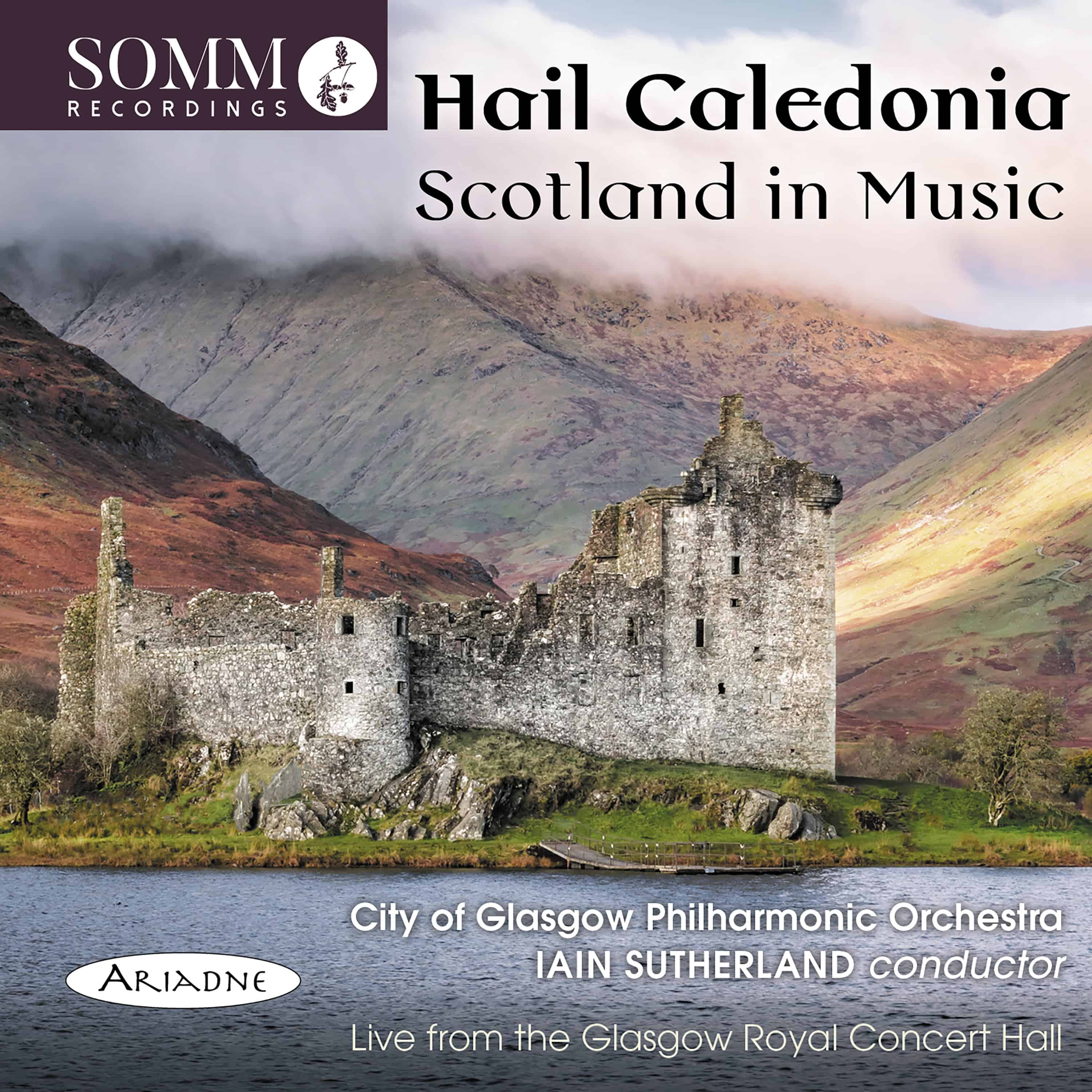
On record – Hail Caledonia: Scotland In Music (City of Glasgow Philharmonic Orchestra / Iain Sutherland) (Somm Recordings)

hail-caledonia

Trad. arr. Sutherland The Black Bear Salute
Docker Abbey Craig (1974)
Tomlinson Cumberland Square (1960)
Coates The Three Elizabeths – Elizabeth of Glamis (1944)
Mendelssohn Symphony No. 3 in A minor, Op. 56, ‘Scottish’ – Vivace non troppo (1842). Blake Take the High Road (1980)
MacCunn (arr. Sutherland) Sutherland’s Law (1886/1973)
Docker Faery Dance Reel (1958)
Sutherland Three Scottish Castles (1966)
MacKenzie (arr. composer) Benedictus, Op. 37 No. 3 (1888/1895)
Bantock Two Heroic Ballads – Kishmul’s Galley (1944)
Arnold Four Scottish Dances, Op. 59 (1957)
Williamson (arr. Sutherland) Flower of Scotland (1967)
Trad. arr. Sutherland Amazing Grace
Whyte Donald of the Burthens – Devil’s Finale/Reel o’ Tulloch (1951)

David Wotherspoon, Iain MacDonald (bagpipes), City of Glasgow Pipe Band, City of Glasgow Chorus, City of Glasgow Philharmonic Orchestra / Iain Sutherland

SOMM Ariadne 5014 [79’32”]

Digital Remastering Paul Arden-Taylor

Live performances at Royal Concert Hall, Glasgow in 1995 and 1996

Written by Richard Whitehouse

What’s the story?

SOMM releases via its Ariadne imprint this compilation of shorter pieces and arrangements which, between them, afford a wide-ranging and not at all hackneyed overview of ‘Scotland in Music’, realized with great flair by Iain Sutherland and the City of Glasgow Philharmonic Orchestra.

What’s the music like?

Whether or not the fastest regimental march in the British army, The Black Bear Salute duly launches proceedings with a gusto continued by Robert Docker’s breezy take on battle-song Scots Wha Hae in Abbey Craig. Ernest Tomlinson furthers the jollity with his amalgam of traditional Borders tunes in Cumberland Square, to which the quiet rapture of Eric Coates’s ‘Elizabeth of Glamis’ (central panel of The Three Elizabeths triptych) provides an admirable foil. The scherzo from Mendelssohn’s Scottish Symphony makes for an ideal interlude in its rhythmic vivacity and formal ingenuity, then come pieces made famous through association with television series – Arthur Blake’s atmospheric theme-tune for the soap drama Take the High Road and the corresponding sequence for crime drama Sutherland’s Law, derived from Hamish MacCunn’s overture Land of the Mountain and the Flood as has regained its place in the concert hall. Docker’s contribution to the light-music repertoire is typified by his Faery Dance Reel, a lively and infectious medley of traditional tunes that wears its heritage lightly.

Iain Sutherland displays his compositional skills (with respective nods to Arnold and Coates) in Three Scottish Castles with its evocative tribute to those of Stirling, Dunvegan (Skye) and Edinburgh. Next comes a contrasting brace of pieces – the burnished eloquence of Alexander MacKenzie’s Benedictus here followed by the unfailing extroversion of Kishmul’s Galley by Granville Bantock, whose immersion in all things Scottish was enduring. Malcolm Arnold’s Four Scottish Dances are then given a memorable reading which points up the trenchant gait of ‘Strathspey’ or the latterly inebriated progress of ‘Reel’, before ‘Hebrides’ casts a suitably rapturous spell that is summarily curtailed with the headlong energy of ‘Highland Fling’. One half of influential folk duo The Corries, Roy Williamson created his own standard in Flower of Scotland, here given an opulent arrangement comparable to that of the ubiquitous Amazing Grace – after which, the closing section from the ballet Donald of the Burthens by Ian Whyte (founder conductor of the BBC Scottish Symphony Orchestra) makes for a scintillating finale.

Does it all work?

Yes. Compilations such as this are often no more than the sum of their parts, however enticing those parts may be, but Hail Caledonia is one to sample at leisure as well as worth playing at a single sitting. It helps when the City of Glasgow Philharmonic renders all these pieces with alacrity and enthusiasm, aided by being captured on various live occasions, and owing in no small part to its founder Iain Sutherland. A familiar radio presence over several decades, he brings an authority to music whose outward flair is not without its corresponding substance.

Is it recommended?

Indeed. The remastered sound lacks nothing in realism or immediacy, while there are detailed and informative notes by composer, critic (and no doubt ecosophile) Robert Matthew-Walker. Any listeners who are looking to add such a compilation to their collections need not hesitate.

Listen & Buy

You can discover more about this release and listen to clips at the SOMM Recordings website, where you can also purchase the recording.

On record – Havergal Brian: Symphonies 3 & 17 (New Philharmonia, Royal Philharmonic Orchestra / Stanley Pope) (Heritage)

brian-heritage

Brian
Symphony No. 3 in C sharp minor (1931-2)
Symphony No. 17 (1960-61)

Ronald Stevenson, David Wilde (pianos, Symphony no.3); New Philharmonia Orchestra (Symphony no.3), Royal Philharmonic Orchestra (Symphony no.17) / Stanley Pope

Heritage Records HTGCD153 [67’26”]

Recorded 12 January 1974 and 23 June 1976 at BBC Maida Vale Studios, London

Written by Richard Whitehouse

What’s the story?

Heritage has followed its release of Charles Groves’s centenary accounts of Havergal Brian’s Gothic Symphony (Part One) and In Memoriam with this first official issue of the composer’s Third and Seventeenth Symphonies, as given in their first performances under Stanley Pope.

What’s the music like?

Although he left few commercial recordings, the London-born and Geneva-based conductor Pope (1916-95) was highly regarded in music from the 19th and 20th centuries. These studio performances are among the best premieres that Brian received, not least the Third Symphony which at almost 55 minutes is his lengthiest after the Gothic. Little is known about its genesis, but the 20-minute opening movement has a complexity and emotional breadth that suggest a suitably high-flown inspiration. Two pianos mark off crucial junctures in its formal trajectory, besides enriching the texture vis a concertante underpinning such as surges forth in the stark chordal cadenza prior to the coda. Had Brian stopped there, this would still have been among his most ambitious symphonies, and the three remaining movements afford intrigues aplenty.

The slow movement continues in similar fashion in its combining of textural audacity with a melodic immediacy (notably for flute and violin) as makes this an ideal entry-point for those new to Brian, and though its expressive ambience is by no means easy to define, a feeling of heroic fatalism comes to the fore during the climactic stages and in a coda of moving pathos. By contrast the scherzo is as direct in its appeal as anything that Brian wrote, not least a trio whose ingratiating charm provides suitable contrast with the boisterous music on either side. With its slow overall tempo, the finale builds in sonorous paragraphs – to whose Brucknerian grandeur Pope is especially attentive – toward a stormy culmination and heightened recall of earlier ideas; thence into an epilogue whose unequivocal finality is rare in Brian’s maturity.

Nearly three decades later, the Seventeenth Symphony offers a very different perspective on Brian’s creative outlook. Last in a series of five single movement such pieces, it is markedly elliptical as to formal unfolding and expressive follow-through – yet, even more than with its masterly predecessor, a continuous and metamorphic ingenuity is perceivable right from the pensive introduction then throughout the three- (or even four-) in-one sequence that follows. Confident and yet ruthless in its triumphalism, the coda is decidedly music for its ‘present’.

Does it all work?

Almost. The Third is the most inclusive of Brian’s orchestral symphonies in its intricacy of texture and (ambivalent) range of expression. Drawing four such diverse movements into a cohesive whole is no easy task, but Pope succeeds more completely than does Lionel Friend (Hyperion) and probes more fully than Adrian Leaper (Naxos) the disquieting obliquities of the Seventeenth. The playing of the New Philharmonia and Royal Philharmonic orchestras is testament to the skill of British players in tackling such complex music on limited rehearsal.

Is it recommended?

Yes. Heritage has done a fine job in opening-up the 1970s sound (the BBC’s notoriously dry Maida Vale studio) and John Pickard contributes his usual insightful notes. The 1974 account of Brian’s choral Fourth Symphony would be an ideal next candidate for such rehabilitation.

Listen

Buy

You can discover more about this release at the Heritage website, and you can read more about Havergal Brian here