Unknown's avatar

About Arcana

My name is Ben Hogwood, editor of the Arcana music site (arcana.fm)

In concert – CBSO Centre Stage: Mozart and Brahms Quintets

cbso-centre-stage-horn

Mozart Horn Quintet in E flat major K407 (1782)
Brahms
String Quintet no. 1 in F major Op. 88 (1882)

CBSO Soloists: Mark Philips (horn), Philip Brett and Charlotte Skinner (violins),Christopher Yates and Catherine Bower (violas), Arthur Boutillier (cello)

CBSO Centre, Birmingham
Thursday 3 February 2022 2pm

Written by Richard Whitehouse

The Centre Stage series, featuring musicians from City of Birmingham Symphony Orchestra, continued this afternoon with an attractive coupling of quintets written exactly a century apart and which are among the most characteristic works of their respective composers’ maturities.

His first piece for the virtuoso Joseph Leutgeb (quite frequently the butt of Mozart’s scabrous humour, though for whom he went on to write four concertos) the Horn Quintet remains one of Mozart’s most engaging chamber pieces – not least through the presence of two violas that yield additional tonal depth to the lively outer Allegros, besides reinforcing the limpid pathos of the Andante. A little reticent toward the outset, Mark Philips came into his own during that central movement with its wistful poise and elegant interaction with those middle registers of the strings. Nor was there any lack of wit in the scintillating finale, its writing for the horn of no less agility than that found in the parallel movements of Mozart’s concertos; all the while suggesting the association between composer and musician was, after all, an endearing one.

Although he had originally intended his Piano Quintet to be a string quintet with two cellos, Brahms only got round to composing what became his First String Quintet as he was nearing fifty. Eschewing both the immediacy of his sextets and the austerity of his quartets, this piece typifies the ruminative warmth but also the expressive ambivalence of his music henceforth – not least an opening movement whose emotional surges are kept in check by the burnished richness of ensemble. The highlight, of the work as of this performance, is a slow movement that offsets its underlying introspection with two scherzo-like episodes whose effervescence carries over the finale – an Allegro of an impetus not so often encountered in Brahms’s later music, while culminating in a coda such as reinforces the home-key with exhilarating effect.

Such, at any rate, was the impression left by an assured and involving performance of a piece which conveyed the extent of this ‘dark horse’ among Brahms’s chamber compositions. Next week sees an ensemble from the CBSO tackle the epic expanse of Schubert’s String Quintet.

You can read more about that next Centre Stage recital, and book tickets, on the CBSO website
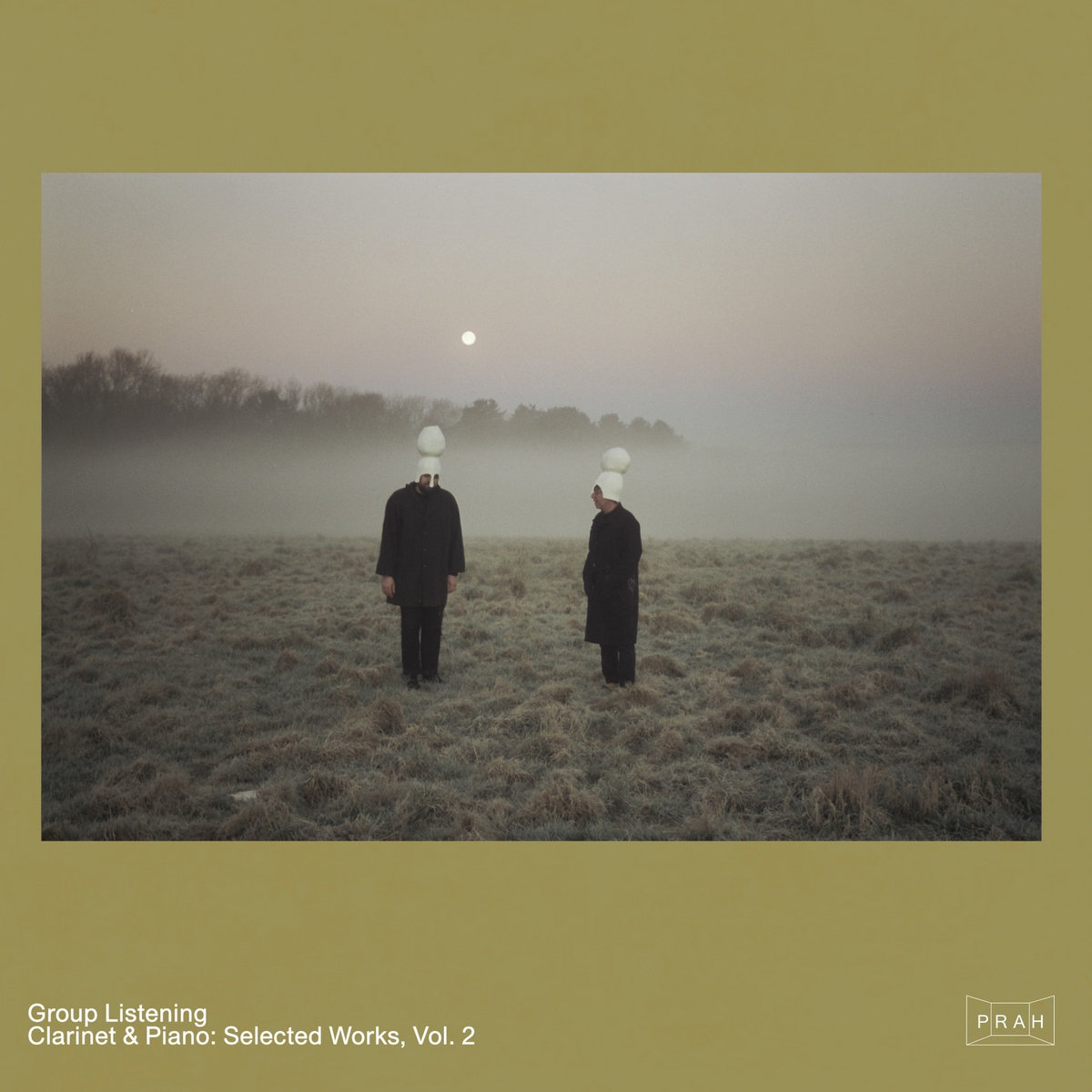
On Record – Group Listening: Clarinet & Piano: Selected Works, Vol. 2 (PRAH Recordings)

group-listening

reviewed by Ben Hogwood

What’s the story?

The first Group Listening album was such a success that clarinettist Stephen Black and pianist Paul Jones have returned for a second instalment. The project celebrates their favourite music – a wide range of electronica, Krautrock and dance-infused classics – by rearranging it for clarinet and piano, with a few electronic twists on the side.

In the course of their work the pair can bring new life to tracks we all thought we knew.

What’s the music like?

Rather special. Both performers play with a great deal of expression, really bringing the music to life and highlighting parts we hadn’t reckoned with before. They are clever with their arrangements, too, giving the melodic lead to the piano on occasion. Robbie Basho’s Blue Crystal Fire is one such example, where Black explores the throaty lower end of the clarinet register while Jones’ piano spins out the tune.

Much of the music is bright and positive, and the first track – a spacious arrangement of Beverly Glenn-Copeland’s Sunset Village – sets the mood perfectly. The appearance of the theme to the 1970s kids tv show Camberwick Green is a humourous shock, joyfully played by both performers, before we hear a radical reworking of Laraaji’s All Of A Sudden. This is where a few risks can go a long way, in this case with the help of a one-touch keyboard rhythm effect.

The Group Listening cover of Malcolm Neon’s Y Cwsg is playful, while Hollywood Dream Trip – originally by Syrinx – is expansive. The original work Five Hundred Miles is unexpectedly poignant, eavesdropping on phone conversations and messages while the instruments work softly voiced conversations of their own. The steady ticking of Seeland has a similar, meditative effect.

Does it all work?

It does – like looking at familiar pictures from unexpected angles and discovering more about them. What really comes across is the love these two musicians have for the music they have arranged and played.

Is it recommended?

Yes. This set of selected works is a blend of cover and remix, throwing new light on music that is revealed to have more dimensions with every listen. A subtly joyous experience.

Stream

 Buy

Listening to Beethoven #205 – Das Glück der Freundschaft (Vita felice) Op.88

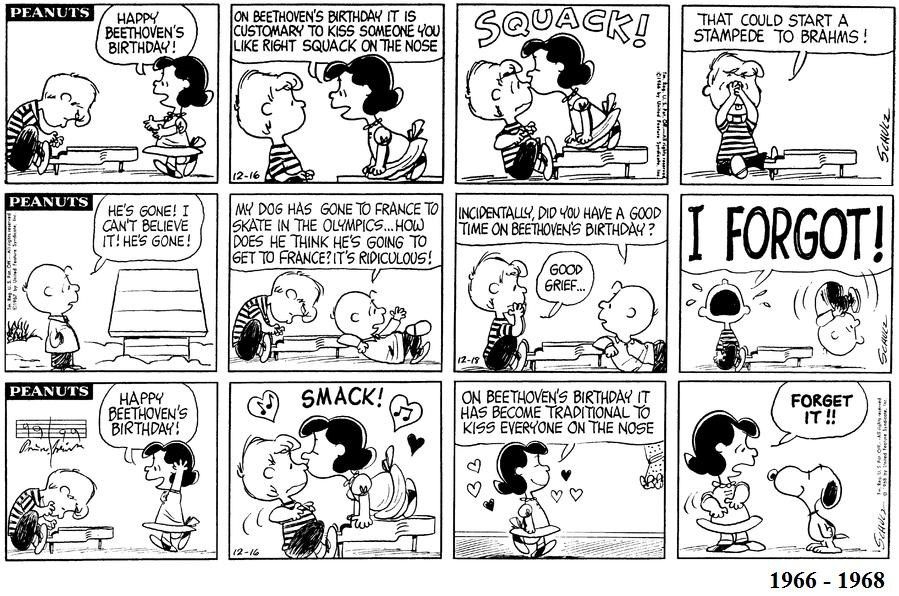
schulz-friendship

Peanuts comic strip, drawn by Charles M. Schulz (c)PNTS

Das Glück der Freundschaft Op.88 (Vita felice) for voice and piano (1803, Beethoven aged 32)

Dedication not known
Text Anon / Christian Tiedge
Duration 2’30”

Listen

Background and Critical Reception

Slightly confusingly, this song has a title in German but the words are in Italian. This is because the original text from which the words are taken is the anonymous Vita felice – which were then seemingly adapted by Christian Tiedge.

The date of composition, and the language, suggest this song to be a product of Beethoven’s studies with Salieri in Vienna, which were just coming to an end.

Thoughts

A flourish from the piano begins this ode to the joy of friendship, ‘offering its hand in these hard times’. The vocal line has a largely stepwise movement, closely shadowed by the piano – but Beethoven does take the opportunity with the key of E major to use some more exotic harmonies.

The profile of the song is quite expansive. Its flowing nature and characterisation are close to Schubert in style, suggesting an influence on the latter composer’s Lieder that is not considered very often.

Recordings used

Pamela Coburn (soprano), Leonard Hokanson (piano) (Capriccio)
René Jacobs (countertenor), Jos Van Immerseel (fortepiano) (Accent)
Dietrich Fischer-Dieskau (baritone), Jörg Demus (piano) (Deutsche Grammophon)

Pamela Coburn has a bright sound in her version, which is transposed up from E major. René Jacobs, full of tone, sings at ‘period’ pitch with Jos van Immerseel giving flowing support on the fortepiano, Perhaps inevitably the version to treasure is from Dietrich Fischer-Dieskau, commanding but elegant and with fulsome support from Jörg Demus.

Also written in 1803 Salieri Gesù al limbo

Next up 3 Marches for piano four hands, Op.45

Listening to Beethoven #204 – Minuet in E flat major WoO 82

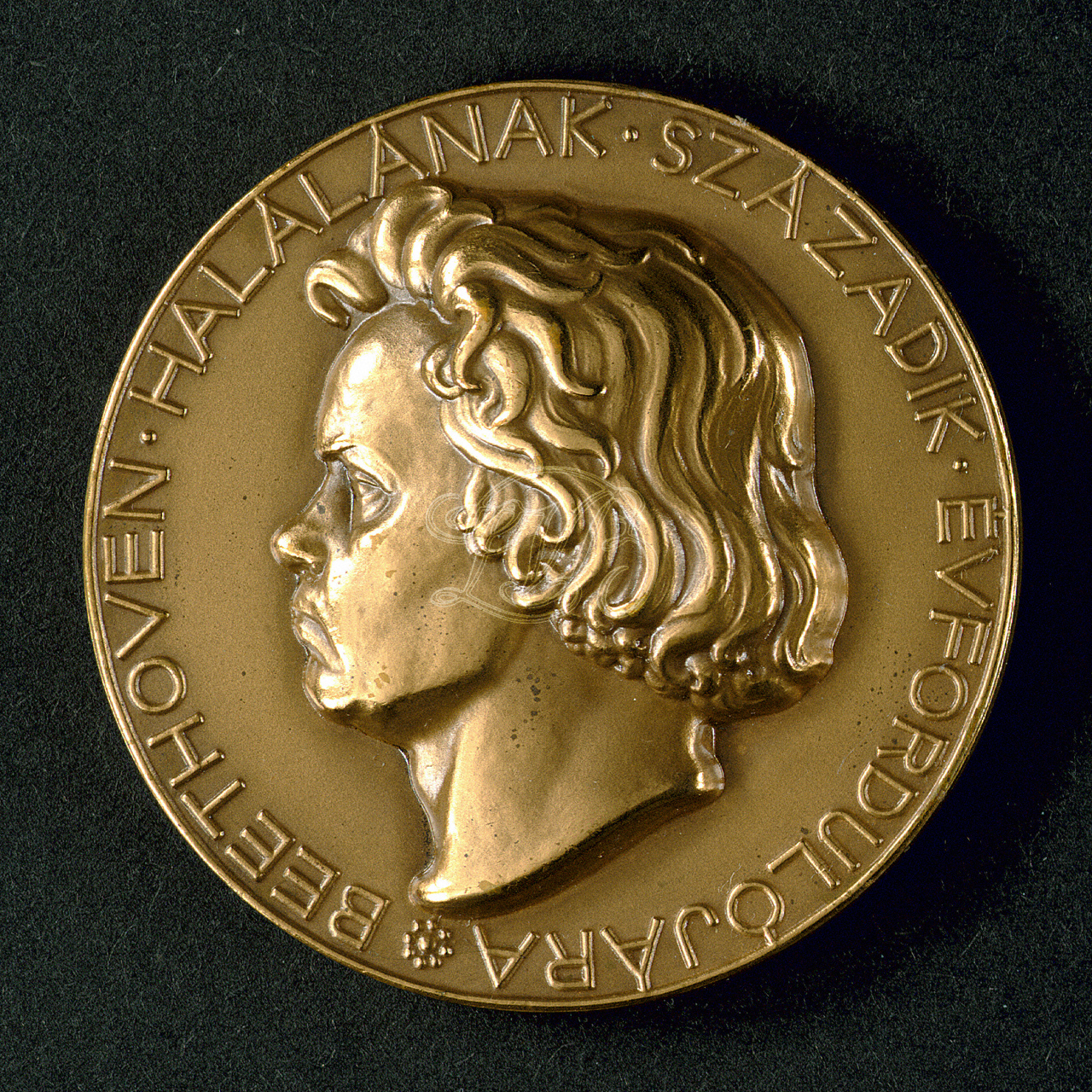
Commemorative medal for Ludwig van Beethoven, 1927 – Bronze medal from the Hungarian Ministry of Culture based on a design by József Reményi

Minuet in E flat major WoO 82 for piano (1803, Beethoven aged 32)

Dedication not known
Duration 4′

Listen

written by Ben Hogwood

Background and Critical Reception

There is some doubt around when this piece was first written. In his notes for Ronald Brautigam’s BIS recording of the Minuet, Roeland Hazendonk notes how an early Beethoven scholar found an early edition of the piece seemingly dating from Beethoven’s time in Bonn in his early teens.

It was however published in 1805, and has proved to be a hit with students starting out on the piano. Hazendonk says this is due to its ‘full, orchestral sonority’.

Thoughts

This is a very easy-going dance, with a repetitive theme that becomes quite an earworm. It is a relatively slow tempo, almost Andante, with poise and a hint of humour. The middle section moves to A flat major, encouraging the pianist to take flight in the right hand a little more, before returning to the easy charm of the first theme.

A simple but enjoyable piece.

Recordings used and Spotify playlist

Ronald Brautigam (BIS)
Jenő Jandó (Naxos)
Gianluca Cascioli (Deutsche Grammophon)
Martino Tirimo (Hänssler)
Olli Mustonen (Decca)

Olli Mustonen plays this piece a little impishly, and is the fastest of the five interpretations considered here. Martino Tirimo is very slow, while in Ronald Brautigam’s hands the dance feels rather earthbound and foursquare.

You can chart the Arcana Beethoven playlist as it grows, with one recommended version of each piece we listen to. Catch up here!

Also written in 1803 Pleyel 3 Keyboard Trios, B.474–476

Next up Das Glück der Freundschaft Op.88

Listening to Beethoven #203 – Prelude in F minor WoO 55

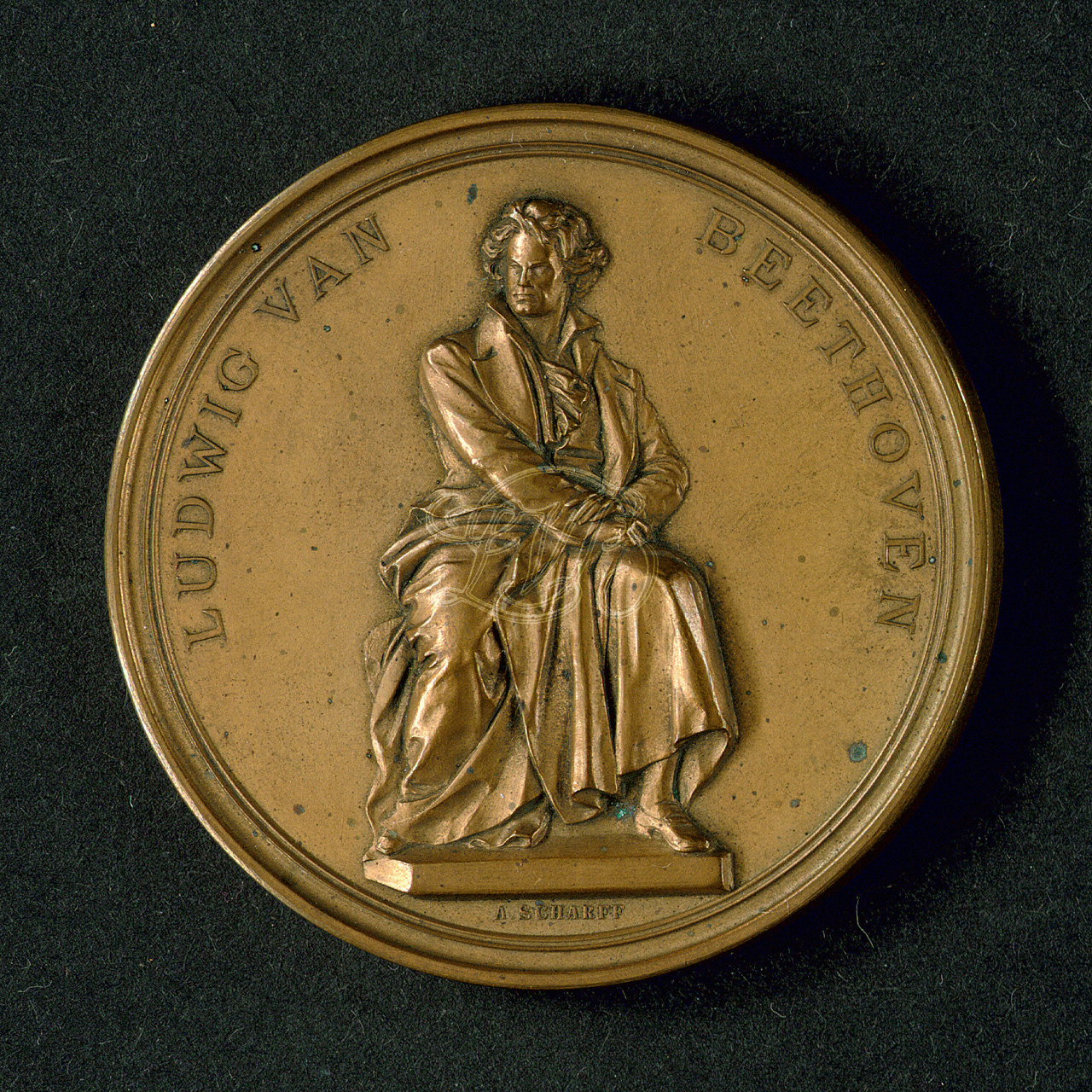
Commemorative medal for the unveiling of the Beethoven monument in Vienna – bronze medal based on a design by Anton Scharff depicting the Beethoven sculpture by Caspar von Zumbusch

Prelude in F minor WoO 55 for piano (1803, Beethoven aged 32)

Dedication not known
Duration 3′

Listen

written by Ben Hogwood

Background and Critical Reception

Roeland Hazendonk, writing booklet notes for the recording made by Ronald Brautigam for BIS, describes this piece as ‘an almost perfect pastiche of a prelude by Bach’, drawing attention to its similarity with the Prelude in the same key from the first book of Bach’s Well-Tempered Clavier.

Thoughts

If you heard this piece without knowing, your first guess at a composer would surely not be Beethoven, for this is a piece of incredibly accurate pastiche. It is remarkably similar in both mood and profile to the F minor prelude of Bach referred to above, yet it is clearly not a copy as you will hear by comparing the two:

Beethoven starts the Prelude confidently, and it evolves naturally in a series of arpeggios that pass instinctively between the hands. For much of the piece he keeps the tonality close to F minor, though the central section starts wandering towards further flung keys. It all comes back together for a poised conclusion.

Perhaps this was a study for one of Beethoven’s teachers at the time, but it expresses his knowledge and love of Bach better than words could possibly manage!

Recordings used and Spotify playlist

Jenő Jandó (Naxos)
Olli Mustonen (Sony BMG)
Ronald Brautigam (BIS)

Gianluca Cascioli adopts a slow and steady tempo, but gives great feeling to his performance. Ronald Brautigam is much quicker but still allows the notes to breathe, pausing at strategic points in the music to give the phrasing a natural structure.

You can chart the Arcana Beethoven playlist as it grows, with one recommended version of each piece we listen to. Catch up here!

Also written in 1802 Reichardt Das Zauberschloss

Next up 6 Ländler WoO15