New music – Gaspar Claus: Désir des astres (InFiné)

by Ben Hogwood, incorporating text from the press release

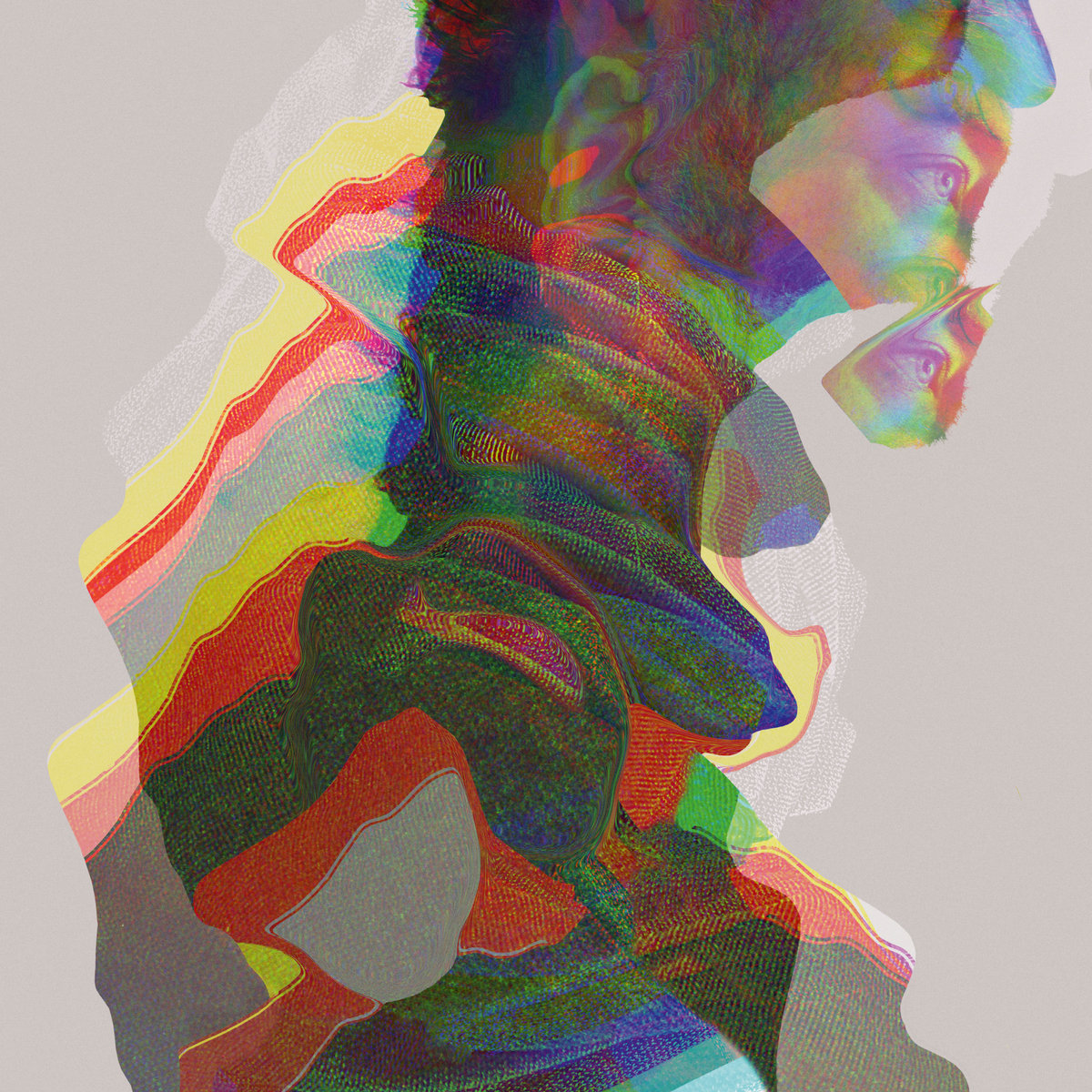
Gaspar Claus has announced a new album, CELLS, featuring collaborations with Matt Elliott (The Third Eye Foundations) and producer Basile3. It will be released by InFiné on 25 September, but has been prefaced by two singles. The second of these, Désir des astres, is available now:

On the track, Gaspar said, “This theme comes from music written for a documentary. It ultimately wasn’t used: the cello often carries that melancholic sweetness so unique to it, and it weighed the film down a bit. So I dug it up, reworked it, and pushed it towards an almost epic boldness. It’s an ideal way to kick off the journey this album offers.”

The title of the piece also plays with the etymology of the word “désir”, which shares the same root as the word “sidéral”, placing the track in a resonance that is both intimate and cosmic.

It is a passionate piece, played with searching expression by the cellist – whose accents bring a humid, almost Mediterranean flavour to the track. I was reminded, in a good way, of the music of Spanish composer Joaquin Rodrigo.

Désir des astres follows the single release of the album’s opening track, World of Idols, in edit form:

CELLS will be released on Biovinyl LP and Digipack CD (all-paper packaging), with all details on the Bandcamp link below:

Published post no.2,905 – Tuesday 2 June 2026

Switched On – Nathan Fake: Evaporator (InFiné)

Reviewed by Ben Hogwood

What’s the story?

Nathan Fake’s electronica has found a new home, with Evaporator his first album released on the InFiné label.

It is an instinctive work, written during the summer of 2024 and wrapped up in just six weeks. He describes it as “airy daytime music,” which is “not overtly confrontational electronic club music, it’s more accessible.” Continuing the instinctive approach, Evaporator was mostly recorded in single takes on a Cubase set up, with Fake employing synths and even a toy Casio keyboard on Yucon, which has become one of his most treasured compositions.

What’s the music like?

Evaporator engages both the mind and the feet in an easy and frequently appealing way. On many occasions it promises the joy of dancing, but there are moments where Fake’s music is aimed straight at the mind, specifically in removing tension and providing musical company.

Both elements combine in the loping beats and lush textures of You’ll Find A Way, while Fake’s clever trick of employing two paces at once works on the implied Euro riffing of Hypercube, where a distinctive five-note rhythm is punched out, and Aiwa, with its slow beats but busy percussion. Yucon has real presence, as well as the childlike simplicity from the toy keyboard, while Bialystok is really strong, led by a powerful and almost primeval kick drum.

Later on in the album, two collaborations make their mark. The weather-beaten Baltasound, with Dextro, appears to be a portrait of a Shetland settlement. On it, the pair create a massive pillow of sound out of which emerges a beat of reassuring depth. Orbiting Meadows features another good friend, Clark, and hints at music heard further afield, with mysterious bells above a broad canvas. Saving one of the very best tracks for last, Slow Yamaha is a beauty, a loping disco number with a rolling beat that works for all of its nine minutes.

Does it all work?

It does. Nathan Fake’s freedom of expression is key here, and the combination of intimacy and wide-open, elemental sound pictures are managed in a really satisfying way.

Is it recommended?

It is. This is another very strong addition to the Nathan Fake canon, another winner from Norfolk. The instinctive approach suits him well!

Listen / Buy

Published post no.2,818 – Tuesday 3 March 2026

Switched On – Mary Lattimore & Julianna Barwick: Tragic Magic (InFiné)

Reviewed by Ben Hogwood

What’s the story?

This is the first chance for Mary Lattimore and Julianna Barwick to realise their ‘musical telepathy’ in recorded form. The two artists, who have been friends for years, use their own instruments of voice and harp, but augment them with contributions from the instrument collection of the Musée de la Musique in the Philharmonie de Paris.

Tragic Magic was recorded in the space of nine days in 2025, just after the two friends had arrived in Paris from Los Angeles and is in part a response to the wildfires in California that they witnessed first-hand.

Instrumentally, Lattimore uses harps that trace the instrument’s evolution from 1728 to 1873, while Barwick, along with her vocal contributions, used analogue synthesizers including the Roland JUPITER and Sequential Circuits PROPHET-5. There is a striking cover in the form of Rachel’s Song, from Vangelis’s soundtrack to Blade Runner, while Roger Eno contributed Temple Of The Winds specially for the album.

What’s the music like?

Magical. It is clear there were some very special musical happenings in these sessions, with an unusual synergy between the two forces that reflects both their long-standing friendship and their pained response to the natural disasters occurring on America’s West Coast.

And yet much of the music here has a restrained beauty that is immensely soothing. This comes in part from the freeform improvisation, but also from the sheer space producer Trevor Spencer helps to secure. Barwick’s vocals move in perspective from foreground to a spacious backdrop, while Lattimore’s gently oscillating harp lines are often supported by drone-like bass movements, as in The Four Sleeping Princesses.

Haze With No Haze is richly expressive, Barwick’s harmonies like snowflakes falling slowly towards the ground, while Eno’s striking Temple Of the Winds looks east in its musical focus. Stardust has a thrilling rush of synthesizer colour at its outset, panning far and wide, its massive sound enveloping the ears, while Lattimore’s intricately plucked harp line makes Melted Moon a special epilogue.

Does it all work?

It does. Voice and harp have always made for a winsome musical combination, but the addition of electronics gives Tragic Magic a rare, ethereal quality.

Is it recommended?

Wholeheartedly. Already Tragic Magic can be declared one of the albums of the year, a document of often stunning beauty where the musical chemistry between Mary Lattimore and Julianna Barwick is laid bare.

Listen / Buy

Published post no.2,769 – Friday 16 January 2026

Switched On – Nathan Fake: Slow Yamaha (InFiné)

by Ben Hogwood

What’s the story?

This is the second single from Nathan Fake‘s forthcoming album Evaporator, due for release on 20 February on InFiné. Although called Slow Yamaha, it features a musical depiction of evaporation at the end.

What’s the music like?

Hypnotic, and ultimately compelling. The start is deceptive, with a minimal approach but gradually the track develops and the horizons start to shimmer, with lovely warm synthesizers starting to dominate.

Big blocks of sound surround the listener, so that when the music disappears in a puff of air at the end the effect is similar to the sensation of taking off.

Does it all work…and is it recommended?

Yes indeed – a promising omen for the album, too!

Listen & Buy

Published post no.2,759 – Tuesday 6 January 2026

New music – Nathan Fake announces Evaporator album (InFiné)

adapted from the press release by Ben Hogwood

After several years of silence, Nathan Fake makes a powerful return with Evaporator, his first album on InFiné. Written in six weeks during the summer of 2024, the record distills two decades of exploration into a lucid, tactile form of daytime electronica — radiant, physical, and full of air. Emerging from the nocturnal pulse of Blizzards and Crystal Vision, Fake turns toward light and openness. 

His analog synths and rhythmic architectures shimmer with space and energy, dissolving density into motion. Tracks like Bialystok and Slow Yamaha pulse with kinetic precision, while “Yucon” and “Aiwa” drift into dreamlike ambient clarity. 

Built entirely on his ancient Cubase setup and recorded largely in single takes, Evaporator captures Fake at his most instinctive and human, while collaborations with Clark and Dextro deepen the sense of dialogue between sound and emotion, between control and surrender. 

This marks not only a major comeback for one of the UK’s most singular electronic artists, but also the start of a new chapter: Fake will tour the album with a brand-new A/V live show created in collaboration with Berlin-based visual artist Infinite Vibes, expanding his luminous sound into a full sensory experience. The first few shows in Berlin, Paris, Milan and Roma have just been announced.

A luminous fusion of electronica, ambient undertones, and leftfield techno, Evaporator is Nathan Fake reconnecting with instinct, clarity, and daylight — and taking it back to the stage.

You can listen to Bialystock and The Ice House below:

Published post no.2,732 – Friday 28 November 2025